Buying a Short-Term Pass for a Weekend Visit
A weekend ride in British Columbia can involve more than finding a trailhead and unloading your ATV or side-by-side. Some managed riding areas require a site pass, while many other places do not use one. The key is checking who manages the area, what the pass covers, and whether it is separate from registration, insurance, or club membership.
First confirm that the riding area requires a pass
British Columbia does not have one province-wide trail pass that automatically covers every riding area. A short-term pass is generally a site-specific requirement: it applies where the organization managing a riding area requires one, and it may not be accepted at another site. Some managed areas offer day passes; others may offer different pass options, or no pass at all.
That makes the destination your first check. Look for current access information from the organization responsible for the specific trail system or recreation site. A nearby staging area, forest road, or Crown land route may have different access rules from the managed trails you plan to use. Check the full route, not just the place where you intend to park.
A pass is not a substitute for following the other rules that apply to your ride. Depending on where you go, you may still need to register your machine, carry required documents, have appropriate insurance, and follow posted restrictions. For a quick overview of the registration rule, see BC ATV Registration Requirements. For what does and does not trigger registration, read BC Crown Land Triggers the Registration Rule.
Before buying, confirm these details with the site manager or pass seller:
- Is a pass required for the exact trails and staging area you plan to use?
- Is there a short-term option that covers your visit?
- Does the pass cover the machine, the rider, or both?
- Does each rider or vehicle need separate proof of payment?
- Are there limits on machine type, trail access, or group size?
- Are there temporary closures or additional site rules?
Pass rules can differ between managed sites, and access conditions can change. If the site’s information is unclear, ask the manager before leaving home rather than assuming a pass sold for one area works elsewhere. BC Passes Exist Only at Managed Sites explains the difference between a local site pass and province-wide access.
Choose the right pass for a weekend visit
A short-term pass can make sense when you are visiting for a day or weekend and the destination requires one. But the right option depends on the pass terms, not just how long you expect to ride. Check whether the pass is valid for the dates of your visit, whether it covers consecutive days, and whether it applies to the trails and staging facilities on your itinerary.
Do not assume that “day pass” has the same meaning everywhere. One site may define access by a calendar date; another may set its own validity period or sales conditions. A pass might cover one machine rather than every person in your group, or it might be sold through a local club with specific instructions. Confirm the terms before paying.
| What to check | Why it matters |
|---|---|
| Valid dates and duration | Your pass needs to cover the day or days you plan to ride. |
| Site and trail coverage | A pass for one managed area may not cover a different trail system. |
| Who or what it covers | Find out whether it applies per rider, per machine, or another way. |
| Eligible machine types | A site may have rules that affect ATVs, side-by-sides, or other vehicles. |
| Proof requirements | You may need to show a receipt, confirmation, pass, or other evidence. |
| Closures and restrictions | A valid pass does not override a closure or posted restriction. |
If you expect to visit the same managed area several times, compare the available options rather than automatically buying a short-term pass for every trip. An annual pass may be offered, but whether it is worthwhile depends on the site’s terms and how often you will ride there. Pass formats, coverage, and costs are set by the provider, so check directly for current details. For a broader explanation of the distinction, see BC Annual Passes at a Managed Site and BC Day Passes at a Managed Site.
Club membership is another point to keep separate. Paying club dues may help support local trail work or provide member benefits, but membership is not necessarily the same as buying a pass to ride a managed site. Verify whether the site requires both, either, or neither. Why Club Membership Is Not the Same as a Pass and BC Club Membership Benefits can help you understand what those purchases are intended to cover.
Buy through the site’s stated channel and keep proof
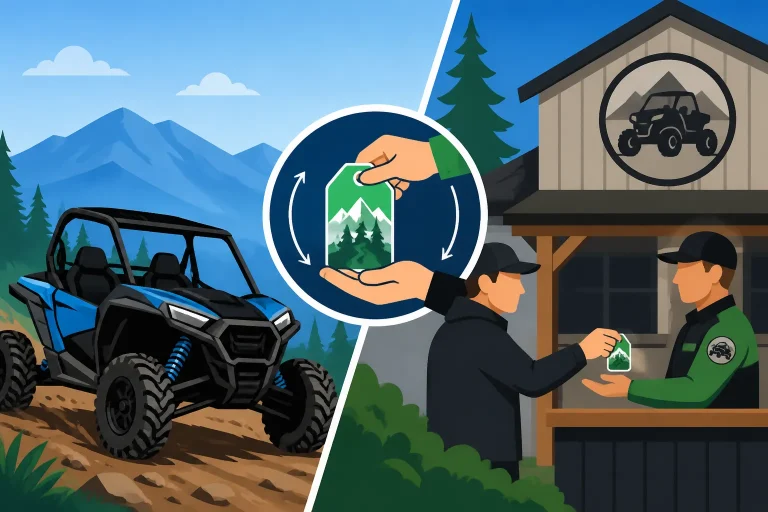
Once you know which pass you need, use the sales method named by the site manager. Depending on the area, passes may be sold online or through another local channel. Do not rely on an old social media post, a third-party listing, or a friend’s past visit as proof that the purchase route or terms are still the same.
A straightforward buying process is:
- Confirm the destination and access rules. Identify the actual managed site, its trails, and the staging area you will use. Check for closures or restrictions before you purchase.
- Ask what pass covers your visit. Confirm the dates, machine coverage, rider coverage, and any group or site conditions.
- Buy through the stated seller. Follow the manager’s instructions and check the dates and details entered before completing the purchase.
- Save the proof of purchase. Keep the confirmation where you can retrieve it, and bring a printed copy if you may be without cell service.
- Recheck conditions before travelling. A pass does not guarantee every trail is open, so check for updated notices before setting out.
If the pass is digital, save the confirmation to your phone before you reach an area with weak reception. A screenshot or downloaded receipt may be easier to show than trying to load an email at the trailhead. If the seller specifies a printed pass or another display method, follow that instruction. The best proof is the one the site manager says it accepts.
Keep the confirmation until the trip is over. It can help resolve a question about the purchase date or coverage, but it does not replace machine registration documents or other required records. See Carrying Proof on a Phone for practical considerations when relying on digital proof, and Carrying Your Certificate of Registration on Every Ride for the separate registration document.
For a weekend visit, also think about the order of your errands. If you need to pick up a pass in person, check the seller’s location and availability before driving to the riding area. If you can purchase online, complete the transaction before leaving home and confirm that you received proof. Do not assume that a site has staff available at the trailhead to sell passes.
A pass does not settle every access or compliance question
Buying a pass addresses only the site’s pass requirement. It does not automatically make every route to the site legal for your machine, authorize travel on a highway, or remove the need to follow land-use restrictions. Your route may cross private land, Crown land, a forest service road, or a closed area, each with its own rules.
For example, a site pass does not make an unregistered machine compliant where registration is required. Nor does it provide the insurance required for certain types of riding. Review BC ATV Insurance Requirements and BC Forest Service Road Requirements if your trip includes those situations. For a general explanation of where off-road rules apply, see What the Off-Road Vehicle Act Covers in BC.
Check posted notices at the entrance and along the trail. Conditions may include restrictions on vehicle types, routes, noise, fire use, or other conduct. A trail pass should not be treated as permission to ignore a gate or continue through a closure. If you find a restriction that conflicts with an older map or trip plan, stop and confirm access with the manager.
A sensible weekend checklist is:
- Pass purchased for the correct site and dates
- Confirmation saved or printed in the form the site accepts
- Registration documents and photo ID carried as required
- Insurance checked for the places you intend to ride
- Route, closures, and posted restrictions reviewed
- Machine and passenger arrangements checked against applicable rules
- Backup plan ready if access is closed or conditions change
If you are visiting several riding areas, check each one separately. A pass for one managed site does not necessarily transfer to another, even if the trails are close together or connected by roads. Similarly, a pass does not create access across land where you do not otherwise have permission to ride.
The practical rule is simple: identify the manager, confirm whether that site requires a short-term pass, and buy the option that explicitly covers your visit. Keep the proof accessible, but treat it as one part of trip planning—not as a substitute for registration, insurance, or permission to use every route.
Disclaimer
This article is for general informational purposes only and does not constitute professional advice. Laws, prices and regulations vary by location and change over time. Consult a qualified professional for guidance on your specific situation.