Riding After a Ban Lifts
Riding after a BC fire ban lifts still means checking local closures, trail access, spark-arrestor rules and machine readiness before heading out.
Your sticker stops at the state line.
Non-resident permits, what they cost and how long they last, and which states honor each other’s — or, increasingly, none at all.
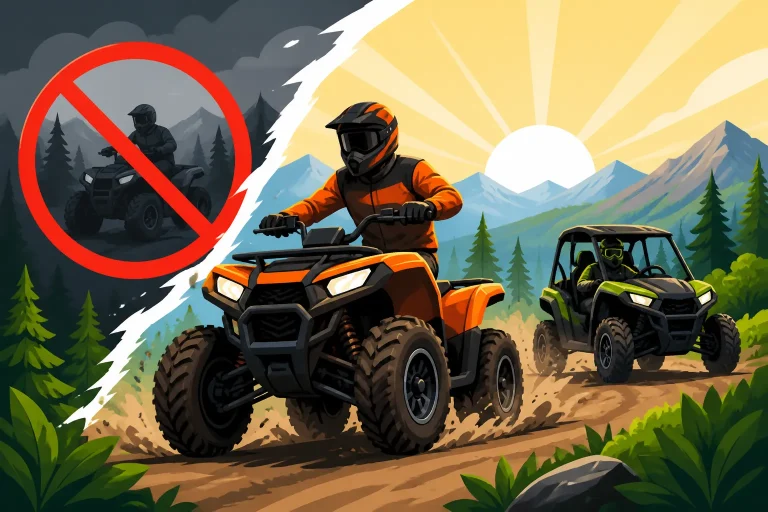
Riding after a BC fire ban lifts still means checking local closures, trail access, spark-arrestor rules and machine readiness before heading out.
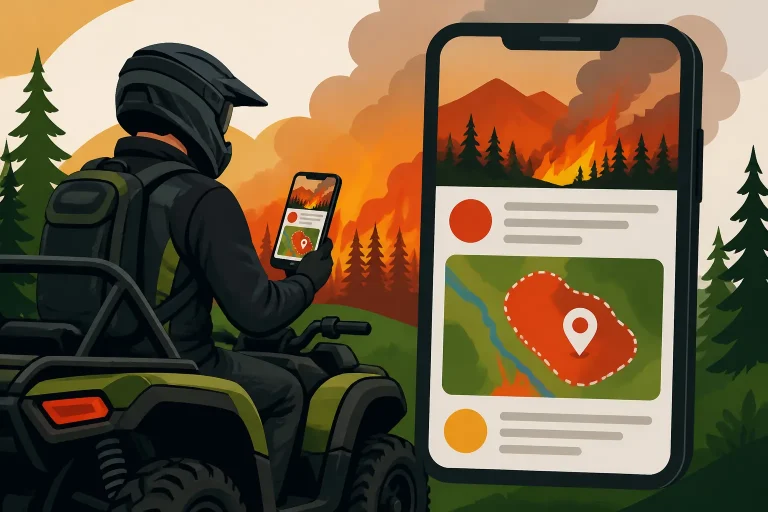
Checking a wildfire blog for BC ATV and UTV rides is only the first step; verify current closures, area restrictions and route access before setting out.
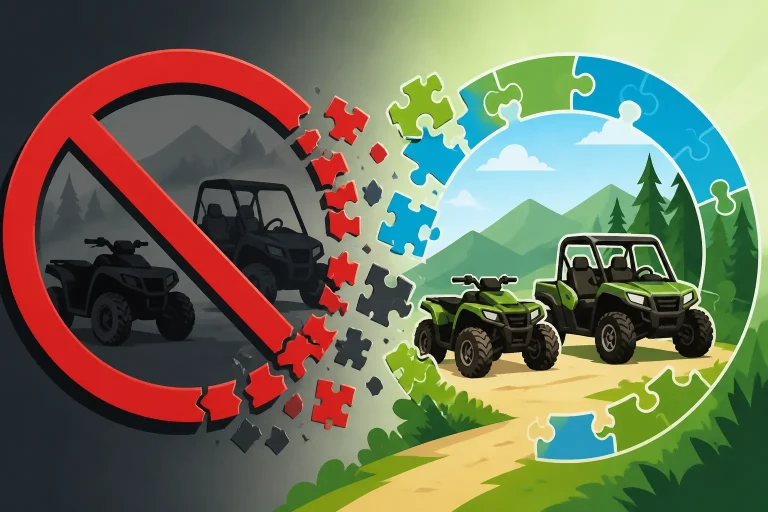
BC fire restrictions can lift area by area, while riding limits, closures and campfire bans may remain; verify each rule before an ATV or UTV trip.
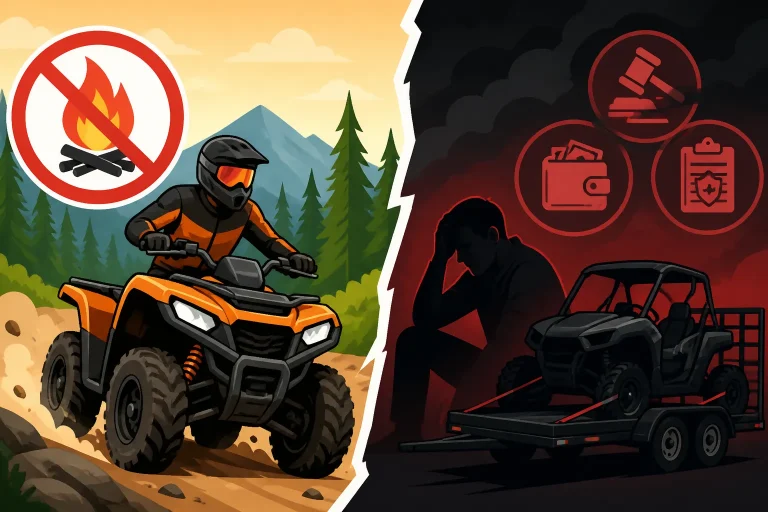
What riding during a fire ban in BC can cost depends on the order, location and conduct; check current restrictions before taking an ATV or UTV out.
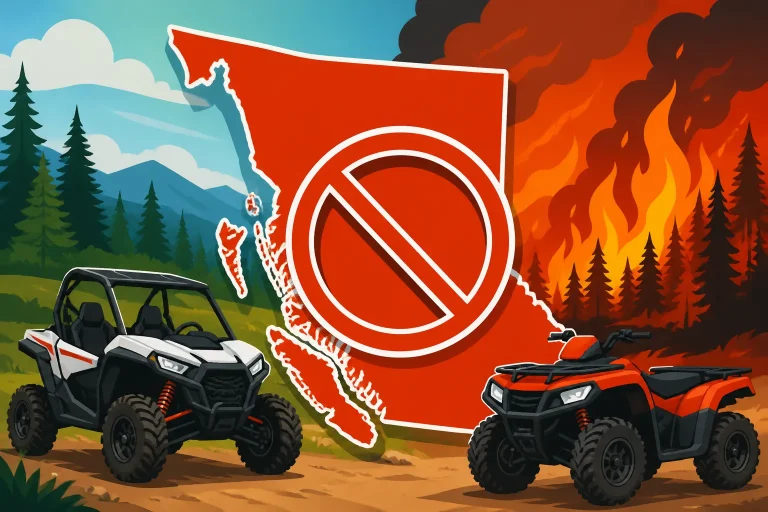
Wildfire-related off-road vehicle bans across British Columbia fire centres restrict Crown land recreation and require checking official notices.
Three Years in Jail may follow an ORV-caused wildfire in BC; check fire restrictions, fit a spark arrestor, and confirm your route is open before riding.
A BC ORV wildfire can bring a court fine up to $1,000,000 and jail; understand how spark arrestor, fire-ban and riding rules fit together.
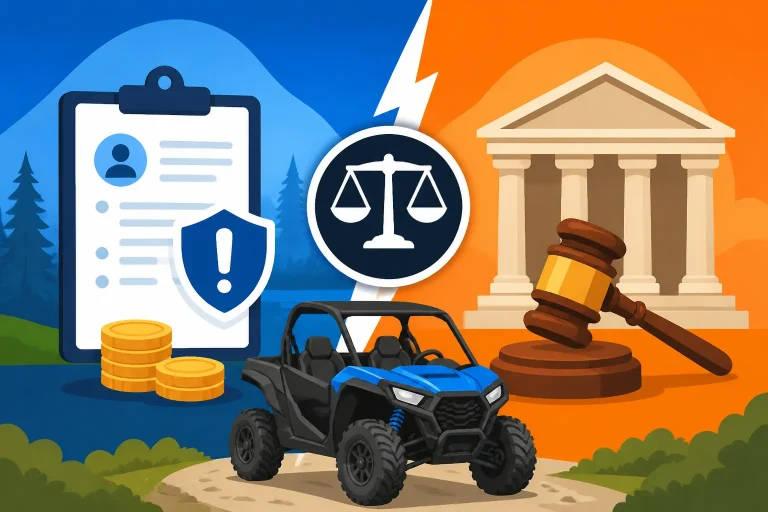
How an administrative penalty differs from a court fine in BC: who issues each, how the processes work, and why the notice controls your response.
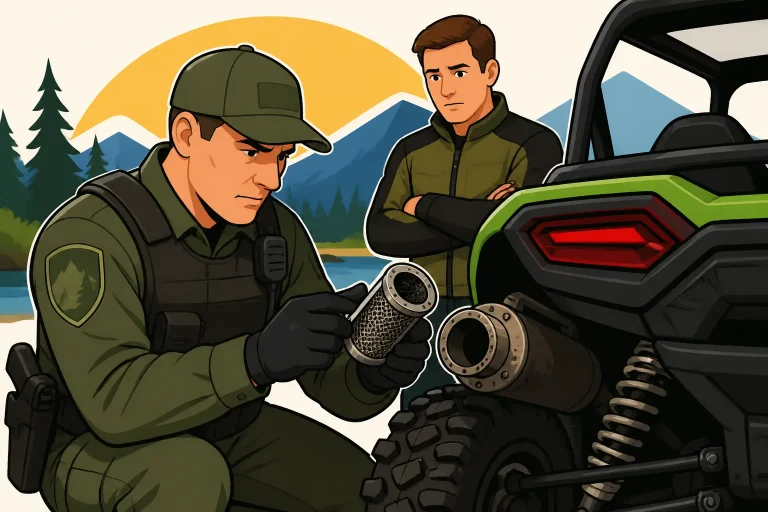
A BC spark arrestor check may focus on the exhaust screen; know what officers can inspect, how to prepare, and when to stop riding.
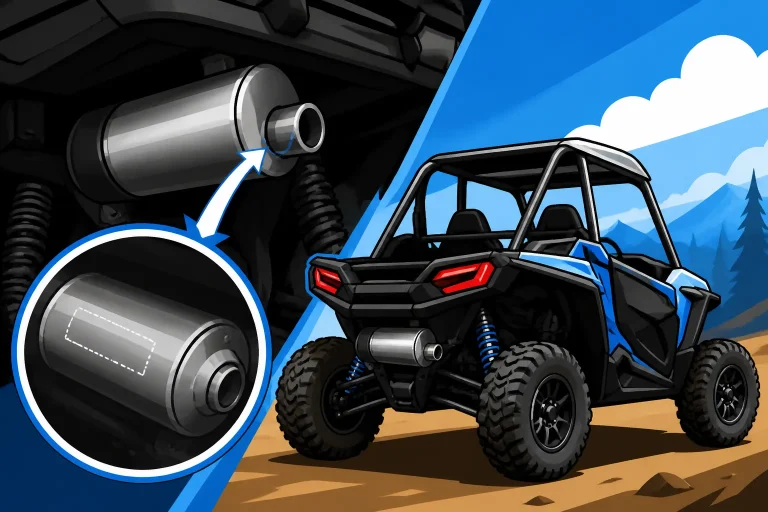
Muffler markings on ATVs and UTVs identify exhaust parts, but they rarely prove compliance with BC spark arrestor requirements.