Riding After a Ban Lifts
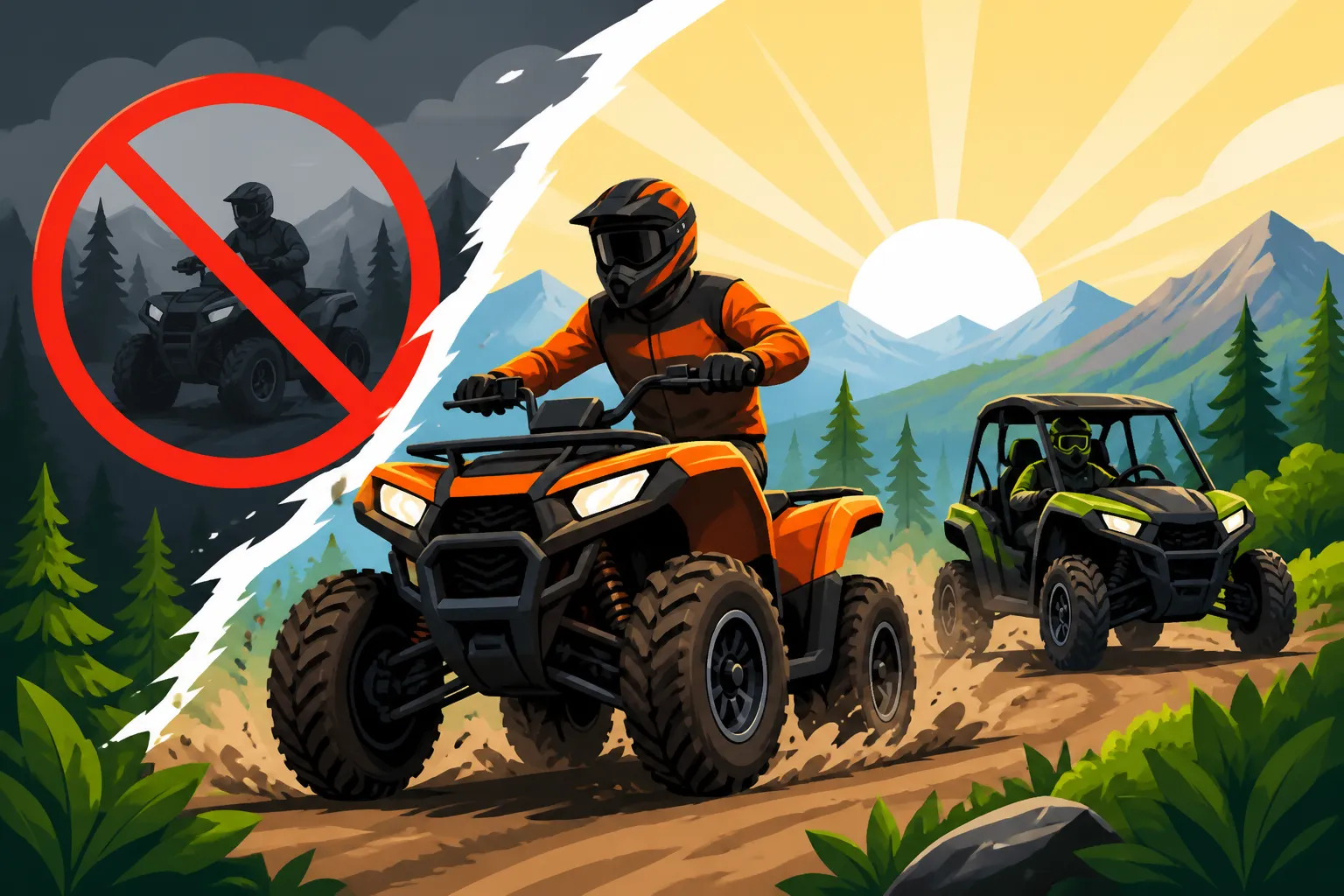
A fire-related riding ban has lifted, but that does not automatically mean every trail or road is open. In BC, the restriction may have covered a particular area, activity or machine type, while other closures remain. Before loading your ATV or UTV, confirm what changed, check the exact route and make sure your machine and paperwork are ready.
What a lifted ban does and does not mean
A wildfire-related prohibition can restrict operating off-road vehicles in a defined area when fire danger is high. When it is lifted, the restriction it covered is no longer in effect under that notice. It is not a province-wide announcement that all riding areas are open or that every other rule has ended.
The boundaries and terms matter. A notice may apply to a fire centre, a smaller area, certain roads, or specific kinds of activity. It may also be amended in stages. One route could reopen while another remains closed because of fire risk, active suppression work, damaged infrastructure or another access restriction.
A lifted fire-related ban also does not necessarily lift a separate motor vehicle closure. Roads and areas can have restrictions for reasons unrelated to wildfire risk, including wildlife protection, road damage, logging activity or land-management decisions. Check for those separately using BC Motor Vehicle Prohibitions Explained and BC Trail Closures After a Storm.
| What you find | What it means for your ride |
|---|---|
| The specific wildfire-related ORV prohibition has ended | That particular restriction may no longer prevent riding in its defined area. Confirm the notice and boundaries. |
| A different area is still under restriction | Do not ride there just because a nearby ban ended. |
| A road or trail has a separate closure | The end of a fire-related restriction does not cancel the separate closure. |
| A managed recreation site is open | The site may still have its own access, pass, equipment or sound rules. |
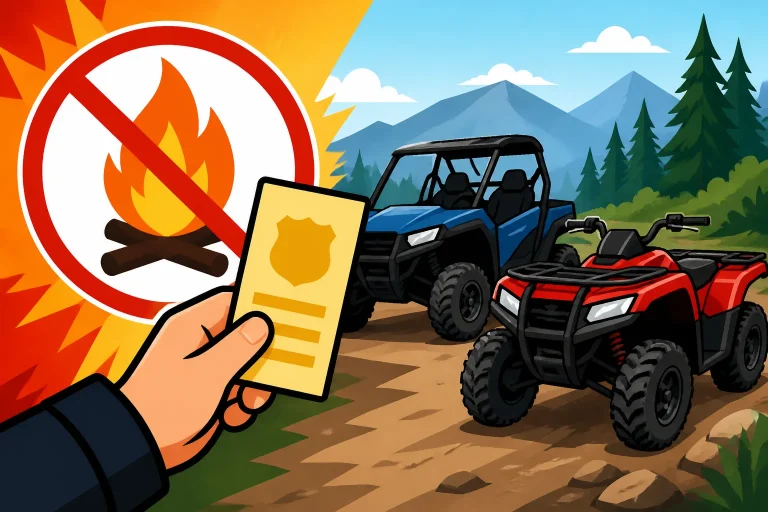
| A fire ban applies to campfires | This is distinct from an ORV prohibition. Follow the current fire rules even if riding is allowed. |
It helps to separate three questions: Is operating an ORV prohibited by the wildfire notice? Is the road or riding area otherwise open? Are fires or other activities restricted? A “yes” to riding access does not answer the other questions.
For a quick refresher on checking the restriction itself, see Checking a Fire Ban Before You Ride in BC. For area-specific information, BC Fire Centre Closures for ORVs explains why checking the location—not just the general status—is important.
Confirm that your exact route is open
Before setting out, check the official notice for the area where you intend to ride. Look for the affected boundaries, the activities covered and any conditions attached to the restriction. If the notice has changed, make sure you are viewing the current version rather than relying on an older screenshot, social-media post or word from another rider.
Then check the route from the staging area to the trails. A riding area can be accessible only by travelling along a road with its own restrictions. The trail itself may be open while a connector road is closed, or a route may pass through land where access needs permission. For routes on Crown land, review BC Crown Land Access Rules. Resource roads also have their own access and traffic considerations; see BC Forest Service Road Requirements before using one.
Check the route as a whole, including the return trip. A gate can be closed, road conditions can change, and restrictions can be added after you leave home. If the route crosses a managed recreation site, confirm its current rules and pass requirements. BC does not have a single province-wide trail pass, and a local pass or site-specific rule may still apply; BC Has No Province-Wide Trail Pass explains the distinction.
A useful pre-trip check includes:
- Identify the riding area and route. Use the actual trailhead and roads you plan to travel, not just a town name or broad region.
- Read the current wildfire notice. Confirm the prohibition has ended for that exact area and that your type of machine is not still restricted.
- Look for other closures. Check road signs and current closure information for the route, trails and staging area.
- Confirm land access. If the route crosses private or leased land, make sure you have permission where required.
- Check site-specific requirements. A managed trail system may have rules about passes, noise, equipment or where machines can travel.
- Recheck shortly before departure. Conditions and access notices can change, especially during periods of elevated fire risk.
If the notice is unclear, do not assume that the area has reopened simply because a ban lifted nearby. Verify with the authority responsible for the notice or choose a route whose status you can confirm. A short delay is better than reaching a closed gate or riding into a restricted area.
Prepare the machine before the first ride back
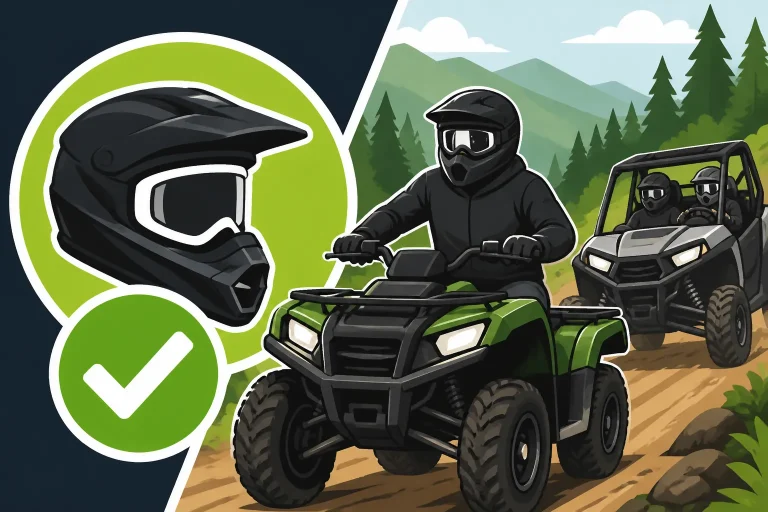
A machine that has been parked during a ban still needs a practical inspection. Pay particular attention to fire-prevention equipment and anything that could create a problem on dry vegetation or a roadside stop.
Check that the exhaust system has the required spark-arresting equipment for the area and that it is correctly installed and in usable condition. A spark arrestor is not a substitute for obeying a closure, but it may be a separate requirement on managed sites or under applicable rules. See BC Spark Arrestor Requirements and How a Spark Arrestor Screen Actually Works for more detail.
If the screen is damaged, missing or clogged, identify the correct replacement for your machine before riding. Confirm compatibility and compliance with the relevant requirement rather than choosing a part based only on a product description. If you are comparing replacement parts on Amazon, verify the manufacturer specifications and the rules for the place you plan to ride.
Also inspect the basics that are easy to overlook after a period of storage:
- Look for fuel leaks, cracked hoses, loose wiring and debris near the exhaust.
- Check that tires, brakes, steering and controls work as expected.
- Confirm that lights are functioning if your route or conditions require them.
- Remove dry grass, leaves and mud from around hot engine or exhaust components.
- Carry the registration and identification required for the ride.
- Pack recovery gear, water, basic tools and a communication device suited to the area.
Registration and insurance obligations do not disappear when a wildfire restriction is in force, and they do not change when it ends. If you are riding on Crown land or using a resource road, confirm the rules that apply to your machine and route. BC Registration Before Riding Crown Land and BC Forest Service Road Insurance cover two checks riders should make before heading out.
A machine that is legal to operate in one location may still be unsuitable for a different route. For example, a managed site may set equipment or noise conditions that are not the same as general access rules. Read posted signs and site information rather than assuming that passing one requirement means every requirement is satisfied.
Ride conservatively after access reopens
A reopening can draw many riders back to an area at once. Trails may be rough, dusty or damaged, and fire crews or other workers could still be active nearby. Start with a conservative pace, stay on established routes and watch for new signs, gates, equipment and changing conditions.
Avoid parking or stopping where a hot exhaust could contact dry grass or brush. Keep the machine clear of vegetation when you pull over, and do not leave it running unnecessarily. Avoid making a new track to get around a barrier or a damaged section: that can cause environmental harm and may take you into an area where access is not allowed.
If you encounter a closure sign, treat it as current unless you can confirm otherwise. Do not ride around a gate, follow another group through a restricted section or assume a closure is outdated because the general fire ban has lifted. Report a hazard or obstruction through the appropriate local channel when it is safe to do so.
Fire restrictions and campfire rules are separate questions. Riding may be allowed while campfires remain prohibited, or the conditions may work the other way around. Check the applicable fire rules before planning a stop or overnight stay, and use only the facilities and activities permitted at that location.
Before each ride during a high-risk period, repeat the route check. A lifted ban is a useful update, not a promise that conditions will stay the same. The safest plan is to confirm the notice, verify every part of the route, prepare the machine and have an alternate destination in case access changes.
Disclaimer
This article is for general informational purposes only and does not constitute professional advice. Laws, prices and regulations vary by location and change over time. Consult a qualified professional for guidance on your specific situation.