BC Resource Road Insurance of $200,000
BC Resource Road Insurance of $200,000
Riding an ATV or UTV on a British Columbia resource road comes with an insurance requirement that can be easy to confuse with registration or ordinary trail coverage. The key figure is $200,000 in third-party liability insurance. Here’s what that requirement means, how to check whether your policy qualifies, and what to sort out before you ride.
What the $200,000 requirement means
When you operate an off-road vehicle on a resource road in BC, you need third-party liability insurance with at least $200,000 in coverage. A Forest Service Road is a common example of a resource road, but road status can depend on who manages it and how it is designated. Check the requirements for your route rather than assuming that every gravel road has the same rules.
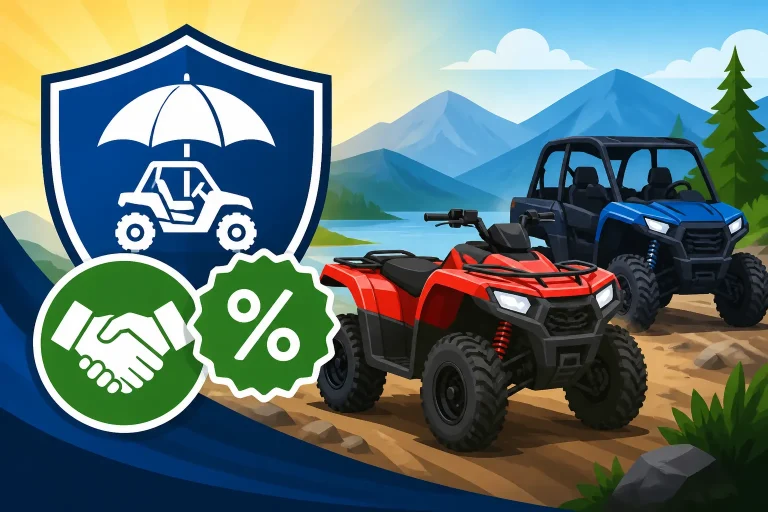
Third-party liability insurance can help cover claims if your operation of the machine causes injury to another person or damage to someone else’s property. It does not mean your own ATV or UTV is insured for damage, theft, or loss. Those protections, if available, are separate coverage decisions and depend on the policy.
The minimum is about liability coverage for operating on a resource road, not a requirement to buy every type of insurance offered for an off-road vehicle. A rider may choose broader protection, but collision or comprehensive coverage is not the same thing as the required liability coverage.
| Term | What it means for a resource-road ride |
|---|---|
| $200,000 minimum | The required minimum amount of third-party liability coverage for operating an off-road vehicle on a resource road |
| Third-party liability | Coverage for eligible claims involving injury to others or damage to their property |
| Registration | A separate legal requirement for many off-road vehicles; it is not insurance |
| Damage to your own machine | Not automatically covered by the liability minimum |
| Trail or site pass | A separate access requirement where a managed riding area requires one |
This is a minimum, not a recommendation that $200,000 will necessarily cover every possible claim. Liability claims can involve injuries, property damage, legal expenses, or more than one person. The practical question is both whether the policy meets the legal minimum and whether you are comfortable with the amount of protection it provides.
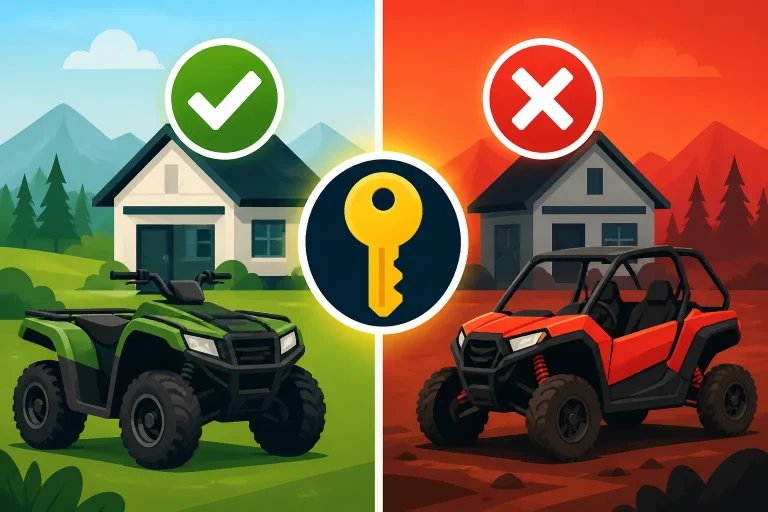
Do not treat a registration certificate, plate, trail pass, or proof of ownership as evidence of insurance. Each serves a different purpose. For a broader overview of the rules that apply on resource roads, see BC Forest Service Road Requirements. For the general insurance rules for off-road vehicles, see BC ATV Insurance Requirements.
Which roads trigger the rule
The insurance requirement applies to resource roads, including Forest Service Roads. These roads can look like ordinary gravel roads, but they may be built or used for forestry, mining, utility work, or other resource activity. They can also be open to public travel without being regular public highways.
That difference matters. A road’s surface does not tell you its legal status: a paved or gravel road might be a resource road, while another rough road could be privately managed or subject to different access conditions. Signs, maps, road-management information, and local authorities can help establish what kind of road you are dealing with. When the status is unclear, check before riding.
The $200,000 requirement is not a blanket statement that every off-road ride anywhere in BC requires the same coverage. Rules may differ depending on whether you are on a resource road, other Crown land, private land, or a highway. Other requirements can apply in each setting, including registration, helmet use, permits, insurance, permission to enter, and posted restrictions.
Keep these distinctions in mind:
- A Forest Service Road: Treat it as a resource road for planning purposes and make sure the vehicle has the required liability coverage before using it.
- Other Crown land: Do not assume the resource-road insurance rule automatically applies in the same way to every location. Check the rules for the specific route and land.
- Private land: Permission from the landowner may be required, and insurance obligations can differ from those on a resource road. Permission does not itself prove that you have insurance.
- A highway: An off-road vehicle is subject to separate highway-use rules. A resource-road policy does not automatically make an ATV or UTV legal to use on a highway.
A route can include several kinds of roads. For example, you might travel from a staging area along a resource road, then turn onto a managed trail. Check the rules for the road portions as well as any trail-access requirements. A trail pass is not a substitute for insurance, and having insurance does not give you permission to use a closed road.
The relationship between the vehicle and the road is important too. A machine may be used for work on one day and recreation on another, but its purpose does not remove the resource-road insurance requirement when it is operated there. Do not assume a farm, work, or utility use makes an ATV exempt. For registration questions, BC Registration Covers Work and Recreation explains why intended use does not necessarily settle the registration issue.
What counts as qualifying insurance
The important point is not just having a document with the word “insurance” on it. You need to confirm that the coverage applies to the vehicle, the operator, and the activity you are planning, and that the third-party liability limit meets the minimum requirement.
A policy for a car or truck should not be assumed to insure an ATV or side-by-side just because the vehicle is owned by the same person. Likewise, insurance for one off-road machine does not necessarily extend to another. The policy wording and any endorsements determine what is covered.
Before relying on a policy, confirm these details with the insurer or broker:
- The machine is covered. Give the insurer accurate details about the ATV or UTV, including its type and identifying information.
- The planned use is covered. Explain that you intend to operate it on a BC resource road, such as a Forest Service Road. Do not describe the use only as “trail riding” if resource-road travel is part of the trip.
- The liability limit meets the requirement. Ask the insurer to confirm that third-party liability coverage is at least $200,000 for the vehicle and use in question.
- The operator is covered. Check whether the policy limits who may operate the machine, and whether every planned rider meets those conditions.
- The location is covered. Ask whether there are geographic limits or exclusions that affect use in BC.
- You can show proof. Confirm what document proves coverage and whether it should be carried in paper or electronic form.
- The coverage dates are valid. Check that the policy is active for the full trip, including the dates you expect to be on the road.
Ask direct questions. “Is my machine insured?” may not clarify whether the policy covers liability on a resource road. A more useful question is: “Does this policy provide at least $200,000 in third-party liability coverage for this specific ATV or UTV when it is operated on a BC resource road?”
If you already have a policy, do not rely on a remembered conversation or an old insurance card. Coverage can change when the machine, operator, use, or policy term changes. Ask for confirmation from the insurer or broker and keep a copy of the current proof of insurance with the vehicle documents.
For an explanation of the liability side of the requirement, see What Liability Coverage Pays for on a Resource Road. To understand how premiums may vary, BC ATV Insurance Cost Per Year offers context about cost factors. A named provider’s current price, terms, or coverage options should be confirmed directly with that provider; insurance costs and policy conditions are not universal.
Visitors, registration, and proof on the ride
The resource-road insurance rule matters to BC residents and visitors alike. If you are bringing a machine from another province or country, do not assume that a home registration or insurance card automatically meets BC requirements. Registration and insurance are separate, and a policy that is valid at home may have limits on where or how the machine can be used elsewhere.
Contact your insurer before travelling and describe the BC use clearly. Ask whether the policy applies to your machine while it is operated on a BC resource road and whether the liability limit meets the minimum. If you are coming from a place where off-road vehicles are not registered in the same way, ask what ownership or registration documents you should carry. See BC Rules for a Visiting Alberta Rider or BC Rules for a Visiting Washington Rider for visitor-specific riding considerations.
Plan to carry proof you can access without relying on a strong phone signal. Resource roads may pass through areas with limited or no cell service. Save an electronic copy for offline access, and consider carrying a paper copy if the insurer provides one. Make sure the document is current and clearly identifies the insured machine or otherwise shows that your vehicle is included.
Insurance proof is only one part of being prepared. You may also need registration documents and photo identification, and you must follow any road-specific conditions. For example, a work truck may be using the same road, or a posted restriction may prohibit access. Radio procedures and safe interaction with industrial traffic are also important on some routes; BC Resource Road Radio Practice explains the practical communication issue.
Before leaving, make sure the people riding with you know where the documents are and who to contact if there is an incident. Keep the insurer’s contact information available, but do not assume a phone call can replace carrying proof when service is unavailable.
A practical pre-ride checklist
Use this checklist before taking an ATV or UTV onto a resource road:
- Identify the route. Confirm whether the road is a resource road or Forest Service Road, and look for closures, posted restrictions, and active work.
- Confirm the coverage. Ask the insurer or broker to verify the required third-party liability limit for the specific machine and use.
- Check operators. Make sure every person who may ride is permitted under the policy.
- Carry proof. Bring current insurance evidence in a format you can access without cell service.
- Sort out registration separately. Confirm that the machine is registered if required. A plate or registration certificate does not replace liability insurance.
- Check other obligations. Look into helmets, permits, road conditions, trail passes, and access permission as applicable.
- Avoid last-minute assumptions. If an insurer cannot confirm the policy applies, do not treat silence or an old document as approval.
If you discover that the coverage does not meet the requirement, arrange suitable coverage before riding the resource road. Do not assume you can resolve it at the trailhead, or that a short trip, low speed, or work-related purpose makes the requirement irrelevant.
If you are unsure whether a road qualifies, check with the road manager or a knowledgeable local authority before setting out. If you are unsure whether the policy qualifies, ask the insurer or broker for a clear answer about the $200,000 liability minimum and the intended BC resource-road use. These are separate questions, and one answer does not resolve the other.
Accidents can happen even on familiar roads. Liability coverage is there for potential claims involving other people or their property; it is not a substitute for careful riding, safe speed, good visibility, or yielding to industrial traffic. Resource roads can have loaded trucks, changing conditions, loose surfaces, and limited room to pass. Carrying the required insurance helps meet one obligation, but it does not make every road safe or every use permitted.
Frequently Asked Questions
Is $200,000 the minimum liability coverage for an ATV on a BC Forest Service Road?
Yes. An off-road vehicle operated on a resource road, including a Forest Service Road, needs at least $200,000 in third-party liability coverage. Confirm that the policy applies to your specific machine and planned use.
Does the $200,000 coverage pay to repair my ATV or UTV?
Not by itself. Third-party liability coverage is for eligible claims involving injury to others or damage to their property. Coverage for damage to your own machine is separate and depends on the policy.
Does registration count as insurance?
No. Registration and insurance are separate requirements. A registration certificate or plate does not prove that the machine has the required liability coverage.
Does a visitor’s home insurance automatically qualify?
Not necessarily. Ask the insurer whether the policy covers the machine while it is operated on a BC resource road and whether the liability limit meets the requirement. Carry current proof of coverage.
Do I need this coverage for every trail in BC?
The $200,000 requirement discussed here applies to operation on resource roads. Other areas and types of roads may have different rules or additional requirements. Check the conditions for the specific route before riding.
Disclaimer
This article is for general informational purposes only and does not constitute professional advice. Laws, prices and regulations vary by location and change over time. Consult a qualified professional for guidance on your specific situation.