BC Resource Road Radio Practice
Riding an ATV or UTV on British Columbia’s vast network of resource roads offers unparalleled access to incredible backcountry, but it also comes with significant, often unseen, dangers. The biggest fear for many riders isn't getting stuck or breaking down, it's the sudden, unexpected encounter with an industrial logging truck or heavy equipment barreling down a narrow, winding road. This guide will walk you through the essential practice of resource road radio communication, ensuring you understand why it’s critical and how to implement it to keep yourself and others safe on BC's active industrial roads.
Why Resource Road Radio Practice is Crucial for BC ATV/UTV Riders
Picture this: you're enjoying a gorgeous day out on your quad, miles up a logging road in the Kootenays, rounding a blind corner. Suddenly, there's a loaded logging truck, easily weighing 100,000 pounds, heading straight for you, taking up nearly the entire road. This isn't a rare occurrence; it's a daily reality on many of BC's resource roads. These aren't your typical gravel roads; they are actively used by industrial traffic that operates on tight schedules and relies heavily on radio communication for safety. For ATV and UTV riders, understanding and participating in this radio practice isn't just good manners, it's a matter of survival. Ignoring it puts you, your passengers, and the hardworking industrial operators at extreme risk. Remember, the industrial traffic owns these roads, and they are expecting you to be using a radio.
The Silent Dangers of Industrial Traffic
The biggest challenge with industrial traffic isn't that they are intentionally dangerous; it's their sheer size, speed, and momentum. A fully loaded logging truck or a grader can't stop on a dime, especially on loose gravel or in wet conditions. They often travel at speeds that seem excessive for the road conditions because they are on a schedule, and they are usually communicating with each other about their movements. When you, on your nimble ATV or robust side-by-side (perhaps one outfitted with heavy-duty protection from a brand like SuperATV), are zipping around a corner without a radio, you are essentially invisible to them until it's too late. The sound of your machine might be drowned out by their own engine noise, and by the time you see each other, evasive action might be impossible for either party. This is why [BC Riders Meeting a Logging Truck] is a scenario you absolutely want to avoid unprepared.
Furthermore, these roads are often maintained by the very companies that use them, meaning they might be graded and watered for high-speed travel, which can be deceiving for recreational riders. You might think the road looks clear and safe, but around the next bend could be a massive piece of equipment or a convoy of trucks. The risks aren't just collisions, either. Even a near-miss can cause serious distress, and the industrial drivers are often as startled and concerned as you are. They are professionals trying to do a job safely, and an unexpected recreational vehicle throws a massive wrench into their finely tuned safety protocols.
What "Calling Kilometres" Really Means
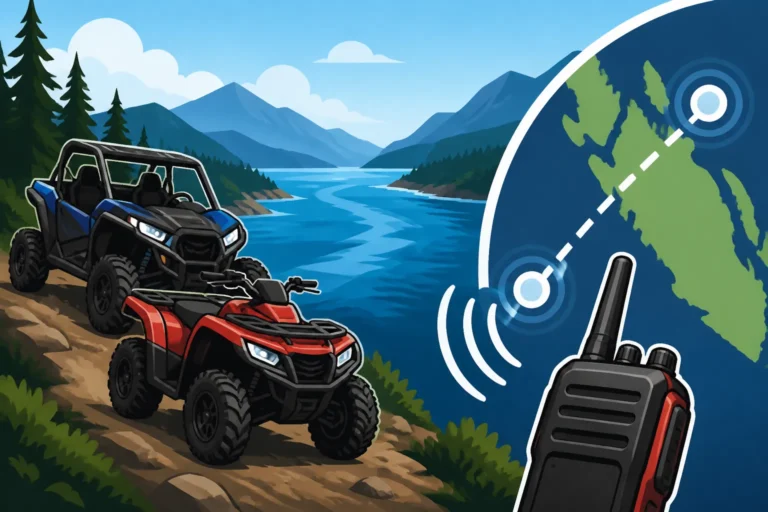
"Calling kilometres" is the bedrock of resource road radio practice. It's how everyone communicates their location and direction of travel on a given radio channel, providing vital awareness to others on the road. Essentially, you announce your kilometre mark and direction (e.g., "Truck 1, clear at 5 km, heading up") as you pass specific markers. These markers are usually small, numbered posts placed at regular intervals, often every kilometre, along the road.
The practice goes like this: as you approach a kilometre marker, you'll pick up your radio and say something like, "ATV at 10 kilometre, heading up on Main FSR." "Up" typically means heading towards higher kilometre markers or further into the bush, while "down" means heading towards lower markers or out to the main highway. This gives anyone else on that channel a heads-up about your presence and where you're going. It's like a verbal beacon, letting a logging truck driver know to expect a recreational rider around the 8 km mark, so they can slow down or prepare to pull over safely. This simple act of communication drastically reduces the chance of a dangerous encounter and is a fundamental part of [BC Forest Service Road Radio Rules]. Without it, you are effectively riding blind, hoping for the best, which is a gamble no one should take on these roads.
Understanding Resource Road Radio Channels and Equipment
Navigating resource roads safely requires the right tools and knowledge. It's not enough to just have a radio; you need to understand which type of radio is appropriate, how to operate it, and the specific etiquette that keeps everyone safe. Many riders assume their FRS/GMRS walkie-talkie is sufficient, but in many cases, especially on active industrial routes, a VHF radio is the standard. This isn't just about signal strength; it's about adhering to the system that the industrial users rely on daily.
Types of Radios: VHF vs. GMRS
When you’re preparing for a trip on BC’s resource roads, one of the first questions is always about radios. There's a common misconception that any two-way radio will do, but that's not quite right.
GMRS (General Mobile Radio Service) radios, like many consumer-grade walkie-talkies, operate on specific channels and are good for short-range communication among groups. They are easy to use and don't require a licence for recreational use in Canada (though some high-power GMRS radios might have different rules in other jurisdictions). For riding with friends in a small group on quieter trails or private land, a good set of GMRS radios from a brand like SuperATV (who might offer integrated communication systems for UTVs) can be fantastic. However, their range is limited, and they are generally not what industrial users operate on busy logging or mining roads.
VHF (Very High Frequency) radios are the workhorses of resource road communication. These are much more powerful, have a significantly greater range, and are designed for the robust communication needs of industrial operations. They require an Industry Canada (now Innovation, Science and Economic Development Canada) licence to transmit, even if you are just using it to listen. The licence is typically for the radio equipment itself, not per person, and involves a small fee. Once licensed, you gain access to the specific industrial channels used on resource roads. Each major resource road or network often has its own designated VHF channel, which is usually posted on signs at the start of the road. This is absolutely critical: you must be on the correct channel for the road you are on to hear and be heard by industrial traffic. Without a VHF radio tuned to the right channel, you might as well be riding with earplugs in and a blindfold on, hoping for the best. For longer trips or routes that include [BC Forest Service Road Requirements], a VHF radio is non-negotiable.
Essential Radio Etiquette and Lingo
Having the right radio is only half the battle; knowing how to use it properly is equally important. Resource road radio etiquette is designed for clarity and safety, often following a specific pattern:
- Listen First: Before you transmit, always listen for a moment to ensure the channel is clear and you're not interrupting an ongoing conversation or a critical call.
- Identify Yourself: Start your transmission by stating who you are (e.g., "ATV," "Quad 1," "Side-by-side," or even just "Recreational Traffic").
- State Your Location: Crucially, announce your kilometre mark. Be as precise as possible (e.g., "at 12 kilometre," "approaching 8 kilometre").
- State Your Direction: Indicate whether you are going "up" (deeper into the road, towards higher kilometre markers) or "down" (out towards the main road, towards lower kilometre markers).
- State Your Intent (Optional but Recommended): Briefly mention what you're doing, especially if it affects traffic flow (e.g., "at 12 km, heading up, just pausing for a moment," or "at 5 km, heading down, one recreational vehicle").
Example Call: "ATV, clear at 15 kilometre, heading up on Main FSR." Then, as you move, you'd repeat this at regular intervals, often at every kilometre marker or every few kilometres, especially before blind corners or narrow sections.
Common Lingo You'll Hear:
- "Clear": Means you've passed the kilometre marker and are now leaving it behind.
- "Approaching": Means you are about to reach the specified kilometre marker.
- "Calling": You're indicating your position, often used when first entering a road.
- "Loaded": Refers to a logging truck carrying logs. These are heavier, slower to stop, and usually take precedence.
- "Empty": Refers to a logging truck returning for another load. These are lighter and can often move faster.
- "Grader" / "Water Truck": Other common industrial equipment. Always give them wide berth.
- "Hot" / "Cold" Road: A "hot" road is actively being used by industrial traffic. A "cold" road is currently not active, though you should still remain cautious.
It's also essential to keep your transmissions brief and clear. Don't chat on an industrial channel; it's for safety communications only. If you need to communicate with your riding partners, use a separate FRS/GMRS channel or an intercom system. Learning to [Yielding to Loaded Trucks] safely becomes much easier when you're communicating effectively.
Practical Steps for Safe Resource Road Riding with a Radio
So, you've got your VHF radio, you understand the lingo, and you're ready to hit the resource roads. Fantastic! But safe riding involves more than just flicking a switch. It requires planning, constant vigilance, and an understanding of how to react when you encounter industrial traffic. These roads are dynamic environments, and your safety depends on continuous awareness and good decision-making.
Before You Go: Planning and Preparation
The preparation for riding BC's resource roads starts long before your tires hit the gravel. This is where you set yourself up for success and safety.
- Research the Area: Identify the specific resource roads you plan to ride. Not all roads are open to recreational use, and some have seasonal closures or active hauling that makes them particularly dangerous. Check local forest district offices, online forums, or local ATV clubs for information on current conditions and radio channels. Many areas will have signage indicating the primary radio channel.
- Get a Map: Always carry a detailed map of the area. Even with a GPS, a paper map can be a lifesaver, especially in areas with no cell service. Identify kilometre markers, potential pull-outs, and alternative routes.
- Check Your Radio Equipment:
- VHF Radio: Ensure your radio is fully charged, properly mounted (SuperATV might have some great mounting solutions for UTVs and ATVs), and programmed with the common industrial channels for BC. Double-check that your antenna is securely attached and in good condition. Consider having a spare battery or a charging solution.
- Licence: Make sure your Industry Canada radio licence is current.
- FRS/GMRS (for group communication): If riding with a group, ensure everyone has working radios for internal communication. This frees up the industrial channel for critical safety calls.
- Tell Someone Your Plan: Always let someone know where you are going, your planned route, and when you expect to return. This is crucial for any backcountry travel.
- Pack for the Unexpected: Resource roads can be remote. Carry a first-aid kit, emergency supplies, extra fuel, tools for minor repairs, and warm clothing. Cell service is often non-existent, so consider a satellite messenger or an emergency locator beacon.
- Understand [BC Rules for Riding a Forest Service Road]: Familiarize yourself with all regulations pertaining to FSRs, including speed limits, right-of-way, and environmental considerations. Being informed means being a responsible rider.
On the Road: Real-Time Communication Strategies
Once you're actually riding, your radio becomes your best friend. It demands constant attention and consistent use.
- Tune to the Correct Channel: As soon as you enter a resource road, tune your VHF radio to the designated channel. These are often posted on signs at the start of the road (e.g., "Main FSR Channel 15"). If no channel is posted, listen for a minute; you might hear traffic indicating the active channel. As a last resort, scan common BC resource road channels.
- Make Your Entry Call: When you first enter the active resource road, make your initial call. For example: "Recreational traffic, entering Main FSR at 0 kilometre, heading up."
- Call Kilometres Consistently: This is the most important part. As you pass each kilometre marker, or at least every few, make a call. Before every blind corner or crest, make an "approaching" call. For example: "ATV, approaching 7 kilometre, heading up on Main FSR." Once you pass it: "ATV, clear at 7 kilometre, heading up on Main FSR."
- Listen Actively: Keep your radio volume up and pay attention to every transmission. Don't get distracted. If you hear an industrial vehicle approaching your location, immediately start looking for a safe pull-out.
- Identify Safe Pull-Outs: Constantly scan ahead for wider sections of the road, old landings, or clearings where you can safely pull your machine completely off the road. When you hear an industrial vehicle approaching, move to one of these spots and make an "off the road" call: "ATV, clear at 12 kilometre, off road, waiting for logging truck."
- Be Prepared to Stop and Wait: Industrial traffic has the right-of-way. Be courteous and patient. Sometimes you might need to wait for a convoy of trucks to pass. This is where [BC Riders Must Carry Photo ID] and [BC Riders Must Carry the Certificate] become especially important, in case you need to interact with enforcement or industrial personnel.
When a Radio Isn't Enough: Other Safety Measures
While a radio is paramount, it's not a magic bullet. There are other crucial safety measures that complement radio use and ensure a comprehensive approach to resource road safety.
- Drive Defensively: Always assume there's something around the next corner. Maintain a safe speed, especially on blind turns and hills. Be prepared to stop or take evasive action at any moment. Your UTV, perhaps equipped with a SuperATV windshield or roof, gives you some protection, but vigilance is still key.
- Increase Your Visibility:
- Headlights On: Always have your headlights on, even during the day. This makes you more visible to oncoming traffic.
- Bright Clothing: Wear highly visible clothing, like fluorescent vests or jackets.
- Flags: Consider mounting a bright, tall flag on your ATV or UTV, especially if you're riding in dusty conditions or over undulating terrain where your machine might be hidden by dips and rises.
- Watch for Signage: Pay attention to all road signs. These might indicate active hauling, specific speed limits, or temporary closures. [Active Hauling and Closed Roads] are a serious concern.
- Travel in Groups: There's safety in numbers. If you're riding with others, ensure everyone understands radio practice and travels within sight of each other. This also means more eyes and ears to spot potential hazards.
- Know the Rules: Understanding the [BC Forest Service Road Requirements] and other relevant regulations is essential for legal and safe riding. Being aware of [BC Crown Land Triggers the Registration Rule] and having your machine properly registered and insured is part of being a responsible rider.
- Emergency Preparedness: Beyond a first-aid kit, think about what you'd do if you had a major breakdown or injury in a remote area without cell service. This is where satellite communicators like an InReach or Spot device become invaluable.
Riding BC’s resource roads offers an incredible experience, but it comes with the serious responsibility of understanding and practicing industrial communication protocols. Your life, and the lives of others, depend on it.
| Action | Purpose | Equipment Needed | Frequency of Use |
|---|---|---|---|
| Listen to Channel | Understand current traffic, find active channel | VHF Radio | Continuously while on industrial road |
| Make Entry Call | Announce your presence on the road | VHF Radio | Once, upon entering the resource road |
| Call Kilometres | Alert others to your precise location and direction | VHF Radio | Every 1-2 km, or before blind corners/crests |
| Call "Off Road" | Inform industrial traffic you are safely pulled off | VHF Radio | When pulling over for oncoming traffic |
| Drive Defensively | Anticipate hazards, react safely | ATV/UTV, Rider Skills | Continuously |
| Ensure Visibility | Make yourself easily seen by others | Headlights, Bright Gear | Continuously while riding |
Disclaimer
This article is for general informational purposes only and does not constitute professional advice. Laws, prices and regulations vary by location and change over time. Consult a qualified professional for guidance on your specific situation.