BC Riders Meeting a Logging Truck
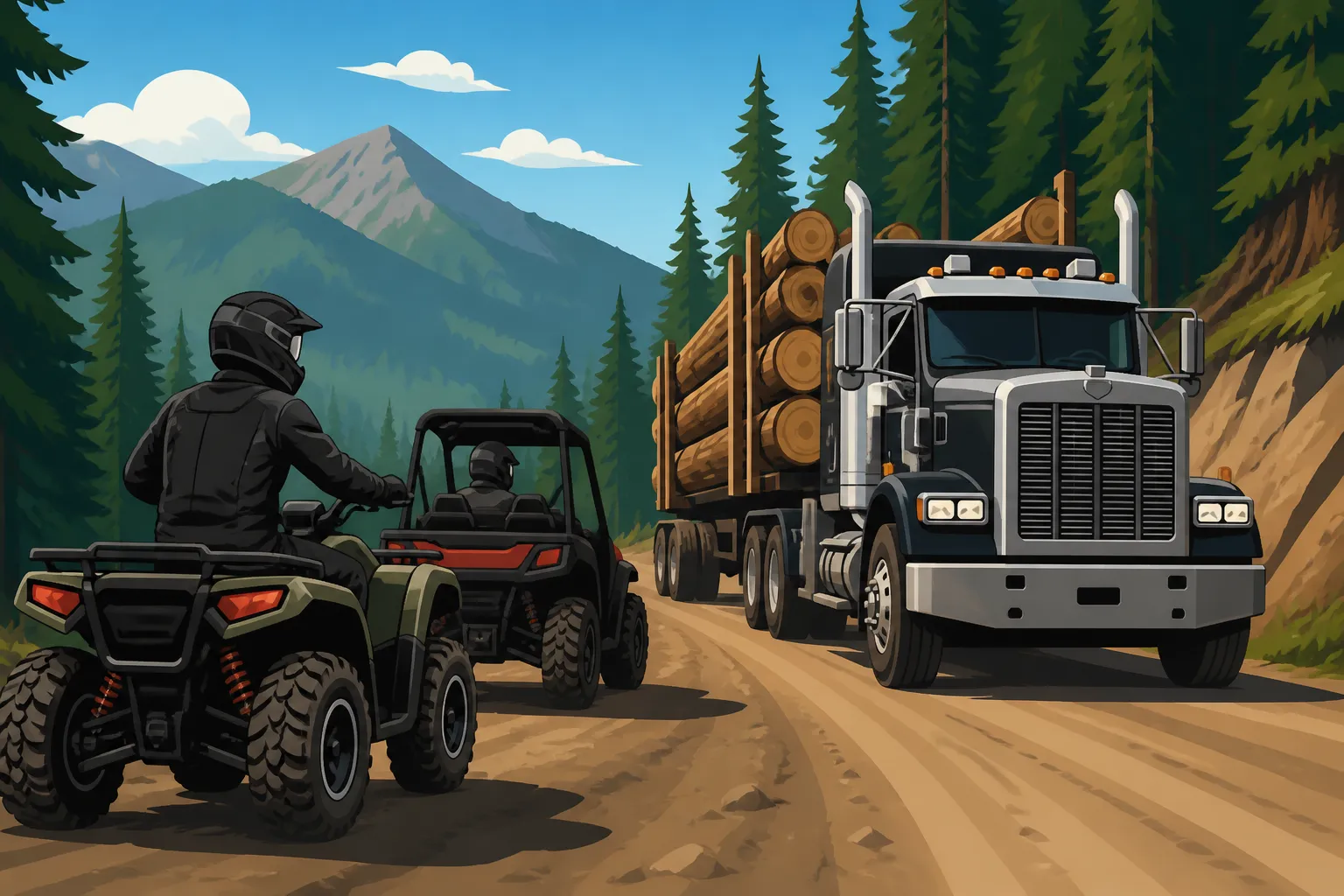
There's a unique thrill to exploring British Columbia's vast backcountry on your ATV or UTV, but that freedom often brings you onto roads shared with active industry. One of the most common and potentially intimidating encounters riders face is meeting a fully loaded logging truck on a narrow, winding resource road. This guide is here to walk you through the essential etiquette, safety protocols, and practical steps you need to navigate these situations confidently and keep everyone safe.
The Reality of Sharing BC's Resource Roads
British Columbia is a province built on its natural resources, and the network of unpaved, often gravel, roads that crisscross its vast landscapes are the arteries of its industrial heart. For ATV and UTV enthusiasts, these resource roads are often the gateway to incredible riding areas, connecting trails, and offering scenic routes through breathtaking wilderness. However, it's crucial to remember that while they offer recreational opportunities, their primary purpose is commercial.
Understanding What "Resource Road" Actually Means
When we talk about "resource roads" in BC, we're referring to roads primarily used for forestry, mining, and other resource extraction activities. These aren't your typical paved highways or even quiet country lanes. They are working roads, often maintained by private companies or the government to facilitate heavy industrial traffic. Many popular ATV trails either branch off these roads or incorporate sections of them, meaning you're very likely to share these routes with large, powerful vehicles. Understanding this fundamental difference is the first step to safe riding. You might be out for fun, but the folks in those logging trucks are at work, often on tight schedules with immense loads. The dynamic is less about shared recreation and more about you, as the recreational user, operating in a commercial environment. [BC Rules for Riding a Forest Service Road] is a good read if you want to brush up on specific regulations for these kinds of routes.
Why Logging Trucks Have the Right-of-Way
This might feel counterintuitive to some, especially if you're used to equal-footing rules on public roads, but on BC's resource roads, logging trucks absolutely, unequivocally, have the right-of-way. There are several very practical and critical reasons for this. Firstly, consider the sheer size and weight of a fully loaded logging truck. These behemoths can weigh tens of thousands of pounds, often more, and are designed to haul massive timber. Stopping one of these giants, especially on a downhill grade or around a blind corner, is not like hitting the brakes in a passenger car, or even your robust side-by-side. Their braking distances are immense, and sudden maneuvers can be incredibly dangerous for the driver and the stability of their load.
Secondly, these drivers are professionals, operating on routes they know intimately, often making multiple trips a day. They are carrying valuable cargo on schedules that impact their livelihood. Any delay or incident can have significant financial repercussions. As recreational riders, we are guests on their workplace. Expecting them to yield to you not only creates a hazardous situation but also disregards the essential nature of their work. Your responsibility is to anticipate their presence, yield safely, and make their job easier and safer, not harder. This isn't just a courtesy; it's a fundamental safety principle ingrained in resource road culture. [BC Resource Road Radio Practice] often stresses the importance of understanding the flow of industrial traffic.
Essential Safety Protocols When You Encounter Industrial Traffic
Navigating resource roads requires a different mindset than hitting your favourite dedicated ATV trail. It's about being constantly aware, proactive, and equipped for the unique challenges these industrial arteries present. Your safety, and that of the truck drivers, hinges on how well you prepare and react.
The Critical Role of Radio Communication
One of the single most effective tools for avoiding dangerous encounters on BC resource roads is a VHF radio. Many active resource roads operate on a "radio call-out" system, where drivers announce their location and direction as they travel, typically by calling out kilometre markers. This practice, often referred to as [Calling Kilometres on a Channel], allows industrial traffic to be aware of each other, providing crucial minutes of warning before meeting. As an ATV or UTV rider, having a radio tuned to the correct channel (which is usually posted at the start of the resource road or can be found on local maps or through clubs) can be a lifesaver.
Don't have your own VHF radio? That's okay! Many small towns near active logging areas have places where you can [Renting a Radio in a Small Town] for your trip. Even if you don't transmit, simply listening allows you to hear if a truck is approaching from around the next bend or crest. It gives you invaluable time to find a safe spot to pull over. Remember, industrial radios are often powerful, so you might hear calls from trucks further away than you'd expect. Investing in a good communications setup, perhaps even exploring robust intercom systems from brands like SuperATV that integrate with two-way radios, can significantly enhance your group's safety and awareness.
Visual Cues and Defensive Riding
Even with a radio, your eyes and defensive riding skills are paramount. Resource roads are often narrow, winding, and present numerous blind spots. Approaching blind corners, crests of hills, or sections with limited visibility requires extreme caution. Always assume there's a logging truck coming, even if you haven't heard a radio call. Slow down significantly before these areas. Ride in a controlled manner, staying as far to the right side of the road as safely possible, especially on blind turns. You should be able to stop your machine within the distance you can see clearly ahead of you. This is a crucial concept for avoiding head-on collisions.
Furthermore, make sure your machine is visible. While you might be focused on the trail, remember you're sharing space with much larger vehicles. Your headlights and taillights should always be on, even during the day, to enhance your visibility. A clean ORV number plate is also essential, not just for legal reasons, but so any approaching traffic control can quickly identify you if needed. [Keeping Your ORV Plate Clean Enough to Read] is more than just good practice; it's a safety measure. Consider adding flags or additional lighting, especially if your UTV is lower profile or easily obscured. [BC Lighting and Seat Belt Requirements] exist for good reason, and sometimes going above and beyond those minimums can truly pay off.
What to Do When a Logging Truck Appears
Despite all your preparations, the moment a logging truck looms into view can still be startling. The key is to react quickly, calmly, and predictably. Panic can lead to unsafe decisions, so having a clear plan in mind is vital.
Immediate Actions for ATV/UTV Riders
The instant you spot or hear a logging truck approaching, your priority shifts to getting yourself and your machine out of its path safely. Here’s a step-by-step breakdown of what to do:
- Slow Down Immediately: Reduce your speed to a crawl as soon as you detect the truck. This gives you more time to react and find a safe spot.
- Pull Over: Find the widest, safest spot on the right-hand side of the road. Your goal is to get your ATV or UTV completely off the main travel surface if possible. This might mean pulling into a small ditch, a wider shoulder, or even backing up to a previous pull-out if one is nearby. Don't just hug the edge; try to create as much clear space for the truck as you can. A sturdy winch, like those available from SuperATV, can be a real lifesaver if you need to pull yourself slightly off the road and there's a steep shoulder or tricky terrain.
- Turn on Your Headlights/Taillights: Even if they're already on, quickly double-check. This makes you even more visible to the truck driver, especially if the dust or shadows are an issue.
- Signal Your Presence (If Safe): If you are stopped and the truck is still some distance away, a subtle wave or flash of your lights can sometimes help confirm you've seen them and are yielding. However, do not get out of your vehicle and stand in the road.
- Yield: This is the golden rule. The truck has the right-of-way. Wait patiently until the truck has passed completely and the dust has settled before re-entering the road. This also applies to other industrial traffic like graders, chip trucks, or heavy equipment. Always assume they need the entire road, and they certainly cannot stop on a dime. Remember [Yielding to Loaded Trucks] is not just polite, it's a critical safety measure.
The Importance of Remaining Calm and Predictable
When you see that massive truck heading your way, it's natural for adrenaline to spike. However, it's essential to stay calm and make predictable movements. A truck driver's job is already incredibly demanding, with constant vigilance required. Your erratic or sudden movements can create confusion and make their job even harder, potentially leading to a dangerous situation. Don't swerve unexpectedly, don't try to outrun them, and certainly don't play chicken.
Once you've safely pulled over, stay put. Don't try to wave them through with grand gestures, and don't assume they see you perfectly. Maintain a clear, visible, and stationary position. Often, the driver will acknowledge your presence with a slight dip of their high beams or a horn toot as they pass, but don't rely on this. Your role is to be a passive, predictable element in their path, allowing them to proceed safely with their heavy load. A moment of patience on your part can prevent a lifetime of regret for everyone involved. [BC Resource Roads and Industrial Traffic] are places where predictability is paramount.
Beyond the Encounter: Prevention and Preparedness
While knowing how to react when you see a logging truck is critical, preventing dangerous close calls through thoughtful planning and preparation is even better. Being proactive can make your backcountry adventures safer and more enjoyable, allowing you to focus on the ride itself rather than constant anxiety.
Pre-Ride Planning and Research
Before you even load your machine onto the trailer, make sure you've done your homework. Resource roads are dynamic environments. Active hauling schedules, road closures due to logging operations, or even maintenance work can change daily. Check for information from local forestry companies, resource road user groups, or even local clubs like the Quad Squad in the South Cariboo or the Okanagan Trail Riders. Many of these groups post updates on road conditions and industrial activity on their websites or social media.
Use maps to identify potential trouble spots on your route – narrow sections, steep grades, blind corners, or bridges that might present challenges. Having a good GPS unit or a reliable mapping app can help you pinpoint your location and make accurate call-outs if you are using a radio. Knowing the general direction of traffic flow (e.g., loaded trucks typically go downhill, empty ones uphill) can also help you anticipate encounters. Remember, [BC Forest Service Road Rules for ORVs] also apply here, and being informed helps you follow them.
Equipment That Enhances Safety
Beyond the mandatory registration and insurance, there's a range of equipment that can significantly boost your safety on resource roads. We've already talked about VHF radios, but let's consider other items.
- Enhanced Lighting: While your stock lights might be fine for the trail, consider adding auxiliary LED light bars, especially if you anticipate riding in dust or low-light conditions. These improve your visibility to others and help you see obstacles sooner.
- Reflective Gear: Wear brightly colored clothing or vests, especially if you're riding in a group. Adding reflective tape to your helmet or machine can also make a big difference, particularly if you have to stop on the side of the road.
- Winch: A reliable winch is not just for getting unstuck on the trail. If you need to pull your UTV slightly off a resource road onto a soft shoulder or up a small embankment to get out of a truck's way, a winch can be invaluable. SuperATV, for example, offers various robust winches and mounting options that can be incredibly useful in these situations.
- Mirrors: Ensure your ATV or UTV has good, clean, properly adjusted mirrors. While you should be looking forward, mirrors help you quickly check behind you for dust clouds or approaching traffic. Some of SuperATV's aftermarket mirrors offer enhanced visibility and durability, which is a definite plus on rough resource roads.
- Spare Tire/Repair Kit: Being stranded on a resource road is no joke. A flat tire can turn a quick pull-over into a major ordeal. Always carry a spare tire (if applicable to your machine), a tire repair kit, and tools.
- First Aid Kit & Emergency Supplies: Always have a well-stocked first aid kit, water, food, and emergency communication like a satellite messenger or phone with a charged external battery, as cell service is often non-existent in the backcountry.
By taking these steps, you're not just hoping for the best; you're actively preparing for the realities of sharing BC's beautiful, but industrially active, resource roads. Safe riding means smart riding, and that includes respecting the workspace of others.
Disclaimer
This article is for general informational purposes only and does not constitute professional advice. Laws, prices and regulations vary by location and change over time. Consult a qualified professional for guidance on your specific situation.