Calling Kilometres on a Channel
It’s a feeling many BC riders know all too well: cresting a blind rise or rounding a sharp corner on a remote Forest Service Road (FSR), heart pounding just a little, wondering what’s around the bend. You know that somewhere out there, a loaded logging truck or industrial vehicle could be coming the other way, fast. This guide is here to walk you through a crucial safety practice that can literally be a lifesaver in these situations: "calling kilometres on a channel," explaining exactly what it means and how to do it right for safer backcountry adventures.
The Lifeline of Resource Roads: Understanding "Calling Kilometres on a Channel"
Navigating British Columbia’s vast network of resource roads and Forest Service Roads (FSRs) offers unparalleled access to breathtaking wilderness, but it comes with a unique set of challenges. Unlike paved highways, these roads are primarily built and maintained for industrial use, serving logging, mining, and other resource extraction operations. This means they are often shared with heavy, fast-moving vehicles that operate on a tight schedule, creating a significant safety risk for recreational users like ATV and UTV riders. The fear of meeting a massive logging truck head-on on a narrow, unpaved road with limited visibility is a very real, and valid, concern for anyone venturing into these areas.
What is "Calling Kilometres"? More Than Just a Chat
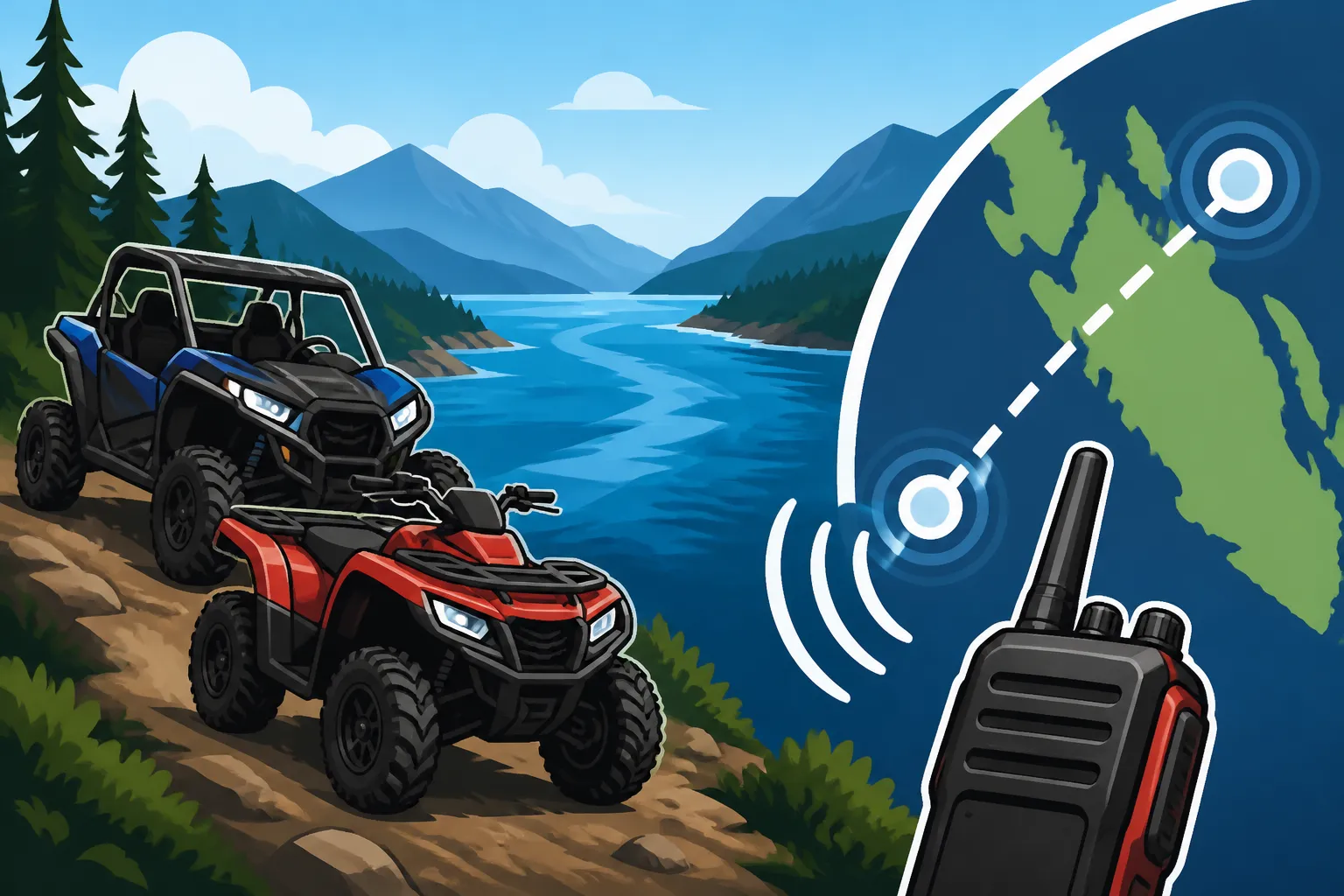
"Calling kilometres" is the informal, yet absolutely critical, radio protocol used by everyone on BC's active resource roads to communicate their location and direction of travel. It's not just casual chatter; it's a vital safety system designed to prevent collisions. Essentially, you're announcing over a designated radio channel that you are at a specific kilometre marker on the road, indicating whether you are travelling up (away from the main highway or the start of the road) or down (towards it). This simple act gives other drivers, particularly those in heavy industrial vehicles, advance warning of your presence, allowing them to adjust their speed, look for pull-outs, or even wait in a safe location.
Imagine a tight, dusty corner with a sheer rock face on one side and a steep drop-off on the other. If a loaded logging truck, weighing many tons and unable to stop quickly, approaches that corner at the same time as your side-by-side, the consequences could be catastrophic. By "calling kilometres," you become a known entity on the road, allowing everyone to anticipate and react. It's an act of mutual respect and self-preservation that has been honed over decades of backcountry travel. Without this system, the risks on these shared roads would escalate dramatically, making many areas far too dangerous for recreational riding.
Why This Practice is Critical on BC's Forest Service Roads
The very nature of BC's FSRs makes this radio protocol indispensable. These roads are typically unpaved, often covered in loose gravel, dust, or mud, and rarely maintained to highway standards. They wind through mountainous terrain, featuring steep grades, blind corners, and limited sightlines. Many FSRs are single-lane with occasional pull-outs, meaning there’s no room for two large vehicles to pass safely without one yielding. Furthermore, industrial vehicles, especially loaded logging trucks, operate at much higher speeds than many recreational users anticipate, and their braking distances are significantly longer. They are often coming down steep grades with thousands of pounds of timber, and they are difficult to stop or steer quickly if an obstacle suddenly appears.
The "rules of the road" on FSRs are not codified in the same way as highway traffic laws; they are an informal code of conduct based on safety and necessity. Industrial traffic almost always has the right-of-way, particularly loaded trucks travelling downhill. Their momentum and weight make it incredibly difficult for them to stop or manoeuvre defensively. Recreational riders on ATVs and UTVs are expected to be vigilant, communicate their presence, and yield when necessary. Ignoring these unwritten rules, or neglecting to "call kilometres," puts not only yourself at extreme risk but also the lives and livelihoods of those working on the roads. It’s a collective responsibility that every rider needs to take seriously when venturing onto Crown Land or resource roads. [BC Resource Roads Count as Crown Land]
Your Radio and the Right Way to Call Kilometres
To safely participate in the "calling kilometres" system, you need the right equipment and a clear understanding of the protocol. It’s not enough to simply have a radio; you need to know how to use it effectively and what to say. Many riders heading out for a day on the trails don't realize that standard cell phones often have no service deep in the backcountry, making a radio your only reliable communication tool.
Essential Radio Equipment for Backcountry Riders
When planning your FSR adventure, your communication setup is just as important as your machine itself. You generally have two main choices for radios: handheld VHF radios or mobile-mounted VHF units. Handhelds offer portability and are great for short-range communication within your riding group, but their range can be limited for calling out to industrial traffic on long stretches of road. Mobile units, which are typically mounted in your UTV or on your ATV, offer greater power output and, crucially, can be connected to external antennas, significantly extending your range.
A good antenna is perhaps the most critical component of your radio setup. A small, stubby antenna on a handheld radio might work fine for a kilometre or two, but it won't reliably reach far enough to warn an approaching logging truck that could be five or ten kilometres away. For serious FSR use, a longer, externally mounted antenna (often 2-5 feet) is highly recommended. These provide much better signal propagation and reception, especially in rugged, mountainous terrain. Ensure your radio and antenna are properly installed and tuned. Power is also key; mobile units are wired directly to your machine's battery, while handhelds rely on internal batteries, so always carry spares or a charging solution. When you’re outfitting your machine for serious backcountry travel, reliable gear is a must. Companies like SuperATV offer a range of accessories that can make your rig more capable for FSRs, from robust winches that can pull you out of a sticky situation to durable storage solutions for your communication gear.
The Standard Protocol: Channels, Direction, and Distance
The protocol for calling kilometres is straightforward, but consistency is vital. Most industrial traffic monitors specific "resource road channels," often referred to as RR channels, like RR1, RR2, or RR3. These channels vary by region, so it’s always wise to check with local clubs or logging companies for the predominant channel in your specific riding area. When you make a call, the standard phrase usually goes something like this:
"Calling kilometres, [your vehicle type] at [kilometre marker], travelling [up/down]."
For example: "Calling kilometres, side-by-side at 15 kilometres, travelling up." Or, "Quad at 22 kilometres, travelling down." It's important to specify your vehicle type so industrial operators know what kind of traffic to expect. You should make these calls regularly, typically every 2-3 kilometres, before and after blind corners, at intersections, and when passing bridges or other significant landmarks. If you stop for a break, it's also good practice to announce, "Side-by-side stopped at 18 kilometres." This provides continuous awareness for everyone on the road. Remember, it’s about establishing a presence and maintaining communication. [BC Resource Road Radio Practice]
Here's a quick reference table for common radio call protocols:
| Element | Description | Example | Notes |
|---|---|---|---|
| Radio Type | VHF (Very High Frequency) handheld or mobile units. | Motorola, Icom, Kenwood models | Mobile units with external antennas offer superior range and power. Always ensure your radio is capable of transmitting on resource road frequencies. |
| Channels | Specific "Resource Road" (RR) channels, e.g., RR1, RR2, RR3. These are region-specific; always verify local channels before riding. | RR1 (e.g., in Fraser Canyon), RR2 (e.g., in Cariboo) | Check with local forestry offices, ATV clubs, or logging companies for current channels in your target riding area. |
| Frequency | Call out every 2-3 kilometres, before/after blind corners, at intersections, and before/after major landmarks (bridges, switchbacks). | "Every 2 klicks," "Before that sharp bend" | Consistency is key to maintain awareness for industrial traffic. Do not rely on just one call at the start of the road. |
| Call Format | "Calling kilometres, [Vehicle Type] at [Kilometre Marker], travelling [Direction]." | "Calling kilometres, Quad at 12 klicks, travelling up." | Keep it concise and clear. Include your vehicle type so others know what to expect. |
| Vehicle Type | Specify what you are driving. | "ATV," "UTV," "Side-by-side," "Motorcycle" | Helps industrial operators gauge size and speed differentials. |
| Kilometre Marker | Your current location, read from official kilometre posts or GPS. | "At 7 kilometres," "Leaving 25 klicks" | Be precise. Kilometre posts are usually metal signs nailed to trees or wooden posts along the road. |
| Direction | Indicate if you are moving "up" (away from the main highway/start of road) or "down" (towards the main highway/start of road). | "Travelling up," "Heading down" | This is crucial for industrial traffic to predict your next calls and anticipate where they might encounter you. |
| Other Calls | When stopped: "Side-by-side stopped at 18 kilometres." When at an intersection: "Side-by-side at 25 kilometres intersection, turning left onto the [Road Name] FSR." | "Logging truck approaching from down" | Always acknowledge calls from others with a brief "Roger that" or "Copy that" to let them know you heard them. If you hear a truck coming, you can announce, "Side-by-side will pull over at [kilometre marker] for approaching traffic." |
Reading Resource Road Markers and Signs
Navigating FSRs successfully means understanding their unique signage. Kilometre posts are your primary guide for making those radio calls. These are typically small, metal plates or painted numbers on wooden posts or trees, usually placed every kilometre along the road, starting from zero at the main highway or junction. They can sometimes be obscured by foliage or weather, so keeping a keen eye out is essential.
Beyond kilometre markers, you’ll encounter other crucial signs. "Loaded" and "Empty" signs are common near logging operations. These indicate whether trucks are coming down with a full load of timber (and thus have much longer braking distances and less maneuverability) or heading up empty. Always give loaded trucks extra deference. You might also see "Active Hauling" signs, sometimes with specific times or dates, indicating that industrial traffic is operating. These signs are critical warnings that demand heightened vigilance. Never assume a road is clear just because you don't see any signs or hear radio calls; always be prepared for the unexpected. When in doubt, slow down, pull over, and wait.
Beyond the Call: Safety and Preparedness on BC Resource Roads
While calling kilometres is a cornerstone of FSR safety, it's just one part of a larger picture of responsible backcountry riding. Your overall preparedness, awareness, and adherence to other safety practices are equally vital for a successful and safe trip. These roads are not your typical recreational trails; they demand respect and a proactive approach to safety.
What to Do When You Hear a Call (or Don't)
Hearing a call on the radio means you have critical information – use it! If you hear an industrial vehicle calling its location and direction, immediately begin looking for a safe pull-out. This could be a widened shoulder, an old landing, or any area where you can safely move your machine completely off the active roadway. Yield to industrial traffic, especially loaded trucks coming downhill. Their stopping distance and ability to maneuver are severely limited. Even if you think you have the right-of-way, it's safer to yield. A brief acknowledgement like "Roger that" or "Copy that" after they call out lets them know you heard them and are taking action.
Just as important is what to do when you don't hear a call. Never assume a road is empty just because the radio is silent. Radio range can be affected by terrain, and some vehicles might not be equipped with radios, or their drivers might not be following protocol. Always ride defensively, especially around blind corners and crests. Assume there could be oncoming traffic. Slow down, stay to the right, and be prepared to stop or pull over at a moment's notice. Your vigilance is your best defence in these unpredictable environments. [BC Riders Meeting a Logging Truck]
Other Crucial Safety Measures for FSR Riding
Beyond radio communication, a comprehensive approach to safety includes being self-sufficient and prepared for emergencies. Always carry essential gear, including a well-stocked first-aid kit, tools for basic repairs, spare parts, and adequate fuel. A satellite messenger or GPS device with mapping capabilities is highly recommended, as cell service is often non-existent in remote FSR areas. [Cell Dead Zones in the Interior] Bear spray is also a wise addition, given the wildlife you might encounter.
Before heading out, check the weather forecast and any active hauling schedules for the specific FSR you plan to ride. Road conditions can change rapidly due to weather, logging activity, or washouts. Also, ensure your ORV is properly registered [BC ORV Registration Became Mandatory in 2015] and that you have the appropriate insurance coverage. While basic ICBC Autoplan may cover you on highways (for permitted crossings), you'll need specific liability coverage for FSRs. Many private insurers offer policies that provide $200,000 in third-party liability coverage, which is highly recommended for resource road riding. [BC Resource Road Insurance of $200,000] Beyond the radio, a well-equipped ORV is your best friend. Think about items like winches, which can be lifesavers on remote FSRs. Whether it's a SuperATV winch or another reputable brand, having the ability to self-recover can prevent hours of being stranded.
Legalities and Best Practices for ORVs on Resource Roads
Riding on FSRs means you are operating your ORV on Crown Land, which falls under the Off-Road Vehicle Act in British Columbia. This Act stipulates several requirements for riders. Your ORV must be registered and display a valid number plate [BC ORV Number Plates and Decals]. Every rider and passenger on a ride-astride ORV (like an ATV or dirt bike) must wear an approved helmet [BC Helmet Law Covers Every Rider]. If you're in a side-by-side or UTV, seat belts are mandatory. While an FSR is not a highway, it’s not truly "off-road" either; it's a managed access road with specific rules.
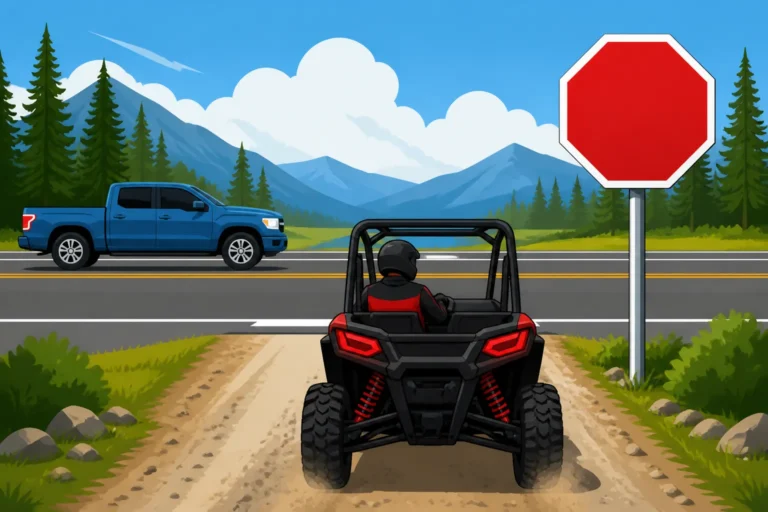
Understanding that FSRs are explicitly excluded from the Motor Vehicle Act (which governs public highways) is crucial. This means you cannot legally drive your ORV down the middle of a paved highway to get to an FSR, though specific, limited highway crossings are permitted under certain conditions. [BC Rules for Crossing a Highway] Always carry your Certificate of Registration and photo ID with you on every ride. Respect any posted signs regarding road closures, active hauling, or environmental sensitivities. Riding BC's resource roads can be tough on your machine. Investing in high-quality aftermarket parts and protection, like skid plates or heavy-duty bumpers (many of which are available from companies like SuperATV), can save you a lot of headaches and repair bills. By combining effective radio communication with thorough preparation and adherence to the rules, you can enjoy the vast beauty of BC's backcountry responsibly and safely. [BC Forest Service Road Requirements]
Disclaimer
This article is for general informational purposes only and does not constitute professional advice. Laws, prices and regulations vary by location and change over time. Consult a qualified professional for guidance on your specific situation.