Crossing a Highway at a Stop Sign
There's nothing quite like the freedom of exploring British Columbia's incredible backcountry on your ATV or UTV. You're out there, enjoying the trails, the views, and the fresh air. But then, you come across that dreaded intersection: a stop sign staring you down, with a busy paved highway stretching out before you. Suddenly, that feeling of freedom can turn into a knot of anxiety. What are the rules here? Can you even cross? This guide is here to walk you through exactly what you need to know to safely and legally cross a highway at a stop sign with your off-road vehicle in BC, so you can keep your adventures going without a hitch.
The Core Rule: Why Crossing is Different from Riding on a Highway
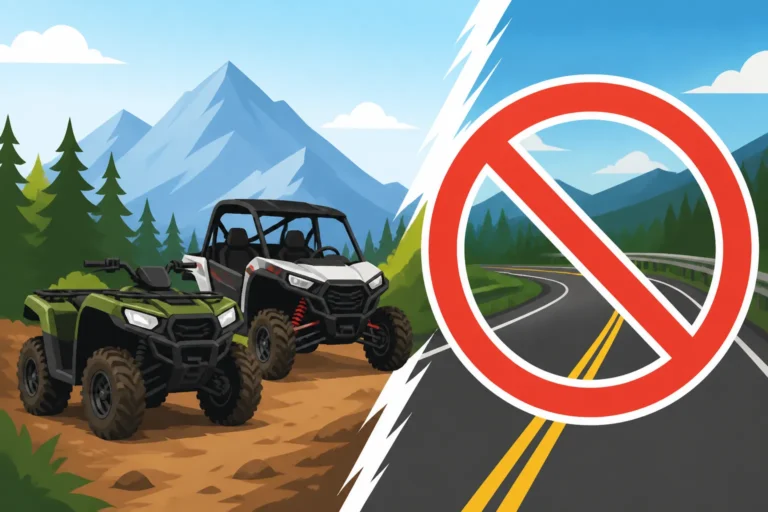
It's a common misconception, and one that causes a lot of confusion for riders, that because off-road vehicles (ORVs) aren't "street legal" in BC, you can't touch pavement at all. And for the most part, that's true – you can't just hop on the Trans-Canada Highway and cruise to your next trail system. But the province's laws do make a very specific, limited exception for crossing a highway. This isn't permission to ride on the highway, even for a short distance; it's strictly about getting from one side to the other. It's a crucial distinction, and understanding it is your first step to staying compliant and safe.
Understanding BC's Off-Road Vehicle Act and Highways
The Off-Road Vehicle Act is the guiding legislation for ATV and UTV use in British Columbia when you're off the pavement, primarily on Crown land and Forest Service Roads (FSRs). This act dictates things like registration, helmet use, and general operating rules in those environments. However, the moment your wheels touch a public highway, you're entering a different legal realm, primarily governed by the Motor Vehicle Act.
The Off-Road Vehicle Act was never intended to regulate highway use. It's built for the trails, the gravel roads, and the vast wilderness that makes BC so special for riders. Because of this, it specifically states that [BC's ORV Act Does Not Reach Highways]. This means that while you might be perfectly legal and compliant on an FSR just seconds before, the rules change dramatically when you approach that paved intersection. The highway is defined by its purpose – public vehicular traffic – and ORVs are generally not considered part of that traffic flow. The allowance for crossing is a pragmatic concession to allow access to trail networks, not an invitation to join highway traffic.
The Specifics of a Stop Sign Crossing
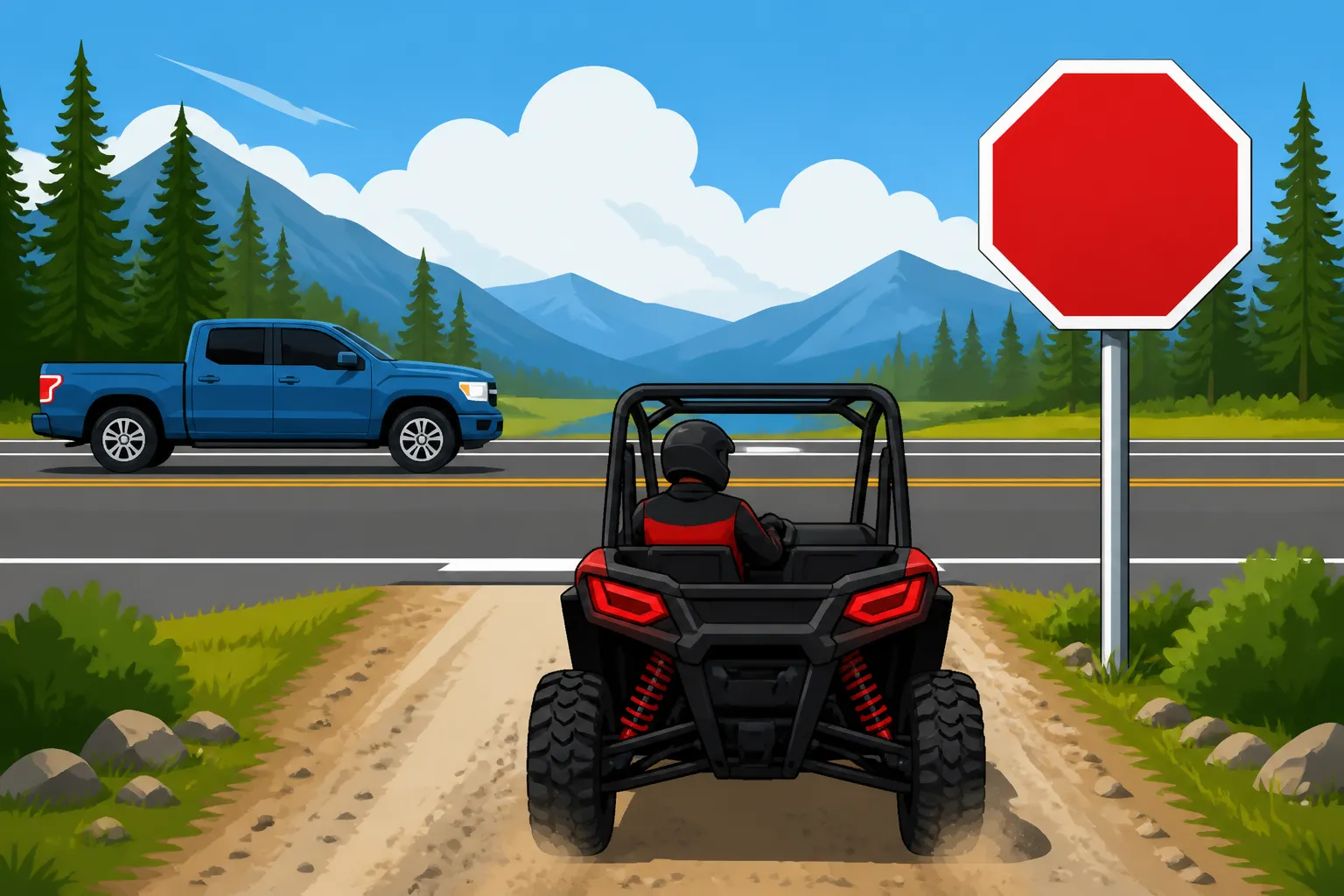
When you encounter a stop sign at an intersection, it signals that you're about to merge with, or cross, a flow of traffic that has the right-of-way. In the context of an ORV, this stop sign often means you're at the edge of a highway. The core principle here is to treat that stop sign exactly as you would if you were in a car. You must come to a complete and full stop at the designated stop line, or if none, at the edge of the intersecting roadway where you have a clear view of approaching traffic.
The presence of a stop sign means you're expected to yield to all traffic on the intersecting highway. This isn't just a suggestion; it's a legal obligation. Because ORVs are less visible than cars and trucks, and often slower to accelerate, you need to exercise extreme caution. You're not just looking for a gap; you're looking for a very safe and unambiguous gap. The provincial regulations are designed to minimize risk at these points, recognizing that these crossings are often unavoidable for recreational riders trying to connect different parts of a trail system or access staging areas.
The Legal Requirements for Crossing a Highway at a Stop Sign
This is where many riders get tripped up, thinking their ORV setup for the trails is enough. Unfortunately, the rules tighten up considerably when you're even momentarily on a public highway. You need to be prepared with the correct documentation for yourself and your machine, and your ORV itself needs to meet certain basic standards. Skipping these steps can turn a simple crossing into a costly ticket or, worse, a dangerous situation.
Licence, Registration, and Insurance During a Crossing
This is perhaps the most critical point of confusion. Many assume that because they're not "driving on the road" for an extended period, the usual road rules don't apply. That's a dangerous assumption. For the brief time you are operating your ORV on a public highway, even just to cross, you are subject to the Motor Vehicle Act.
This means you absolutely must have a valid driver's licence. [BC Requires a Driver's Licence on a Highway] to operate any motor vehicle on a public road, and that includes your ORV during the crossing manoeuvre. Your regular Class 5 (or equivalent) driver's licence is what's needed. Don't think your learner's permit for your off-road safety course is enough here; it isn't.
Equally important is insurance. Your ORV needs to be properly insured, specifically with at least basic Autoplan insurance. [BC Requires Basic Autoplan on a Highway] for any vehicle operating on a public road. While you might carry private, recreational ORV insurance for coverage on trails or resource roads, that often doesn't extend to public highways. When you register your ORV in BC, you'll work with an Autoplan broker who can help you understand these insurance layers. Make sure you have the minimum liability coverage for highway exposure, even if brief.
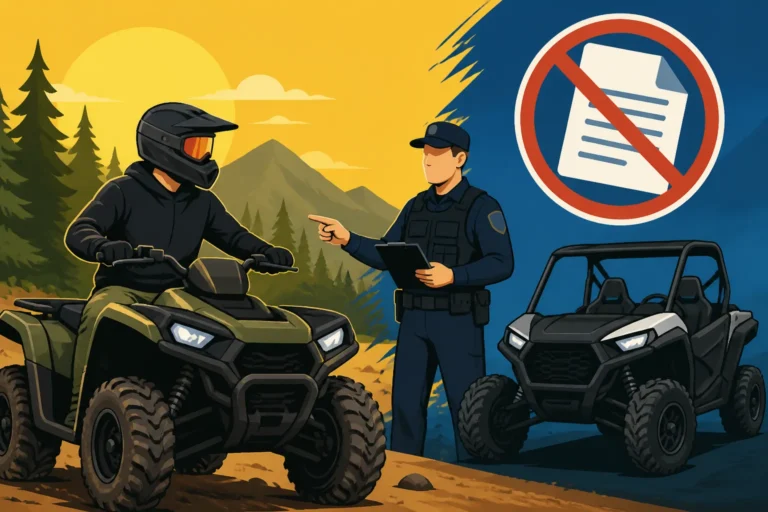
And of course, your ORV itself must be registered. [BC Registration Became Mandatory in 2015], meaning every ORV that operates off-road (and by extension, occasionally crosses a highway) must have a valid Certificate of Registration and display a number plate. Without current registration, you're looking at a ticket before you even consider the other requirements. [BC Tickets for an Unregistered Machine] are no fun, and an officer encountering an unregistered machine trying to cross a highway will certainly issue one.
Machine Requirements for a Highway Crossing
Beyond your personal documentation, your ORV also has to meet certain standards to be legally allowed to cross a highway. These are primarily focused on making your machine visible and safe for other road users.
First and foremost, visibility is key. Your ORV needs functioning headlights, taillights, and brake lights. While many stock ORVs come with these, it's vital to ensure they're clean and working perfectly before you even think about approaching a highway crossing. If you've invested in aftermarket lighting from companies like SuperATV, that's great for the trails, but double-check that your basic road-legal lights are also in top shape. You need to be seen, especially at dawn, dusk, or in poor weather.
Your number plate is also critical. It must be clearly visible, clean, and mounted correctly. [BC Plate Placement on Front, Back or Left] is allowed, but it needs to be easily read by other drivers and law enforcement. If it's obscured by mud, cargo, or simply improperly mounted, you could face a fine. [Keeping Your ORV Plate Clean Enough to Read] isn't just good practice; it's a legal requirement, especially when interacting with highway traffic. A working horn is also a good idea, as it's a standard safety device on most motor vehicles for signalling intent or warning others.
Here's a quick summary of what you need:
| Requirement | Details |
|---|---|
| Driver's Licence | Valid Class 5 (or equivalent) BC driver's licence. No learner's permits. |
| ORV Registration | Current BC Off-Road Vehicle Certificate of Registration. |
| ORV Insurance | Minimum basic Autoplan liability coverage for highway exposure. Check with your broker. |
| Headlights | Fully functional, clean, and visible. |
| Taillights | Fully functional, clean, and visible. |
| Brake Lights | Fully functional, clean, and visible. |
| Number Plate | Clearly visible, clean, and correctly mounted on the front, back, or left side. |
| Helmet | Mandatory for all ride-astride ORVs (ATVs, dirt bikes) whenever operating, including crossings. |
| Seatbelts | Mandatory for UTVs with ROPS (roll-over protective structures) and seats, whenever operating. |
Navigating the Crossing Safely and Legally
Okay, you've got all your papers in order, and your machine is ready. Now comes the actual crossing. This isn't a moment to rush or be complacent. Even the shortest time on a highway carries risks, and as an ORV rider, you're likely less visible to fast-moving highway traffic. A careful, deliberate approach is essential for your safety and to avoid any legal issues.
Pre-Crossing Checklist and Situational Awareness
Before you even get close to the stop sign, start preparing. Look ahead for visibility issues like blind corners, hills, or dense foliage that might obscure your view of oncoming traffic or their view of you. Consider the width of the highway and how much time it will take you to cross. A multi-lane highway will require much more caution than a narrow country road.
As you approach the stop sign, begin scanning actively. Look left, then right, then left again. And don't just glance; genuinely look. Highway speeds mean vehicles can cover a lot of ground quickly. Listen for traffic you can't see yet. If there's heavy traffic, be patient. It's far better to wait for an extended, clear gap than to try to squeeze through. Remember, you're responsible for safely entering the highway.
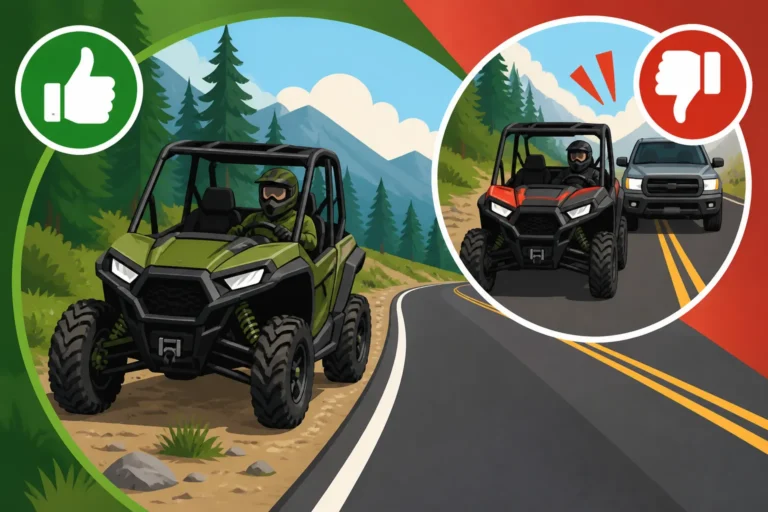
When choosing your path, aim for the shortest, most direct route across the highway. [BC Rules for Crossing a Highway] are clear on this: it's a perpendicular movement, not a diagonal one or an attempt to ride the shoulder. You're trying to minimize your exposure to highway traffic as much as possible. Avoid any maneuvers that would keep you on the highway or its shoulder for longer than strictly necessary to traverse it.
Executing the Crossing Maneuver
Once you've stopped, scanned, and determined a safe gap, it's time to execute. Make sure you're at a complete stop at the stop line or the edge of the intersecting roadway. Don't roll through; that's an infraction itself. If your ORV has turn signals, use them to indicate your direction of travel across the highway. If it doesn't, consider clear, unambiguous hand signals if you can manage them safely while maintaining control of your machine.
Accelerate smoothly but decisively across the highway. Don't floor it, but don't hesitate either. You want to get across efficiently without losing control. Keep your eyes peeled for any changes in traffic flow as you cross. Once you've cleared the highway and are back on the trail or road you intended to reach, you can relax a little, but maintain situational awareness.
If you're dealing with a divided highway with a median, you treat each direction of travel as a separate crossing. Stop in the median (if it's wide enough and safe to do so) and repeat the scanning process for the second half of the highway. Never attempt to cross multiple lanes or directions of traffic in one go if it means you'd be stuck or hesitating in the middle. Remember, you might be carrying gear for your adventure, and while SuperATV has some great options for cargo management, don't let a loaded machine compromise your ability to cross quickly and safely. Their heavy-duty tires can certainly help with traction on various surfaces near crossings, ensuring a solid grip as you accelerate.
Common Pitfalls and How to Avoid Them
Even with the best intentions, it's easy to make mistakes when navigating highway crossings. The line between legal and illegal, safe and unsafe, can feel blurry when you're primarily used to off-road environments. Being aware of the most common errors can help you steer clear of trouble.
Misinterpreting "Crossing" versus "Operating"
This is perhaps the biggest pitfall. Many riders, either out of convenience or misunderstanding, will travel short distances along a highway or its shoulder rather than simply crossing it perpendicularly. This is a direct violation of the Motor Vehicle Act and the Off-Road Vehicle Act. The law allows for crossing, not for travel. Even riding 100 metres down the shoulder to a convenient access point is operating on the highway, and that's generally prohibited for ORVs.
Police officers are well aware of this distinction, and they are authorized to issue tickets for illegal operation on a highway. [BC Fines for Careless Operation] can be applied if you are seen operating your ORV on a highway in a manner that's not explicitly permitted for a crossing. The key takeaway here is: get across as quickly and directly as possible, and then get back to designated ORV routes. Do not use the highway as a shortcut or connector.
Consequences of Non-Compliance
Ignoring the rules for highway crossings can lead to a host of unpleasant and expensive consequences. As mentioned earlier, if your ORV isn't registered, you're looking at [BC Tickets for an Unregistered Machine]. If you don't have a valid driver's licence, you could be cited for operating a motor vehicle without a licence, which carries substantial penalties. Operating without the required basic Autoplan insurance can lead to massive fines and personal liability in the event of an accident. Imagine hitting a car on the highway without insurance – the financial repercussions would be devastating.
Beyond fines, there's also the risk of having your machine seized. [BC Machine Seizures by Police] can occur for serious infractions, such as repeat offences or operating a vehicle without proper registration or insurance. This means your prized ORV could be impounded, leaving you stranded and facing significant costs to get it back, if you can at all.
Finally, always make sure you are carrying the necessary documentation with you. [BC Riders Must Carry the Certificate] of Registration and [BC Riders Must Carry Photo ID] whenever operating your ORV. An officer making a stop will want to see these. Not having them can lead to delays, further investigation, and even additional fines. Always prioritize safety and legality; it's the best way to ensure your BC ATV and UTV adventures remain enjoyable and stress-free.
Disclaimer
This article is for general informational purposes only and does not constitute professional advice. Laws, prices and regulations vary by location and change over time. Consult a qualified professional for guidance on your specific situation.