Why BC Highways Are Excluded From ORV Use
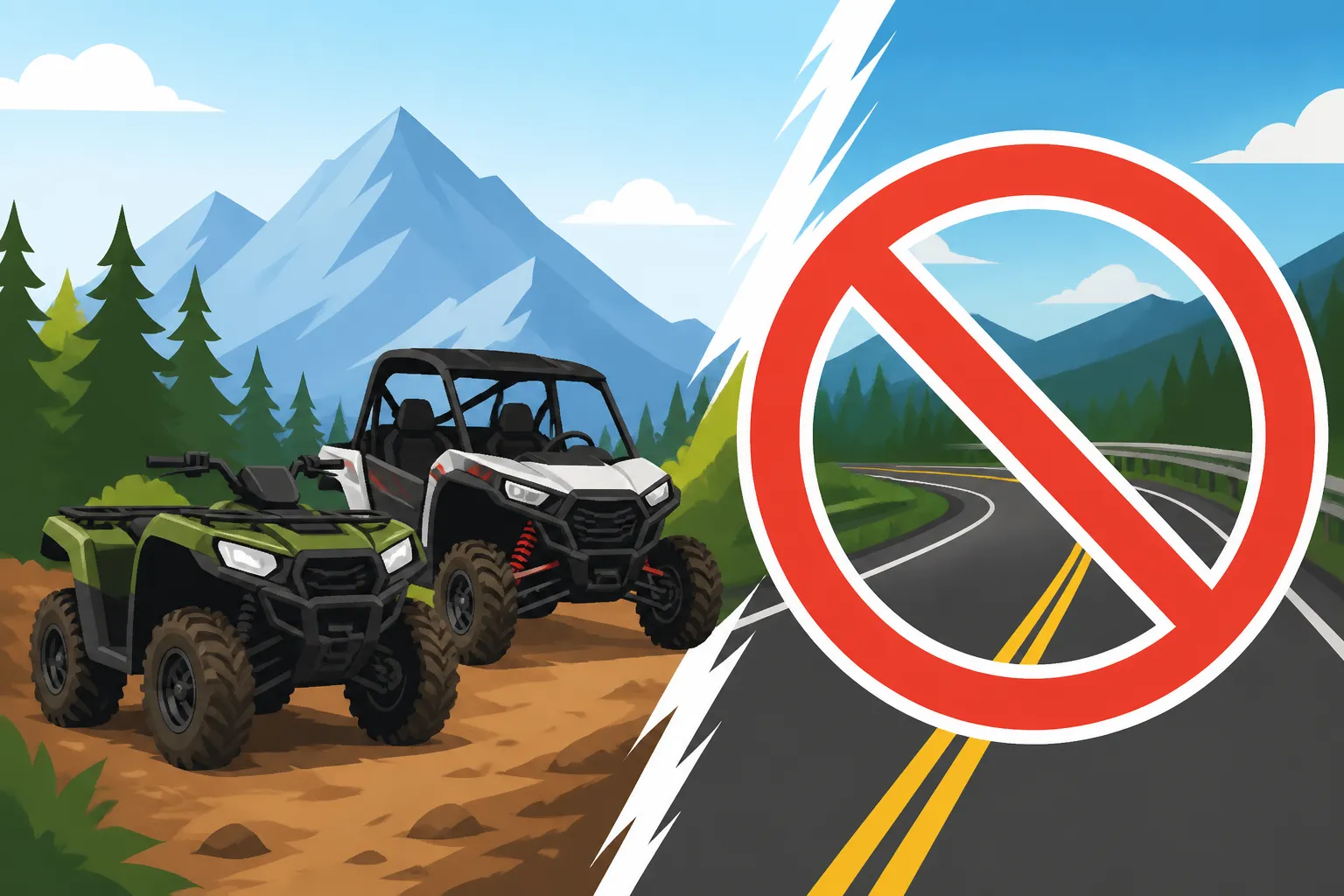
It’s a common dream for many of us with an ATV or UTV in beautiful British Columbia: imagine just hopping on your machine and heading straight out from your driveway onto the main road, maybe even that scenic highway, to reach your favorite trail. But the reality hits hard: those powerful machines, built for adventure, are almost universally banned from paved public highways in BC, creating a huge disconnect for riders trying to figure out how to get to their riding spots. This guide is here to shed light on exactly why BC highways are excluded from off-road vehicle use, clarify the legal landscape, and help you understand the rules so you can ride safely and legally without the stress of unknowingly breaking the law.
The Fundamental Legal Divide: ORVs Versus Highway Vehicles
The biggest reason you can't just drive your ATV or UTV on a BC highway boils down to the law and how different vehicles are categorized. British Columbia, like many jurisdictions, has a clear legislative separation between vehicles designed for public roads and those meant for off-road environments. This isn't just about semantics; it's about a foundational difference in how these machines are regulated, built, and intended to be used. It can be frustrating when you see a dirt bike or quad that seems perfectly capable, but the law draws a very sharp line.
The Off-Road Vehicle Act and the Motor Vehicle Act
In British Columbia, the landscape of vehicle regulation is primarily carved out by two significant pieces of legislation. On one side, we have the Motor Vehicle Act (MVA), which governs virtually all vehicles designed and intended for use on public roads and highways, including cars, trucks, motorcycles, and commercial vehicles. This act sets out stringent requirements for vehicle construction, safety features, licensing, insurance, and driver conduct, all tailored for the high-speed, complex environment of public roads.
Then, on the other side, we have the Off-Road Vehicle Act (ORV Act), which specifically regulates the use and operation of off-road vehicles like ATVs, UTVs, dirt bikes, and snowmobiles. This act primarily concerns itself with the operation of these machines on Crown land, resource roads, and other non-highway areas. The ORV Act came into full effect in 2015, making registration mandatory for these machines when operated off private property, but critically, it explicitly excludes their regular operation on highways. This legislative split is the bedrock of why your beloved quad isn't street legal. For a deeper dive into what the ORV Act covers, you might find [What the Off-Road Vehicle Act Covers in BC] helpful.
Defining "Highway" in BC Law
One of the common misconceptions among riders is the idea that a "highway" only refers to major freeways or divided highways. In BC, the legal definition of a "highway" under the Motor Vehicle Act is incredibly broad. It doesn't just mean Highway 1 or the Coquihalla. Instead, it encompasses almost any road, street, lane, or thoroughfare that is publicly maintained and intended for public vehicle traffic. This includes municipal streets, paved rural roads, and even the shoulders of these roads.
So, when the law states that ORVs are excluded from highways, it essentially means they are excluded from the vast majority of paved public roads you encounter in towns and cities, or connecting communities. It's a comprehensive prohibition that catches many off guard, making that short hop down a residential street to reach a trailhead just as illegal as trying to ride on the Trans-Canada Highway. This broad definition ensures a clear delineation between the types of vehicles that belong on these public thoroughfares and those that don't.
Machine Design and Certification
The exclusion of ORVs from highways isn't merely a bureaucratic technicality; it's deeply rooted in the fundamental design and purpose of these machines. Highway-legal vehicles, like cars and trucks, are engineered and manufactured to meet incredibly strict federal and provincial safety standards for on-road use. This includes features like crumple zones, airbags, specific lighting configurations, braking systems, emission controls, and tire types, all designed to perform safely at higher speeds and in varied traffic conditions.
Off-road vehicles, however, are built for an entirely different purpose. Their design prioritizes ruggedness, maneuverability, and traction over varied terrain – mud, rocks, sand, and steep inclines. Features like aggressive knobby tires, long-travel suspensions, high ground clearance, and powerful low-end torque are perfect for the trail but are detrimental to stability and safety on paved roads, especially at sustained speeds. They simply aren't designed to interact safely with passenger vehicles or large trucks in a highway environment. Even with modifications, the core design philosophy remains distinct, making it nearly impossible for an ORV to meet highway certification standards without fundamentally changing what makes it an ORV.
Safety Concerns and Design Limitations
Beyond the legal definitions, the primary reason ORVs are kept off BC highways is a matter of public safety. The differences in design, handling characteristics, and safety features between an off-road vehicle and a highway-legal vehicle are profound. These disparities create significant risks for ORV operators, passengers, and other road users if ORVs were allowed on public roads designed for faster, heavier traffic.
Speed and Handling Differences
Off-road vehicles are engineered for specific performance characteristics that excel in rugged, unpredictable terrain, not smooth asphalt. Their engines are often tuned for low-end torque, allowing them to climb steep hills and power through challenging obstacles. Their transmissions and gearing are typically optimized for lower speeds, providing controlled power delivery rather than high-speed cruising.
Conversely, highway vehicles are designed for sustained higher speeds, with stability, braking performance, and precise steering being paramount. When you put an ORV, with its aggressive knobby tires and long-travel suspension, onto pavement, you immediately compromise its handling. Those knobby tires, perfect for gripping dirt, offer very little contact patch and poor traction on smooth, wet, or dry asphalt, making braking distances longer and cornering dangerous. The suspension systems, built to absorb massive impacts off-road, can feel spongy and unstable at highway speeds, leading to excessive body roll and unpredictable handling. While aftermarket parts from companies like SuperATV can dramatically enhance your machine's off-road capabilities and durability, providing robust protection for trails, these modifications are designed for the rigors of the backcountry, not the specific safety requirements and crash performance expected on a high-speed public highway.
Visibility and Lighting
Visibility is a critical factor for safety on public roads, especially as speeds increase and traffic density grows. Highway-legal vehicles are equipped with comprehensive lighting systems, including bright headlights, tail lights, brake lights, and highly visible turn signals, along with extensive mirrors to provide drivers with a full view of their surroundings. These features are standard and mandated by law to ensure that a vehicle is seen by others, day or night, and that its intentions (turning, stopping) are clearly communicated.
Many ORVs, particularly ATVs, have much more rudimentary lighting systems. While they often have headlights and tail lights, these might not be as bright or as extensive as those on a car, and turn signals are frequently absent. Mirrors might be minimal or non-existent, and their lower profile can make them harder to spot in the blind spots of larger vehicles. Riding an ORV on a highway, even during the day, presents a significant risk due to this reduced visibility, and at night, the danger escalates dramatically. The lights on your machine, while adequate for a dark trail, simply don't cut it for safe highway travel.
Crash Protection and Occupant Safety
Perhaps the most stark difference between ORVs and highway vehicles lies in their crash protection and occupant safety features. Cars and trucks are built with sophisticated passive and active safety systems: multiple airbags, energy-absorbing crumple zones, reinforced cabins, advanced seatbelt systems, and side-impact protection. These are all meticulously engineered to protect occupants in the event of a high-speed collision with another vehicle or a fixed object.
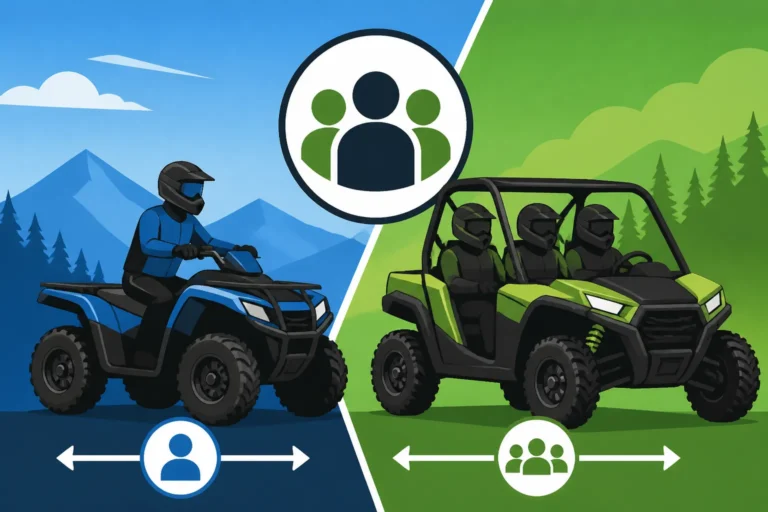
ATVs, being ride-astride machines, offer virtually no occupant protection in a crash other than what a helmet and protective gear can provide the rider. UTVs (side-by-sides) do offer roll-over protection structures (ROPS) and seatbelts, but these are designed to protect occupants in low-speed rollovers or impacts off-road, not high-speed collisions with a multi-ton vehicle. The specialized tires, suspension lifts, and powerful engine modifications you might invest in from a brand like SuperATV are engineered to tackle mud, rocks, and steep climbs, giving you incredible traction and ground clearance off-road. However, these very features can make an ORV unstable and difficult to control at highway speeds, increasing the risk of rollovers or loss of control, and these vehicles offer no crash protection for a highway accident. The lack of robust crash protection for highway conditions makes ORVs inherently unsafe for use on public roads, putting riders and passengers at extreme risk. [BC Helmet Law Covers Every Rider] is a crucial safety measure that highlights the vulnerability of riders even off-highway.
Limited Exceptions and Controlled Access
While general highway travel is strictly off-limits for ORVs in BC, there are a few very specific and tightly regulated situations where an ORV might briefly interact with a highway. These aren't loopholes for general use but rather carefully managed exceptions designed to allow access to riding areas or to facilitate specific operations under strict safety protocols. Understanding these limited exceptions is key to avoiding penalties.
Controlled Highway Crossings
One of the most common exceptions to the highway ban is the ability to perform a controlled crossing of a highway. This is not about traveling along a highway, but about getting from one side to the other when an ORV trail or designated riding area is bisected by a public road. The rules for these crossings are very clear and must be followed precisely. You can only cross at an intersection where it's safe and practical to do so, and you must do it perpendicular to the flow of traffic, taking the most direct route across.
Before crossing, you must stop, yield to all highway traffic, and proceed only when it's safe to do so. Your ORV must be registered and plated, and you must carry your [BC Riders Must Carry the Certificate] of registration and appropriate identification. Failing to follow these rules can result in significant fines. These crossings are designed to be quick and minimize exposure to highway traffic, emphasizing that highway travel is not permitted. For specific details on how to handle these situations, review [BC Crossings at a Stop Sign] and [BC Crossings at a Traffic Light].
Special Operation Permits
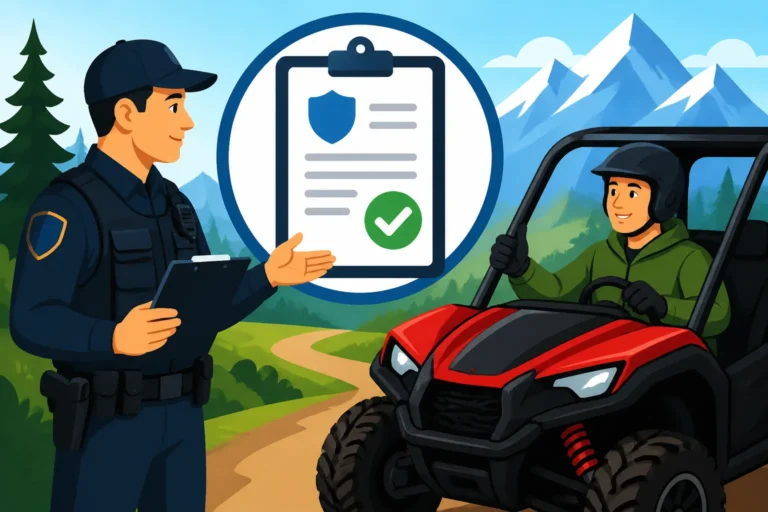
In very rare and specific circumstances, local police detachments (municipal police or the RCMP) may issue a special operation permit that allows an ORV to operate on a short section of a highway. These permits are typically granted for extremely limited purposes, such as accessing a unique property that has no other route, participating in a parade, or moving agricultural equipment short distances. They are absolutely not for general recreational travel to a riding area. The conditions attached to these permits are usually very stringent, specifying the exact route, time of day, and duration of the operation.
An operation permit is a temporary, conditional allowance, not a general waiver of the highway prohibition. It's crucial to understand that these are exceptions, not entitlements, and they require advance application and approval from law enforcement. You cannot simply decide to take your ORV on a highway because you think your situation warrants it; you must have the permit in hand. Details on how to obtain these permits can be found in [BC Operation Permit Application Steps] and [BC Permits Issued by Local Police].
Loading and Unloading in Parking Lots
It's perfectly legal to transport your ORV on a trailer on BC highways. This is the standard and safest method for getting your machine to designated off-road riding areas. When you arrive at your destination, you can operate your ORV in a parking lot for the sole purpose of loading or unloading it from your trailer. This is seen as an incidental activity necessary for transport and not "highway use" in the prohibitory sense.
However, operating your ORV in a parking lot for joyriding, using it as a shortcut through a shopping center, or attempting to travel from one parking lot to another via a public road is still illegal. The intent behind the allowance is strictly functional: to facilitate the transport and staging of your ORV. Once you've unloaded, your ORV must be directed onto an authorized off-road trail or private property. [BC Parking Lots for Loading and Unloading] clarifies these specific allowances, ensuring riders understand the boundaries.
The Consequences of Ignoring the Rules
Attempting to operate an off-road vehicle on a BC highway without a valid, rare special permit can lead to serious consequences. The authorities take these rules very seriously due to the significant safety risks involved. Ignorance of the law is not a valid defense, and the repercussions can range from hefty financial penalties to the loss of your machine and even criminal charges. It's simply not worth the risk.
Fines and Penalties
If you're caught operating your ATV or UTV on a highway in BC, you can expect to receive a significant violation ticket. The fines associated with operating an unregistered, uninsured, or improperly equipped vehicle on a highway are substantial, often ranging into the hundreds of dollars. Beyond just the MVA, you could also face penalties under the ORV Act for misusing your machine outside its designated legal operational zones. Law enforcement officers have the authority to issue multiple tickets for various infractions, such as no valid driver's license (since you need one to operate on a highway), no highway insurance, and operating a non-compliant vehicle.
In addition to fines, your off-road vehicle could be impounded. This means towing fees, storage fees, and the hassle of recovering your machine, which can quickly add up to a cost far exceeding the initial ticket. In more serious cases, especially if your actions are deemed reckless or cause danger to others, you could face charges for careless operation or dangerous driving, which carry much more severe consequences, including potential court appearances, higher fines, and even a driving prohibition. [BC Fines for Careless Operation] gives you an idea of the costs involved when rules are broken.
Insurance Implications
This is a huge one that many riders overlook. Your standard off-road vehicle insurance policy, which you might purchase voluntarily or as part of your [BC ATV Insurance Requirements] for resource roads, is specifically designed to cover incidents that occur in off-road environments. It is almost certainly not valid for accidents that happen on a public highway. If you have an incident or accident while riding your ORV on a highway, even a minor fender-bender, your insurance company will likely deny coverage.
This leaves you personally liable for all damages, injuries, and legal costs arising from the incident. Imagine hitting a car or injuring a pedestrian; the financial repercussions could be catastrophic, easily totaling hundreds of thousands of dollars. The simple truth is that [BC Requires Basic Autoplan on a Highway] for vehicles operating on those roads, and your ORV does not qualify for it in most cases. Operating an ORV on a highway is not only illegal but also an incredibly risky financial gamble that could devastate your personal finances for years to come.
Safety Risks to Self and Others
The legal prohibitions and penalties are there for a reason: safety. As discussed earlier, ORVs are fundamentally different from highway vehicles in their design, handling, and crash protection. Riding an ATV or UTV on a public highway, where vehicles travel at much higher speeds and there's a constant flow of heavy traffic, creates an extremely dangerous situation. The ORV's instability, lack of visibility, and inability to provide occupant protection in a high-speed collision dramatically increase the risk of severe injury or fatality for the ORV operator and any passengers.
Furthermore, you pose a significant risk to other road users. An ORV's unpredictable handling, slower speeds (relative to highway traffic), and potential to break down on a busy road can cause sudden hazards, leading to chain-reaction accidents involving multiple vehicles. The goal of the laws excluding ORVs from highways is to prevent these inherently unsafe interactions and ensure the safety of everyone on BC's public roads. Ignoring these rules is a direct disregard for the safety of yourself and the community.
Navigating BC's Roads: Where You Can Ride
While the restrictions on highway use might seem limiting, British Columbia actually offers an incredible amount of legal and breathtaking terrain for off-road vehicle enthusiasts. The key is knowing where you are allowed to ride and understanding how to safely and legally transport your machine to those areas. Embrace the vast opportunities that BC's backcountry provides, and your ORV adventures will be far more rewarding and stress-free.
Crown Land and Resource Roads
The vast majority of British Columbia is Crown land, and this is where the ORV Act truly shines, providing immense opportunities for off-road recreation. Crown land includes a wide array of natural landscapes, from dense forests to alpine meadows, and it is the primary legal operating area for ATVs and UTVs. Running through much of this Crown land are extensive networks of resource roads, often referred to as Forest Service Roads (FSRs) or logging roads. These roads, while not "highways" under the MVA, are explicitly covered by the ORV Act and are generally open for ORV use, subject to specific conditions and potential industrial traffic.
Many of BC's most iconic riding areas are accessed via these resource roads, leading to thousands of kilometres of trails. When you operate on Crown land or resource roads, your machine must be registered and display its ORV plate, and you must carry proof of registration and identification. You might also need specific insurance coverage for resource roads, such as the minimum [BC Requires $200,000 on a Forest Service Road] liability. It’s important to remember that these roads are active work sites, so always be aware of industrial traffic and yield to logging trucks. [BC Crown Land Triggers the Registration Rule] and [BC Resource Roads Count as Crown Land] are essential reads to understand the extent of these opportunities.
Private Property with Permission
Beyond the vast expanse of Crown land, you are also legally permitted to ride your ATV or UTV on private property, provided you either own the land or have explicit permission from the landowner. This might include your own acreage, a friend's farm, or a designated private riding park. When riding on private property, the rules regarding registration under the ORV Act generally don't apply, as the Act primarily focuses on operation on Crown land.
However, even on private land, you still have a responsibility to operate your machine safely and not create a public nuisance. Noise bylaws might still apply, and you must ensure you have adequate liability insurance, as your homeowner's policy may not cover ORV-related incidents. Always respect property boundaries and ensure you have clear, written permission if you're riding on someone else's land. This is particularly relevant if you're using a large machine or engaging in activities that could be seen as disruptive. [BC Private Land and the Registration Question] provides more details on this aspect.
The Importance of a Trailer
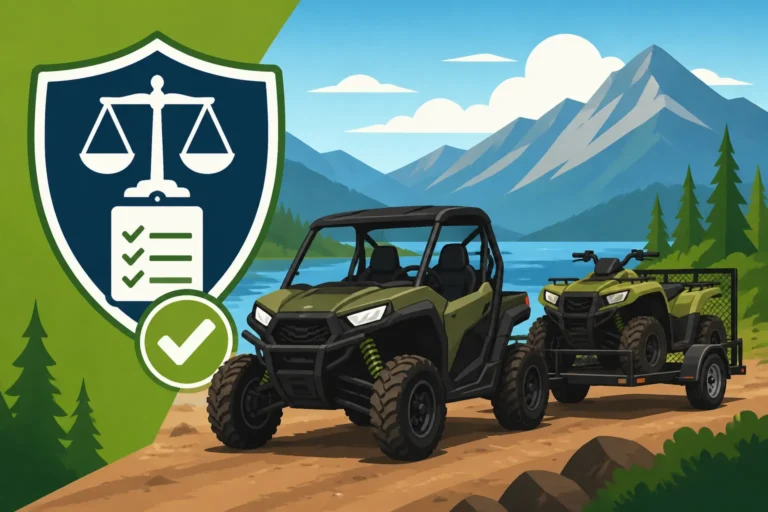
Given that direct access to riding areas via highway is prohibited, the most practical, legal, and safest way to enjoy your ORV in BC is to transport it on a trailer. Investing in a suitable trailer allows you to safely tow your ATV or UTV behind your highway-legal vehicle to any designated staging area or trailhead. This eliminates the risk of fines, impoundment, or dangerous collisions on public roads.
Trailers come in various sizes and configurations, from single-machine utility trailers to enclosed multi-machine haulers. When choosing a trailer, consider the weight of your ORV(s), your towing vehicle's capacity, and the types of terrain you'll be traversing to reach your staging points. For those epic backcountry adventures where your SuperATV-equipped rig truly shines, getting it to the trailhead safely means trailering it. It's the only legal and sensible way to transport your machine to areas where it can be enjoyed without violating highway laws or compromising safety. Always ensure your trailer is properly maintained, registered, and that you understand the towing laws in BC. This simple solution ensures you can access all the incredible off-road opportunities BC has to offer without running afoul of the law or putting yourself and others at risk.
| Feature | Highway-Legal Vehicle (e.g., Car, Truck) | Off-Road Vehicle (ATV, UTV) |
|---|---|---|
| Primary Design Purpose | Public road travel, high speeds | Off-road recreation/work, low-to-medium speeds |
| Governing Legislation | Motor Vehicle Act, Federal Safety Standards | Off-Road Vehicle Act, manufacturer guidelines |
| Tires | Smooth tread, designed for pavement grip | Aggressive, knobby tread for traction on varied terrain |
| Suspension | Road-tuned for comfort, stability at speed | Long travel, high clearance for rough terrain |
| Lighting | Headlights, tail lights, brake lights, turn signals, DRLs | Basic headlights, tail lights (often limited), sometimes no turn signals |
| Speed Capability | Designed for sustained high speeds | Designed for lower speeds, rapid acceleration/deceleration |
| Safety Features | Airbags, crumple zones, ABS, advanced driver aids | Roll-over protection (UTV), basic seatbelts (UTV), helmets (ATV) |
| Registration | Vehicle registration, licence plates, title | ORV Certificate of Registration, ORV plate |
Disclaimer
This article is for general informational purposes only and does not constitute professional advice. Laws, prices and regulations vary by location and change over time. Consult a qualified professional for guidance on your specific situation.