Getting a Free Operation Permit From Your Local Detachment
Many BC off-road vehicle riders feel a real pinch when they need to cross a short stretch of pavement or access a staging area that requires a brief stint on a public road. It's frustrating when your ATV or UTV is perfectly capable but the law feels like a brick wall, preventing you from making those essential, brief movements. This guide is all about navigating that wall by explaining how you can obtain a free operation permit from your local police detachment, giving you a legal path for those necessary, short highway movements.
Understanding the BC ORV Operation Permit
Let's cut through the confusion right away. When we talk about an "operation permit" for an off-road vehicle (ORV) in British Columbia, we're not talking about something that suddenly makes your quad or side-by-side fully street-legal. That's a common misconception, and it's important to set it straight from the get-go. Instead, this permit is a very specific, limited authorization that allows you to operate your ORV on certain highways or portions of highways under strict conditions. It's a lifeline for riders who need to connect trails or access fuel, but it's not a green light to cruise down the main street.
The permit is essentially a temporary pass, granted by local police, acknowledging that for very practical reasons, sometimes an ORV needs to briefly share space with road traffic. It’s a recognition of the reality of BC’s vast trail networks and the occasional need to link them up over short stretches of public road. Without this permit, operating an ORV on a highway is generally prohibited, and you could face significant fines or even vehicle impoundment. This permit isn't about transforming your machine into something it's not; it's about providing a narrow, legal window for specific movements that enhance your riding experience without compromising road safety.
What the Permit Allows You to Do
The core purpose of this operation permit is to bridge gaps. Imagine you're riding a fantastic trail, and it suddenly spits you out onto a rural highway for a kilometre before picking up another trail system. Or perhaps the only way to get your machine from your property to the nearest staging area involves a short jaunt down a paved road. These are precisely the scenarios the operation permit is designed for. It grants you permission to operate your ORV on a highway for the express purpose of:
- Crossing a highway: This is often the most common use. If a trail continues on the other side of a road, the permit can allow for a safe and legal crossing. You'll still need to follow all traffic laws, including stopping at stop signs or obeying traffic lights, just like any other vehicle. [BC ORV Crossing Rules at Stops and Lights] covers this in more detail.
- Accessing an ORV trail from a staging area: Many designated ORV areas or Crown land access points might require a brief section of road travel from where you've parked your truck and trailer.
- Connecting ORV trails: In some areas, the trail network isn't continuous, and a short stretch of pavement is unavoidable to get from one section to another.
- Accessing essential services: This could include getting to a gas station in a small community or reaching a repair shop if you've had a breakdown nearby.
It's crucial to understand that these movements are generally for short distances and specific purposes. The permit isn't for joyriding on the highway or using your ORV as an alternative to a car for daily errands. Police issue these permits with specific routes and distances in mind, reflecting the practical needs of riders in their local areas. It's about functionality and necessity, not convenience or circumventing the fact that [BC Has No Street-Legal Path for an ATV].
What it Doesn't Allow: Key Limitations
This is where many riders get into trouble, so let's be crystal clear about what this permit doesn't do. Firstly, it doesn't exempt you from any of the standard ORV registration and insurance requirements. Your machine still needs to be registered with the Province of BC and display a valid number plate. You also need to have appropriate insurance coverage. While the permit addresses highway operation, it doesn't supersede these foundational rules. [Registering an ATV With ICBC in BC] is a good place to learn more about the registration process.
Secondly, the permit absolutely does not transform your ATV or UTV into a street-legal vehicle like a car or motorcycle. You can't just slap a permit on your machine and expect to drive it around town like any other vehicle. The operation is typically limited to specific routes, often the shortest, most direct path between two points, and usually in rural or low-traffic areas. You won't be using it to commute to work or pick up groceries. Furthermore, the permit does not waive speed limits, traffic signals, or other rules of the road. In fact, operating on a highway, even with a permit, means you are subject to the same traffic laws as any other vehicle operator, often with additional restrictions specific to ORVs.
Finally, the permit typically specifies conditions related to equipment, such as ensuring your ORV has adequate lighting, turn signals, and mirrors, even if these aren't always strictly required for off-road use. These are safety measures to make your ORV more visible and predictable to other road users during its brief highway stint. If you've been eyeing some robust aftermarket mirrors or LED lighting upgrades from a company like SuperATV, now might be the time to consider them, as they can significantly enhance safety and compliance when operating under these permits.
Why an Operation Permit is Often Necessary for BC Riders
The provincial landscape of British Columbia is a rider's paradise, but it also presents unique challenges. With vast expanses of Crown land, intricate trail networks, and isolated communities, ORV riders often find themselves needing to navigate short sections of public road. The simple truth is, [BC Crown Land Triggers the Registration Rule], and while you can generally ride on Crown land, getting to that Crown land often involves crossing or using a highway. This is where the frustration really sets in for many riders. You've got your machine registered, you've got your insurance, and you're ready to hit the trails, only to find a paved road standing between you and your adventure.
Without an operation permit, using your ORV on a public highway – even for a short distance or just to cross – can lead to fines and legal headaches. The Off-Road Vehicle Act specifically governs where and how ORVs can operate, and public roads are generally off-limits. This permit provides that essential legal bridge, allowing you to comply with the law while still enjoying the extensive riding opportunities BC has to offer. It's about enabling access and minimizing the friction points between our passion for off-roading and the necessity of public road infrastructure.
Connecting Trails and Accessing Staging Areas
Think about the sheer size of British Columbia and its incredible natural beauty. We have riding areas that span hundreds of kilometres, but they aren't always perfectly contiguous. Often, a fantastic segment of trail will end at a provincial highway, only to pick up again a short distance down the road. Without a permit, you'd have to load your machine onto a trailer, drive it down the highway, and unload it again – a massive inconvenience and time-waster for just a few hundred metres. The operation permit offers a practical solution to this geographical reality. It allows you to legally connect these segments, transforming fragmented trails into longer, more enjoyable routes.
Similarly, many popular staging areas for ORV use are located just off main roads, or require navigating a short stretch of municipal road to reach. Whether it's a designated parking lot where you unload your trailer, or simply a safe spot to begin your ride on [BC Forest Service Road Rules for ORVs], access can be a hurdle. The permit ensures that this initial or final leg of your journey can be completed legally, getting you from pavement to dirt (or vice-versa) without breaking the law. It’s about seamless transitions and making the most of your riding time, rather than grappling with logistics.
Navigating Around Restrictions or Obstacles
Sometimes, the need for an operation permit arises not from convenience, but from necessity due to unforeseen circumstances or permanent obstacles. Perhaps a private landowner has gated off a section of what was once a through-trail, forcing you onto a brief road detour. Or maybe a bridge on an old logging road has washed out, requiring you to find an alternative route that briefly involves a public highway. In such cases, the operation permit becomes less about connecting trails and more about maintaining continuity in your journey when unexpected barriers arise.
It's also worth noting that some older machines, or those imported from other jurisdictions, might have unique challenges regarding compliance with modern BC ORV regulations. While the permit doesn't fix underlying registration issues, it can address the specific challenge of highway use for these machines, assuming they meet the necessary equipment requirements for safe road operation. Riders might also consider upgrades for their UTV or ATV, like a full windshield or specific tire choices from a brand like SuperATV, to enhance their machine's versatility and safety for these occasional road sections.
How to Get Your Operation Permit from a Local Detachment
Okay, so you've understood why you might need one. Now for the how. The process for obtaining an ORV operation permit is thankfully straightforward, largely because these permits are issued at the local level by police detachments. This decentralized approach means you're dealing directly with the officers who know the local roads, the local riding areas, and the specific challenges riders face in that community. It's often more personal and less bureaucratic than other provincial processes. Remember, [BC Permits Cost Nothing], which is a huge bonus!
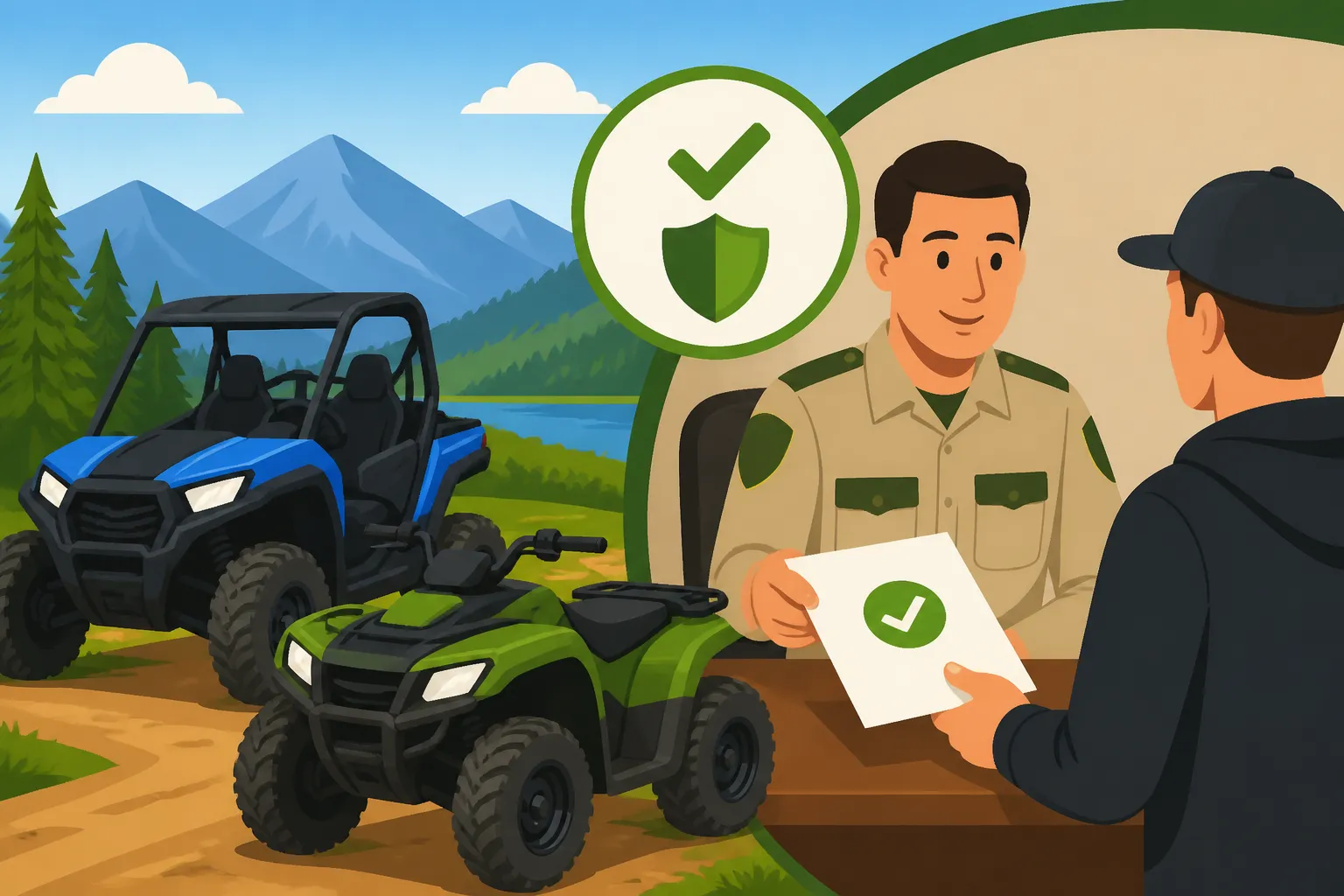
The key is to approach your local police detachment – typically an RCMP detachment in most communities, or a municipal police force in larger centres like Vancouver, Victoria, or Delta. You can't get these permits online or from ICBC directly. This face-to-face interaction allows officers to assess your specific need, understand the proposed route, and ensure you're aware of all the conditions and requirements. It's a dialogue, not just a form submission.
Which Police Detachment to Contact
The general rule of thumb is to contact the police detachment that has jurisdiction over the specific highway or section of highway you intend to use. If you live in a small town and the road in question is within your town's limits or just outside, your local RCMP detachment is the place to go. If you're planning a trip to a different region and anticipate needing to cross a highway there, it would be best to contact the detachment responsible for that area in advance.
For example, if you frequently ride the trails around Revelstoke and need to cross Highway 23 for a short connection, you'd contact the Revelstoke RCMP detachment. If your riding takes you to the Chilliwack area, the Chilliwack RCMP would be your point of contact. A quick search for "RCMP [Your Town/Region]" will usually give you their local contact information. Don't be shy about calling ahead to ask about their specific process for ORV operation permits; some detachments might have particular hours for this service or require an appointment.
What Paperwork and Information You'll Need
When you visit the detachment, you'll need to be prepared with some basic information and possibly some documents. While the permit itself is free, demonstrating you're a responsible operator with a properly equipped and registered machine is key. Here's a general checklist:
- Proof of ORV Registration: This is your Certificate of Registration, which you received when you registered your ORV with ICBC. You need to be able to present this document. [BC Riders Must Carry the Certificate] whenever they ride.
- Proof of Insurance: You'll need to show that your ORV has valid insurance. This typically includes the basic third-party liability coverage. [BC ATV Insurance Requirements] dictates what you need. Remember, if you're riding on a Forest Service Road, you'll likely need additional liability coverage.
- Your Driver's Licence: You must hold a valid driver's licence to operate an ORV on a highway, even with a permit. [BC Requires a Driver's Licence on a Highway].
- Details of Your Machine: Be ready to provide information about your specific ORV, including its make, model, year, and VIN (Vehicle Identification Number).
- Proposed Route and Purpose: This is critical. You'll need to clearly articulate where you need to operate the ORV on the highway (the specific road names, sections, and approximate distances) and why (e.g., to connect two trails, access a staging area, cross a highway). Having a map or being able to point out the specific location on a map can be very helpful.
- Safety Equipment: Be prepared to confirm that your ORV is equipped with the necessary safety features for highway operation, such as adequate headlights, taillights, brake lights, and potentially turn signals and mirrors. Police may want to visually inspect your machine or verify these details. This is where those SuperATV upgrades for visibility can really shine.
It's a good idea to gather all this information and have it organized before you go. This shows the officers you've done your homework and are taking the matter seriously, which can help smooth the process.
Conditions and Restrictions on Your Operation Permit
Once issued, an operation permit isn't a blank cheque to ride your ORV anywhere on the highway. Far from it. These permits come with very specific conditions and restrictions tailored to ensure safety and minimize disruption to regular road traffic. It's vital to read and understand every single condition on your permit, because violating them can lead to tickets, fines, or even the revocation of your permit. Remember, the police are granting you a privilege, not a right, to use the highway.
These conditions often reflect local road conditions, traffic volumes, and specific safety concerns in the area. What might be allowed on a quiet rural road in the Cariboo might be strictly prohibited on a busier route in the Okanagan. The police have the discretion to set these parameters, and they do so with public safety as their top priority.
Specified Routes, Times, and Distances
The most common and important conditions relate to where, when, and how far you can operate your ORV on a highway.
- Specified Routes: Your permit will almost certainly specify the exact highway or section of highway you are permitted to use. It might be Highway 3 for a specific 500-meter stretch, or a particular municipal road between two intersections. Deviating from this specified route is a violation. The police want to ensure you're taking the shortest, safest, and most direct path.
- Specified Times: To minimize conflicts with peak traffic, permits might restrict operation to certain hours of the day. For instance, you might be allowed to cross a highway only between 9 AM and 3 PM, avoiding morning and afternoon rush hours. This is particularly common in areas with significant commuter traffic. Operation might also be restricted to daylight hours, even if your machine has lights, due to visibility concerns.
- Specified Distances: The permits are generally for very short distances. It's not uncommon for a permit to specify a maximum distance, such as "not exceeding 2 kilometres" or "only for direct crossing." The intent is not to allow extended highway travel, but to facilitate brief, necessary movements.
This table illustrates some common conditions you might see on an ORV operation permit:
| Condition Category | Example Details | Purpose |
|---|---|---|
| Route | Highway 99 between XYZ and ABC roads | Ensures specific, direct, and shortest path is used |
| Distance | Not to exceed 1.5 kilometres | Prevents extended highway travel |
| Time | Daylight hours only (e.g., 7:00 AM – 7:00 PM) | Enhances visibility and avoids peak traffic |
| Equipment | Must have working headlights, taillights, brake lights, mirrors, turn signals | Improves safety and visibility to other road users |
| Speed | Maximum 20 km/h or lower than posted limit | Reduces risk due to lower ORV top speeds and handling |
| Purpose | Connecting ORV trail sections / Crossing highway | Limits use to essential, practical needs |
| Duration | Valid for up to two years from issue date | Provides reasonable validity for recurring needs |
Equipment Requirements and Safety Considerations
Beyond route and time restrictions, your permit will also emphasize equipment requirements and general safety. Even if your ORV is legally registered for off-road use, operating it on a highway demands additional vigilance and, often, specific equipment.
- Visibility: Police will want to ensure your ORV is highly visible to other road users. This includes bright, fully functional headlights, taillights, and brake lights. [BC Lighting and Seat Belt Requirements] cover these in more detail. Some permits might explicitly require turn signals and mirrors, even if they're not factory standard on all ORVs. Adding a set of quality, robust mirrors from a brand like SuperATV can dramatically improve your field of vision and road safety.
- Helmets and Seatbelts: If you're on a ride-astride ATV, a helmet is always mandatory in BC. For side-by-sides, seatbelts are crucial. When operating on a highway under a permit, these safety measures become even more critical due to the presence of faster-moving vehicles. [BC ATV Helmet Law Explained] and [BC Seat Belt Rules on a Side-by-Side] are essential reading.
- Speed Restrictions: ORVs are not designed for highway speeds. Your permit might stipulate a maximum speed limit, often significantly lower than the posted highway limit, to ensure you can safely control your machine and react to traffic. Always drive defensively and be aware of your surroundings when on the pavement.
- Carrying the Permit: Just like your registration and driver's licence, you must carry your operation permit with you whenever you are operating your ORV on the highway. If you're stopped by an officer and can't produce it, it's as if you didn't have one at all.
Remember, the goal of these conditions is to protect both you and other road users. Complying with them isn't just about avoiding a ticket; it's about ensuring everyone's safety on the roads.
Common Misconceptions About ORV Operation Permits
It's easy to get tangled up in the various rules and regulations surrounding off-road vehicles in British Columbia. Because an operation permit allows highway use, it often gets confused with making a machine "street legal." This is perhaps the biggest and most dangerous misconception, leading many riders astray. Let's clarify some of these common misunderstandings to ensure you're operating safely and legally.
The difference between a permit and actual street-legal status is monumental. A street-legal vehicle is designed, manufactured, and equipped to meet all federal and provincial highway safety standards, allowing it to be registered and operated freely on public roads. An ORV, by its very nature, is not designed for this purpose, and a simple permit doesn't change that fundamental classification. It provides a limited exception, not a full transformation.
"It Makes My ATV Street Legal"
This is the big one, and it's absolutely false. An ORV operation permit does not make your ATV or UTV street legal in British Columbia. It simply grants you specific, temporary permission to use a specific section of highway for a specific purpose under specific conditions. You cannot take your permit and start driving your quad to work, using drive-thrus, or cruising main street on a Saturday night.
The core reason an ATV or UTV is not street legal is due to fundamental design differences:
- Safety Standards: ORVs generally lack many of the safety features required for highway vehicles, such as extensive crash protection, specific lighting configurations, and emissions controls.
- Handling Characteristics: ORVs have a higher centre of gravity and different suspension setups, making them less stable and predictable at highway speeds or in traffic.
- Manufacturer Intent: Manufacturers design these machines for off-road environments, not public roads. Attempting to modify them to meet street-legal standards is often impractical, extremely costly, and may void warranties or compromise safety.
So, while the permit is incredibly useful for connecting trails, it's not a magic bullet that changes the inherent nature or legal classification of your machine. [BC Has No Street-Legal Path for an ATV] remains true, even with a permit in hand.
"I Can Get One Online or From ICBC"
Another common misconception is about where these permits come from. Unlike ORV registration or Autoplan insurance, you cannot obtain an ORV operation permit online, through an ICBC Autoplan broker, or from Service BC. These permits are exclusively issued by local police detachments (RCMP or municipal police forces) that have jurisdiction over the specific area where you intend to operate on the highway.
This local issuance process is by design. The police are best equipped to assess local road conditions, traffic patterns, and community needs. They can determine if the proposed use of an ORV on a specific section of highway is safe and reasonable. While you might discuss [BC Basic Autoplan on a Quad] with your ICBC broker, the operation permit itself is a separate police-issued document. So, save yourself a wasted trip or a fruitless online search; head straight to your local police detachment. [BC Permits Issued by Local Police] are the only way to go.
"The Permit Lasts Forever"
While some permits are issued for a decent duration, they definitely don't last forever. [BC Permits Valid Up to Two Years] is a common maximum duration for an operation permit. This means that after a couple of years, you'll need to reapply to your local detachment if you still require the authorization. The limited validity period allows police to review the permit conditions periodically, account for changes in local road infrastructure or traffic patterns, and ensure the rider is still complying with all requirements.
Think of it like an agreement that needs to be renewed. It's not a one-and-done deal. Keeping track of your permit's expiry date is important to avoid inadvertently operating your ORV illegally on a highway. A quick phone call to your local detachment a few weeks before your permit expires can help you understand their renewal process and ensure a smooth transition to a new permit.
Making the Most of Your Permit and Staying Safe
Having an ORV operation permit is a fantastic tool for BC riders, opening up possibilities for seamless trail connections and responsible highway crossings. But like any tool, it needs to be used wisely and safely. This isn't just about following the letter of the law; it's about being a responsible, courteous, and safe operator who respects both off-road and on-road communities. Your actions, especially when operating on a highway, reflect on all ORV enthusiasts.
Making the most of your permit means more than just having it in your pocket. It involves preparation, awareness, and a commitment to safe riding practices. The freedom to connect trails or access staging areas comes with the responsibility of ensuring you do so without incident.
Preparing Your Machine for Brief Highway Use
Before you even think about hitting that paved section with your permit, take a few minutes to ensure your machine is truly ready for road use, even if it's brief. While your ORV is built tough for the trails, the road presents different demands and safety considerations.
- Tires and Pressure: Check your tire pressure. Off-road tires are often run at lower pressures for better traction on soft terrain, but this can make them squirrelly and less stable on pavement. Inflate them to the manufacturer's recommended pressure for harder surfaces or for transport.
- Lights and Signals: Double-check all your lights: headlights, taillights, and especially brake lights. If your permit requires turn signals and mirrors, ensure they are clean, properly adjusted, and fully functional. Consider adding reflective tape to your machine or wearing high-visibility gear to make yourself more noticeable to other drivers. High-quality LED lights, perhaps an aftermarket bar from SuperATV, can dramatically improve your visibility.
- Brakes: Test your brakes before you leave. They need to be in perfect working order, as you'll be interacting with faster-moving highway traffic.
- Cleanliness: While not a legal requirement for the permit itself, keeping your ORV relatively clean, especially your number plate, can prevent unnecessary stops. [Keeping Your ORV Plate Clean Enough to Read] is a good practice. A clean machine also tends to have better visibility of its lights and reflectors.
Remember, a well-maintained and clearly visible ORV is a safer ORV, especially when sharing the road with cars and trucks.
Best Practices for Riding on a Highway with a Permit
Even with a permit, operating an ORV on a highway is different from riding on a trail or a resource road. Special care and attention are required.
- Stay Alert and Predictable: Be acutely aware of your surroundings. Scan continuously for other vehicles, road hazards, and changes in traffic flow. Signal your turns well in advance. Avoid sudden movements. Your ORV might be less visible to drivers of larger vehicles, so anticipate their actions and make yours as predictable as possible.
- Maintain Distance: Keep a safe following distance from vehicles in front of you. Your ORV's braking distance might be different from a car's.
- Ride to the Right: If there's no designated shoulder or if the shoulder is unsafe, ride as far to the right of the lane as is safely possible. [BC Rules for Riding a Shoulder] will guide you further. Yield to faster-moving traffic.
- Obey All Traffic Laws: This cannot be stressed enough. All speed limits, stop signs, traffic lights, and other rules of the road apply to you. [BC Rules for Crossing a Highway] means you must treat highway crossings with the same seriousness as any other vehicle operator.
- Be Mindful of Weather Conditions: Rain, fog, or snow can significantly reduce visibility and traction, making highway operation even more hazardous for an ORV. If conditions are poor, reconsider your route or postpone your trip.
- Carry All Documents: Always have your driver's licence, ORV Certificate of Registration, proof of insurance, and, of course, your operation permit readily accessible. [BC Riders Must Carry the Certificate] and [BC Riders Must Carry Photo ID] whenever they are riding.
By following these best practices, you're not only ensuring your own safety but also demonstrating responsible ORV use, which benefits the entire riding community in British Columbia.
Communicating with Law Enforcement and Other Road Users
Should you encounter law enforcement while operating on a highway with your permit, be prepared to calmly and courteously present your documents. Officers are often looking for proper registration, insurance, and the operation permit, ensuring you're complying with its conditions. Clearly stating your purpose and showing your valid permit will usually make the interaction brief and positive.
When it comes to other road users, remember that many drivers may not be familiar with ORVs operating on highways. They might be surprised or even confused to see your machine. A calm, predictable, and courteous riding style can help alleviate any potential frustration. A simple wave or nod to acknowledge other drivers can go a long way in fostering a positive perception of ORV riders. Ultimately, responsible permit use helps maintain good relationships between the ORV community and the broader public, ensuring these permits remain a viable option for riders in the future.
Disclaimer
This article is for general informational purposes only and does not constitute professional advice. Laws, prices and regulations vary by location and change over time. Consult a qualified professional for guidance on your specific situation.