Why an Operation Permit Is Good for Two Years
Oh, the age-old dilemma of ATV and UTV riders in beautiful British Columbia! We love our machines, we adore the freedom of the trails and resource roads, but then you hit that stretch of pavement, or need to connect two riding areas, and suddenly you're faced with the frustrating reality: your off-road vehicle (ORV) isn't exactly welcomed on the public highway. This guide is going to dive deep into a specific, sometimes confusing, solution to that problem: the BC operation permit, and why it's such a valuable tool for riders, especially with its generous two-year validity.
Understanding BC's Off-Road Vehicle Act and Highways
Let's be real, it's a dream for many of us to just hop on our quad or side-by-side and cruise down the road from our garage straight to the trailhead. But the moment your tires hit that paved public road, you're entering a whole new legal landscape governed by the Motor Vehicle Act, which has very different rules than the Off-Road Vehicle Act that covers your riding adventures on Crown land. It’s this fundamental clash that creates the headache for riders.
The Fundamental Restriction: ORVs and Public Roads
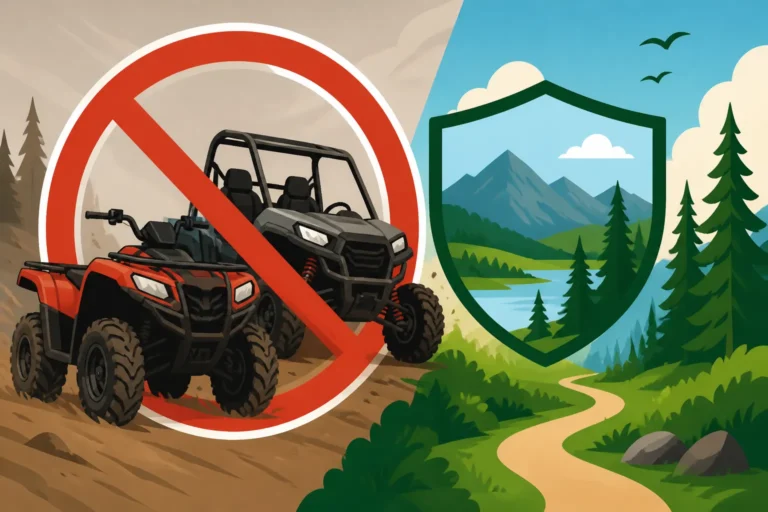
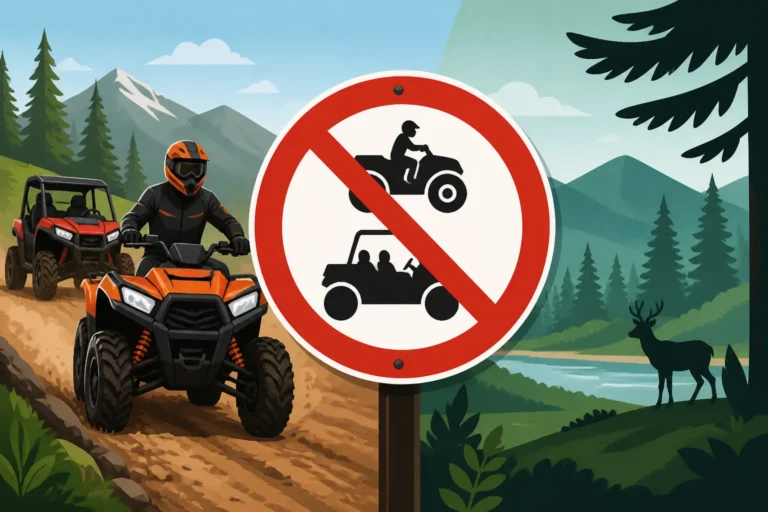
The core issue is that, by default, off-road vehicles like ATVs, UTVs, dirt bikes, and snowmobiles are simply not designed or legally permitted for use on public highways in British Columbia. This isn't just a minor technicality; it's a significant distinction that impacts everything from insurance to equipment requirements. The provincial government has a clear line drawn in the sand: highways are for highway vehicles. This rule is in place for safety, to separate slower, less protected off-road machines from faster, heavier road traffic. Think about it: your quad, while rugged, lacks many of the safety features and visibility requirements of a typical car or truck, and its handling characteristics are entirely different. This is why you won't see ORVs in BC treated as street-legal vehicles like they might be in some other jurisdictions.
This restriction can be incredibly frustrating when you're trying to access a prime riding area that requires a short jaunt on a paved road, or when two fantastic trail networks are separated by just a few kilometres of highway. You might have your machine legally registered under the [BC ORV Registration You Pay Once] system, and you might even carry liability insurance for Crown land, but that still doesn't give you carte blanche on the highway. The rules are strict, and violations can lead to significant fines. It's a common pain point for riders across the province, especially those who live in smaller communities where trailheads are often just a stone's throw from a main road.
Defining "Highway" in BC
So, what exactly is a "highway" in the eyes of BC law? It's not just the major four-lane arteries or bustling city streets. The definition of "highway" under the Motor Vehicle Act is surprisingly broad and encompasses almost any road or public thoroughfare that isn't explicitly designated for off-road use. This includes your quiet rural paved roads, gravel roads maintained by the municipality or province (that aren't Forest Service Roads), and even paved shoulders. If the public has a right to use it for vehicle travel, it's generally considered a highway.
This broad definition often catches riders by surprise. Many assume that a small, rarely-used paved road in the backcountry might be exempt, but that's rarely the case. It means that even short crossings or shoulder rides can land you in hot water if you don't have the proper authorization. Understanding this distinction is crucial for safe and legal riding. It's why we have to be so careful when we talk about [Can You Ride an ATV on the Road in BC?] and [BC Rules for Crossing a Highway]. The law aims for clarity, but the nuances can be tough to navigate without some guidance. For instance, a Forest Service Road, while often graveled, is generally considered Crown land access and falls under different rules than a public highway. It’s a subtle but important legal difference that dictates where you can and cannot ride without a special permit.
The Purpose of a BC Operation Permit
This is where the operation permit steps in as a practical, albeit limited, solution for many BC riders. It's not a "street legal" designation, and it doesn't mean your ATV can suddenly join the morning commute. Instead, it’s a specific, localized permission granted for very particular circumstances.
Bridging the Gap: Limited Highway Access
An operation permit acts as a bridge, allowing your registered ORV to legally traverse short sections of public highway for specific purposes. This is absolutely critical for riders who need to connect different trail systems, access fuel or amenities in a nearby town, or simply get from their staging area to the actual trailhead without illegally riding on the pavement. Without these permits, riders would be forced to trailer their machines for even the shortest distances, adding significant time, cost, and logistical hurdles to their outings. This is especially true for those riding in areas like the Kootenays or the Cariboo, where vast trail networks might be interrupted by small stretches of provincial highway.
The permit acknowledges the reality that while ORVs aren't highway vehicles, there are legitimate and unavoidable needs for them to briefly interact with the highway system. It's a pragmatic approach to facilitate responsible recreation and industry access. The key word here is "limited." These permits are not a workaround to make your quad street legal. They are for very specific, often short-distance, point-to-point movements, and they come with strict conditions about where and when you can use them. This is a crucial distinction to grasp. The police aren't just handing out free passes; they are providing a regulated avenue for essential travel.
Common Scenarios Where a Permit Helps
So, when would you actually need one of these valuable permits? Let's look at a few real-world situations many of us have faced:
- Connecting Trail Networks: Imagine you're riding a fantastic trail system, but to reach the next section, you need to cross a provincial highway or ride along a short section of a paved road for a kilometre or two. An operation permit makes this legal.
- Accessing Amenities: You've been out all day, your fuel tank is running low, or you need to grab some lunch. The nearest gas station or diner is just off the trail, but it requires riding on a municipal road for a short distance. A permit can cover this.
- Getting to a Staging Area: Perhaps your truck and trailer are parked in a designated staging area, but the actual entry point to the trails is a short distance down a public access road. Rather than loading and unloading, a permit allows you to legally drive your machine to the starting line.
- Work-Related Travel: For those who use their ORVs for work – say, to access remote worksites, conduct property inspections, or maintain forestry plots – these permits can be invaluable for legal transit between private land and work areas that may involve brief highway segments. [BC Registration Covers Work and Recreation] for the machine itself, but the operation on a highway requires this extra step.
- Special Events: Sometimes local communities host parades or special events where ORVs might be part of the festivities. An operation permit can provide the necessary legal cover for such specific, temporary movements on public roads.
In each of these scenarios, the permit provides peace of mind, allowing you to focus on your ride or your work without the constant worry of an unexpected run-in with law enforcement over a brief, necessary highway segment. It's why [Getting a Free Operation Permit From Your Local Detachment] is such a practical piece of advice for any serious BC rider.
How to Obtain a BC Operation Permit
Okay, so you've decided an operation permit is exactly what you need. How do you actually get one? It's simpler than you might think, though it does require a bit of planning and interaction with your local police force.
Who Issues These Permits? Your Local Detachment
Unlike your ORV registration, which you get through an Autoplan broker, operation permits are issued directly by local police detachments. This means your journey to getting a permit will involve visiting your local RCMP detachment or municipal police office. This decentralized approach makes sense because the police are best positioned to understand the specific local road networks, traffic conditions, and any unique concerns in their jurisdiction. They know which roads are busy, which ones are quiet, and where an ORV might pose a particular risk or be a nuisance.
When you go to apply, be prepared to explain your exact needs. Don't just show up and say "I need a permit to ride my quad on the road." Have your specific route in mind, including the start and end points, and ideally, a map to show them. Explain why you need to use the highway section – is it to connect trails, get to fuel, or access a specific work site? The more precise and reasonable your request, the smoother the process will be. Remember, these permits are discretionary, and the police have the authority to set conditions or even deny a request if they deem it unsafe or unnecessary. This personal interaction ensures that each permit is tailored to the local environment and the rider's genuine needs. So, don't be shy; have a clear conversation with them.
What Information Do You Need to Provide?
When you head to your local police detachment, make sure you bring all the necessary information and documents to make the process as efficient as possible. While the exact requirements might vary slightly between detachments, here's a general checklist of what you'll likely need:
- Your Valid Driver's Licence: This is non-negotiable. Even though you're riding an ORV, you'll be operating it on a public highway, which requires a valid driver's licence. [BC Requires a Driver's Licence on a Highway] is a key rule.
- Your ORV's Certificate of Registration: This proves your machine is legally registered in BC under the Off-Road Vehicle Act. You'll need to show your [BC's Certificate of Registration Explained] document.
- Proof of Insurance: Your ORV must have the minimum required third-party liability insurance for operation on a highway. This will typically be Basic Autoplan from ICBC. [BC Requires Basic Autoplan on a Highway] applies here, even for short distances. This is a critical safety net in case of an accident involving other vehicles or property.
- Details of Your Proposed Route: As mentioned, be precise. Specific road names, cross-streets, and an approximate distance. A marked map or even a screenshot from a mapping app can be incredibly helpful.
- Reason for Travel: Clearly articulate why you need to use the highway. Is it a regular commute to a job site, or an occasional connector between recreational areas?
- Details of the ORV: The police will need to know the make, model, year, and VIN of your specific machine.
Having all this ready not only speeds up the process but also demonstrates that you're a responsible rider who understands the rules and is serious about safety. Remember, these permits are generally [BC Permits Cost Nothing], which is a huge bonus, but that doesn't mean the application process should be taken lightly. It's about ensuring public safety and responsible use of the roads.
Conditions and Limitations of an Operation Permit
Getting an operation permit isn't a free pass; it comes with important conditions and limitations that you must adhere to. Ignoring these could lead to fines, permit revocation, or worse, an accident. Understanding these rules is critical for safe and legal riding.
Specific Routes and Times
One of the most important aspects of an operation permit is that it's typically issued for specific routes and often specific times or periods. The police won't give you a blanket permit to ride "anywhere on the highway." Instead, your permit will clearly delineate the exact road names or sections of road you are authorized to use. For example, it might state: "Permitted to operate ATV on Elm Street between Maple Avenue and Oak Road, Monday to Friday, 7 AM to 5 PM." This specificity is designed to minimize risk by limiting ORV travel to the safest and most necessary stretches of highway.
Think of it this way: the police are granting you a privilege, not a right, to use a piece of infrastructure not intended for your machine. They want to ensure this privilege is exercised responsibly. They might impose conditions like "daylight hours only" or restrict travel during peak traffic times. If you deviate from the specified route or time, you are operating outside the terms of your permit, and effectively, you're riding unregistered on a highway, which can lead to serious consequences. Always keep your permit on you and refer to it if you're unsure. This level of detail is a key part of [What Conditions Police Attach to an Operation Permit].
Machine Requirements and Safety Gear
While an operation permit grants you limited highway access, it doesn't exempt you from fundamental safety requirements. When operating on a highway, even for a short distance, your ORV is subject to some of the basic equipment rules of the Motor Vehicle Act, particularly regarding visibility and safety. This typically includes:
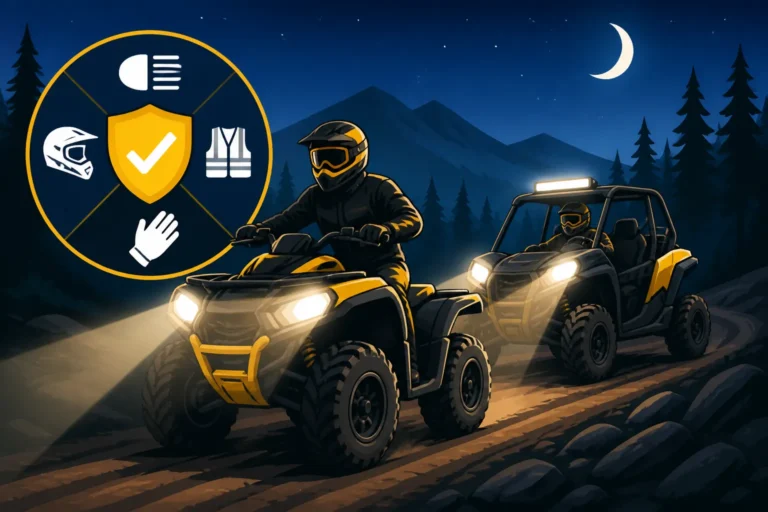
- Helmets: If you're on a ride-astride machine (like an ATV or dirt bike), a helmet is always mandatory, whether on the trail or on the highway. [BC Helmet Law Covers Every Rider]. For side-by-sides with roll cages and seatbelts, helmets may not be required if the manufacturer specifies the use of seatbelts instead.
- Lighting: Your machine must have functional headlights and taillights, especially if there's any chance you'll be operating near dusk or dawn, or during periods of low visibility. While the permit might specify "daylight hours only," having working lights is still good practice for safety.
- Mirrors: Some permits might require mirrors for better visibility of traffic behind you, aligning with standard highway vehicle requirements.
- Seatbelts: For side-by-sides, seatbelts are mandatory for all occupants, just like in a car.
- Registration Plate: Your [BC ORV Number Plates and Decals] must be clearly displayed and legible.
It’s crucial to understand that even for a short highway jaunt, you need to be highly visible and operate your machine safely and predictably. You are sharing the road with much larger, faster vehicles. While the permit itself doesn't mandate performance upgrades, thinking about your machine's visibility can make a difference. For example, if you're frequently on the road, adding extra reflective tape or upgrading your lights to brighter LEDs (making sure they are DOT compliant for highway use) could be a sensible safety measure. It's about being seen and staying safe.
Why the Two-Year Term?
And now, the big question: why is an operation permit good for two years? This generous validity period is actually a huge benefit for BC riders and reflects a practical understanding from law enforcement.
From a rider's perspective, a two-year permit means significantly less administrative hassle. Imagine having to renew this permit every month or every six months! That would be a constant drain on your time, requiring repeated visits to the police detachment. By offering a two-year term, the system acknowledges that many riders have consistent needs for highway access – whether it's for regular work, repeated visits to the same riding area, or simply living in a location where a short road connection is always necessary. It reduces bureaucracy for both the public and the police, allowing them to focus on more pressing matters.
From the police perspective, a two-year permit allows for stability and predictability. While the specific conditions can be tailored, a longer term means less frequent processing of routine applications. It's a balance between oversight and efficiency. They assess your needs, verify your documents, and grant permission for a reasonable period, trusting that you, as a responsible rider, will adhere to the conditions. If there are no changes in the road network, traffic patterns, or your personal circumstances, then the permit remains valid. It's a testament to the system's aim to be practical and supportive of responsible ORV use, within the confines of highway safety. This long validity period is explicitly stated in [BC Permits Valid Up to Two Years] and [Two Years on a Single Permit]. It's a real advantage for consistent riders.
Beyond the Permit: Other Highway Crossing Rules
While an operation permit is fantastic for planned, short highway transits, there are also specific rules for quick, unplanned highway crossings or navigating parking lots without needing a full permit. These are distinct from operation permits and cover very specific, brief interactions with the highway.
Quick Crossings at Stop Signs and Traffic Lights
Sometimes, you're not trying to ride along a highway, but simply across it to get from one section of Crown land or private property to another. BC law makes provisions for this, but with very strict conditions. An ORV can cross a highway at an intersection where there's a stop sign or a traffic light, provided it's done safely and directly. This isn't an invitation to cruise through a town; it's about connecting two points.
The key here is safety and minimal disruption. You must stop, yield to all traffic, and proceed directly across the highway at the nearest right angle. You cannot ride down the highway shoulder, nor can you turn and proceed along the highway. It's a straight shot, from one side to the other. You must also comply with all traffic signals and signs. This rule is designed to allow riders to access continuous trail systems or private property that happens to be bisected by a public road, without needing a special permit for literally every crossing. Always exercise extreme caution, as you're in the immediate path of highway traffic. These rules are covered in detail in [BC ORV Crossing Rules at Stops and Lights] and [BC Crossings at a Stop Sign].
Parking Lots and Staging Areas
What about those moments when you're loading or unloading your machine, or just need to move it around a parking lot before heading to the trails? The good news is that operating your ORV in a parking lot for the purpose of loading, unloading, or temporary staging is generally allowed, even if that parking lot is adjacent to a highway. This is a practical exception that recognizes the reality of how we transport and prepare our machines for a ride.
However, "parking lot" doesn't mean "any paved area." This typically refers to designated public or private parking lots. You're expected to operate your machine slowly, safely, and with due care, just as you would any other vehicle in a parking lot. It's not a free-for-all to do donuts or ride recklessly. The intent is solely for the practical movement of the ORV in preparation for or after a ride. Once you leave the confines of the parking lot and enter a public road, even if it's just a short driveway, the rules of the Motor Vehicle Act and the need for an operation permit (or adherence to crossing rules) immediately apply. Always be mindful of pedestrians and other vehicles in these areas.
Navigating the Rules: Tips for Responsible Riders
Understanding the rules is one thing; applying them safely and responsibly in the real world is another. As veteran riders, we know that common sense and respect for the law go a long way.
Planning Your Route Carefully
Before you even load your machine, take some time to plan your route, especially if it involves any interaction with public roads. Look at a map – a paper one or a digital app – and identify any sections of highway, municipal roads, or other paved areas you might encounter. Ask yourself:
- Do I need to cross a highway? If so, where are the legal crossing points (intersections with stop signs or traffic lights)?
- Do I need to ride along a highway for any distance? If the answer is yes, then you absolutely need an operation permit for that specific segment.
- Are there alternative routes on Crown land or Forest Service Roads that avoid highway use altogether? Sometimes, a slightly longer route off-pavement is the safer, more legal option.
- Are there any local bylaws in the communities you'll be near that might further restrict ORV use? While provincial law is primary, some municipalities have their own rules.
Careful planning can prevent unexpected encounters with law enforcement and ensure you're always operating within the legal framework. It's not about being overly cautious, but about being informed and prepared. Many of us have been caught off-guard by an unforeseen stretch of pavement, and the stress of wondering if you're breaking the law can ruin a good ride. So, plan ahead, and if in doubt, err on the side of caution.
Carrying Your Permit and ID
This might sound obvious, but it's astonishing how often riders forget to carry their essential documents. If you have an operation permit, it needs to be with you every single time you use your ORV on a permitted highway section. This isn't just a suggestion; it's a legal requirement. Think of it like your driver's licence – you wouldn't drive a car without it.
You should also carry your valid driver's licence and your ORV's Certificate of Registration. Police officers will often ask for all three if they stop you. Having them readily accessible, perhaps in a waterproof bag or pouch on your machine, makes any interaction with law enforcement quick and straightforward. You'll also need to carry [BC Riders Must Carry Photo ID] and [BC Riders Must Carry the Certificate].
Consider making a laminated copy of your operation permit and storing the original in a very safe place, just in case. While carrying an original is ideal, a clear copy might pass muster in a pinch, but check with your local detachment when you get the permit about their preference. The point is, don't leave home without proof of your legal authorization. This applies not just for highway permits, but also for proof of insurance when you're on a resource road – [BC Insurance Proof on the Trail] is just as important.
Understanding Local Bylaws
While the Off-Road Vehicle Act and Motor Vehicle Act set the provincial rules, it's also important to be aware that local municipalities can sometimes have their own bylaws regarding ORV use within their boundaries. While these generally can't override provincial highway rules, they can impact things like noise restrictions, specific road closures, or permitted access points within urban or residential areas.
For example, a small town might have a bylaw restricting ORV use on certain quiet residential streets, even if those streets aren't considered "highways" in the traditional sense. It's always a good idea to check with the local municipal office or their website if you plan to ride near or through a populated area. This shows respect for the community and helps avoid any misunderstandings or potential fines. Most communities are welcoming to riders, but they also appreciate us being good neighbours and following their local rules. Don't assume that because it's allowed on Crown land, it's allowed everywhere. It’s all part of being a responsible and considerate rider in our beautiful province.
Disclaimer
This article is for general informational purposes only and does not constitute professional advice. Laws, prices and regulations vary by location and change over time. Consult a qualified professional for guidance on your specific situation.