Due Care on a Blind Corner
Navigating British Columbia's vast and wild backcountry on your ATV or UTV is an incredible experience, but it comes with real dangers that many riders unfortunately overlook until it’s too late. One of the biggest hazards we face out there is the blind corner – that deceptively innocent bend in the trail or road where you simply cannot see what’s coming around the other side. This guide will walk you through the essential strategies, techniques, and equipment you need to ride with due care on blind corners, helping you stay safe and prevent accidents in BC's diverse terrain.
Understanding the Dangers of Blind Corners in BC's Backcountry
When you’re out exploring on your machine, especially on the winding logging roads and narrow trails that crisscross our province, blind corners are everywhere. They're not just a minor inconvenience; they're genuine accident traps that demand your full attention and respect. The sheer unpredictability of what lies beyond that visual barrier is what makes them so hazardous.
The Hidden Hazards: What You Can't See Can Hurt You
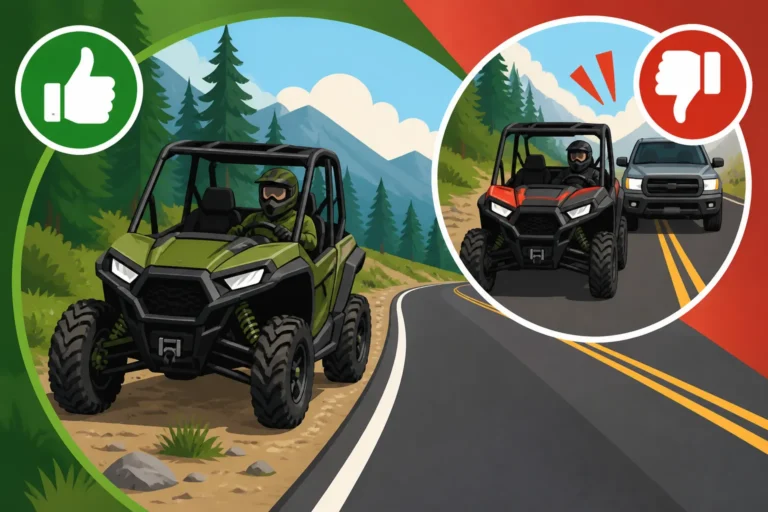
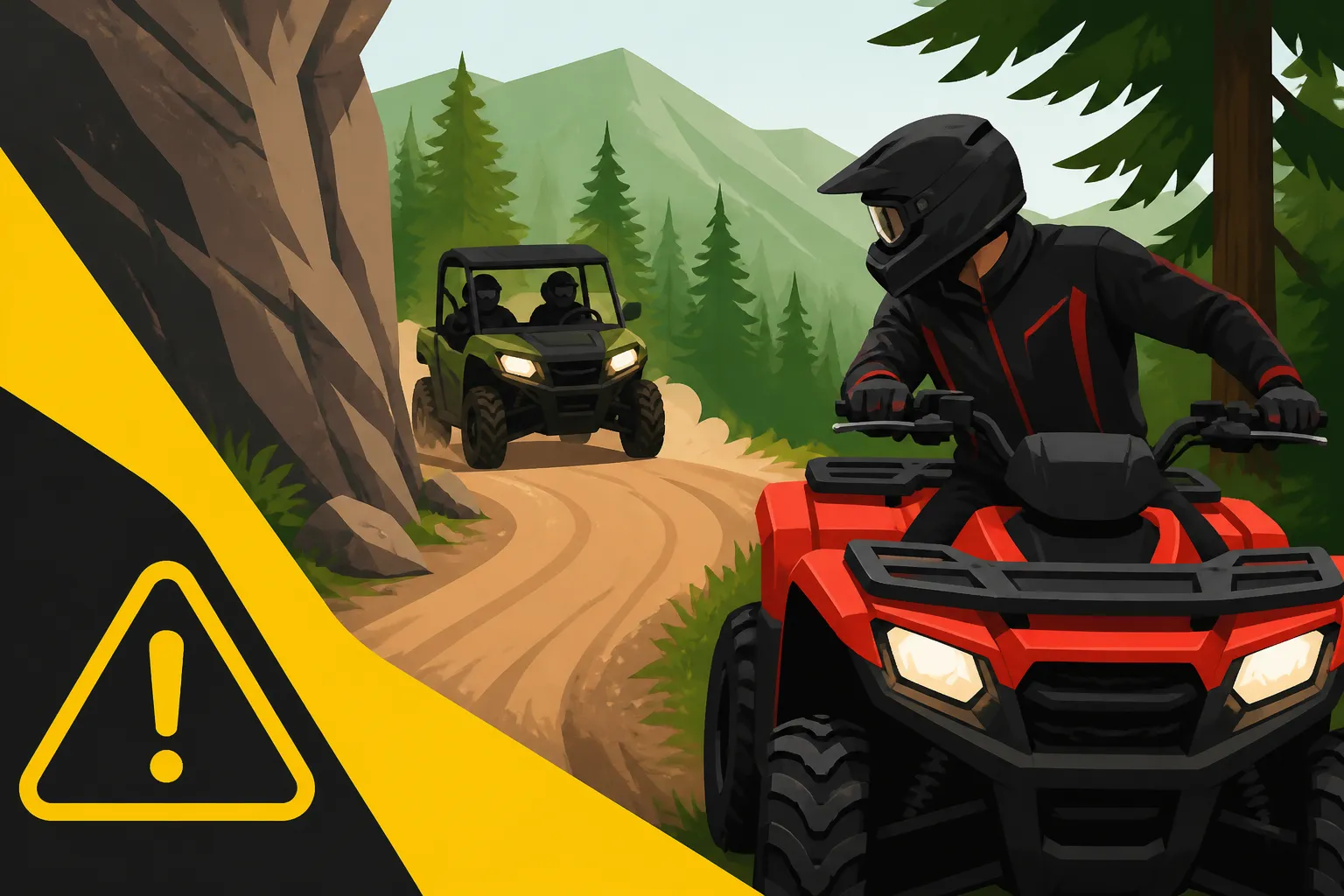
Think about it: you’re cruising along, enjoying the scenery, perhaps a bit of a flow state has set in. Then you approach a tight turn, and all you see is dense foliage or a sheer rock face blocking your view of what's ahead. This isn't just a psychological hurdle; it's a very real physical risk. What could be waiting on the other side? It could be another ORV, perhaps a side-by-side or a dirt bike, coming towards you at a similar speed, completely unaware of your presence. Even more concerning, especially on resource roads, is the potential for a massive logging truck to be rounding that corner, taking up most of the road, or a heavy equipment transport. These industrial vehicles are not only much larger and heavier, but they also have very limited maneuverability and often travel at surprising speeds. [BC Riders Meeting a Logging Truck] is a scenario no one wants to experience unprepared.
Beyond other vehicles, BC's dynamic environment presents its own set of challenges. A blind corner could conceal a fresh washout from recent rains, leaving a deep gully across your path. There might be a fallen tree, an unexpected rockslide, or a group of deer or elk enjoying a quiet moment on the trail. I've personally come around a corner to find a black bear sauntering across the trail more than once – a situation that requires immediate, decisive action. These aren't hypothetical scenarios; they are everyday realities in BC's backcountry. The dense forests, steep inclines, and variable weather conditions mean that trail conditions can change rapidly and often without warning, making visibility around corners even more critical.
The Physics of Blind Corners: Why Speed and Awareness Matter
Understanding the physics behind why blind corners are so dangerous can genuinely save your hide. It all boils down to two critical factors: speed and reaction time. When you're traveling at speed, your kinetic energy increases exponentially, meaning it takes a much greater distance to come to a complete stop. If you enter a blind corner too fast, your "sight distance" – the distance you can see ahead – is severely reduced compared to your stopping distance. This creates a terrifying gap where you might see an obstacle, but simply don't have enough time or space to react safely.
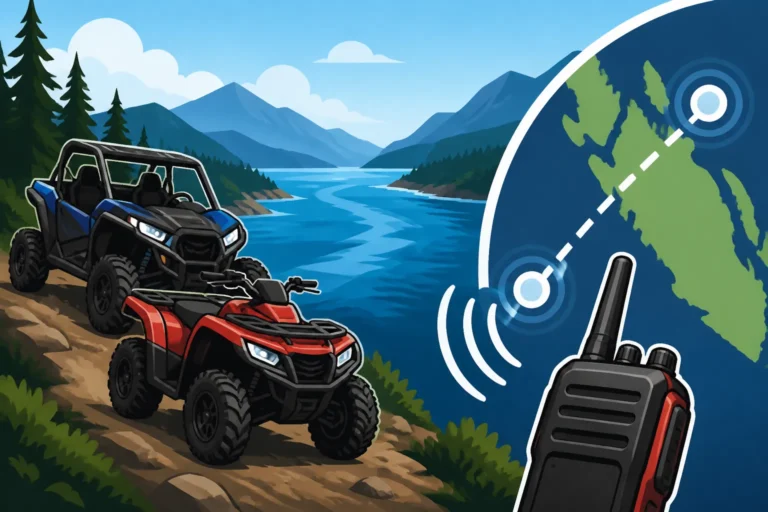
Consider the surface you're riding on. Loose gravel, mud, wet dirt, or even dry, dusty trails all have vastly different traction coefficients. Your braking distance on a loose gravel forest service road, for example, will be significantly longer than on a paved surface. Factor in the incline or decline of the corner, and the situation becomes even more complex. A steep downhill blind corner on loose rock could extend your braking distance by several machine lengths. This is why awareness isn't just about looking ahead; it's about constantly assessing the terrain, anticipating potential hazards, and knowing the limits of both your machine and your own riding skills. Mastering [BC Resource Road Radio Practice] is also a crucial element of awareness, especially on industrial roads where communication can prevent head-on collisions.
Essential Strategies for Navigating Blind Corners Safely
Riding safely around blind corners isn't just about being lucky; it's about being prepared and employing a consistent set of strategies. These aren't optional tips; they are fundamental practices that every rider, regardless of experience level, should adopt every single time they hit the trails. Developing these habits will drastically reduce your risk of an incident.
Slowing Down and Staying in Control: The Golden Rule
This might sound like common sense, but it’s the single most important piece of advice for blind corners: slow down. And I mean really slow down, well before you enter the bend. Your speed should be such that you can stop your machine within the distance you can see. If you can only see 10 feet into the corner, you should be going slow enough to stop in 10 feet. This often means reducing your speed to a crawl, even if the trail ahead looks clear or you're feeling confident. A good rule of thumb is to decelerate to a speed where you feel completely in control, ready to brake or maneuver instantly if a hazard appears.
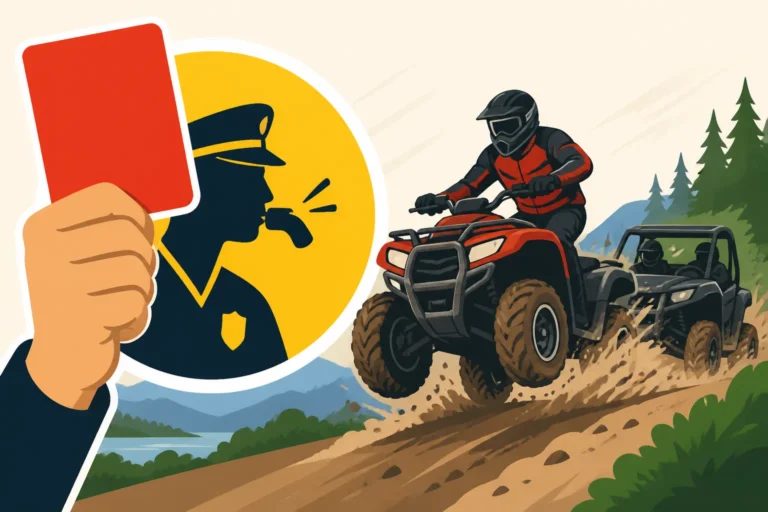
Along with reducing throttle, actively use your brakes and downshift your transmission. Engaging a lower gear allows for effective engine braking, which not only helps control your speed but also keeps your machine stable and ready for acceleration if you need to quickly clear an obstacle after the corner. For riders on manual transmissions, this means selecting the appropriate gear before entering the corner, not fumbling with it mid-turn. If you're on a CVT-equipped side-by-side, understand how your system delivers power and braking. Maintaining control also means keeping your body position neutral and balanced, ready to shift your weight to counteract unexpected forces like a sudden rut or a quick steering input. Always remember that on resource roads, [BC Forest Service Road Requirements] dictate a higher level of care and awareness due to shared use.
The Art of the "Warning Horn" and Other Signals
Your machine's horn isn't just for getting attention in a parking lot; it's a vital safety tool on the trail, especially around blind corners. Before entering a blind turn, especially one where you know visibility is nil or on a commonly used trail, give a couple of short, sharp blasts of your horn. This isn't meant to be an aggressive honk, but rather a clear, audible warning to anyone who might be on the other side. Think of it as saying, "Hey, someone's coming!" This simple act can give an oncoming rider or vehicle enough warning to slow down or move over, potentially preventing a collision. Some riders even install louder, aftermarket horns to ensure their presence is known, and companies like SuperATV offer robust horn kits specifically designed for ORVs to cut through engine noise and natural ambient sounds.
Beyond the horn, consider other signals, particularly if you're riding in a group. Hand signals can communicate upcoming turns or hazards to riders behind you. If you're leading a group, it’s good practice to have the lead rider signal an approaching blind corner, prompting everyone to slow down and prepare. Some groups even use pre-arranged radio calls for specific hazards. While not always practical for every blind corner, developing these communication habits within your riding circle enhances overall safety significantly. Always make sure your signals are clear and understood by everyone in your group.
Maintaining Your Lane and Expecting the Unexpected
When riding on a two-way trail or, more commonly, a Forest Service Road (FSR) in BC, it is absolutely paramount to maintain your side of the road, especially around blind corners. Just like driving a car on a winding paved road, you should always stay to the right. Don't be tempted to "cut the corner" to try and maintain speed or a smoother line. That half-second advantage you gain could put you directly into the path of an oncoming vehicle. On narrow FSRs, this becomes even more critical because there's often little room to maneuver, and the shoulder might drop off steeply or be filled with debris. Always ride defensively, assuming that there might be someone or something coming around that corner that is NOT sticking to their side.
Furthermore, always expect the unexpected. This means being prepared for more than just another ORV or logging truck. What if there's a group of hikers or mountain bikers? What if a section of the trail has washed out completely, or there's a fresh rockfall blocking half the path? What if a piece of heavy equipment has broken down just around the bend? These aren't far-fetched scenarios in BC's diverse and often rugged terrain. By mentally preparing for a variety of hazards, you reduce your surprise factor and increase your reaction time. This mindset is crucial for safe riding in the backcountry. Always be aware of [BC Forest Service Road Rules for ORVs] and the shared nature of these routes.
Advanced Techniques and Equipment for Enhanced Safety
While basic strategies are the foundation, there are additional techniques and pieces of equipment that can significantly bolster your safety when tackling blind corners, especially for those who frequent more challenging or remote areas. Investing in these can literally provide an extra layer of protection and awareness.
Communication is Key: Group Riding and Spotters
When riding in a group, effective communication becomes an invaluable tool for navigating blind corners. Don't underestimate the power of a good lead rider and tail rider system. The lead rider, acting as the eyes of the group, can slow down, assess the corner, and then relay information back to the rest of the group before anyone else enters the unknown. This can be as simple as a hand signal for "slow down" or "hazard ahead." For more advanced groups, portable two-way radios or helmet-mounted intercom systems allow for instant, clear communication. Imagine the lead rider saying, "Clear, but big puddle just past the apex!" or "Logging truck just came through, watch for dust!" This real-time information is priceless.
For extremely tricky or severely blind corners, especially on tight technical trails, deploying a spotter can be a game-changer. A spotter, usually someone from your group, can walk ahead to the apex of the corner and visually confirm if the path is clear or if there are any immediate obstacles. They can then signal you through the turn, guiding your speed and line. This is particularly useful in areas with very steep drops, dense vegetation, or unstable ground where a fall could have serious consequences. Always ensure your spotter is in a safe position and clearly visible to you before you start moving.
Upgrading Your Machine for Better Visibility and Awareness
Modern ATVs and UTVs are incredibly capable machines, but sometimes, a few well-chosen upgrades can dramatically improve your safety, especially concerning visibility. One of the simplest yet most effective upgrades is quality mirrors. Many stock ATVs don't come with mirrors, and side-by-sides often have small or easily obstructed ones. Installing robust, well-placed side mirrors and even a wide-angle rearview mirror can allow you to check for traffic behind you before merging or turning, and, crucially, to glance into the beginning of a blind corner's exit without having to crane your neck. Companies like SuperATV offer a wide range of durable mirrors designed specifically for the rigors of off-road use, including convex mirrors that provide a broader field of view, helping you spot things faster.
Another key area for improvement is lighting. While stock headlights are usually sufficient for basic riding, auxiliary LED light bars or spot lamps can drastically increase your forward visibility, especially in low-light conditions, dense forests, or on overcast days. A powerful light bar mounted on your roll cage or bumper can cast light further and wider, illuminating more of the trail ahead and giving you a better glimpse around the initial curve of a blind corner. This extra light can reveal unexpected ruts, hidden rocks, or even wildlife lurking just beyond your normal headlight beam. This is especially important when considering [BC Lighting Rules in Low Visibility], as ensuring you can see and be seen is critical. Good lights paired with mirrors provide a comprehensive visual awareness system, helping you react faster and more safely.
Preparing for the Worst: Emergency Procedures After a Blind Corner Incident
Despite all the precautions, accidents can and sometimes do happen. A sudden encounter on a blind corner can lead to a collision, a rollover, or hitting an unexpected obstacle. Having a clear plan for what to do in the immediate aftermath can make a significant difference in outcomes, potentially saving lives or mitigating further damage. This isn't about being pessimistic; it's about being realistically prepared for the inherent risks of backcountry riding.
Immediate Actions and Scene Management
If you find yourself involved in an incident after a blind corner, your first priority is always the safety and well-being of yourself and anyone else involved. Immediately assess for injuries. Even if you feel fine, do a quick self-check, and then check on any passengers or other riders. If someone is injured, do not move them unless they are in immediate danger (e.g., fuel leak, risk of fire, or being in the path of other traffic). A well-stocked first-aid kit, easily accessible on your machine, is absolutely non-negotiable for backcountry riding. Make sure it contains items for cuts, scrapes, sprains, and basic trauma care.
Once immediate medical needs are addressed, secure the scene. If your machine or another is blocking the trail, try to move it to a safer position if it can be done without causing further injury or damage. If you cannot move the machine, place visible markers (bright clothing, reflective triangles, or even large branches) far enough in both directions to warn approaching riders or vehicles. This is especially critical on blind corners where oncoming traffic still won't see the hazard until it's too late. If there's any chance of fire, shut off the fuel and electrical systems if safe to do so. In BC, any incident on Crown land involving injury or significant damage should be reported; understanding [BC Accident Reporting on Crown Land] is crucial.
Signalling for Help and Recovery Options
The backcountry often means being out of cell service, making signaling for help a significant challenge. This is why reliable communication devices beyond your cell phone are essential gear. A satellite messenger (like a Garmin inReach or a Zoleo) or a Personal Locator Beacon (PLB) can literally be a lifesaver, allowing you to send emergency messages with your exact GPS coordinates to rescue services. These devices work anywhere with a clear view of the sky and are worth every penny for the peace of mind they provide. Even if you're not planning a multi-day expedition, carrying one for day rides in remote areas is highly recommended.
Once help is on the way, or if injuries are minor and recovery is your next step, you'll need to consider how to get your machine out. If you have a winch on your ATV or UTV – and if you don't, it's a great upgrade to consider, with many options from companies like SuperATV – you might be able to recover your machine from a ditch or roll. Always carry basic recovery gear like a tow strap, shackles, and a small folding shovel. Knowing how to safely use your winch and recovery gear is just as important as having it. If you're riding in a group, multiple winches and machines can greatly assist in recovery efforts. Always remember that on shared resource roads, [BC Riders Meeting a Logging Truck] might be an issue, so clear the road as quickly and safely as possible.
Comparing Blind Corner Safety Practices
To help solidify these crucial safety practices, here's a quick comparison of safe habits versus risky ones when approaching a blind corner in BC's backcountry.
| Safe Practice | Risky Habit | Potential Consequence |
|---|---|---|
| Decelerate well before the corner. | Maintain speed or accelerate into the corner. | Head-on collision, loss of control, running off trail. |
| Stay to the right of the trail/road. | "Cut" the corner or drift into the opposite lane. | Collision with oncoming traffic (ORV, logging truck). |
| Use your horn before entering. | Assume the trail is clear or rely solely on visual cues. | Surprising other riders/vehicles, insufficient warning time. |
| Scan aggressively for hazards beyond the turn. | Focus only on the immediate trail directly in front of you. | Failing to see obstacles (washouts, fallen trees, wildlife). |
| Maintain proper body position and balance. | Ride rigidly, unprepared for sudden movements. | Being thrown from the machine, rollovers on uneven terrain. |
| Ride within your skill level and machine limits. | Push boundaries, overestimating abilities. | Loss of control, crashes, injury. |
| Carry a first-aid kit and communication device. | Rely on luck or cell service for emergencies. | Inability to treat injuries, stranded without help. |
Disclaimer
This article is for general informational purposes only and does not constitute professional advice. Laws, prices and regulations vary by location and change over time. Consult a qualified professional for guidance on your specific situation.