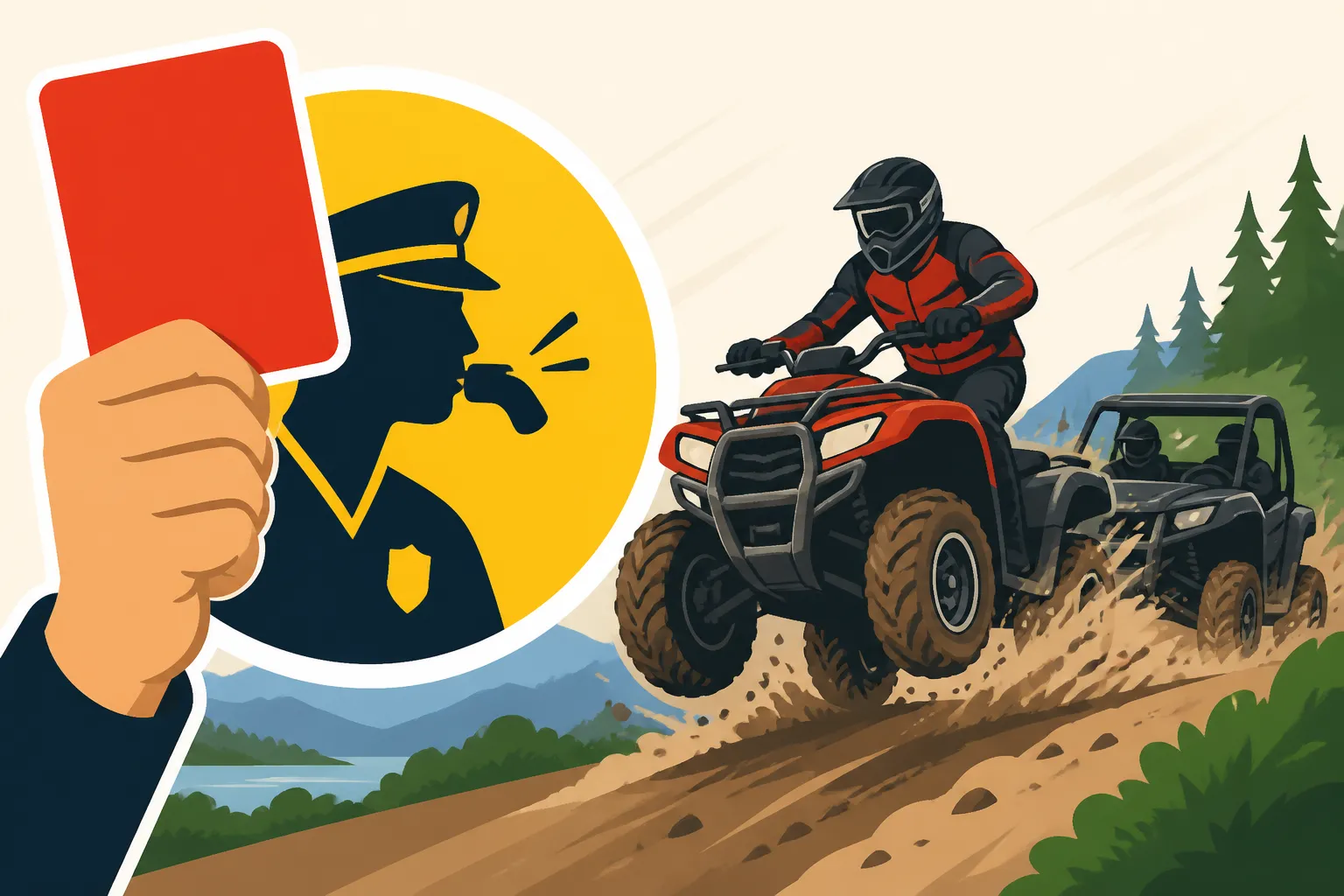
BC Fines for Careless Riding
It's incredibly frustrating to head out for a day of adventure on your ATV or UTV, only to find yourself facing a hefty fine because an officer decided your riding style was "careless." You thought you were just having fun, maybe pushing your machine a little, but the law in British Columbia has specific definitions that can catch even experienced riders off guard. This guide is here to shed light on what exactly constitutes careless riding under BC's Off-Road Vehicle Act, the penalties you could face, and crucially, how to keep your ride enjoyable and your wallet safe from unexpected tickets.
Understanding "Careless Riding" in BC for ATVs and UTVs
When we talk about "careless riding" for ATVs and UTVs in British Columbia, it's not just about reckless stunts or intentionally breaking rules. The BC Off-Road Vehicle Act has a much broader interpretation that can encompass actions you might consider harmless, or even just part of the fun of off-roading. Many riders feel a deep sense of injustice when they're ticketed for something that feels subjective, especially when they truly believe they weren't putting anyone in danger. It’s important to understand that the law looks at your actions through a very specific lens, focusing on safety and the potential for harm, not just the intent.
What the Law Actually Says About Careless Operation
The Off-Road Vehicle Act in BC, which became mandatory for registration in 2015, includes provisions for the "careless operation" of an off-road vehicle. Essentially, this means operating your machine without due care and attention, or without reasonable consideration for other people or property. This isn't about specific speed limits on every single trail, but rather the manner in which you're operating the machine in a given situation. It’s about being mindful of your surroundings, the terrain, the presence of others, and even the condition of your own vehicle. What might be acceptable on a wide-open, private field could be considered utterly careless on a busy multi-use trail or [BC Forest Service Road Rules for ORVs]. The definition is intentionally broad, which can make it feel like a catch-all for officers.
Think of it this way: the law isn't just about preventing accidents, but about preventing the risk of accidents. If an officer observes you riding in a way that creates an undue risk, even if nothing immediately goes wrong, that can be enough to warrant a charge of careless operation. This broad scope is often a point of contention for riders who feel singled out when they see others doing similar things. It’s a frustrating reality that enforcement can sometimes feel inconsistent, but understanding the legal framework helps you mitigate your personal risk. For a full rundown on what the Act covers, you might want to read [What the Off-Road Vehicle Act Covers in BC].
Common Scenarios That Lead to a Careless Riding Fine
So, what does "without due care and attention" or "without reasonable consideration" actually look like in the real world? It's often not the extreme stunts you see in videos. More commonly, it’s about riding in situations where your actions pose a clear, avoidable risk. This could be speeding through a recreation site where children are playing, taking sharp turns on a narrow trail where visibility is poor, or riding too close to other vehicles or pedestrians. It might even include riding a machine that's clearly not in safe operating condition, like a UTV with bald tires on a slippery hill, or an ATV with faulty brakes.
Another common scenario involves riding in prohibited areas or ignoring posted signage. While this might seem like a separate infraction, operating a machine in an area clearly marked as closed or restricted can be interpreted as operating without reasonable consideration for property (e.g., sensitive ecological areas) or for public safety. Think about riding an unregistered machine or one without a proper spark arrestor during wildfire season – while those are specific infractions, the manner of riding in those conditions could also lead to a careless operation charge. Even something as seemingly minor as riding in low visibility without proper [BC Lighting and Seat Belt Requirements] can be seen as careless if it increases risk. It’s about being proactive and always assuming you are being watched, especially when operating near other people, sensitive environments, or areas of high traffic like [BC Resource Roads Count as Crown Land].
The Difference Between Careless and Impaired Riding
It’s crucial to understand that "careless riding" is distinct from "impaired riding," though both carry serious consequences. Careless riding refers to your manner of operation – how you control your vehicle, your level of attention, and your consideration for others and property. Impaired riding, on the other hand, deals with your state of mind and body, specifically when affected by alcohol, drugs, or even severe fatigue to the point where your ability to operate the machine is compromised. [BC Impaired Riding Penalties] are typically much more severe because they fall under the Criminal Code, potentially leading to criminal charges, significant fines, driving prohibitions, and even jail time.
While both scenarios involve a lack of appropriate control or judgment, the legal framework and the penalties are different. You could be riding perfectly sober but still be charged with careless operation if your actions pose an undue risk. Conversely, an impaired rider might technically be operating "carefully" at a very low speed, but their impairment is the primary offense. The key takeaway here is that you need to be both sober and attentive, and you need to operate your machine responsibly at all times. Neither condition excuses the other; you must meet both standards to ride legally and safely.
The Fines and Penalties You Could Face
Getting a ticket for careless riding can feel like a punch to the gut, especially when you’re out trying to enjoy the incredible wilderness BC has to offer. The financial penalties alone can be significant, but it's not just about the money. There can be other, more far-reaching consequences that impact your ability to enjoy your machine in the future. Nobody wants to deal with the hassle of court dates or the stress of having their machine impounded, but these are very real possibilities if you're found to be riding carelessly.
Standard Violation Ticket Amounts for Careless Operation
When an officer issues a violation ticket for careless operation, the fine amount is generally set by regulation and can be quite substantial. While I can't give you exact dollar figures that might change, understand that you're looking at hundreds of dollars for a single infraction. This isn't a small parking ticket; it's a serious penalty designed to deter unsafe behavior. Imagine spending a few hundred dollars simply because an officer deemed your speed too high for the conditions, or because you rode too close to a hiking path. That's a day's worth of gas and snacks, or even a good chunk of money towards essential upgrades like a new set of SuperATV axles.
These fines are usually listed directly on the violation ticket, giving you the option to pay it or dispute it in court. Choosing to dispute means you'll need to prepare your case, potentially gather evidence, and take time off work to attend court, which itself is a significant investment of time and resources. Even if you believe you were unfairly targeted, the burden of proof in challenging a ticket can be a challenge. It's often a difficult choice for riders: pay the significant fine and move on, or invest even more time and potential legal fees to fight it. You can find more specific information on [BC Fines for Careless Operation] if you need further details on the common amounts.
Escalating Penalties for Repeat Offenses or Severe Incidents
One ticket for careless riding is bad enough, but repeat offenses or incidents deemed particularly severe can lead to escalating penalties. The legal system doesn't look kindly on habitual offenders or those whose actions pose extreme risks. This can mean higher fines imposed by a court, or even more serious administrative penalties. For instance, if your careless operation results in damage to property or causes injury to another person, you could be facing civil lawsuits in addition to the regulatory fines.
In severe cases, or if you accumulate multiple careless riding tickets, you might face temporary prohibitions from operating an off-road vehicle altogether. This means your pride and joy could be sitting in your garage, legally forbidden from hitting the trails for a period. This is especially frustrating for dedicated riders who rely on their machines for recreation or even work. The penalties are designed to be a strong deterrent, reminding everyone that responsible operation is not just a suggestion but a legal requirement.
Machine Seizure: A Very Real Consequence
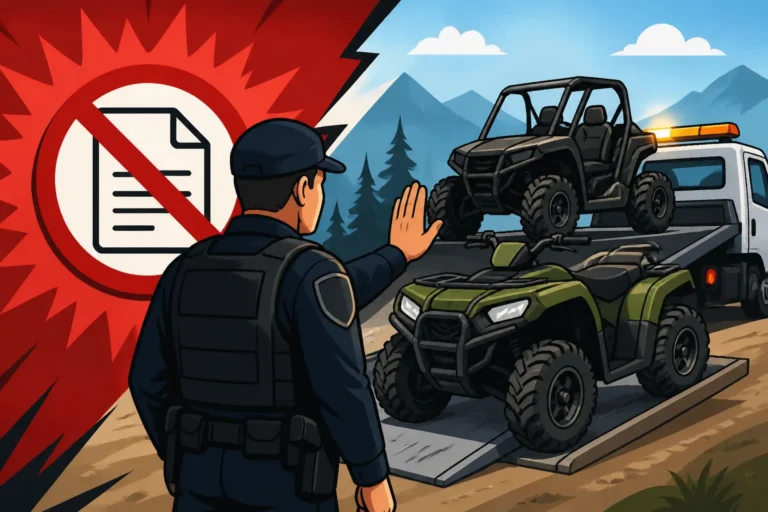
Perhaps one of the most frightening consequences of careless riding, especially for serious infractions or repeat offenses, is the potential for your machine to be seized by authorities. [BC Machine Seizures by Police] are not just a rumour; they are a very real power that law enforcement officers have under the Off-Road Vehicle Act. Imagine finishing a ride, only to have an officer tell you your ATV or UTV is being loaded onto a tow truck. You'd be left stranded, and then face the significant hassle and cost of recovering your machine, if you're even allowed to.
Machine seizure can happen on the spot if an officer believes the operation was particularly egregious, or if there's a history of previous violations. Recovering a seized machine typically involves paying impound fees, storage costs, and potentially additional fines or court-ordered conditions. In some rare cases, for very severe or ongoing violations, there's even the possibility of permanent forfeiture. The thought of losing your expensive ATV or UTV over a riding infraction is enough to make anyone rethink their throttle control. This consequence alone should be a powerful motivator for all riders to exercise extreme caution and consideration whenever they're out on [BC Crown Land Riding Explained] or any other accessible area.
How Enforcement Works on BC Trails and Roads
The vast wilderness of British Columbia might make you feel like you're alone and unobserved, but that's rarely the case. There are various authorities with the power to enforce the Off-Road Vehicle Act, and they are increasingly present on trails, resource roads, and popular riding areas. It's not just about getting caught; it's about understanding that these officers are looking for specific indicators of unsafe riding and that their observations carry legal weight.
Who Can Issue a Ticket: Conservation Officers, RCMP, and Bylaw Officers
Unlike highway traffic laws which are primarily enforced by the RCMP and municipal police, off-road vehicle laws in BC can be enforced by a broader range of personnel. Yes, the RCMP is often present in rural areas and on resource roads, but you'll also frequently encounter Conservation Officers (COs). These dedicated individuals are tasked with protecting BC's natural resources and wildlife, and that includes ensuring responsible recreation. They have full authority to issue tickets under the Off-Road Vehicle Act for violations like careless riding, environmental damage, or failing to have proper permits.
In some specific areas, especially near towns or managed recreation sites, you might also find local bylaw officers or park rangers who have been granted enforcement powers. This means that a casual ride through an area you perceive as safe could suddenly become a formal interaction with an enforcement official. It's why it's so important to be familiar with the rules, not just the provincial ones, but any local regulations that might apply to where you're riding. Always assume that the person in uniform has the authority to issue a ticket, and act accordingly.
Proving Careless Operation: What Officers Look For
So, what exactly are these officers looking for that constitutes "careless operation"? It's not always about catching you in the act of a high-speed crash. Often, it's about observations of your riding manner. They'll look at your speed relative to the conditions (visibility, terrain, other users), how you navigate corners, whether you're performing maneuvers that appear reckless or out of control, or if you're ignoring safety equipment like helmets or seatbelts (where applicable for UTVs). They might also consider whether your machine is properly equipped – for instance, a UTV lacking side nets or doors, even if modified with SuperATV aftermarket parts, could be deemed unsafe for aggressive riding.
Officers are trained to assess risk. If your riding creates a reasonable apprehension of danger in their mind, or if it demonstrates a clear disregard for the safety of others or the environment, that can be enough to justify a ticket. They often rely on their professional judgment and experience in the field. Sometimes, this can feel unfair to riders who believe they were in full control, but the officer's perspective on safety and risk is what counts in the eyes of the law. This subjective element is precisely what makes "careless riding" tickets so frustrating for many riders.
The Immediate Impact of Receiving a Violation Ticket
When you receive a violation ticket for careless riding, the immediate impact is both emotional and practical. Emotionally, it's disheartening to have your fun interrupted and to feel like you've been unfairly judged. Practically, you're now holding a piece of paper that represents a significant financial penalty and a legal process you need to address. The officer will typically explain the infraction and your options: either pay the fine by the due date or dispute it in court.
If you choose to pay, the matter is generally closed, although the infraction might be recorded. If you choose to dispute, you'll need to contact the provincial court system, file your notice of dispute, and then prepare for a court appearance. This involves gathering any evidence you have, potentially lining up witnesses, and presenting your case to a judge or justice of the peace. It can be a time-consuming and stressful process, often weighing heavily on riders who just want to get back to enjoying their machines. Therefore, understanding and preventing these tickets in the first place is always the best approach.
How to Avoid Careless Riding Fines and Stay Safe
Nobody wants to deal with fines, court dates, or the risk of machine seizure. The best offense is a good defense when it comes to avoiding careless riding tickets in BC. It’s not about riding timidly; it's about riding smart, safely, and with a keen awareness of your surroundings and the legal expectations. Being a responsible rider benefits everyone: it keeps the trails open, reduces conflicts, and ensures you can continue to enjoy your machine for years to come.
Riding Responsibly: It's More Than Just "Following the Rules"
Riding responsibly goes beyond just knowing that [BC Registration Became Mandatory in 2015] or that you need a [BC ORV Number Plates and Decals]. It's about cultivating a mindset of safety and respect every time you throw a leg over your ATV or buckle into your UTV. This means:
- Adjusting to Conditions: Your speed and riding style should always match the terrain, weather, visibility, and traffic. A wide-open gravel road might allow for higher speeds, but a narrow, winding trail with blind corners definitely does not.
- Respecting Others: Share the trail! Slow down when passing hikers, equestrians, or other motorized users. Give them space and minimize dust and noise.
- Protecting the Environment: Stay on designated trails. Avoid sensitive areas like wetlands, riparian zones, or delicate alpine meadows. Don't spin your tires unnecessarily or leave garbage behind.
- Anticipating Hazards: Always be looking ahead for obstacles, other trail users, or sudden changes in terrain. Riding defensively can prevent many close calls.
It's a proactive approach to riding that prioritizes safety over thrills. While it might feel like "dumbing down" your ride, it's actually about mastering control and judgment, which are hallmarks of a truly skilled rider.
Essential Gear and Machine Maintenance for Safer Riding
Your gear and the condition of your machine play a huge role in safe operation and, by extension, in avoiding careless riding fines. An officer observing a poorly maintained or ill-equipped machine being ridden aggressively is far more likely to issue a ticket.
Here's what to focus on:
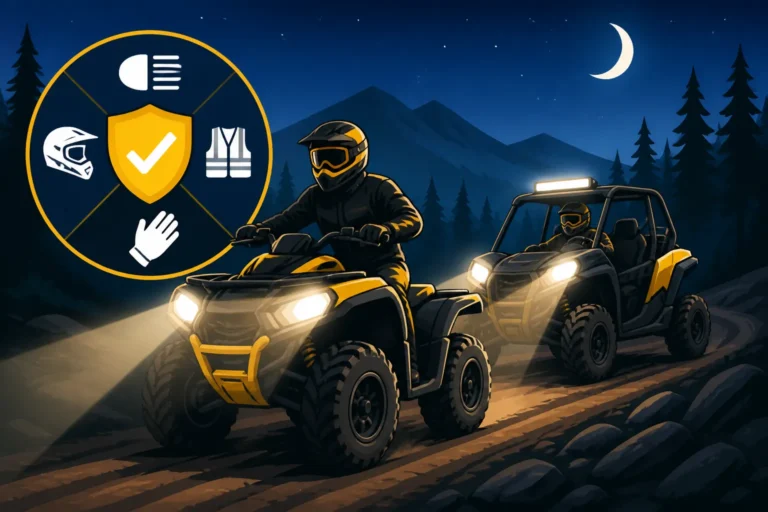
- Personal Protective Equipment (PPE): Always wear a proper helmet (which is legally required for ride-astride machines like ATVs – see [BC Helmet Law Covers Every Rider]), eye protection, gloves, long sleeves and pants, and sturdy footwear. For UTVs, ensure all passengers are buckled up, and consider additional safety gear like side nets or doors if you're venturing onto challenging terrain.
- Machine Condition: Regularly inspect your ATV or UTV. Check your brakes, tires, lights, steering, and suspension. Ensure your spark arrestor is intact and functioning, especially during fire season. A well-maintained machine is safer and performs predictably, reducing the risk of an accident or an officer deeming its operation careless. If you've got a SuperATV winch, make sure it's in good working order for self-recovery, not for reckless pulling.
- Appropriate Modifications: While aftermarket modifications can enhance your machine, ensure they don't compromise safety or legality. For example, overly loud exhausts can attract attention and contribute to a perception of careless operation due to noise pollution.
Think of it this way: if your machine isn't safe, or if you're not wearing the right gear, you're already exhibiting a form of "lack of due care" before you even turn the key.
Educating Yourself and Your Riding Buddies
One of the most powerful tools in avoiding fines is knowledge. The Off-Road Vehicle Act and its associated regulations are comprehensive, and while they might seem daunting, understanding the basics can save you a lot of grief. Don't rely solely on what you think the rules are or what "everyone else does."
Here are some ways to stay informed and help your riding group:
- Read the Regulations: Familiarize yourself with the key aspects of the Off-Road Vehicle Act. You don't need to be a lawyer, but knowing the major dos and don'ts is crucial.
- Take a Safety Course: While [BC ATV Safety Training Options] are generally voluntary for adults, they offer invaluable instruction on safe riding techniques, risk assessment, and legal requirements. This can significantly improve your judgment on the trail.
- Join a Club: Local ATV/UTV clubs are a fantastic resource. They often have members who are very knowledgeable about local trails, regulations, and best practices. They also promote responsible riding and community engagement.
- Educate Your Group: Before heading out, have a quick chat with your riding buddies about responsible riding, especially if there are new riders or if you're exploring a new area. Remind everyone about speed limits, giving space, and respecting others.
By taking these proactive steps, you not only reduce your personal risk of fines but also contribute to a more positive image for the entire off-road riding community in British Columbia. We all want to keep our trails open and accessible, and responsible riding is the key to achieving that.
Common ORV Offenses and Their Consequences
To give you a clearer picture of the types of infractions that can lead to fines beyond just "careless riding," here's a table outlining some common offenses under the BC Off-Road Vehicle Act and the nature of their penalties. Remember, these are general descriptions, and specific amounts or consequences can vary based on circumstances and changes in regulations.
| Offense Category | Example Infraction | Nature of Penalty | Key Prevention Strategy |
|---|---|---|---|
| Operation & Conduct | Careless Operation | Significant financial fine, potential machine seizure, court appearance. | Ride with due care, consider others/property, match conditions. |
| Impaired Operation (alcohol/drugs) | Criminal charges, very large fines, driving prohibitions, jail time, vehicle impoundment/forfeiture. | Never ride under the influence. | |
| Riding in Prohibited Area | Financial fine, potential machine seizure. | Check maps/signage, respect closures. | |
| Registration & Documents | Unregistered ORV | Financial fine, potential machine seizure. | Ensure your ORV is properly registered with ICBC. |
| Failing to Carry Certificate of Registration | Financial fine. | Carry your [BC Riders Must Carry the Certificate] on every ride. | |
| Failing to Carry Photo ID | Financial fine. | Carry valid photo ID. | |
| Equipment & Safety | No Spark Arrestor (during wildfire season or on managed sites) | Significant financial fine (e.g., BC Spark Arrestor Rules and Fines), potential machine seizure. | Install/maintain an approved spark arrestor. |
| No Helmet (on ride-astride ORV) | Financial fine. | Always wear a CSA/DOT approved helmet. | |
| No Seatbelt (where required, e.g., UTV) | Financial fine. | Ensure all passengers are belted in. | |
| Youth Riders | Unsupervised Minor | Financial fine to supervising adult, potential machine seizure. | Adhere to [BC Youth Riding Rules and Supervision]. |
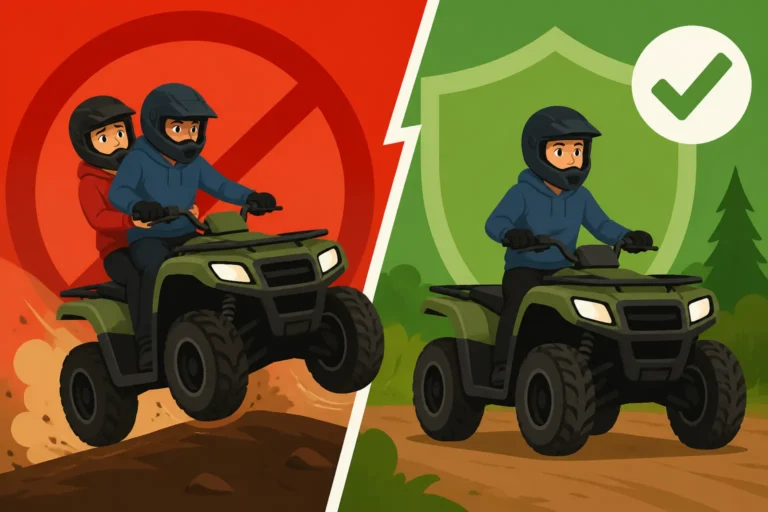
| Minor Carrying Passenger | Financial fine to supervising adult, potential machine seizure. | Follow manufacturer and provincial rules on passengers. |
Disclaimer
This article is for general informational purposes only and does not constitute professional advice. Laws, prices and regulations vary by location and change over time. Consult a qualified professional for guidance on your specific situation.