BC Machine Seizures by Police
There’s almost nothing worse than the feeling of dread that washes over you when you see those flashing lights in your rearview mirror, especially when you’re out enjoying a ride on your ATV or UTV in the beautiful BC backcountry. And for many riders, that dread can turn into a full-blown nightmare: having your machine seized by the police. It’s a frustrating, costly, and often bewildering experience that can leave you stranded and facing serious legal and financial headaches. This guide is here to help you understand why seizures happen, what the immediate and long-term consequences are, and most importantly, how to prevent your off-road vehicle from ever being impounded by BC law enforcement.
Why Does BC Police Seize ATVs and UTVs?
When police in British Columbia decide to seize an off-road vehicle, it’s not usually done on a whim. There are very specific reasons rooted in provincial laws like the Off-Road Vehicle Act and even the federal Criminal Code. Understanding these triggers is the first step in avoiding the headache of impoundment.
Riding Unregistered or Uninsured
One of the most common reasons for an ATV or UTV seizure in BC stems from non-compliance with basic provincial requirements: registration and insurance. Since November 1, 2015, it has been mandatory for almost all ORVs operating on Crown land or Forest Service Roads in BC to be registered with the provincial government. This isn't just a suggestion; it's the law. If you're caught riding an unregistered machine where registration is required, not only can you face significant fines for [BC Fines for Riding an Unregistered Machine], but your machine can also be impounded.
What often catches riders by surprise is the link between registration and insurance. While basic liability insurance isn't mandatory for all Crown land riding (it is for FSRs and highways), showing proof of registration is generally what triggers the enforcement. If your machine isn't registered, it’s often assumed you haven’t taken the necessary steps to meet other legal requirements, including insurance. Imagine you're out exploring some incredible trails near Nelson, perhaps on an older quad you bought years ago, completely unaware that [BC Registration Became Mandatory in 2015]. An officer stops you, asks for your papers, and suddenly, you're looking at a ticket and a tow truck because you couldn't prove your machine was legally recognized and, by extension, had the appropriate coverage. This is a very real scenario that plays out far too often, leading directly to seizure. It's not just about paying a fine; it’s about losing immediate access to your vehicle.
Impaired Operation and Criminal Code Violations
This is arguably the most serious category for machine seizures, carrying the heaviest penalties. If you are operating an ATV or UTV while impaired by alcohol or drugs, you are not just violating provincial off-road vehicle laws; you are breaking the Criminal Code of Canada. The law treats an off-road vehicle just like any other "conveyance" when it comes to impaired operation, whether it's on a public road, a logging road, or even a remote trail. This means police have the authority to make arrests, issue criminal charges, and, yes, seize your machine.
The consequences for [BC Impaired Riding and the Criminal Code] are severe, including hefty fines, driving prohibitions, potential jail time, and a criminal record. The seizure of your machine in such cases is often immediate and used as evidence. Picture a group of friends enjoying a campfire on a Friday night, and one decides to "just run the quad down the trail a bit" after a few drinks. If caught, that spontaneous decision can lead to their machine being towed away, an arrest, and a cascade of legal problems far beyond a simple traffic ticket. These [BC Impaired Riding Penalties] can truly alter a person's life, and the seizure of the machine is just the beginning of that difficult process.
Careless or Dangerous Operation and Public Safety
Police also have the power to seize ATVs and UTVs when their operation poses a significant risk to public safety or demonstrates extreme carelessness. This can include excessive speed in inappropriate areas, reckless stunts, riding in prohibited zones, or generally operating the machine in a manner that endangers other people, wildlife, or property. While a single minor infraction might lead to a ticket, a pattern of dangerous behaviour or an egregious act can result in the vehicle being impounded.
Think about someone ripping through a popular recreation site near Chilliwack, doing wheelies near families, or tearing up sensitive ecological areas. These actions aren't just annoying; they're illegal and show a disregard for safety and environmental protection. Public complaints often trigger police response in these situations. The penalties for [BC Fines for Careless Operation] can be substantial, but when the police determine that the operator's actions represent a clear and present danger, seizure becomes a tool to immediately remove that danger from the public space. It’s a measure designed to prevent further harm and enforce responsible riding.
The Immediate Impact of a Seizure
Having your ATV or UTV seized by the police is an incredibly disruptive and expensive event. It’s not just an inconvenience; it immediately hits you in the wallet and can leave you in a real bind.
On-the-Spot Impoundment and Towing
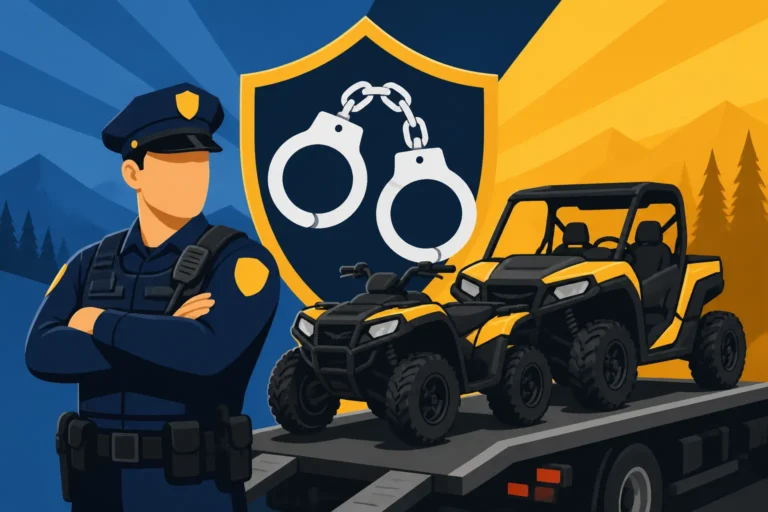
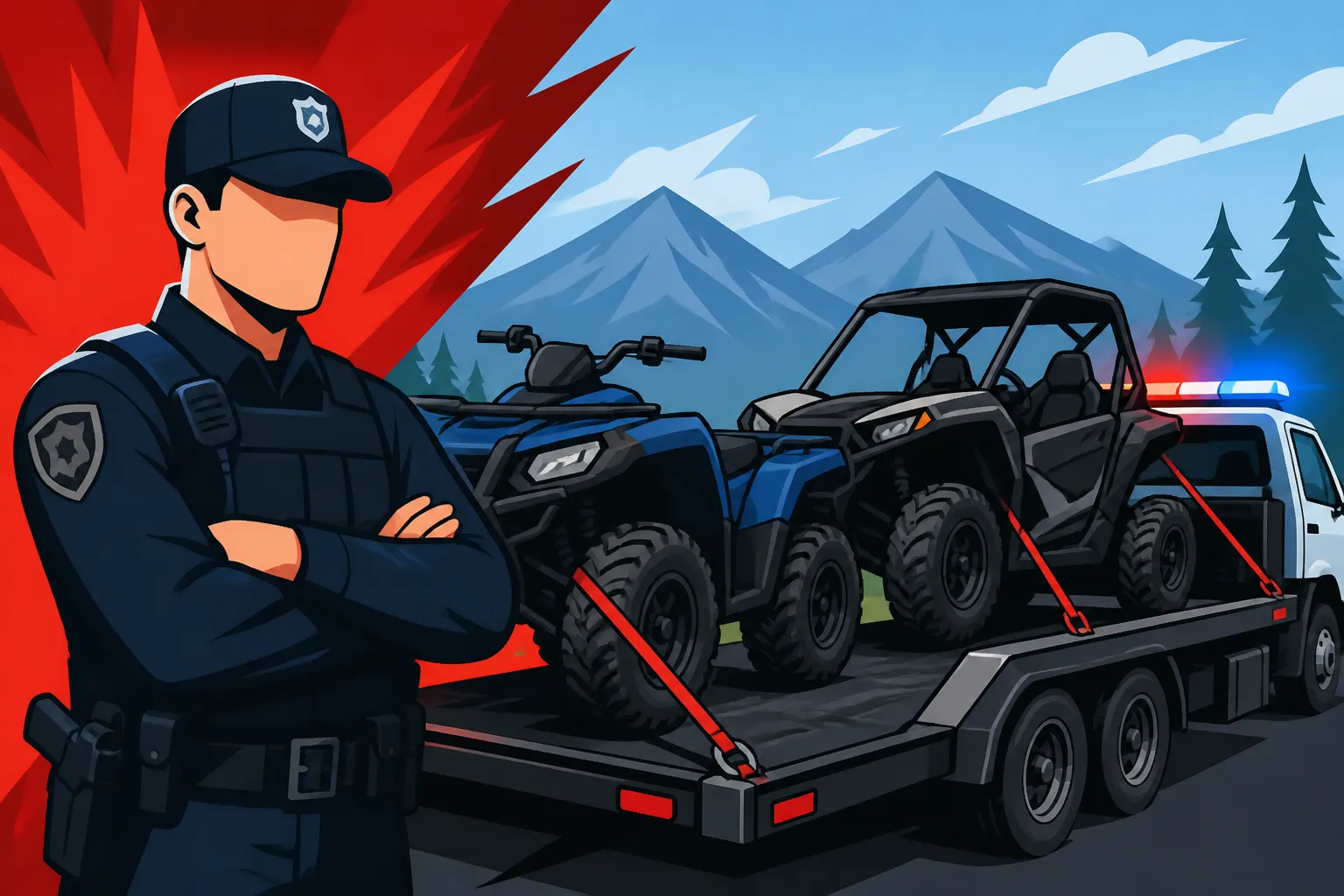
When a machine is seized, it’s not just a warning or a promise that it might be taken later. In most cases, it’s an immediate, on-the-spot impoundment. This means a tow truck is called, and your ATV or UTV is physically removed from wherever you were riding. If you’re deep in the backcountry, this can be particularly problematic, as you’ll be left stranded, potentially miles from civilization or your tow vehicle. This is part of the [BC Seizure Powers Under the ORV Act] — officers have the authority to act decisively.
Imagine you're enjoying a beautiful day riding near the Okanagan, and suddenly your machine is being loaded onto a flatbed. You’re left standing on the side of a gravel road, perhaps with your helmet in hand, facing a long walk or waiting for a ride from a friend. The clock starts ticking immediately on costs, too. The towing company charges for the call-out and the transport to their impound lot. Then, daily storage fees begin to accumulate, turning a frustrating situation into a financial drain with every passing hour. These fees are not cheap and can quickly add up, especially if there's a delay in resolving the underlying issue that led to the seizure.
Financial Burden: Fines, Fees, and Legal Costs
The financial impact of a seizure goes far beyond the initial tow. You’ll be on the hook for a range of expenses, and they accumulate quickly. First, there are the fines associated with the offense that led to the seizure. If it was for an unregistered machine, that could be one set of [BC Violation Tickets Cost]. If it was for careless driving or, even worse, impaired operation, the fines can be significantly higher, potentially in the thousands of dollars.
Then come the impound and storage fees. These are charged by the towing company and the impound lot, not by the police. They are commercial rates and can escalate rapidly. Many riders are shocked to find that after just a few days or weeks, the storage fees alone can outweigh the value of an older machine. If the seizure involves criminal charges, you also need to consider legal fees for a lawyer, court costs, and potential lost wages for court appearances. It's a compounding financial burden that can easily spiral out of control.
Here’s a simplified look at the types of costs you might face:
| Cost Type | Description | Estimated Impact |
|---|---|---|
| Violation Fines | Penalties for offences like riding unregistered, careless operation, lack of spark arrestor, etc. | Moderate to High (Hundreds to Thousands of Dollars) |
| Towing Fees | Cost to transport your ORV from the scene of seizure to an impound lot. | Moderate (A few hundred dollars, varies by distance) |
| Storage Fees | Daily charges for keeping your ORV at the impound lot. | High (Can quickly accumulate to hundreds or thousands) |
| Administrative Fees | Fees charged by police or ICBC for processing the impoundment and release. | Low to Moderate (Often under a hundred dollars) |
| Legal Fees | Costs for a lawyer, especially if facing criminal charges like impaired operation. | Very High (Thousands to Tens of Thousands of Dollars) |
| Lost Wages | Time off work for court dates, resolving issues at ICBC, or arranging machine release. | Variable (Depends on individual income and time spent) |
| Insurance Premiums | Potential increase in insurance costs due to traffic violations or criminal convictions. | Long-term (Can be hundreds more per year for several years) |
This table doesn't even cover potential damages to your machine during towing or storage, or the cost of alternative transportation while your ORV is impounded.
Legal Consequences and Your Future Riding Privileges
Beyond the immediate financial hit, a machine seizure can trigger significant legal consequences. Depending on the nature of the offence, you might face court appearances, probation, or even a driving prohibition, which can extend to all motor vehicles, including your car or truck. For serious offences like impaired driving, the legal ramifications are severe and long-lasting, including a permanent criminal record. This can impact your employment, travel, and even personal reputation.
Even for less severe violations, accumulating tickets can lead to higher insurance premiums and a review of your driving record. It sends a clear message that your behaviour is deemed unsafe or illegal, and authorities are willing to use the full extent of the law to curb it. Dealing with the legal system is often complex and stressful, further highlighting why preventing a seizure in the first place is always the best approach.
How to Get Your Seized Machine Back (If Possible)
Once your ATV or UTV has been seized, the process of getting it back can be complicated, costly, and time-consuming. There's no quick fix, and you'll likely need to jump through several hoops.
Addressing the Underlying Offence
The first and most crucial step is to resolve whatever legal issue led to the seizure. Your machine is essentially being held as a guarantee until you comply with the law. If your ORV was seized because it was unregistered, you will need to register it. This often involves gathering all your paperwork, including [BC Bills of Sale for Every Prior Owner] and possibly a [BC Statutory Declaration for an ORV] if you have gaps in the ownership chain, and taking them to an Autoplan broker to complete the [Registering an ATV With ICBC in BC] process. Until that’s done, the impound lot won't release your machine.
If the seizure was due to outstanding fines for previous infractions, those fines will likely need to be paid. For more serious charges, such as impaired operation, you will have to navigate the criminal justice system. This means attending court, dealing with lawyers, and abiding by any conditions set by the court. In some cases, especially with criminal convictions, your machine might even be subject to forfeiture, meaning you may never get it back. It’s a harsh reality, but the courts can decide that a machine used in serious criminal activity should not be returned to the offender.
Paying Impoundment and Storage Fees
Even after you've dealt with the legal reason for the seizure, you still can’t just walk up to the impound lot and drive your machine away. You must pay all accumulated towing and storage fees in full. These fees are typically collected by the impound lot operator, not by the police, and they often demand cash or certified payment before they will release the vehicle.
It’s not uncommon for these fees to climb into the hundreds or even thousands of dollars, depending on how long your machine has been held. If your ATV or UTV is older or has a lower market value, you might face the difficult decision of whether it’s even worth paying the fees to retrieve it, especially if the costs exceed what the machine is actually worth. Many riders have reluctantly abandoned their machines because the financial burden of retrieval became too high. Every day your machine sits there, the cost grows, adding to the pressure to resolve the situation quickly.
Seeking Legal Advice
For more complex cases, particularly those involving criminal charges or if you believe your machine was unlawfully seized, seeking legal advice is highly recommended. A lawyer specializing in motor vehicle or criminal law can help you understand your rights, challenge the seizure if appropriate, and guide you through the legal process. They can explain the nuances of [Disputing a Violation Ticket] or navigating court proceedings.
While hiring a lawyer adds to the overall cost, it can potentially save you a lot more in the long run, especially if it helps you avoid hefty fines, a criminal record, or keeps your machine from being permanently forfeited. They can also often act as an intermediary, helping to coordinate with authorities and the impound lot. Trying to tackle the legal system alone, especially when emotional about a seized machine, can lead to costly mistakes.
Preventing Seizure: Best Practices for BC Riders
The best way to deal with a machine seizure is to prevent it from ever happening. By adopting a proactive and responsible approach to riding, you can significantly reduce your risk of an unpleasant encounter with law enforcement and ensure your adventures remain trouble-free.
Always Be Prepared: Registration, Insurance, and Documentation
This cannot be stressed enough: be absolutely sure your ATV or UTV is properly registered and insured. In BC, this means completing the necessary paperwork through an Autoplan broker. Make sure you understand [BC ATV Insurance Requirements] for where you plan to ride, especially on [BC Forest Service Road Requirements]. Always carry your [BC Riders Must Carry the Certificate] of Registration with you, along with valid [BC Riders Must Carry Photo ID]. A waterproof pouch secured to your machine or carried on your person is an excellent way to keep these vital documents safe from the elements and readily accessible.
Beyond the essentials, it's wise to carry proof of insurance, even if it's voluntary for some Crown land. [BC Insurance Proof on the Trail] is key. Think of it as your riding passport – without it, you could be denied entry, or worse, have your vehicle confiscated. When outfitting your machine for rugged BC trails, consider robust storage solutions for all your gear and important documents, perhaps from reputable brands like SuperATV, which are designed to withstand challenging conditions and keep your essentials secure. Having all your [BC Registration Paperwork Checklist] in order is your primary defence against a seizure for administrative reasons.
Ride Responsibly and Know the Rules
Responsible riding is about more than just avoiding tickets; it’s about safety, respect, and ensuring the sustainability of our riding areas. Always adhere to posted speed limits, stay on designated trails, and avoid areas where ORV use is prohibited, such as certain [BC Provincial Parks That Ban Machines] or [BC Motor Vehicle Prohibitions Explained] zones. Never operate your ATV or UTV under the influence of alcohol or drugs. Not only is it illegal, but it impairs your judgment and significantly increases the risk of accidents, injury, and certainly, seizure.
Familiarize yourself with BC’s specific ORV rules, including [BC Helmet Law Covers Every Rider], [BC Youth Riding Rules and Supervision], and [BC Rules for Riding Crown Land]. Be mindful of other trail users – hikers, mountain bikers, horseback riders, and wildlife. This includes understanding the risks of [BC Fire Centre Riding Bans] and always checking current conditions before heading out, especially during dry seasons. Being a respectful and informed rider goes a long way in avoiding negative attention from enforcement officers.
Regular Maintenance and Safety Checks
While not a direct cause for seizure in most cases, a well-maintained machine is a safer machine, and it also tends to operate within legal limits for things like noise and emissions. Before every ride, conduct a quick inspection: check your tires, brakes, lights, and ensure your [BC Spark Arrestor Requirements] is clean and functional. A loud, poorly maintained exhaust system can attract unwanted attention from authorities, as can non-functional lights, especially if you’re riding at dusk or in low visibility.
Ensuring your machine is in top working order not only provides a better riding experience but also reduces the likelihood of breakdowns in remote areas, which could lead to complications. For reliable replacement parts or upgrades, many riders turn to trusted names like SuperATV to keep their machines in top shape, which contributes to safer, more compliant riding. A properly maintained machine that meets safety and legal standards is less likely to be stopped in the first place, thus reducing any risk of a seizure.
Disclaimer
This article is for general informational purposes only and does not constitute professional advice. Laws, prices and regulations vary by location and change over time. Consult a qualified professional for guidance on your specific situation.