Why a Young Rider Cannot Carry a Passenger
It's a common scenario for families who love hitting the trails on their ATVs and UTVs in beautiful British Columbia: your child is old enough to ride their own machine, and naturally, they might want to bring a friend or a younger sibling along for the adventure. However, while the excitement is totally understandable, BC has very clear and strict rules regarding young riders and carrying passengers on off-road vehicles. This guide will dive deep into why a young rider cannot carry a passenger in BC, explaining the regulations, the crucial safety reasons behind them, and what this means for your family's riding plans.
The BC Rules on Youth Riders and Passengers
Navigating the regulations for off-road vehicles (ORVs) in British Columbia can sometimes feel like trying to follow a faint trail through dense forest – it's easy to get a bit lost! But when it comes to youth riders and passengers, the rules are thankfully quite clear, though perhaps not always what parents might expect. The core of it all stems from the Off-Road Vehicle Act and its associated regulations, designed to keep everyone safe on our vast network of trails and resource roads.
Defining "Young Rider" in BC
First off, let's nail down what BC considers a "young rider" in the context of ORV operation. Generally, the province's rules make a significant distinction for anyone under the age of 16. While children under 12 are largely restricted from operating ORVs except on private land with direct adult supervision, the focus for passenger rules primarily impacts those between 12 and 15 years old. This age group is often eager to explore and might feel competent enough to handle a machine with an extra person, but the law sees it differently. For instance, a 14-year-old rider, even with parental permission and supervision, is still classified as a young rider subject to specific limitations, including the passenger prohibition. You can find a comprehensive breakdown in [BC Youth Riding Rules Explained].
The Explicit Passenger Prohibition
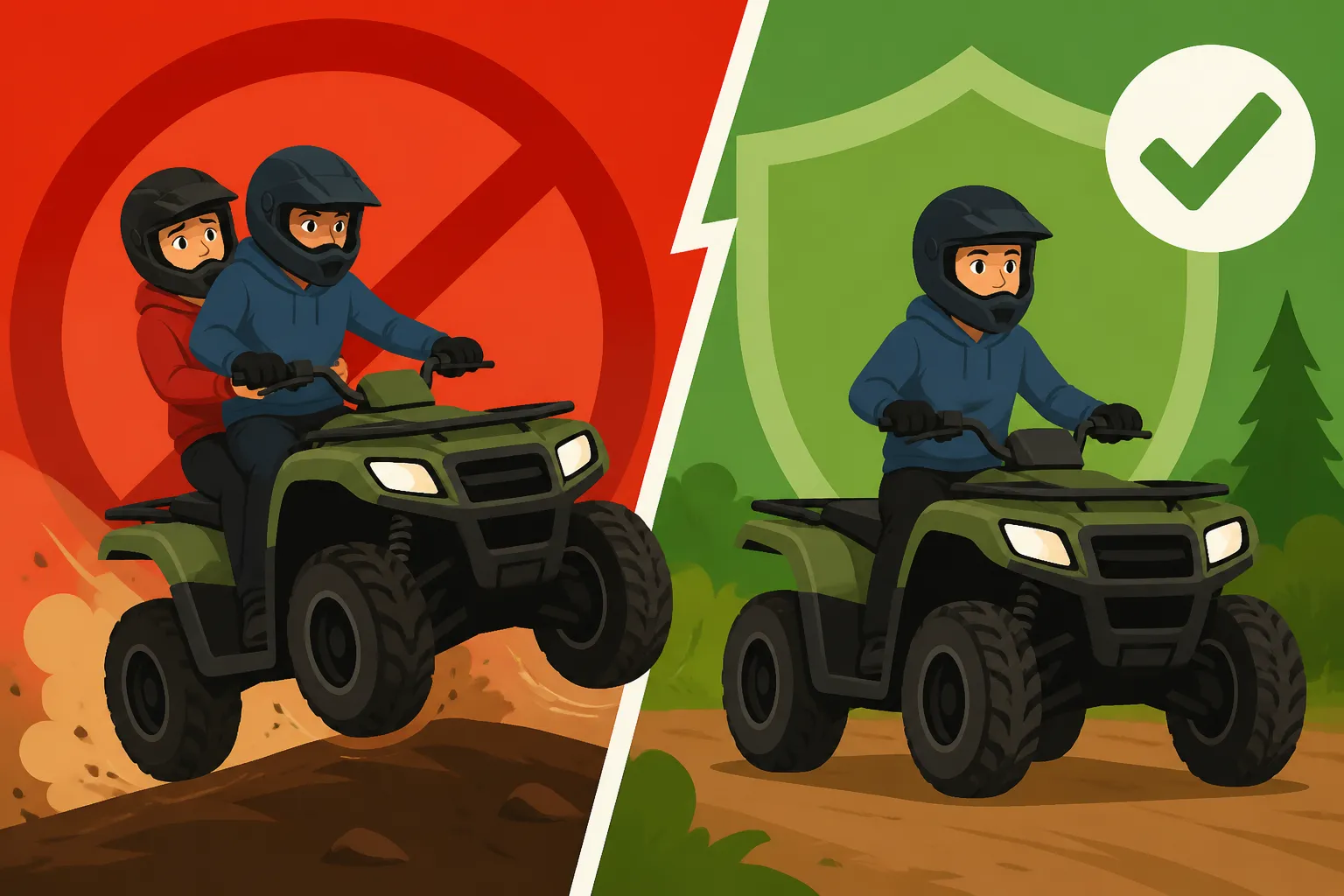
So, what's the bottom line? The BC Off-Road Vehicle Regulation explicitly states that a person under 16 years of age who is operating an ORV must not carry a passenger. This isn't a suggestion; it's a hard rule. It doesn't matter if the passenger is their twin sibling, a best friend, or even a supervising adult. If the operator is under 16, their machine is a solo mission. This rule applies across all types of ORVs that fall under the Act, including ATVs, UTVs (side-by-sides), dirt bikes, and snowmobiles. It’s important to distinguish this from the rules that apply to adult operators, where manufacturer guidelines often dictate passenger capacity. For young riders, the provincial regulation overrides even a manufacturer's suggested passenger capacity if the machine is designed for two or more.
Where These Rules Apply
It's natural to wonder if these rules are universal across all riding locations. The short answer is: essentially, yes. These provincial regulations apply whenever an ORV is being operated on Crown land, which includes the vast majority of BC's public trails, forest service roads (FSRs), and other backcountry areas. [BC Crown Land Triggers the Registration Rule] highlights how pervasive Crown land is in BC. While private property rules might be less stringent, relying on a private landowner's discretion, the moment a young rider ventures onto public land, these provincial passenger prohibitions kick in. This means that whether you're out exploring the Okanagan backcountry or riding the logging roads around Prince George, the rule remains the same.
Safety First: Why Passengers are Prohibited for Young Riders
It's easy to look at a rule like "no passengers for young riders" and feel a bit frustrated, especially if your child feels confident and capable. But behind every regulation, there's usually a critical safety concern, and this one is no exception. The prohibition isn't about doubting your child's abilities; it's about acknowledging the inherent challenges of operating an ORV and minimizing risks for everyone involved.
Reduced Control and Stability
Operating an ATV or UTV requires a significant amount of skill, coordination, and physical strength. Even on flat, easy terrain, a rider needs to be constantly shifting their weight, steering, and managing throttle and brake inputs to maintain control. Add a passenger into the mix, and everything changes.
- Weight Distribution: A passenger, even a small one, significantly alters the machine's center of gravity. This makes it harder for the operator to lean into turns, maintain balance on uneven terrain, or react quickly to unexpected obstacles. A sudden shift from the passenger can throw an experienced adult rider off balance, let alone a developing young rider.
- Increased Braking Distance: More weight means more momentum, which translates to longer braking distances. A young rider, whose reaction times and strength might still be developing, could struggle to stop a loaded machine safely, especially in an emergency.
- Steering and Maneuverability: The extra weight and altered dynamics can make the ORV feel sluggish and harder to steer, requiring more effort and precise input from the operator. Imagine trying to navigate a tight, technical section of trail with an unresponsive machine – it's a recipe for disaster.
These factors are why manufacturers often specify age and weight limits for passengers, and why companies like SuperATV focus on suspension and stability enhancements for optimal control. However, these enhancements are designed for adult operation; the fundamental challenge of a young operator managing extra weight remains.
Skill Development and Emergency Response
Learning to ride an ORV safely is an ongoing process. Young riders are still honing their skills, building muscle memory, and learning how to anticipate and react to varying trail conditions. Introducing a passenger adds a layer of complexity that can overwhelm even a promising young operator.
- Divided Attention: A young rider should be 100% focused on operating their machine and scanning the trail ahead. A passenger can be a distraction, requiring communication, consideration, and potentially diverting the operator's attention from critical safety tasks.
- Emergency Braking/Swerving: In a split second, an operator might need to slam on the brakes or swerve to avoid a fallen log, a sudden drop-off, or an oncoming machine. With a passenger, these maneuvers become exponentially more dangerous. The risk of the machine rolling, pitching forward, or ejecting riders increases dramatically.
- Communication Challenges: Effective communication between operator and passenger is crucial, but young riders might not have the experience to anticipate what their passenger needs or to clearly communicate their own intentions.
This is why [BC Safety Training Options] are so important. These courses focus on solo rider proficiency, ensuring the operator can handle the machine safely before any additional factors are introduced.
Manufacturer Guidelines and Machine Design
Beyond provincial law, machine manufacturers themselves have a strong stance on who can operate their vehicles and who can be a passenger. Most ATVs are designed as single-rider machines, with a seat specifically for one person. While some models are built for two-up riding, they typically have extended seats and often stiffer suspension to accommodate the extra load, and they are always intended for adult operators.
- Age and Weight Restrictions: Manufacturers often stipulate minimum age and weight requirements for both operators and passengers, aligning with the physical and cognitive development needed to operate or ride safely. [BC Manufacturer Age and Weight Rules] delve deeper into this.
- Design for Stability: A single-rider ATV's design prioritizes the stability and maneuverability needed for one person. Adding a passenger onto a machine not designed for two can lead to catastrophic instability, especially on side-by-side inclines or during sharp turns. Even on UTVs designed for multiple occupants, the driver must be an adult with a full understanding of the machine's capabilities and limitations.
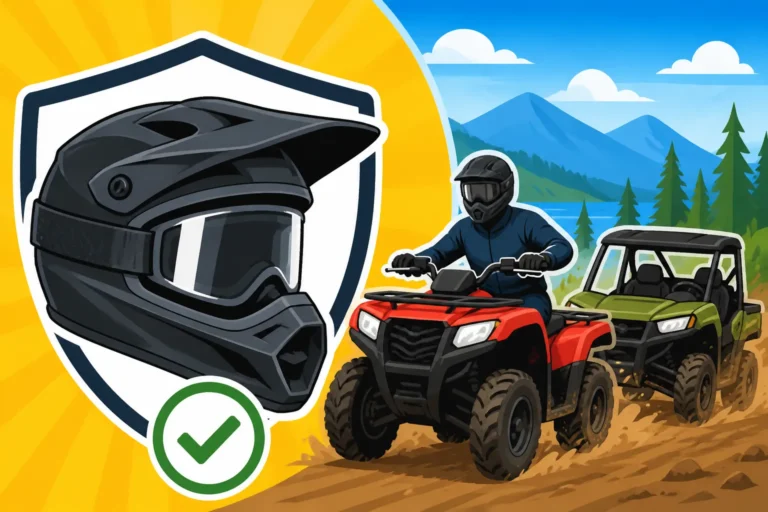
- Helmet and Safety Gear: While all riders in BC must wear appropriate helmets, as covered in [BC Helmets on Ride-Astride Machines], the dynamics of a crash with a passenger are vastly different and often more severe, particularly for the passenger who might have less opportunity to brace for impact.
The combination of reduced control, compromised skill development, and manufacturer warnings paints a clear picture: prohibiting passengers for young riders is a proactive measure to prevent serious accidents and injuries.
What Happens if a Young Rider Carries a Passenger?
Understanding the "why" behind the rule is crucial, but it's equally important to be aware of the "what if." What are the actual consequences if a young rider is caught with a passenger on a BC trail or resource road? It's not just a slap on the wrist; the penalties can be significant and far-reaching, affecting both the young rider and the supervising adult.
Violation Tickets and Fines
The most immediate consequence of violating the passenger prohibition is a violation ticket. Conservation Officers, RCMP, and other enforcement personnel regularly patrol ORV areas to ensure compliance with the Off-Road Vehicle Act. If they observe a young rider with a passenger, they can issue a fine.
- Penalty Amount: While specific fine amounts can vary and are subject to change, expect a significant penalty. These aren't minor parking tickets. The intent of these fines is to deter unsafe behaviour and underscore the seriousness of the regulation. These fines often fall under categories related to "careless operation" or specific violations of the ORV Act's youth riding provisions.
- Who Pays? Typically, the ticket will be issued to the operator of the ORV, even if they are a minor. However, the supervising adult, who is legally responsible for ensuring the young rider complies with the rules, can also face penalties for permitting or failing to prevent the violation. This means parents or guardians should be extra vigilant.
- Record of Offence: While a violation ticket for a minor might not have the same long-term impact as a criminal charge, it still creates a record. This could become relevant in future interactions with law enforcement or, in rare cases, impact insurance rates for the supervising adult if associated with their household's recreational vehicles.
For more on general penalties, check out [BC Fines for Careless Operation]. It's a sobering read that really drives home the message of responsible riding.
Machine Seizure
This is where the consequences can become particularly impactful and inconvenient. Under the Off-Road Vehicle Act, enforcement officers have the power to seize an ORV if it's being operated in contravention of the Act, especially for serious safety violations.
- Immediate Impoundment: If a young rider is found with a passenger, an officer could impound the machine on the spot. This doesn't just ruin your day; it means your ORV is taken away and transported to a secure impound lot.
- Costs to Retrieve: Retrieving a seized ORV involves hefty costs. You'll likely pay for the towing, daily storage fees, and potentially administrative fees, all of which can quickly add up to hundreds, if not thousands, of dollars. On top of that, you'll still need to pay any outstanding fines before the vehicle is released.
- Loss of Riding Time: Beyond the financial burden, a seizure means you lose access to your machine for an indefinite period, disrupting planned trips and recreational activities.
The threat of seizure is a powerful deterrent, and it highlights the commitment of BC authorities to enforce these critical safety regulations.
Increased Risk of Accident and Injury
Beyond the legal and financial penalties, the most severe consequence of a young rider carrying a passenger is the increased risk of an accident leading to serious injury or even fatality. This isn't just about breaking a rule; it's about putting lives at stake.
- For the Operator: An accident with a passenger dramatically increases the risk of injury for the young operator, who may be less able to control the machine or brace for impact. The forces involved in an ORV accident can be tremendous, leading to fractures, head injuries, and internal trauma.
- For the Passenger: The passenger is often even more vulnerable. They have no control over the machine, limited ability to see hazards, and are at the mercy of the operator's skill (or lack thereof). In a rollover or ejection, the passenger can be crushed or thrown clear with devastating force.
- Long-Term Impact: Even if an accident doesn't result in immediate fatality, severe injuries can lead to long-term physical disabilities, emotional trauma, and significant medical expenses. These are the real-world costs that no fine or seizure can ever truly measure.
Alternatives and Best Practices for Young Riders
So, if carrying a passenger is out of the question for young riders, what are the positive alternatives? How can you ensure your child still gets to enjoy the thrill of ORV riding safely and legally in British Columbia? It all comes down to focusing on solo skill development, proper supervision, and embracing responsible riding practices.
Focus on Solo Riding Skills
The number one priority for any young rider should be mastering their machine independently. This means giving them plenty of opportunities to develop their skills in a controlled and safe environment.
- Appropriate Machine Size: Ensure your child is riding an ORV that is the right size and power for their age, weight, and experience level. A machine that is too big or too powerful will only hinder their learning and increase risk. Many manufacturers, including those whose parts might be found on a SuperATV-modified machine, provide clear guidance on this.
- Formal Training: While not always mandatory for recreational riders, enrolling your child in an approved ORV safety training course is one of the best investments you can make. These courses teach fundamental riding techniques, hazard awareness, and safe operating procedures. They focus on solo riding proficiency, which is the bedrock of safe operation. You can learn more about these options in [BC ATV Safety Training Options].
- Progressive Skill Building: Start with easy, flat terrain and gradually introduce more challenging conditions as your child's skills and confidence grow. Don't rush the process. Riding is about enjoyment and exploration, not about conquering the hardest trail overnight.
Strict Adult Supervision
For riders under 16, strict adult supervision is not just recommended; it's a legal requirement in many situations, especially on Crown land. This means the adult supervisor must be readily available to provide immediate direction and intervention if needed.
- Within Sight and Hearing: The supervising adult must be within clear sight and hearing of the young rider at all times. This isn't a "drop them off and check back later" situation.
- Active Guidance: The supervisor's role is to actively guide the young rider, pointing out hazards, reinforcing safe techniques, and ensuring they are following all rules. This direct involvement is critical for skill development and immediate accident prevention. For more details on this, refer to [BC Rules for a Supervising Adult].
- Leading by Example: As an adult, always set a good example by following all ORV regulations yourself, wearing appropriate safety gear, and practicing responsible riding. Children learn best by observing.
Exploring Together, Safely Apart
Even without a passenger, families can still enjoy incredible ORV adventures together. The key is to ride in a convoy, maintaining safe distances, and communicating effectively.
- Two Machines are Better Than One (for Young Riders): If you have two young riders who want to go out, they should each be on their own appropriately sized machine, with you supervising on a third. This allows everyone to experience the ride independently and safely.
- Communication Devices: Consider using two-way radios or helmet-to-helmet communicators, especially when riding with younger, less experienced operators. This allows for constant communication about trail conditions, upcoming turns, or any issues.
- Planned Stops and Breaks: Plan regular stops to regroup, check in, and allow everyone to stretch and hydrate. This is a great time to share observations about the trail and discuss upcoming sections.
Remember, the goal is to create lasting memories and foster a love for the outdoors, and that can only truly happen when safety is paramount. Adhering to BC's rules regarding young riders and passengers isn't about limiting fun; it's about ensuring that every ride is a safe one, allowing for many more adventures in the future.
| Rider Age Category | Passenger Rule (BC Crown Land) | Supervision Requirement | Recommended Gear |
|---|---|---|---|
| Under 12 | Not permitted (generally cannot operate on Crown land) | Direct adult supervision (if on private land) | Helmet, eye protection, gloves, boots, long pants/sleeves |
| 12-15 years | NO PASSENGERS PERMITTED | Direct adult supervision (within sight/hearing) | Helmet, eye protection, gloves, boots, long pants/sleeves |
| 16 years and older | Permitted if machine designed for it & manufacturer guidelines followed | None (but still encouraged for new riders) | Helmet, eye protection, gloves, boots, long pants/sleeves |
By understanding and adhering to these rules, you're not only protecting your children but also contributing to a safer ORV community in British Columbia.
Disclaimer
This article is for general informational purposes only and does not constitute professional advice. Laws, prices and regulations vary by location and change over time. Consult a qualified professional for guidance on your specific situation.