BC Police Operation Permits for Highway Travel
Oh, the dream of just hopping on your quad or side-by-side and cruising down the main highway to your favourite trailhead, isn't it? Many of us in British Columbia have felt that pang of frustration, hauling our machines on trailers when we just want to ride a short stretch of pavement. The reality is that BC's rules for Off-Road Vehicles (ORVs) on public roads are incredibly strict, but there is a little-known avenue for limited, specific highway travel: the BC Police Operation Permit. This guide will walk you through what these permits are, when you might actually get one, and what it really means for your riding.
The Harsh Reality of ORVs and BC Highways
Let's get this out of the way upfront: BC generally considers your ATV, side-by-side, dirt bike, or snowmobile an Off-Road Vehicle, designed strictly for, well, off-road. The moment you even think about putting a tire on a paved public road, especially a provincial highway, you're entering a legal grey area that's fraught with rules and restrictions. Most riders mistakenly believe there's a loophole or a special registration that makes their machine "street legal," but the truth is far more complex and often disappointing. [BC Has No Street-Legal Path for an ATV] is a concept many new riders struggle with, and it's important to understand why.
Why Your ORV Isn't "Street Legal" in BC
Unlike some other jurisdictions, British Columbia has not created a legislative pathway for ORVs to be registered and operated as regular motor vehicles on public highways. This isn't just about lacking turn signals or a horn; it's about fundamental differences in design, safety standards, and the intent of the vehicle's manufacture. Your quad, built for mud, rocks, and uneven terrain, simply doesn't meet the stringent requirements for highway travel that cars and trucks do. It's a different beast entirely, and the law treats it as such. This means no driving to the grocery store, no quick run across town on the main drag, and certainly no highway cruising.
Crossing a Highway Versus Riding On It
There's a crucial distinction many riders miss, and it's often the source of confusion. The Off-Road Vehicle Act does allow for very specific and limited crossings of highways and public roads to get from one section of Crown land or trail to another. These crossings have their own strict rules, including stopping, yielding, and proceeding safely. You can learn more about these specific rules in [BC ORV Crossing Rules at Stops and Lights]. However, a crossing is not the same as riding on the highway for any distance. A crossing is meant to be the shortest, most direct path across, not a temporary stretch of road use. The police operation permit addresses the limited instances where you might need to actually ride on a highway for a short distance, not just cross it.
What Exactly is a BC Police Operation Permit?
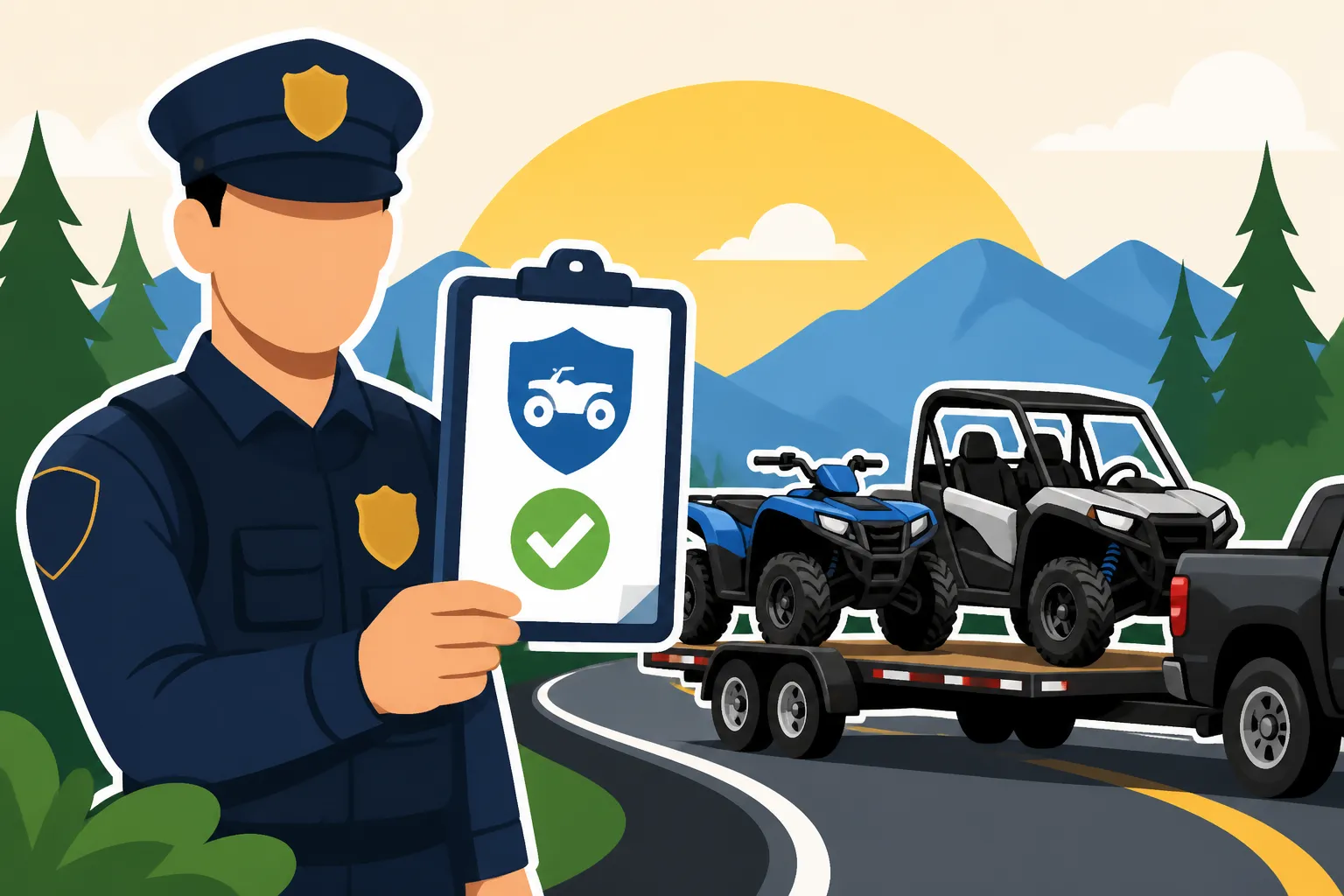
A Police Operation Permit for an Off-Road Vehicle in BC is a special, temporary authorization issued by a local police detachment that allows an ORV to be operated on a highway under very specific and controlled conditions. It is not a blanket permit for all highway travel, nor does it make your ORV street legal. Think of it more as a limited-use pass for an exceptional circumstance, rather than a general permission slip. These permits are rare, highly conditional, and entirely at the discretion of the issuing police detachment.
Not a "Street Legal" Conversion Kit
It's vital to understand that this permit does not magically transform your ORV into a street-legal vehicle. You won't be able to buy a kit from SuperATV, bolt on some lights and mirrors, get a permit, and then cruise down Highway 1. The permit specifically acknowledges that your vehicle remains an ORV, but it grants a temporary exemption from certain provisions of the Motor Vehicle Act for a very narrow purpose. The focus is always on the minimum necessary use for a specific task, not general transportation. This means the police will scrutinize your request carefully to ensure it truly meets the spirit of the exemption.
Issued by Local Police, Not ICBC
Unlike your ORV registration or regular vehicle insurance, these operation permits are not handled by ICBC or an Autoplan broker. They are issued directly by your local police detachment – be it the RCMP, a municipal police force, or even the BC Conservation Officer Service in certain situations where they have jurisdiction. This is a critical point, as it means you'll be dealing with law enforcement directly, and their primary concern will always be public safety and the enforcement of traffic laws. You can find more details about who issues these in [BC Permits Issued by Local Police]. They are looking for legitimate, specific needs, not general convenience.
When and Where Can You Use These Permits?
These permits are designed for truly exceptional circumstances where there is no practical alternative for transporting an ORV. They are not for leisure riding, commuting, or even getting to a trailhead if a trailer is a viable option. The scenarios are usually tied to work, emergencies, or very specific community events where ORV access on a highway is absolutely necessary and unavoidable.
Essential Work and Emergency Operations
The most common scenarios where police might consider issuing an operation permit involve essential work or emergency services. Think about situations like search and rescue operations where an ORV needs to access a specific area quickly via a short stretch of highway, or utility workers who need to get to a remote power pole and the only way involves a brief segment of paved road. Other examples include agricultural operations where a farm quad needs to move between fields on opposite sides of a quiet road for a very short distance, or even forestry workers who need to manage active operations near a public road. These permits are typically granted when the ORV is performing a specific, time-sensitive task that benefits public safety or essential services, and alternative transport methods are impractical or impossible.
Community Events and Parades
On rare occasions, a permit might be issued for a community event, such as a parade, where an ORV is part of a float or display. Again, this is not for recreational riding to the parade, but for the very specific act of moving the ORV within the confines of the event route. Even then, the police will likely impose strict conditions regarding speed, escorts, and route. Similarly, if there's a sanctioned, organized ORV event that has a designated route that must briefly touch a highway segment, organizers might apply for such permits. These are not individual permits for riders, but rather large-scale, event-specific authorizations.
Specific Limited Access to Crown Land
Sometimes, an area of Crown land might be segmented by a short stretch of municipal road or even a provincial highway, and there's genuinely no other way to get from one section to another without traveling on the pavement. In such a unique scenario, if all other options have been exhausted (like finding an alternative trail, using a trailer, or rerouting entirely), a local police detachment might consider a permit for that specific, unavoidable highway segment. However, this is exceptionally rare and would require a compelling justification, often supported by local authorities or land managers. They are looking for minimal impact, minimal distance, and a clear safety plan.
How to Apply for a BC Police Operation Permit
Applying for one of these permits isn't like picking up your ORV registration at an Autoplan broker. It requires direct engagement with law enforcement and a clear, compelling reason. There's no standard form you fill out online; it's a conversation and a request that the police will evaluate on a case-by-case basis.
Contact Your Local Police Detachment
The first and most crucial step is to directly contact the police detachment responsible for the jurisdiction where you intend to operate the ORV on the highway. This could be an RCMP detachment, a municipal police force like the Vancouver Police Department, or another specific enforcement body. Do not just show up; call ahead, explain your situation, and ask about their process for applying for an ORV operation permit. They might ask for details about your machine, the exact route, the reason for the travel, and the duration. Remember, you're making a request for an exemption, so be prepared to clearly articulate your need.
Provide Comprehensive Justification and Route Details
When you contact them, be ready to provide a detailed explanation of why you need to use the highway and why there are no viable alternatives. Simply saying "it's easier" won't cut it. You'll need to outline the specific purpose, the exact route (including start and end points), the proposed time of day, and how long you anticipate needing the permit. Police will want to know the make, model, and VIN of your ORV, as well as your driver's licence and [BC ORV Registration You Pay Once] details. If you're using aftermarket accessories from brands like SuperATV that enhance safety or visibility, it might be worth mentioning them as part of your safety plan, but don't assume they'll make the permit easier to obtain. They are concerned with safe operation.
Be Prepared for Conditions and Restrictions
Even if a permit is granted, it will come with a strict set of conditions. These might include specific operating hours (e.g., daylight hours only), maximum speed limits (often much lower than the posted limit), requirements for escort vehicles, additional lighting, flagging, or even the presence of a police escort. You might be restricted to certain lanes or sections of the road, or required to have specific signage on your ORV. [What Conditions Police Attach to an Operation Permit] will vary greatly depending on the specific situation, the road in question, and the discretion of the officer. It’s imperative that you understand and strictly adhere to every condition. Failure to do so could result in immediate cancellation of the permit, fines, or even seizure of your machine.
Conditions and Requirements for Permit Use
Once you manage to secure one of these rare permits, you'll find that the conditions attached are designed to ensure maximum safety for both the ORV operator and other road users. These aren't suggestions; they are mandatory requirements that you must follow to the letter.
Driver's Licence and Basic Insurance
Even with an operation permit, when you're on a highway, you are essentially operating a motor vehicle (albeit a temporarily permitted one). This means you absolutely must hold a valid driver's licence. [BC Requires a Driver's Licence on a Highway] is not optional. Furthermore, your ORV will need at least basic third-party liability insurance. This isn't the specialized ORV insurance you might carry for off-road trails; it's the kind of basic liability insurance typically associated with highway vehicles. [BC Requires Basic Autoplan on a Highway] to cover potential damages or injuries you might cause to other vehicles or property while on the pavement. You'll need to discuss this with your insurance provider, as not all ORV policies extend to highway use, even with a police permit.
Visible Plate and Proper Identification
Your ORV must display its BC ORV number plate clearly. The rules for [BC Plate Placement on Front, Back or Left] still apply. It needs to be clean, legible, and unobstructed. Along with your valid driver's licence and proof of insurance, you must carry the actual Police Operation Permit with you at all times while operating the ORV on the highway. This is your proof of exemption, and law enforcement officers will expect to see it upon request. Furthermore, you should carry photo identification, as you would with any motor vehicle operation.
Safety Equipment and Visibility
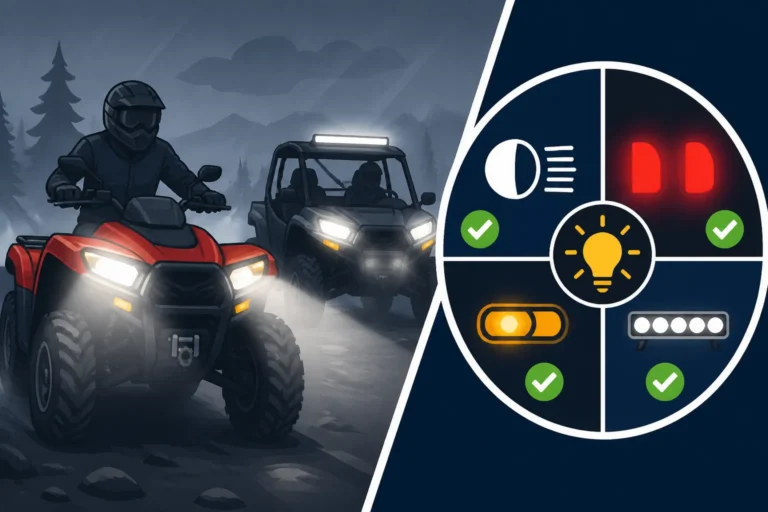
The police will likely impose specific requirements for safety equipment. This often includes bright, visible clothing, and ensuring your ORV has functioning headlights, taillights, and brake lights. While not explicitly turning your ORV into a street-legal machine, thinking about elements that improve visibility – like auxiliary lighting or mirrors from companies like SuperATV – can only benefit your case and enhance safety. Remember, ORVs are inherently less visible than standard highway vehicles, and the permit conditions will reflect this. They may also specify requirements for speed, route, and even time of day.
Limitations and Misconceptions About Permits
Despite getting a permit, it's crucial not to misunderstand its scope. These permits are very narrowly defined and do not open the floodgates to general ORV highway use. There are many things these permits simply do not allow.
No General Commuting or Recreational Use
Let's be absolutely clear: a Police Operation Permit is not for commuting to work, running errands, or taking a joyride down the highway. Its purpose is for specific, unavoidable, and temporary operational needs. If you're hoping to avoid trailering your machine for a recreational ride, this permit is not your solution. The police are looking for legitimate, compelling reasons that serve a public interest or address an unavoidable logistical challenge, not personal convenience. Expect your request to be denied if it falls into the recreational category.
Does Not Apply to All Roads
A permit granted by a local police detachment is typically specific to the roads within that detachment's jurisdiction or for a very specific, pre-approved route. It does not mean you can drive your ORV on any highway in BC. If your intended route spans multiple jurisdictions, you might need to obtain separate permits from each police force involved, which is highly unlikely for a single trip. Furthermore, the permit will not allow you to access roads where ORVs are explicitly prohibited by other bylaws or regulations, such as in certain provincial parks or protected areas, unless those regulations are also specifically addressed and exempted by the permit.
Not a Long-Term Solution
These permits are temporary by nature. [BC Permits Valid Up to Two Years] is the maximum duration, but many are issued for much shorter periods – a single day, a week, or for the duration of a specific project. They are not a permanent solution for highway access. If your need for highway travel is ongoing, you'll need to reapply and re-justify your request each time. This continuous re-evaluation ensures that the temporary exemption remains truly necessary and that conditions can be adjusted as circumstances change. This process is designed to discourage reliance on these permits as a regular mode of transport.
Why These Permits Are So Specific (and Sometimes Frustrating)
It's easy to feel frustrated by the strictness surrounding ORV highway use in BC. We love our machines and want to use them, but the provincial government and local authorities have valid reasons for these regulations. Understanding the "why" behind the "no" can help put the permits into perspective, even if it doesn't make the process any less cumbersome.
Public Safety Concerns
The primary driver behind the strict rules is public safety. ORVs are not designed for the speeds, traffic volumes, or handling characteristics required for safe highway travel. Their high centre of gravity, open cabins (for quads), and lack of crumple zones or advanced safety features make them inherently more dangerous in collisions with highway vehicles. Additionally, they can be less visible, have slower acceleration, and may not handle emergency braking or evasive manoeuvres as effectively on pavement. The police, when considering a permit, are first and foremost weighing the safety of everyone on the road. This is why conditions like escorts, reduced speeds, and specific operating times are so common.
Protecting Infrastructure and Environment
While less obvious, there are also concerns about road infrastructure and the environment. Heavy ORVs with knobby tires can contribute to accelerated wear and tear on paved surfaces, especially shoulders and secondary roads. There are also environmental considerations, such as noise pollution and emissions in areas not typically exposed to ORV traffic. While an operation permit for a short distance won't cause significant damage, the cumulative effect of widespread, unregulated ORV use on highways could be substantial. The restrictions aim to manage these potential impacts.
Maintaining the Intent of the ORV Act
The Off-Road Vehicle Act was specifically created to regulate ORVs off public roads and highways. Allowing widespread highway travel would fundamentally undermine the intent of this legislation, blurring the lines between ORVs and standard motor vehicles. The police operation permit serves as a very specific, controlled exception to this overarching principle, ensuring that the spirit of the Act is maintained while accommodating truly necessary, limited highway movements. This legislative framework is designed to keep ORVs where they belong – off-road.
Alternative Ways to Get Your ORV to the Trail
Given how challenging and restrictive it is to obtain and use a Police Operation Permit, most riders will continue to rely on alternative methods to transport their ORVs to the vast trail networks and Crown lands across BC. These methods are generally safer, more practical, and fully compliant with existing laws.
Trailering Your Machine
By far the most common and legally sound method is to trailer your ORV. Whether it's on an open utility trailer, an enclosed cargo trailer, or a dedicated ORV trailer, this is the safest way to get your machine from home to the trailhead. It keeps your ORV off the highway entirely, eliminating all concerns about permits, special insurance, or being stopped by law enforcement for operating an ORV where it doesn't belong. Many riders invest in specialized trailers or ramp systems, sometimes even from suppliers that offer heavy-duty hauling accessories like SuperATV, to make loading and unloading easier and more secure.
Using Forest Service Roads and Resource Roads
Many of BC's incredible riding areas are accessible via the extensive network of Forest Service Roads (FSRs) and other resource roads. These are generally not considered "highways" in the same sense as paved public roads, and ORVs can often be operated on them provided they are registered, insured (with specific liability coverage for FSRs), and that you comply with all other ORV Act rules. These roads lead to vast areas of Crown land where you can legally ride. Always check for current road conditions, industrial traffic, and any closures before you head out. [BC Rules for Riding a Forest Service Road] provides important details on this common access method.
Staging Areas and Designated Access Points
Many popular riding areas have designated staging areas where you can safely unload your ORV, park your tow vehicle, and begin your ride. These staging areas are typically located at the entrance to trail systems or Crown land, eliminating the need for any highway travel with your ORV itself. Planning your trip around these established access points is key to a hassle-free and legal riding experience. Always check with local clubs or Recreation Sites and Trails BC for information on official staging areas in your chosen riding region.
Disclaimer
This article is for general informational purposes only and does not constitute professional advice. Laws, prices and regulations vary by location and change over time. Consult a qualified professional for guidance on your specific situation.