BC Rules for Riding a Rail Trail
There's a common misconception that because a rail trail is no longer an active railway, it automatically becomes fair game for all types of recreation, including off-road vehicles like ATVs and UTVs. Many riders in British Columbia have found themselves confused or, worse, facing fines because they didn't realize that the rules for these scenic pathways are often very strict regarding motorized use. This guide will clarify the specific regulations around riding your ATV or UTV on rail trails across BC, helping you understand where you can and cannot ride, and how to avoid an unwelcome surprise.
What Exactly is a Rail Trail in BC and Why Does It Matter for ATVs?
Rail trails in British Columbia are fascinating ribbons of history, repurposed from old railway lines into multi-use pathways. They crisscross our province, offering incredible views and connecting communities. But their past life as a railway doesn't automatically grant open access to every type of recreation, especially for motorized vehicles. Understanding what these trails are in the eyes of the law is the first step to knowing if your quad belongs there.
From Rails to Trails: The Transformation Story
Imagine a train chugging along a track, carrying goods or passengers through our diverse BC landscapes. Decades later, that railway line might be decommissioned. Instead of letting the corridor fall into disrepair, many communities and provincial bodies have transformed these linear pathways into "rail trails." These trails are incredibly popular for walking, cycling, and sometimes even horseback riding. They're often graveled, but some sections might be paved, while others remain quite rugged, reflecting their original condition or the local terrain.
The catch is, this transformation isn't a one-size-fits-all process. Some rail trails are managed by the province, like segments of the Trans Canada Trail. Others fall under municipal jurisdiction, or are even managed by local non-profit land trusts. This varied ownership and management is why the rules for riding an ATV or UTV can differ so drastically from one rail trail to another, or even along different sections of the same trail. It's not like the clear-cut rules you'd find for [BC Forest Service Road Requirements] which are generally consistent.
The Legal Status Conundrum
This patchwork of ownership leads to a complex legal status for rail trails in BC. Many riders assume that because a trail is "multi-use," it means all uses are permitted. Unfortunately, that's rarely the case. The term "multi-use" almost universally refers to non-motorized activities unless specifically stated otherwise.
The primary goal of many rail trail conversions is to provide accessible, quiet pathways for passive recreation. Introducing ATVs and UTVs, with their noise, speed, and potential for environmental impact, often conflicts directly with this purpose. The legal designation of a rail trail, whether as a park, a regional greenway, or a provincial recreation site, directly dictates what activities are allowed. Many are explicitly designated as [BC Motor Vehicle Closed Areas], which means no motorized vehicles, period. It's a key distinction that can save you from a lot of grief.
The Blanket Rule: Are ATVs Generally Allowed on BC Rail Trails?
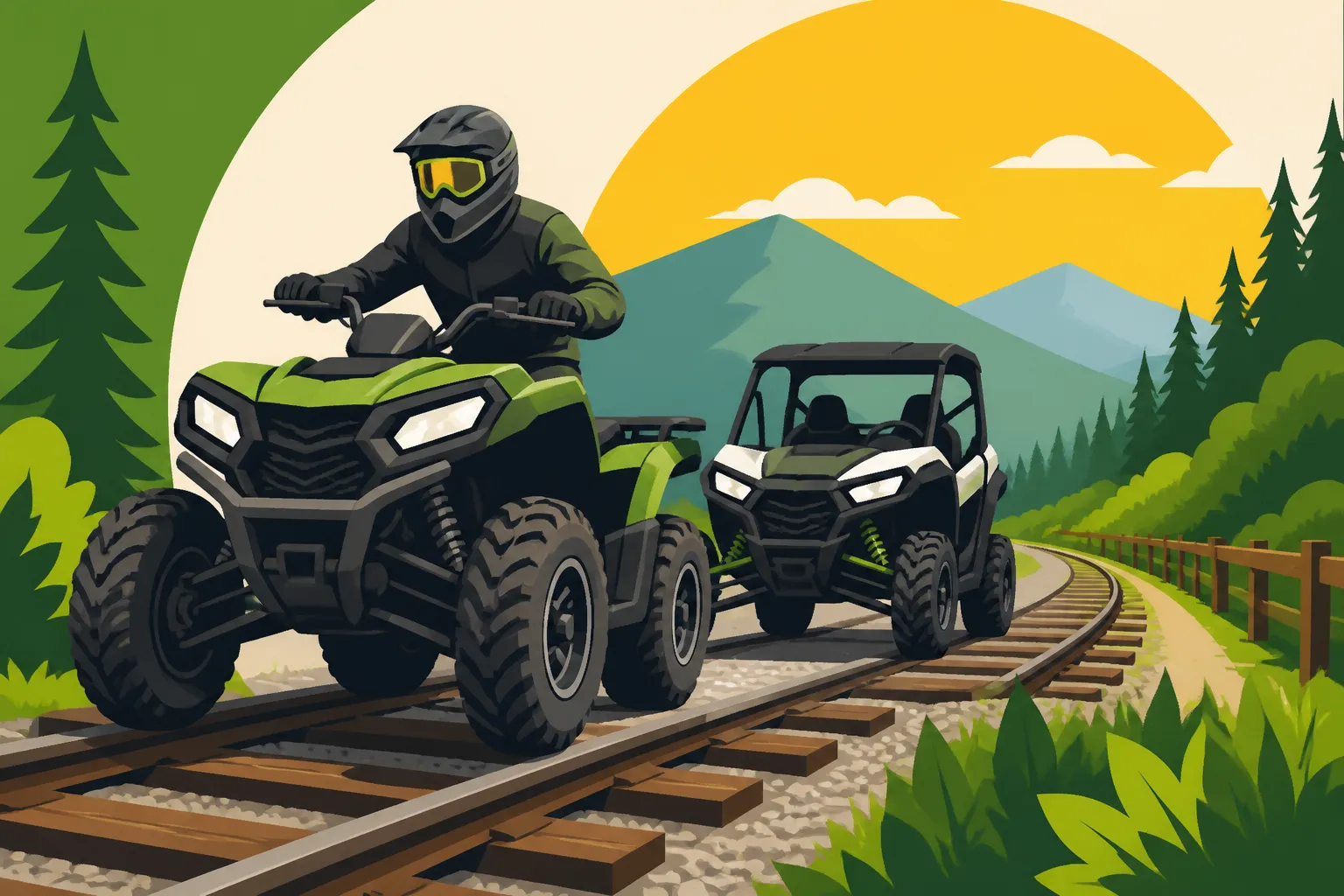
Let's cut right to it: in British Columbia, the general rule of thumb is that ATVs and UTVs are not allowed on rail trails. This might be frustrating news for many riders who see these long, relatively flat corridors as perfect for a scenic cruise. You see an old railbed stretching into the distance, and your mind immediately goes to the adventure of riding it. But ignoring this blanket rule can lead to significant problems, including fines and environmental damage.
Why "No" is the Default Answer
The reasons behind the widespread prohibition of motorized vehicles on most BC rail trails are numerous and well-founded. Primarily, it comes down to user conflict and safety. Rail trails are incredibly popular with families, cyclists, hikers, and sometimes equestrians, all of whom are seeking a peaceful, often quiet, outdoor experience. The presence of ATVs and UTVs can be disruptive, creating noise, dust, and a perceived safety risk for these other users. Imagine a small child on a bicycle rounding a corner and suddenly encountering a side-by-side; it's a recipe for potential anxiety or even an accident.
Furthermore, there are significant environmental considerations. While a railbed might seem robust, heavy ORV traffic can accelerate erosion, especially on softer sections, and spread invasive species. There's also the matter of trail maintenance; many rail trails are maintained by volunteer groups or limited municipal budgets, and they aren't equipped to handle the wear and tear that motorized vehicles can inflict. This is why you'll often see clear "Motorized Vehicles Prohibited" signs, reinforcing that these are indeed [BC Motor Vehicle Closed Areas].
Exceptions You Might Encounter
Now, like almost any rule, there can be exceptions, but they are few and far between, and crucially, they are always clearly designated. You won't stumble upon an exception; you'll have to actively seek it out and confirm it.
These exceptions typically occur in more remote areas where a segment of an old railbed has been explicitly re-designated as an ORV trail, often as part of a larger network of trails managed for motorized recreation. In these cases, the rail trail segment might connect two larger [BC Crown Land Riding Explained] areas or function as an access route to other permitted trails. You might find these specific segments listed on maps provided by Recreation Sites and Trails BC, or through local ATV clubs that have worked with land managers to secure these designations.
For example, while the main Kettle Valley Rail Trail is largely non-motorized, there might be a short, isolated section in a resource district that has been explicitly opened for ORV use as part of a logging road network. These are not commonplace, and you should never assume. Always look for official signage or check with local authorities. This is where researching [BC ATV Clubs Worth Joining] can be invaluable, as they often have the most up-to-date information on locally permitted riding areas.
Navigating the Nuances: When and Where Might You Ride an ATV on a Rail Trail?
The general rule is "no," but understanding the exceptions and how to find them is key to responsible riding. It’s not about finding loopholes, but about finding legitimate, designated opportunities. This requires proactive research and a keen eye for official information.
Seeking Local Permissions and Designations
If you've heard whispers or seen a vague map that suggests a particular rail trail might allow motorized use, your first step is always to verify. The best way to do this is to contact the local regional district, municipality, or the specific organization responsible for managing that section of trail. For provincial trails, Recreation Sites and Trails BC is a great resource. Don't rely on old forum posts or hearsay. The rules can change, and what was once permitted might no longer be.
For instance, you might be looking at an old rail spur line that connects to a popular [BC Crown Land Riding Explained] area. While the main rail trail might be closed to motorized vehicles, this specific spur could potentially have a different designation. This is where local ATV clubs come into play. Many clubs actively work with land managers to maintain and advocate for legitimate riding areas, and they are often the first to know about specific designations or changes in access. Getting involved with a local club can not only provide you with up-to-date information but also connect you with like-minded riders.
When you do find those glorious, permitted stretches of old railbed that are now designated for ORVs, you'll appreciate the durability of aftermarket parts like those from SuperATV. These trails, even if repurposed, can still have rough, rocky sections or unexpected washouts, and having a robust machine is key. Upgrading your suspension or adding durable skid plates can make a real difference when you're exploring the more rugged, designated sections that are open to ATVs.
Understanding Trail Signage and Maps
Always, always respect trail signage. Signs are there for a reason and are legally binding. If you see a sign explicitly stating "No Motorized Vehicles," "Motorized Vehicles Prohibited," or even just pictograms showing a crossed-out ATV, that's your cue to turn around. Ignoring these signs can lead to severe penalties. Similarly, if a gate is closed and locked, it means no entry, regardless of what you think the rules might be.
Official maps from governing bodies are your best friend. Look for maps published by Recreation Sites and Trails BC, municipal park departments, or regional districts. These maps will clearly indicate designated ORV trails versus multi-use trails that exclude motorized vehicles. Websites and visitor centres for specific regions can also provide current, reliable information. Remember, just because a trail looks like an old railbed, and your machine, perhaps sporting a new SuperATV winch, could tackle it, doesn't mean it should. Always prioritize official designation over appearance. Make sure you understand [BC Motor Vehicle Prohibitions Explained] to avoid accidentally entering restricted zones.
Avoiding Trouble: How to Confirm Rail Trail Access and Ride Responsibly
The bottom line is that navigating rail trail access in BC for ATVs requires diligence and respect for the rules. Riding where you're not supposed to isn't just about risking a ticket; it's about potentially damaging the environment, creating conflict with other trail users, and eroding trust between the ORV community and land managers. Responsible riding starts with knowing before you go.
The Importance of Due Diligence
"Ignorance of the law is no excuse." This old adage holds particularly true when it comes to riding your ATV or UTV in British Columbia. Before you even load your machine onto your trailer, make sure you've done your homework. Check official websites for local municipalities, regional districts, and Recreation Sites and Trails BC. Call local government offices if you're unsure. If you're visiting a new area, drop into a local visitor centre; they often have maps and up-to-date information on trail access.
Failing to do your due diligence can lead to costly consequences. You could face significant [BC Penalties for Riding Unregistered] if your machine isn't properly registered, even if you just get caught riding in an unauthorized area. Beyond that, there are specific [BC Fines for Careless Riding] or trespass if you're caught on private land or a prohibited public trail. Even if you've got your machine kitted out with the toughest SuperATV upgrades for a demanding ride, none of that matters if you're on a trail where you shouldn't be. The best gear won't save you from a ticket or a damaged reputation. Always ensure your machine is also compliant with the [What the Off-Road Vehicle Act Covers in BC] regulations wherever you ride.
Responsible Riding and Alternatives
If, after all your research, you confirm that a particular rail trail is indeed off-limits to ATVs, accept it. There are countless other legitimate and incredible places to ride your ATV or UTV in British Columbia. Explore the vast network of [BC Forest Service Road Requirements] or other designated [BC Crown Land Riding Explained] areas. These offer fantastic opportunities for exploration, often with stunning scenery and challenging terrain.
When you do find a legal riding area, always practice responsible riding. Stay on marked trails, respect environmental regulations, pack out everything you pack in, and be mindful of other users. These practices build a positive reputation for the ORV community and help ensure that we retain access to the trails we love. Being a responsible rider means being an informed rider, and sometimes that means choosing an alternative route that respects the rules designed to protect our beautiful BC landscapes.
| Type of Rail Trail/Area | General ATV/UTV Access | How to Confirm | Common Issues |
|---|---|---|---|
| Provincial Greenways | Generally PROHIBITED | Recreation Sites and Trails BC website, local signage | User conflict, environmental sensitivity |
| Municipal Park/Trail | Generally PROHIBITED | Municipal website, local park bylaws, signage | Noise complaints, safety for pedestrians/cyclists |
| Designated ORV Trail | PERMITTED (if explicitly signed) | Local ATV clubs, regional district maps, specific signage | May be limited, can still have non-motorized users |
| Private Land Trails | PERMITTED with permission | Direct contact with landowner, written consent | Trespassing if no permission, liability |
Disclaimer
This article is for general informational purposes only and does not constitute professional advice. Laws, prices and regulations vary by location and change over time. Consult a qualified professional for guidance on your specific situation.