BC Rules for Riding a Dike
Many off-road vehicle enthusiasts in British Columbia eye those scenic dikes that wind through our valleys and along our waterways, thinking they look like perfect, open stretches for a cruise. But before you even think about airing up those tires and hitting what looks like an inviting path, it's absolutely crucial to understand the rules. Riding a dike isn't like riding on a forest service road or a dedicated trail, and a casual assumption could land you in serious trouble. This guide will walk you through the specifics of why dikes are generally off-limits for ATVs and UTVs in BC, and what you need to know to stay on the right side of the law.
Understanding Dikes and Their Purpose in BC
When we talk about dikes in British Columbia, we're not just referring to any old raised embankment. These are critical pieces of infrastructure, often built to protect communities, agricultural land, and sensitive ecosystems from the immense power of our rivers and oceans. It's easy to look at a long, flat, gravel-topped dike and see a perfect cruising path, but their primary function is far removed from recreational riding.
What Exactly is a Dike in British Columbia?
A dike in BC is essentially an engineered barrier designed to prevent flooding by containing water within a specific channel or area. You'll find them along major rivers like the Fraser, meandering through rich farmland in the Okanagan, or protecting coastal communities from high tides. Most dikes are constructed from compacted earth, often topped with gravel or a maintenance road, and they're usually vegetated on their slopes to prevent erosion.
These structures are under constant pressure, especially during our heavy rain seasons or spring run-off. Their integrity is paramount, and any activity that could compromise their structure is typically forbidden. They're not just dirt paths; they are vital flood protection systems, built to withstand significant forces and protect millions in property and countless lives.
Who Owns and Manages BC's Dikes?
This is where things can get a little complicated, and it's often the root of rider confusion. There isn't a single, uniform management body for all dikes across British Columbia. While many dikes fall under the general oversight of the provincial government, particularly the Ministry of Forests, Lands, Natural Resource Operations and Rural Development, the day-to-day management and specific bylaws are often handled at a more local level.
Many dikes are managed by local diking authorities, municipal governments, or regional districts. These local bodies have specific mandates and bylaws to ensure the dikes' stability and function. This fragmented ownership and management means that the specific rules and enforcement can vary slightly from one region to another, making it genuinely tough for a rider to know who's in charge when every dike feels different. It's a common frustration: "You see a long, open stretch, and it's hard to tell if it's Crown land or some obscure local jurisdiction." This lack of clear, universal signage or consistent rules is part of the problem many ORV owners face.
The Legal Landscape: Why Dikes Aren't Open Roads for ORVs
Given their critical function and varied ownership, it's no surprise that dikes generally have strict rules regarding access. Unlike vast expanses of [BC Crown Land Riding Explained], dikes are almost universally treated as controlled access areas. You can't just assume an open path means open season for your quad or side-by-side.
The Off-Road Vehicle Act and Dike Access
The [What the Off-Road Vehicle Act Covers in BC] is the primary legislation governing off-road vehicles in the province. It establishes requirements for registration, insurance, and safe operation. However, what it doesn't do is grant blanket permission to ride on all types of land. Instead, it defers to the specific land manager's rules for particular areas. For dikes, this means the ORV Act alone doesn't open the gates; rather, you need permission from the entity that owns or manages that specific dike.
Think of it this way: the ORV Act tells you how to operate your machine legally (e.g., [BC Registration Became Mandatory in 2015], carrying proper ID and insurance), but it doesn't tell you where you can operate it. For dikes, the answer to "where" is almost always "nowhere, unless you have explicit permission." This stands in contrast to riding on vast tracts of Crown land, where general access is often permitted unless explicitly restricted by signage, closures, or specific regulations. Dikes are typically the opposite: they are restricted unless explicit permission is given.
Diking Authority Bylaws and Local Restrictions
This is the most critical hurdle for ORV riders. Most dikes in British Columbia are governed by specific bylaws enacted by the local diking authorities, municipalities, or regional districts that manage them. These bylaws are designed to protect the dike's structural integrity, ensure public safety, and preserve surrounding ecosystems. They almost universally prohibit unauthorized motorized vehicle use.
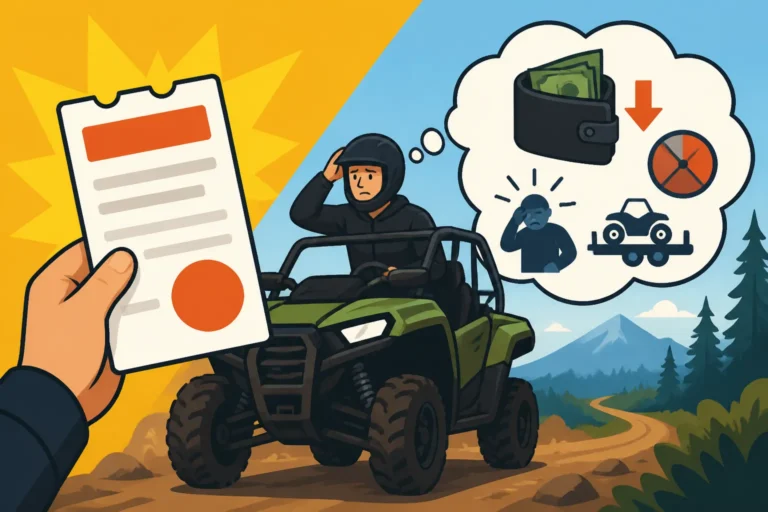
These bylaws often cite concerns about erosion, soil compaction, and damage to the vegetation that stabilizes the dike slopes. Beyond environmental concerns, there are public safety aspects; dikes are often shared with pedestrians, cyclists, and local residents. Motorized vehicles can pose a hazard in these multi-use environments. Violation of these bylaws can lead to significant [BC Fines for Careless Operation] or even more severe penalties under local enforcement. Enforcement can be carried out by local bylaw officers, RCMP, or conservation officers, and they don't take risks with dike integrity lightly.
Trespass and Property Damage Concerns
Even if you mistakenly believe a dike is "Crown land" and therefore open, riding on it without permission can still constitute trespass. Many dikes, even those managed by public bodies, are not designated for general recreational ORV use. Land managers have a legal responsibility to maintain these structures, and unauthorized access complicates their ability to do so safely and effectively.
Beyond trespass, there's the very real risk of causing property damage. The weight and action of ATV and UTV tires, especially in wet conditions, can easily erode the dike surface, damage protective vegetation, and compact soil in a way that compromises the dike's structural integrity. Imagine if your riding unknowingly contributed to a weak spot that later failed during a flood event – the liability for such damage would be immense. It's a serious matter that land managers and enforcement officials take very seriously, making unauthorized dike riding a risky proposition on multiple fronts.
Getting Permission: Is Dike Riding Ever Possible?
Given the strict regulations and critical nature of dikes, many riders wonder if there's any scenario where they can legally take their ORV onto one. While it's highly improbable for general recreational riding, there are specific, limited circumstances to consider.
The Myth of "Implied Permission" on Dikes
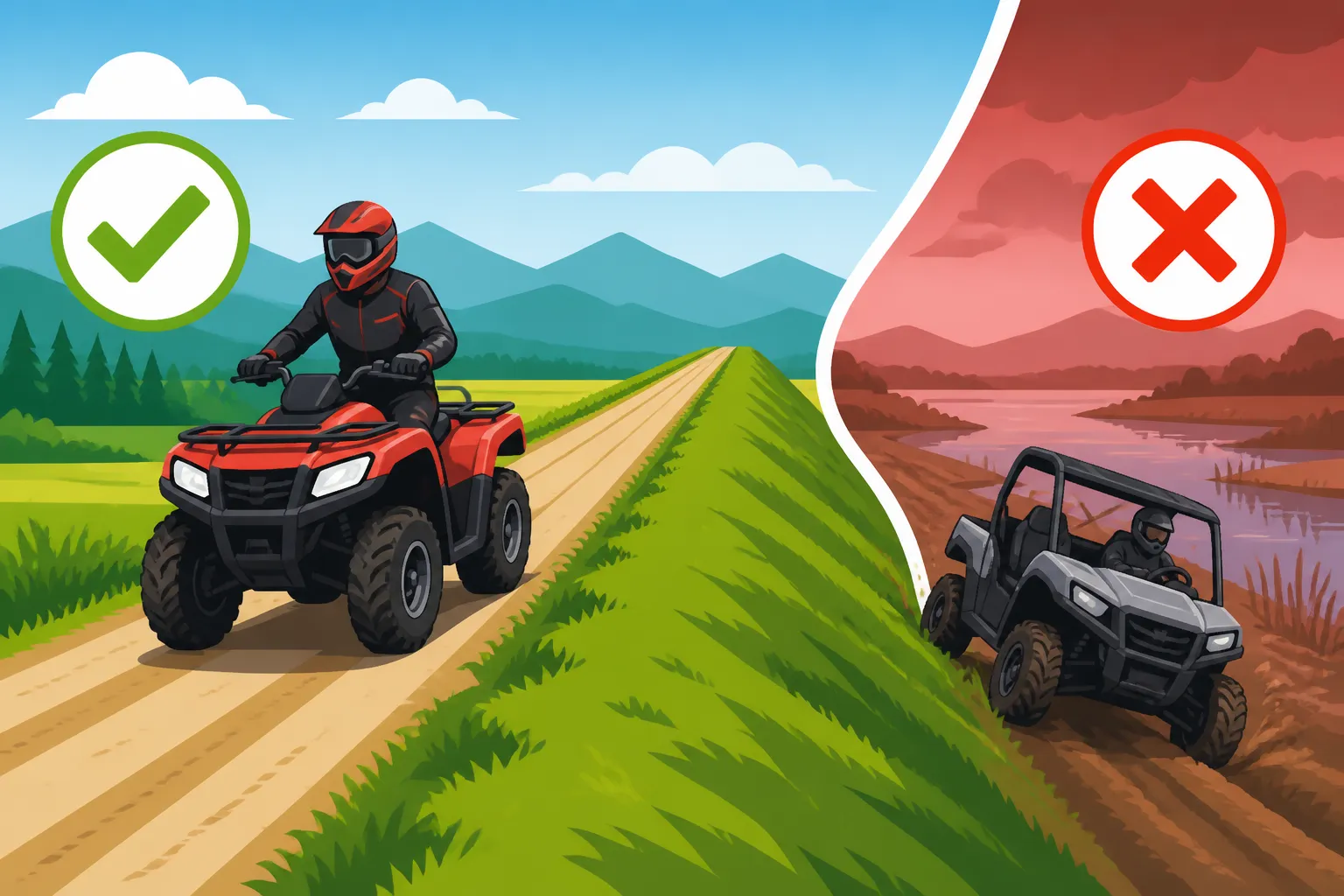
It’s a common scenario: you drive past a dike, notice tire tracks, or see an absence of "No Trespassing" signs, and think, "Well, if there are no signs, it must be okay!" This is a dangerous and incorrect assumption, particularly when it comes to dikes. The absence of a specific prohibition sign does not automatically grant implied permission for ORV use. Dikes are generally treated as restricted areas by default.
Many riders, fueled by the desire for new trails, mistakenly believe that if a path looks open, it is open. This mindset often leads to disappointment and tickets. You might see other tracks because someone else was also riding illegally, or the tracks might belong to authorized maintenance vehicles. "You see tracks, you think it's open, right? But that's a risky assumption that could lead to your machine being impounded or a hefty fine," is a sentiment many riders can relate to after a negative experience. It's simply not worth the gamble when the potential consequences are so severe, including [BC Fines for Riding an Unregistered Machine] if your documentation isn't current, though that's a separate issue from trespass.
How to Legally Access a Dike for ORV Use
The only way to legally access a dike with an ORV for any purpose is to obtain explicit, written permission from the landowner or the managing authority. This means contacting the specific municipality, regional district, or diking authority responsible for the dike you're interested in. You'll need to clearly state your intentions and seek formal approval.
Realistically, for general recreational riding, this permission is almost never granted. Dike managers are extremely cautious due to their liability for maintaining these critical flood protection structures. Permission is typically reserved for maintenance personnel, emergency services, or those with direct agricultural interests who use specific sections for necessary farm operations. Even then, [BC Farm Quads Are Not Exempt] from general ORV registration rules, so your farm quad would still need to be registered even if you had permission to use it on a dike for legitimate farming activities. The administrative burden and legal risks associated with granting recreational access are simply too high for most authorities.
The Role of Organized Groups and Special Events
On very rare occasions, an organized ORV club or a specific event might gain temporary, highly controlled access to a dike. This usually happens for specific, non-recreational purposes such as community clean-up initiatives, dike maintenance support, or supervised ecological monitoring. In these instances, access is pre-arranged, heavily regulated, and often involves strict conditions, including insurance requirements and direct supervision from the managing authority.
These are exceptional circumstances and should not be interpreted as a precedent for individual recreational access. They are complex logistical undertakings that require significant planning and liability management, far beyond what an individual rider can arrange. For the average rider looking to enjoy their ORV, seeking out these rare exceptions is not a viable strategy for finding places to ride. The vast majority of dikes remain off-limits to recreational ORV use.
Responsible Riding: Alternatives and Best Practices
So, if dikes are mostly a no-go, where can you safely and legally enjoy your ATV or UTV in British Columbia? The good news is that BC offers a wealth of incredible opportunities for off-road riding, provided you stick to designated areas and adhere to responsible riding practices.
Finding Legal and Safe Places to Ride Your ORV in BC
Instead of trying to navigate the complexities of dike access, shift your focus to the many fantastic and legal riding destinations across our province. British Columbia boasts a diverse range of [BC ATV Trails: Where to Ride] and managed recreation sites specifically designed for off-road vehicle enjoyment. These areas offer clear rules, often well-maintained trails, and a community of like-minded riders.
Consider places like [Bear Creek OHV: BC's Largest Recreation Site] near Kelowna, offering hundreds of kilometres of trails, or the extensive network of riding areas in the [Chilliwack Area Riding in BC]. You also have access to countless kilometres of designated [BC Forest Service Road Rules for ORVs] that often lead to spectacular backcountry scenery. Local ATV and ORV clubs, such as those listed in [BC ATV Clubs Worth Joining], are excellent resources for discovering new trails, participating in organized rides, and learning about responsible riding practices. These clubs often work directly with land managers to create and maintain legal riding opportunities, so they're an invaluable source of information and community.
Minimizing Impact and Protecting Sensitive Environments
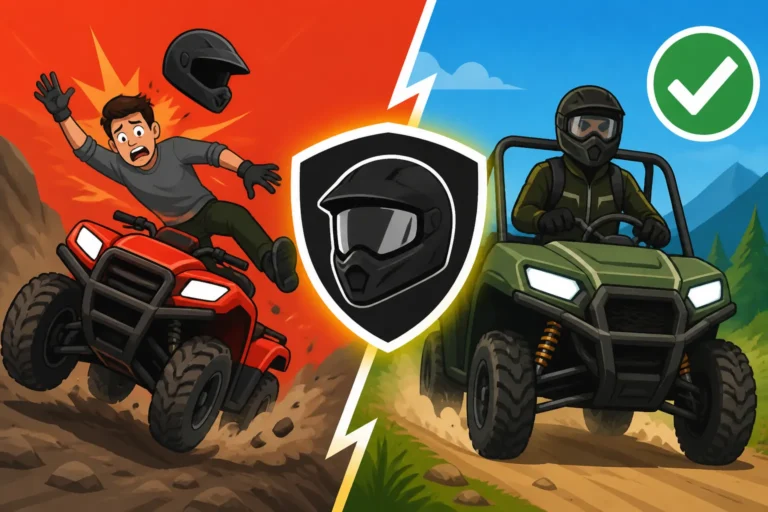
Wherever you choose to ride, responsible operation is key. This means always sticking to marked trails, avoiding sensitive ecological areas like wetlands, alpine meadows, and riparian zones (the areas directly alongside rivers and streams). Practicing "Tread Lightly" principles – treading lightly on the land, respecting wildlife, and leaving no trace – is essential for ensuring continued access to our beautiful backcountry.
Even if you've invested in robust aftermarket gear like heavy-duty SuperATV skid plates to protect your machine, remember that no amount of advanced equipment gives you permission to ride where you shouldn't. Using high-quality components for durability is smart, but it doesn't override the need for explicit permission or adherence to land use regulations. Focusing on maintenance and preparedness for designated trails is where those upgrades truly shine, not as a license to explore forbidden territory.
What to Do If You See Unauthorized Riding
If you witness unauthorized ORV riding on a dike or in another restricted area, the best course of action is to report it to the appropriate authorities. This usually means contacting the local RCMP non-emergency line, the BC Conservation Officer Service, or the specific municipal or regional district bylaw enforcement office responsible for that area.
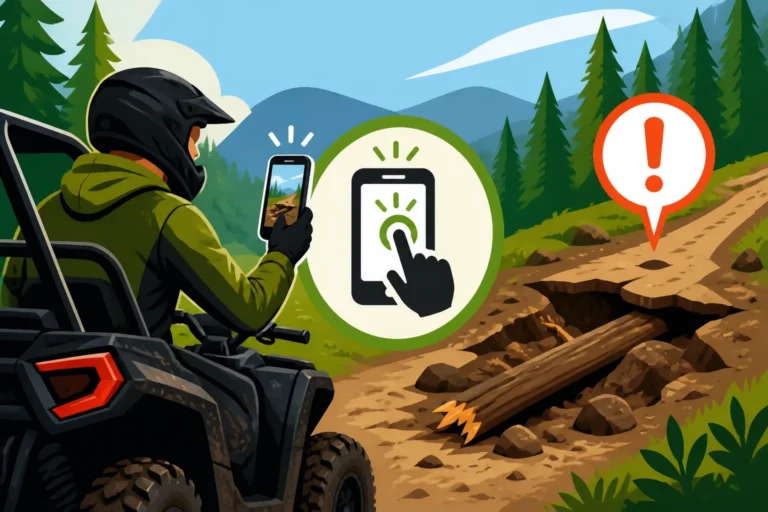
It's crucial to provide as much detail as possible, such as the location, date, time, and a description of the vehicles and individuals involved (without putting yourself at risk). It's always best to avoid direct confrontation with unauthorized riders, as this can escalate into an unsafe situation. By reporting these incidents, you help ensure that dikes remain protected and that our legal riding areas aren't jeopardized by the actions of a few irresponsible individuals. Protecting our natural spaces and critical infrastructure is a shared responsibility.
Dike Riding vs. Designated ORV Trails
To make it clear, here's a quick comparison of why dikes and designated ORV trails are fundamentally different:
| Feature | Dike Riding (Without Permission) | Designated ORV Trails (e.g., Bear Creek) |
|---|---|---|
| Legality | Generally illegal; often considered trespass | Legal and encouraged within specific guidelines |
| Ownership/Mngmt | Varies; often local diking authorities/Crown with restrictions | Managed by provincial or local recreation bodies/clubs |
| Primary Purpose | Flood protection, water management | Recreational ORV use, trail access |
| Environmental Impact | High risk of erosion, habitat damage | Designed to minimize impact, often maintained |
| Safety | Unpredictable conditions, potential conflicts with other users, unseen hazards | Mapped, often signed, specific safety measures in place, clear use rules |
| Enforcement | Fines, machine seizure, liability for damage, trespass charges | Rules enforced (e.g., helmets, registration), but clear boundaries and consequences |
| Experience | Risky, stressful, potential for conflict with authorities or locals | Enjoyable, community-focused, regulated fun, often with amenities |
Disclaimer
This article is for general informational purposes only and does not constitute professional advice. Laws, prices and regulations vary by location and change over time. Consult a qualified professional for guidance on your specific situation.