BC Child Operators Cannot Carry Passengers
It can be incredibly frustrating when you're a parent trying to navigate the exciting world of ATV and UTV riding with your kids, only to be met with a maze of regulations. You want to share the adventure, create those lasting memories, but you're also deeply concerned about their safety and staying on the right side of the law. One common question that often sparks confusion and genuine worry is whether a child operating an off-road vehicle in British Columbia can carry a passenger. This guide is here to untangle those rules, validate your concerns, and provide clear, empathetic answers so you can ensure your young riders are as safe and legal as possible on the trails and resource roads of our beautiful province.
Understanding the BC Off-Road Vehicle Act and Child Riders
British Columbia's Off-Road Vehicle (ORV) Act, which came into full effect in 2015, brought a much-needed framework to recreational riding. Before this, things were a bit of a Wild West, leading to inconsistencies and, unfortunately, safety issues. Now, the rules are clearer, especially when it comes to our youngest riders. It's not just about getting out there; it's about getting out there responsibly and safely, and the law has some very specific things to say about children and passengers.
The Core Rule: Child Operators Cannot Carry Passengers
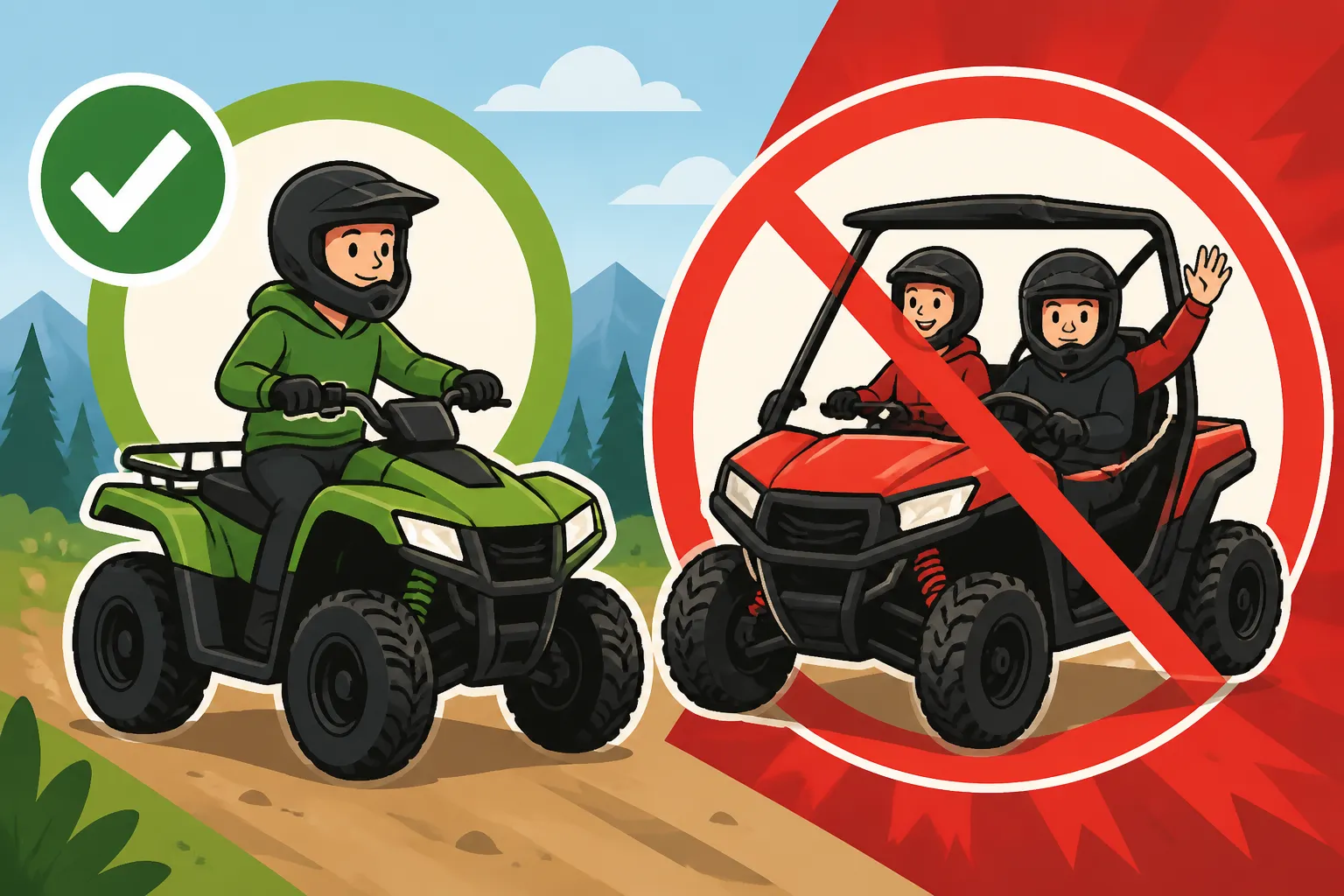
Let's get straight to the point, because this is often where the biggest misunderstandings lie: In British Columbia, a child operating an off-road vehicle is absolutely prohibited from carrying any passenger. This rule is firm, with no exceptions for age, machine type, or the relationship between the operator and the passenger. It doesn't matter if it's their younger sibling, their best friend, or even a grandparent – if the driver is under the age of 16, they must be the sole occupant of that machine.
This rule isn't meant to spoil anyone's fun; it's rooted deeply in safety. Imagine a common scenario: you have a capable 14-year-old who's been riding their quad for years on the family property. They feel confident, and they want to show their younger 8-year-old cousin the ropes. The temptation to let the older child drive the younger one around the field is strong, especially if they seem to have good control. However, under BC law, this exact situation would be illegal and, more importantly, unsafe. The law is designed to prevent accidents before they happen, recognizing the inherent risks that arise when a young, developing rider has the added responsibility and altered vehicle dynamics of a passenger.
Defining "Child Operator" in BC
When we talk about a "child operator" in the context of BC's ORV Act, we are specifically referring to anyone under the age of 16. This age is a crucial threshold in the legislation. Once a rider turns 16, they are considered an adult operator under the ORV Act for most purposes, which then opens up the possibility of carrying passengers, provided the machine is designed for it and they have the appropriate training and licensing. But until that 16th birthday, they are squarely in the "child operator" category, and the no-passenger rule applies.
It's important to differentiate this from manufacturer recommendations, which often state age ranges for specific machines (e.g., "ages 10 and up," "ages 14 and up"). While those guidelines are vital for matching a child to an appropriately sized and powered machine, they don't override BC's passenger rule. A 14-year-old operating a machine designed for their age group, even if they meet the physical and experience requirements set by the manufacturer, still cannot carry a passenger. The BC law adds an extra layer of caution on top of industry standards, focusing purely on the developmental stage of the operator and the added complexity of managing a passenger.
Why This Rule Exists: Safety First
The prohibition against child operators carrying passengers isn't arbitrary; it's a direct response to the unique physical and cognitive demands of operating an ORV, particularly an ATV. ATVs, or "quads," are designed for a single rider and require significant body English and weight shifting to steer, maintain balance, and navigate uneven terrain. A passenger, even a small one, dramatically alters the machine's center of gravity. This shift makes it much harder for an operator, especially a younger, less experienced one, to control the vehicle effectively. They might struggle to lean into turns, prevent a rollover on a sidehill, or react quickly to unexpected obstacles like a sudden rut or a fallen log.
The risks are compounded when you consider the operator's developmental stage. Children and adolescents are still developing their judgment, peripheral vision, reaction time, and ability to multitask under pressure. Adding a passenger means they're not just responsible for their own safety and the machine's control, but also for the safety of another person whose movements and weight can be unpredictable. A sudden jolt, a sharp turn, or an unexpected bump can throw a passenger off balance, leading to them losing their grip, or worse, causing the machine to tip. This rule is a fundamental pillar of child safety in BC's off-road environment, aiming to minimize severe injuries that can result from loss of control or rollovers.
Navigating Age Restrictions for ORV Operation in BC
Beyond the passenger rule, BC has a tiered approach to who can operate an ORV at various ages. It’s not simply a free-for-all once you hit a certain birthday; there are specific conditions that must be met, especially for those under 16. Understanding these requirements is essential for every parent or guardian who oversees young riders. The goal is to ensure that while children can enjoy the thrill of off-roading, they do so under the safest possible circumstances, which includes strict limitations on passengers.
Who Can Operate an ORV in BC?
In British Columbia, anyone 16 years of age or older can operate an ORV without direct supervision, provided they are appropriately licensed for the public roads they might need to cross and the machine is registered. However, for those under 16, the rules become more specific. A child between the ages of 12 and 15 may operate an ORV on Crown land (which includes most trails and resource roads) if they are under the direct supervision of an adult who is at least 19 years old. They also need written permission from their parent or legal guardian if the supervising adult is not their parent. For children under 12, the rules are even tighter; they can generally only operate an ORV on private land with permission, and direct supervision.
The crucial point here, which often gets overlooked, is that even if a child meets the age and supervision requirements to operate an ORV, the "no passenger" rule for child operators still applies. So, while your 14-year-old might be legally riding their ATV under your watchful eye on a [BC Forest Service Road], they cannot have their younger sibling riding along on the back. The legal ability to operate the machine does not grant permission to carry passengers when the operator is a minor. [BC Youth Riding Rules Explained] provides a deeper dive into the specific age tiers and requirements for young riders.
The Role of Supervision for Young Riders
Supervision for young riders in BC isn't just about having an adult present somewhere in the vicinity. The ORV Act defines specific criteria for effective supervision. The supervising adult must be at least 19 years of age, and they must be able to provide "visible and immediate direction" to the young rider. This means they need to be close enough to see what the child is doing, hear them, and intervene quickly if necessary. They can't be several kilometres away, or even around the next bend. The intent is to ensure that if a child gets into trouble, the adult is right there to help.
This intense level of supervision underscores the seriousness of young rider safety. Even with an attentive supervisor, the added variable of a passenger introduces too many uncontrollable elements for a developing operator. Think of it this way: a supervisor can coach a child on throttle control, braking, and navigating obstacles. But if that child unexpectedly loses control with a passenger on board, the supervisor's ability to provide "immediate direction" might not be enough to prevent an injury. The law, therefore, errs on the side of caution, removing the passenger variable entirely for minors. For more details on these requirements, check out [BC Supervision Required Under 16].
Manufacturer Guidelines vs. BC Law
It’s natural for parents to look at the manufacturer’s recommendations when buying an ORV for their child. Companies like Polaris, Yamaha, and Can-Am (and parts suppliers like SuperATV) design and market youth-model ATVs and UTVs with specific age and size guidelines printed right on the machine. These guidelines are incredibly important; they ensure the machine's power, weight, and handling characteristics are appropriate for a child's physical capabilities and experience level. For example, a "youth" ATV might be recommended for riders 10 and up, while a larger, more powerful model might be for 16 and up.
However, it's absolutely crucial to understand that BC law imposes additional restrictions that may go beyond manufacturer guidelines. While a manufacturer might design a larger ATV for "teenagers" and technically equip it with a seat long enough for two, if the operator is under 16, BC law says they cannot carry a passenger. Manufacturer guidelines are minimum safety standards for machine-to-rider fit; BC law dictates how those machines can be legally and safely operated by minors within the province. Always adhere to both: ensure the machine is appropriate for the child's age and size and ensure their operation complies with all provincial regulations, especially the [BC Manufacturer Age and Weight Rules] and the no-passenger rule. Ignoring either set of guidelines puts your child at significant risk.
The Perils of Carrying Passengers on an ATV/UTV (Especially for Kids)
The rules in BC regarding child operators and passengers aren't just bureaucratic red tape; they're built on a solid foundation of real-world experience and accident statistics. The dangers of carrying a passenger on an ORV, particularly an ATV, are amplified when the operator is still developing their skills, judgment, and physical strength. It's not just about compliance; it's about genuinely understanding and mitigating severe risks.
Impact on Vehicle Stability and Handling
ATVs are intrinsically designed for dynamic riding where the operator uses their body weight to shift and balance the machine, especially when turning, climbing, or traversing uneven terrain. Adding a passenger, especially on a single-rider ATV, fundamentally alters the vehicle's center of gravity. This makes the machine inherently less stable. Even a slight lean or unexpected movement from the passenger can throw the ATV off balance, significantly increasing the risk of a rollover. This risk is compounded on technical trails, side hills, or during sudden maneuvers.
For a child operator, who may not yet have the strength, experience, or instinct to compensate for these changes, the situation becomes even more precarious. They might struggle to counter-steer effectively, maintain traction, or react to an unexpected dip in the trail when they have an additional weight pulling the machine in an unpredictable direction. Imagine a 13-year-old taking a corner too fast with a friend on the back; the combined weight shifting outwards could easily cause the ATV to tip. While products from brands like SuperATV offer robust aftermarket suspension components that can improve a machine's handling and stability, they cannot counteract the fundamental design limitation of an ATV as a single-rider vehicle when a child is at the controls, nor do they supersede provincial safety laws. The most durable parts in the world won't prevent a rollover if the physics of carrying a passenger on a machine designed for one, operated by a minor, are defied.
Reduced Operator Control and Reaction Time
Operating an ORV demands quick reflexes, keen situational awareness, and the ability to make split-second decisions. A child operator's cognitive and physical development means their reaction times might naturally be slower, and their ability to process multiple sensory inputs simultaneously is still maturing. Introducing a passenger adds another layer of complexity. The operator now has to contend with the passenger's weight, their movements, and the distraction of another person, all while trying to maintain control of the machine and navigate the trail.
This reduced control and slower reaction time can have serious consequences. If a sudden obstacle appears – say, a fallen branch or a deep pothole – a solo child operator might have just enough time and skill to swerve or brake effectively. With a passenger, the added weight increases braking distance, and the altered balance makes sharp evasive maneuvers much riskier. The operator might hesitate, or the machine might not respond as expected, leading directly to a collision or rollover. The potential for injury, both to the operator and the especially vulnerable passenger, dramatically increases in such scenarios. [BC Fines for Careless Operation] are not just about monetary penalties; they reflect the serious hazards posed by operating an ORV without due care, which certainly includes carrying an unauthorized passenger.
Risk of Injury to Both Operator and Passenger
The most stark and somber reason for the no-passenger rule for child operators is the devastating potential for injury. In the event of a rollover or collision, the consequences for a passenger, particularly one who might not be securely seated or belted (which is often the case on an ATV not designed for multiple riders), can be severe. Ejection from the vehicle is a common occurrence, leading to impacts with the ground, rocks, trees, or even being crushed by the machine itself. Common injuries range from broken bones and lacerations to much more serious head, neck, and spinal trauma.
For the child operator, while they are actively holding the controls, they are also at high risk. They could be pinned, thrown, or suffer injuries as the machine rolls. These are not minor scrapes; we're talking about life-altering injuries that can have long-term impacts on a child's development and future. Every safety rule, including [BC Helmet Law Covers Every Rider], aims to reduce the severity of injuries, but preventing the accident in the first place is always the primary goal. The law unequivocally states that a child operating an ORV cannot carry a passenger because the inherent risks, when combined with a developing rider's capabilities, are simply too high to justify. It’s a measure to protect the most vulnerable in our riding community.
Consequences and Enforcement of Passenger Rules for Child Operators
It's one thing to know the rules, and another to understand what happens if those rules are broken. In British Columbia, the authorities take ORV safety seriously, and violations of the ORV Act, especially those concerning child safety, can lead to significant penalties. This isn't just about a slap on the wrist; it's about consequences that aim to deter unsafe practices and ensure everyone, especially our youth, stays safe on the trails.
Violation Tickets and Fines
If a law enforcement officer – be it an RCMP officer, a Conservation Officer, or a local bylaw enforcement officer (where applicable) – observes a child operating an ORV with a passenger, they have the authority to issue a violation ticket. These tickets come with financial penalties that can be quite substantial. It's important to remember that these fines are typically issued to the supervising adult or the registered owner of the ORV, as they are ultimately responsible for ensuring the machine is operated legally and safely. The logic is that an adult should know the rules and ensure compliance, especially when a child is involved.
Imagine you've sent your 15-year-old and their friend off on a quad on a [BC Resource Roads Count as Crown Land], confident in their riding skills. An officer on patrol spots them, and suddenly you're facing a fine. This isn't just an inconvenience; it's a clear message that the province prioritizes safety over casual disregard for the rules. Beyond the immediate fine, such infractions can also lead to increased scrutiny from authorities in the future. [BC Fines for Careless Operation] highlight that operating an ORV in a manner that endangers others or violates specific regulations, like carrying an unauthorized passenger, is taken seriously by the authorities.
Machine Seizure and Other Penalties
While less common for a first-time, minor infraction, more serious or repeated violations of the ORV Act can lead to the seizure of the off-road vehicle. This is a powerful deterrent, and it means your cherished quad or side-by-side could be impounded, resulting in impoundment fees, towing charges, and the hassle of retrieving it, in addition to any fines. This penalty is typically reserved for situations where there's blatant disregard for safety, dangerous operation, or repeat offenses.
Beyond seizure, there could be other long-term consequences. For instance, if an incident results in an injury, liability issues can become incredibly complex and costly. While [BC Insurance Bought With Registration] provides some basic coverage for certain types of riding, violating core safety rules could potentially complicate insurance claims or even lead to refusal of coverage for damages if negligence is proven. The broader message here is that the authorities have significant tools at their disposal to enforce the ORV Act, and they are prepared to use them to protect public safety and the integrity of our shared outdoor spaces. For more details on these potential consequences, you might want to review [BC Machine Seizures by Police].
The Importance of Setting a Good Example
Ultimately, as parents and guardians, we are the primary educators and role models for our children. When we prioritize safety and adhere to the regulations, we are not just avoiding fines; we are instilling crucial values in our young riders. Teaching them the importance of safe operation, respecting the rules, and understanding the risks helps them become responsible and conscientious riders for life. Allowing them to carry passengers when the law prohibits it, or turning a blind eye to such behaviour, sends a dangerous message that rules are optional or can be bent for convenience.
This isn't just about personal safety; it's about the future of ORV riding in BC. When incidents occur due to unsafe practices, it fuels public and political pressure for stricter regulations, more closures, and potentially higher costs for everyone. By setting a good example and adhering to rules like the no-passenger restriction for child operators, we contribute to a safer riding environment for all and help preserve access to our beautiful trails and [BC Crown Land Triggers the Registration Rule] for generations to come. It's about being part of the solution, not contributing to the problem. If you’re also concerned about registration, remember that [BC Penalties for Riding Unregistered] also exist.
Alternatives and Safe Practices for Family Riding
The rules about child operators and passengers might feel restrictive, but they are designed to protect your family. The good news is that there are still plenty of fantastic and safe ways to enjoy off-road riding together in British Columbia. It's all about making informed choices, using the right equipment for the right purpose, and prioritizing safety training.
UTVs vs. ATVs for Passengers (Adult Operators)
One of the biggest distinctions when it comes to carrying passengers legally and safely is the type of off-road vehicle. UTVs, or Side-by-Sides, are specifically designed to carry multiple passengers. Unlike ATVs, UTVs typically feature bucket seats, seatbelts, a roll cage, and often a steering wheel, providing a much more stable and secure environment for occupants. This design makes them a much safer option for family outings where you want to bring multiple people. For adults (aged 16 and over) operating a UTV, carrying passengers is generally permitted, as long as the UTV has manufacturer-designated seating positions and seatbelts for each passenger.
However, it is absolutely critical to remember that even in a UTV, the rule for child operators remains the same: a child under 16 cannot operate a UTV with passengers. So, while your adult self can load up the family in a four-seater UTV for a scenic ride through the Kootenays, your 15-year-old cannot do the same. This distinction is vital for safety and legality. Always refer to [BC Rules for Riding a Side-by-Side] for comprehensive details on UTV operation in the province.
Riding Solo: The Safest Path for Young Operators
For young riders who are still developing their skills and are under 16, the safest and only legal path for riding an ATV is solo operation. This means each child should have their own age-appropriate machine, designed for their size, weight, and skill level. Focus on developing their individual riding skills, balance, and judgment without the added complexity and danger of carrying a passenger. This also means resisting the urge to have them "double up" on a larger machine, even if it seems like a gentle cruise.
There are many excellent youth ATVs on the market, with different engine sizes and features tailored for various age groups. Ensuring a proper fit is paramount; a child should be able to comfortably reach the controls, see over the handlebars, and shift their weight effectively. Companies like SuperATV offer a range of accessories that can enhance safety and customization for youth machines, such as specific handlebar risers, smaller grips, or even specialized tires that can improve handling for a specific rider, always in the spirit of making the solo riding experience safer and more comfortable. Remember, these modifications are about optimizing the machine for a single, young operator, not enabling illegal passenger carriage.
Supervised Group Rides and Training
While solo riding is key for young operators, this doesn't mean family adventures are out of the question. Organized, supervised group rides where each child operates their own machine are fantastic ways to enjoy the outdoors together. These rides allow parents or supervising adults to maintain "visible and immediate direction" while teaching children valuable riding etiquette, trail awareness, and environmental responsibility. Many local ATV clubs in BC organize such family-friendly events, providing a supportive and safe environment for young riders to gain experience.
Furthermore, investing in formal ATV safety training for your children is one of the best decisions you can make. Courses taught by certified instructors cover everything from basic controls and riding techniques to hazard awareness and emergency procedures. These courses build confidence, reinforce safe habits, and provide a structured learning environment that often cannot be replicated in informal settings. Many provincial regulations, including [BC Youth Riding Rules and Supervision], implicitly encourage such training by outlining the responsibilities of young riders and their supervisors. Enrolling your child in a recognized [BC ATV Safety Training Options] program is a proactive step towards ensuring their safety and enjoying many happy years of off-road adventures.
ORV Passenger Rules: Adult vs. Child Operator
Here's a quick overview of how passenger rules differ based on the operator's age in British Columbia.
| Feature | Adult Operator (16+) | Child Operator (Under 16) |
|---|---|---|
| ATV (Quad) | Permitted ONLY if machine is designed for 2 riders | NEVER permitted, regardless of machine design |
| UTV (Side-by-Side) | Permitted if machine has designated seating & seatbelts | NEVER permitted, regardless of machine design |
| Safety Rationale | Adult experience, strength, and judgment; machine design. | Child's developing skills, balance, and cognitive ability. |
| Legal Status | Generally legal (with appropriate machine) | Strictly illegal |
| Primary Goal | Enable safe multi-person recreation | Maximize safety for vulnerable young operators |
Disclaimer
This article is for general informational purposes only and does not constitute professional advice. Laws, prices and regulations vary by location and change over time. Consult a qualified professional for guidance on your specific situation.