Asking Police for an Operation Permit
Navigating the rules for riding your ATV or side-by-side in British Columbia can feel like trying to solve a puzzle with half the pieces missing, especially when you encounter pavement. Many of us dream of a straight path to make our machines "street legal," but the reality is far more nuanced. This guide will walk you through the specifics of requesting an ORV Operation Permit from the police in BC, clarifying what these permits are for, what they allow, and what they absolutely don't.
The Persistent Myth of "Street Legal" ATVs in BC
Let's get this out of the way upfront: there is no simple way to make your ATV or UTV "street legal" for general highway use in British Columbia like you might register a car or truck. I know, it's a frustrating truth for many riders who just want to get from Point A to Point B without trailering their machine. You see all these cool aftermarket accessories, maybe even some from a company like SuperATV, that look like they'd make your machine road-ready, but the provincial legislation simply doesn't allow for it. The Off-Road Vehicle Act in BC governs where and how ORVs can be operated, and it strictly differentiates them from highway vehicles.
So, when we talk about "operation permits" from the police, we're not discussing a magical piece of paper that suddenly lets you cruise down the Trans-Canada Highway. Instead, these permits are granted under very specific, limited circumstances to allow for short, controlled crossings or brief travel on sections of highway that are otherwise off-limits. It's about bridging gaps, not becoming a permanent fixture on the road. The frustration of wanting more flexibility for your machine is completely understandable, but it’s crucial to understand the actual scope of these police-issued permits to avoid disappointment or, worse, a hefty fine. For a deeper dive into the overall regulatory framework, you might want to read [What the Off-Road Vehicle Act Covers in BC].
Understanding the BC ORV Operation Permit
An ORV Operation Permit, issued by a local police detachment (RCMP or municipal police), is not a general pass to ride your quad on any public road. It's a very specific authorization for extremely limited highway travel. Think of it as a temporary, highly restricted exemption to the general rule that ORVs cannot operate on highways.
When a Permit Might Be Considered
The primary reason you might need to approach the police for such a permit is to cross a highway or to travel a very short distance on a highway to connect two separate off-road trails. For instance, imagine you're riding a beautiful trail that suddenly ends at a provincial highway, and the next section of the trail starts just 200 metres down the road. Without a permit, you'd have to load your machine onto a trailer, drive that 200 metres, and unload again. That's simply not practical for many riders, especially if they're out on a long day trip. These permits are designed to offer a practical, safe solution for such specific connectivity challenges. They acknowledge that in some geographic realities, a brief highway crossing or shoulder use is the only logical way to continue an off-road journey. You can learn more about specific highway rules here: [BC ORV Crossing Rules at Stops and Lights].
What a Permit is NOT For
It's vital to clarify what an operation permit isn't. It's not for commuting to work, it's not for running errands in town, and it's certainly not for joyriding on paved roads. Furthermore, it doesn't give you permission to operate on Forest Service Roads (FSRs) or other Crown land. Those areas have their own rules regarding registration, insurance, and safe operation. For FSRs, for example, you're usually good to go with proper registration and liability insurance, without needing a police permit, unless the FSR itself is also a designated highway. Check out [BC Forest Service Road Rules for ORVs] for more details on that. The permit is narrowly focused on highway segments. You'll never get a permit to take your fully kitted-out UTV, perhaps with a custom exhaust from SuperATV, for a scenic drive through a residential neighbourhood. The police are simply not authorized to grant such broad access.
The Application Process: Talking to Your Local Detachment
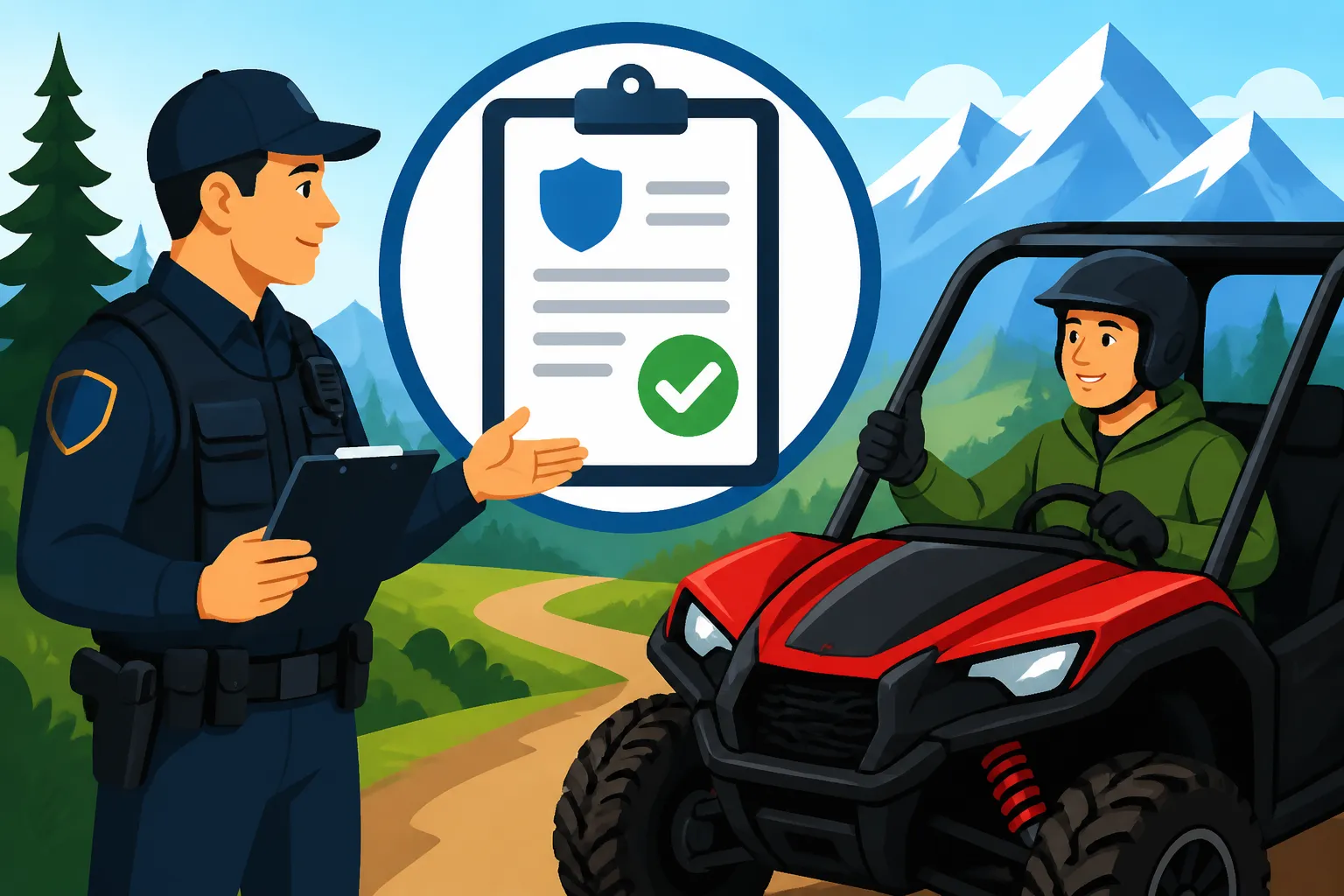
Requesting an ORV Operation Permit isn't like picking up a fishing licence at a tackle shop. It involves direct communication with your local police detachment, and the process can vary slightly depending on where you are in BC. The key is to be prepared, respectful, and clear about your needs.
Where to Apply
Your first step is to contact the police detachment responsible for the area where you intend to use the permit. This is usually your local RCMP detachment or, in larger municipalities, your municipal police force (like Vancouver Police Department or Victoria Police Department). Don't just show up; call ahead, explain what you need, and ask about their specific procedures for issuing [BC Police Operation Permits for Highway Travel]. They might have a specific officer or unit that handles these requests. Some detachments might prefer you come in person to discuss it, while others might start the process over the phone.
When you call, be ready to provide details:
- Your Identity: Your name, contact information, and proof of identity.
- Machine Details: Make, model, VIN, and proof of registration (your Certificate of Registration, which is distinct from a highway vehicle title). You'll need to know [BC's Certificate of Registration Explained].
- The Specific Route: This is perhaps the most critical piece of information. You'll need to pinpoint the exact section of highway you wish to cross or travel on, including street names, distances, and any landmarks. Be as precise as possible, perhaps even bringing a map.
- Reason for Travel: Explain why you need to use this specific section of highway. Is it to access another trail network? To move between two pieces of private property? Your reason must be compelling and limited to necessity, not convenience.
What Documents to Bring
While the permit itself is essentially a written authorization, you'll need to demonstrate that you and your machine meet other legal requirements. This includes:
- Proof of Identity: A valid driver's licence is a must, as the permit often stipulates that the operator must be licenced, especially when touching a highway. Remember, [BC Requires a Driver's Licence on a Highway] even for these brief interactions.
- ORV Registration: Your current [BC's Certificate of Registration Explained] is essential. Your machine needs to be registered with the Province of BC to be legally operated, even off-highway.
- Insurance: While basic third-party liability is mandatory for Forest Service Roads, and usually a minimum of $200,000, for highway crossings or travel, you will typically need to demonstrate that your ORV carries valid Basic Autoplan insurance from ICBC. This is critical because you're now interacting with highway traffic. [BC Requires Basic Autoplan on a Highway] applies here.
- Safety Gear: Be prepared to demonstrate that your machine meets basic safety requirements. This might include proper lighting, mirrors, and, for ride-astride machines, that you'll be wearing an approved helmet. Even if you've kitted out your UTV with a sturdy roll cage and harnesses from SuperATV, you still need to meet the specific requirements of the permit and the Motor Vehicle Act for the duration of its use on the highway.
The police officer will assess your request based on public safety, the necessity of the route, and the specific local conditions. It's at their discretion to issue the permit, and they can attach conditions to it. Being polite, organized, and clearly articulating your needs will go a long way.
What to Expect: Conditions, Validity, and Limitations
When a police detachment issues an ORV Operation Permit, it comes with strict conditions, and it's absolutely crucial that you understand and adhere to every single one. These aren't just suggestions; they are legally binding instructions designed to ensure safety during the brief moments your ORV interacts with highway traffic.
Common Permit Conditions
Police officers have the authority to impose various conditions to mitigate risks. These might include:
- Designated Route and Time: The permit will specify the exact stretch of highway you can use and often the time of day or even specific dates. You cannot deviate from this route or operate outside the designated hours. For instance, a permit might allow you to cross Highway 97 at a specific intersection only between 10 AM and 2 PM on a Saturday.
- Speed Limits: You will likely be restricted to a lower speed than the posted highway limit, usually to minimize the speed differential with other traffic.
- Visibility Requirements: Conditions might stipulate that you must have a bright flag, reflective tape, or additional lighting, especially if your machine is not factory-equipped with full highway-style lighting. You could also be required to wear high-visibility clothing.
- Spotters or Pilot Vehicles: In some cases, particularly for larger UTVs or in areas with poor visibility, the police might require you to have a spotter or even a pilot vehicle to escort you across or along the highway section.
- Traffic Control: The permit might specify how you must interact with traffic, such as yielding to all highway vehicles or only crossing when there's a clear break in traffic. This applies especially at intersections where [BC ORV Crossing Rules at Stops and Lights] generally dictate a stop and yield.
- Minimum Equipment: Even if your ORV is modified with robust parts from SuperATV, the permit might specify certain safety equipment like working headlights, taillights, brake lights, and perhaps even mirrors that provide a clear view of traffic.
It is paramount that you review the permit carefully and understand every condition. If you're unsure about anything, ask the issuing officer for clarification before you hit the trail. Ignoring these conditions isn't just a breach of the permit; it could lead to significant fines and puts you and other road users at risk.
Validity and Expiry
One common question is "how long is this permit good for?" Good news here: [BC Permits Valid Up to Two Years]. This means you don't have to reapply every week or month for the same limited crossing. However, the officer issuing the permit has the discretion to set a shorter validity period if they deem it appropriate for the specific circumstances or location. Always check the expiry date on your permit.
It's also important to remember that the permit's validity is tied to its specific conditions. If your route changes, or if the reason for needing the permit changes, your existing permit might no longer be valid, and you'd need to reapply.
What the Permit Absolutely DOES NOT Grant
Despite having a permit, there are some fundamental limitations to ORV operation on highways that remain in place:
- General Highway Use: An operation permit does not turn your ORV into a street-legal vehicle for general highway use. You cannot use it to travel long distances on highways or for purposes not explicitly stated in the permit. [BC Has No Street-Legal Path for an ATV], and this permit doesn't create one.
- Exemption from Other Laws: The permit does not exempt you from any other laws, such as impaired driving laws, helmet laws (if applicable for your machine type), or the requirement to carry your [BC Riders Must Carry the Certificate] and photo ID.
- Permission for Passengers: If your machine is not designed to carry a passenger, or if the manufacturer's guidelines prohibit it, the permit will not override that. Safety always comes first.
- Automatic Renewal: These permits are not automatically renewed. Once it expires, you must go through the application process again.
Understanding these boundaries is crucial. The operation permit is a privilege granted for specific, necessary circumstances, not a right to operate your ORV freely on public roads.
| Aspect | Description |
|---|---|
| Purpose | Temporary, limited highway crossing or short travel to connect off-road trails. |
| Issued By | Local RCMP or municipal police detachment. |
| Cost | [BC Permits Cost Nothing]. |
| Validity | Up to two years, but officers can set shorter terms based on circumstances. |
| Required Documents | Valid driver's licence, ORV Certificate of Registration, proof of Basic Autoplan insurance. |
| Key Information Needed | Exact route, reason for travel, machine details (VIN, make, model). |
| Typical Conditions | Specific route/time, speed limits, visibility aids, spotters (rare), adherence to traffic rules. |
| Does NOT Grant | General highway legal status, exemption from other traffic laws, permission for unapproved passengers, automatic renewal. |
| Discretionary | Issuance is entirely at the police officer's discretion, based on public safety and necessity. |
Beyond the Permit: What Else You Need to Know
Even with a police-issued operation permit in hand, there are broader responsibilities and considerations that every ORV rider in BC needs to be aware of. The permit covers a very specific niche, but it doesn't encompass everything.
General ORV Regulations and Best Practices
Always remember that the ORV Act has overarching rules for operation. Your machine must be registered, you must carry your [BC Riders Must Carry the Certificate] and [BC Riders Must Carry Photo ID] at all times while riding. When on Crown land, including Forest Service Roads, you need adequate liability insurance. Many riders opt for additional private insurance beyond the basic ICBC Autoplan for peace of mind, especially if their machine has significant modifications or valuable aftermarket parts, perhaps from a high-quality brand like SuperATV.
Beyond the legal requirements, practicing responsible riding is paramount. This means staying on designated trails, respecting private property, being mindful of other users (hikers, mountain bikers, equestrians), and never operating while impaired. These are principles that apply whether you're on a remote trail or making a permitted highway crossing.
The Importance of Communication and Local Knowledge
Laws and enforcement can sometimes feel a bit grey around the edges, especially in rural areas where ORV use is more common. Building a good relationship with your local police detachment and even local off-road clubs can be incredibly beneficial. Clubs often have insights into local access issues, trail networks, and might even have pre-existing agreements or knowledge about common highway crossing points. For example, some clubs might have worked with local police to streamline the process for [Getting a Free Operation Permit From Your Local Detachment] for specific, often-used trail connectors.
Furthermore, conditions on Crown land can change rapidly due to logging, wildfires, or seasonal closures. Always check for current [BC Motor Vehicle Closed Areas] or fire bans before heading out. A permit might get you across a highway, but it won't help you if the trail you're trying to reach is closed.
When in Doubt, Don't Risk It
The penalties for operating an unregistered ORV, or operating an ORV on a highway without proper authorization and insurance, can be severe. This includes significant fines, points on your driver's licence, and potentially even seizure of your machine. It's simply not worth the risk. If you're unsure whether a specific piece of road qualifies as a highway, or whether your intended use aligns with the spirit of an operation permit, err on the side of caution.
If your primary goal is to use your ORV for utility purposes that require highway travel, or if you simply want the freedom of being "street legal," it might be worth considering a different type of vehicle altogether, as current BC legislation simply does not provide that path for ATVs and UTVs. A permit is a very specific tool for a very specific, limited problem. Use it wisely, and always prioritize safety and compliance with the law.
Disclaimer
This article is for general informational purposes only and does not constitute professional advice. Laws, prices and regulations vary by location and change over time. Consult a qualified professional for guidance on your specific situation.