Loading in a Parking Lot
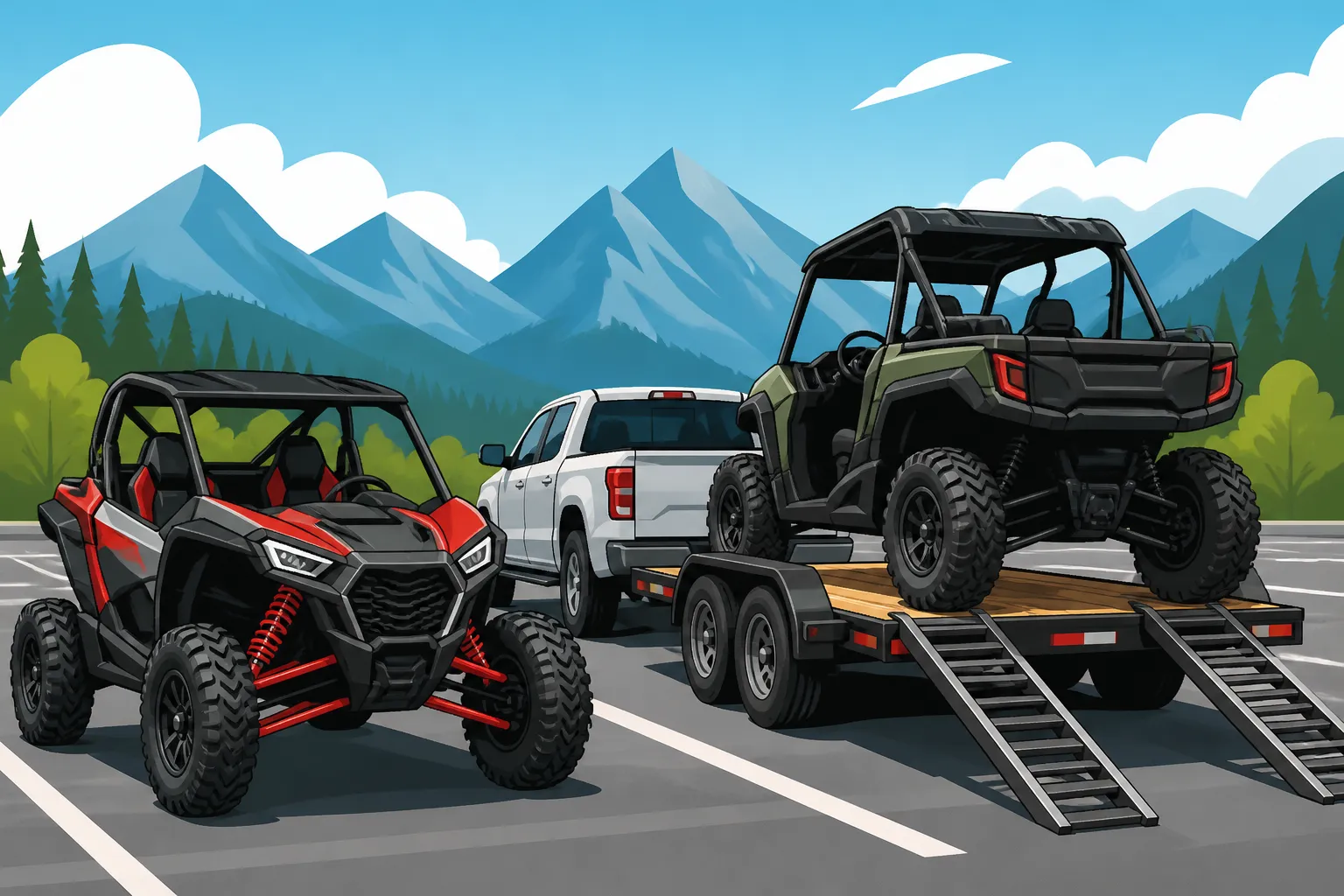
Picture this: you've just finished an incredible day tearing up the trails, mud-splattered and grinning, but now you're faced with the often-overlooked challenge of getting your ATV or side-by-side back onto your trailer in a busy parking lot. It can feel like you're navigating a minefield, with worried glances from passersby and the nagging question of whether you're even allowed to be doing this here. This guide will help you understand BC's specific rules and best practices for safely and legally loading and unloading your off-road vehicle (ORV) in various parking lot scenarios, ensuring your adventure ends as smoothly as it began.
Understanding BC's "Highway" Definition and Its Impact on Parking Lots
One of the biggest sources of confusion for off-road riders in British Columbia is the definition of a "highway" under the Motor Vehicle Act and how it applies to seemingly innocuous places like parking lots. We often think of highways as multi-lane arteries or paved roads, but in BC, the legal definition is far broader, and it directly impacts where and how you can operate your ORV.
What Constitutes a "Highway" in BC?
In British Columbia, the term "highway" isn't limited to what you might see on a map. According to the Motor Vehicle Act, a highway includes not only public streets and roads but also "every place or way, including the shoulders of a highway, designed or intended for use by the general public for the passage of vehicles." This is a critical distinction because it means many areas you might not consider a "highway" actually fall under this definition, including most public parking lots. If a parking lot is publicly accessible, even if it's privately owned, it's often deemed part of the "highway" system for regulatory purposes. This distinction is crucial because [What the Off-Road Vehicle Act Covers in BC] explicitly states that ORVs are generally not permitted on highways unless very specific conditions are met.
For example, the parking lot of a provincial park, a large shopping centre, or even a municipal boat launch could all be considered part of the "highway." This means that simply driving your ORV across a few parking spaces to reach your trailer could, technically, be considered operating an unregistered and uninsured vehicle on a highway, leading to a potential ticket. This broad definition often catches riders off guard, as they assume that because it's not a main road, the rules are different. This isn't just about avoiding pavement; it's about avoiding any area "designed or intended for use by the general public for the passage of vehicles," which is a pretty wide net.
The Nuances of Public Versus Private Parking Lots
While the "highway" definition is broad, there are still important nuances between truly private property and public-access parking lots. A parking lot on private land, where access is restricted and not generally open to the public – think a fenced-off storage yard or your own driveway – usually falls outside the Motor Vehicle Act's definition of a highway. On such truly private land, the rules around ORV operation are much more relaxed, generally only requiring owner permission and adherence to local bylaws regarding noise or nuisance.
However, most parking lots where you'd typically load or unload an ORV, such as those at trailheads, sporting goods stores, or even roadside restaurants, are considered public-access areas. Even if the land is privately owned, if the public is invited to use it for parking, it often carries the weight of "highway" regulations. This means that if you're pulling into the parking lot of a popular trailhead, even if it's gravel and feels very "off-road," you're likely still operating within the broad definition of a highway. This is why you'll see a lot of riders doing quick, deliberate maneuvers to get their machines on and off trailers, minimizing the distance travelled under their own power. Knowing these distinctions can help you avoid unintended run-ins with enforcement officers, who are keenly aware of these legal definitions. [BC Crown Land Triggers the Registration Rule] is another area where understanding these legal distinctions is paramount.
Safe and Legal Practices for Loading and Unloading Your ORV in BC Parking Lots
Given the broad definition of a "highway" in BC, it's crucial to approach loading and unloading your ORV with both safety and legality in mind. It’s not just about avoiding scrapes and bruises, but also about sidestepping potential fines or complications with local authorities.
Minimizing ORV Operation in Parking Lots
The golden rule for ORV use in any area that might be construed as a "highway" is to minimize actual operation. This means your goal should be to get your ORV on or off your trailer with the absolute least amount of driving possible. Ideally, you want to position your truck and trailer so that you can drive straight onto or off the ramp, reducing the need to manoeuvre your ORV across multiple parking spaces. This isn't just about legality; it's also about courtesy and safety in what are often congested areas.
Imagine you're at a popular staging area for a trail system. Instead of driving your quad from one end of the parking lot to the other to get to your trailer, try to back your trailer into a spot where you can easily align your ORV. If you have to move your ORV more than a few feet, consider pushing it or using a winch. For heavy side-by-sides, this might not always be feasible, but the principle remains: keep the engine off and wheels static whenever possible while not on the ramps. This practice greatly reduces the chance of someone misinterpreting your actions or, worse, you accidentally violating a bylaw.
Essential Equipment for Safe Loading
Safety is paramount when loading and unloading, especially with heavy machinery. Investing in the right equipment can make all the difference, preventing accidents and making the process far less stressful.
Here’s a look at what you’ll want to have on hand:
- Quality Ramps: This is non-negotiable. Sturdy, well-maintained ramps are critical. Look for ramps with good traction, a high weight capacity that exceeds your ORV's weight, and a secure attachment system to prevent them from slipping off the trailer. Whether they are foldable, arched, or straight, ensure they are rated for your specific machine. If you're using aftermarket ramps, brands like SuperATV offer a range of heavy-duty options designed for various ORV types, ensuring stability and durability.
- Secure Tie-Down Straps: Once your ORV is on the trailer, it needs to be secured properly. Use at least four heavy-duty ratchet straps – one for each corner – to prevent movement during transit. Cross-strapping can provide extra stability. Check your straps regularly for wear and tear.
- Wheel Chocks: For an extra layer of security, especially if you're loading on a slight incline, wheel chocks can prevent your ORV from rolling off the ramps or moving once on the trailer before you've strapped it down.
- Winch (Optional but Recommended for Heavy Machines): If you frequently load heavy UTVs or have a steep ramp angle, a winch on your trailer or ORV can be a lifesaver. It allows for controlled loading, reducing the risk of tipping or losing control. If you're outfitting your UTV with a powerful winch, check out robust systems from companies like SuperATV that are built for tough hauling.
- Proper Footwear and Gloves: Protect yourself! Sturdy, closed-toe boots with good grip are essential, and gloves can prevent scrapes and provide better grip on ropes or winches.
Having this gear, and knowing how to use it, turns a risky chore into a manageable task.
Best Practices for Parking Lot Maneuvers
Even with the right gear, technique matters. Here are some best practices:
- Choose Your Spot Wisely: Whenever possible, pick a parking spot that's relatively level, has ample space around your truck and trailer, and isn't in a high-traffic area. This gives you room to work and minimizes disruption to others. Avoiding busy thoroughfares within the lot is also safer.
- Clear the Area: Before you start, make sure there are no children, pets, or distracted individuals near your loading zone. A quick scan of your surroundings is crucial.
- Engage Parking Brake/Chocks: On both your tow vehicle and your ORV, engage parking brakes. If your trailer has chocks, use them.
- Load and Unload Slowly and Deliberately: Speed is not your friend here. Use low gear on your ORV, maintain a steady throttle, and ascend/descend the ramps slowly. Have a spotter if possible, especially with larger machines.
- Face Up the Incline: When loading, drive the ORV forward onto the trailer. When unloading, reverse it off the trailer. This provides better control and visibility. If you have an enclosed trailer, you might need to back in and then drive off forward.
- Secure Immediately: As soon as the ORV is on the trailer, engage its parking brake, shut off the engine, and immediately begin securing it with tie-down straps. Do not assume it's stable just because it's sitting on the trailer bed.
Avoiding Common Pitfalls and Ensuring Compliance
Navigating the rules around ORV use, even in something as seemingly simple as a parking lot, can feel like a maze. Understanding the potential pitfalls and knowing how to ensure compliance can save you a headache, and a hefty fine, down the road.
The Problem of Operating Unregistered or Uninsured Machines
One of the most significant issues when operating an ORV in a public parking lot (which, as we've discussed, often falls under BC's broad "highway" definition) is the requirement for registration and insurance. If your ORV is unregistered or doesn't have the appropriate insurance for highway use, even a short jaunt from a parking spot to your trailer can land you in trouble. [BC Tickets for an Unregistered Machine] can be substantial, and operating without proper insurance carries even greater risks, not to mention financial liability if an accident occurs.
The Off-Road Vehicle Act requires all ORVs to be registered with ICBC if they are operated on Crown land, which includes most trails and resource roads. While this registration does not make your ORV "street legal" – [BC Has No Street-Legal Path for an ATV] – it does fulfill a basic requirement. However, for any operation on a "highway," even a parking lot, your ORV typically needs to comply with Motor Vehicle Act requirements, which means it would need to be suitable for highway use (which ATVs and UTVs are generally not) and carry Motor Vehicle Act insurance. This creates a Catch-22: you can't get highway insurance for an ORV because it's not highway legal, but operating it on a "highway" (like a parking lot) without it is illegal. This is precisely why minimizing operation is key. Treat any parking lot as if it were a public road, and only operate your ORV under its own power when absolutely necessary for loading or unloading. If you must move it, keep it brief and direct.
Local Bylaws and Private Property Rules
Beyond provincial statutes, local municipalities and private property owners can impose their own rules and bylaws. [BC Municipal Authority Over ORV Roads] gives cities and towns some power to regulate ORV use within their boundaries. While these bylaws rarely make it illegal to load your ORV in a parking lot, they might address noise, engine idling, or even specific designated loading zones. For example, a municipality might have a noise bylaw that kicks in at certain hours, making it problematic to rev your engine or operate your ORV loudly in a parking lot late at night or early in the morning.
Always be aware of any posted signs. A private parking lot owner, for instance, might have signs explicitly prohibiting ORV operation beyond loading/unloading, or even prohibiting it entirely. Ignoring these signs can lead to being asked to leave, trespassing charges, or even having your vehicle towed. If you're regularly using a specific staging area or parking lot, it's a good idea to check with the local municipality or the property owner (if known) to understand any specific rules they might have in place. Common sense and respect for others go a long way here; loud, disruptive behaviour in a parking lot is more likely to attract unwanted attention from both property owners and law enforcement.
The Importance of Being Prepared and Visible
Being prepared isn't just about having the right gear; it's also about knowing what to do and making sure you're visible and predictable to others around you. This proactive approach greatly reduces risk.
Ensuring Visibility and Awareness
Loading and unloading can be a bit of a spectacle, and unfortunately, not everyone in a parking lot is paying attention. Your responsibility is to ensure maximum visibility and awareness during the process.
Here’s how:
- High-Visibility Clothing: Consider wearing a high-visibility vest or brightly coloured clothing, especially if loading/unloading in low light conditions or a busy area. This makes you stand out to drivers and pedestrians.
- Warning Lights: If your tow vehicle has flashing hazard lights, use them. Some trailers also have their own hazard lights. This signals to others that you are engaged in a stationary activity and they should exercise caution.
- Cones or Markers: If you have them, placing traffic cones or reflective markers around your immediate loading area can create a visible safety perimeter, directing traffic away from your work zone. This is particularly helpful in larger, more open parking lots where space allows.
- Spotter Communication: If you have a helper, establish clear hand signals or verbal commands before you start. Miscommunication can lead to dangerous situations, especially when guiding a large machine onto a narrow ramp.
- Keep Your Head on a Swivel: Even with precautions, stay alert. Constantly check your mirrors and surroundings for approaching vehicles or pedestrians who might not see what you're doing. Distracted drivers are a real hazard in any parking lot.
Documentation and Communication with Authorities
Should a peace officer approach you while you're loading or unloading, being polite, cooperative, and prepared with your documentation can often smooth things over. Remember, they are there to enforce regulations and ensure public safety.
Here’s what you should have ready:
- ORV Registration: Always carry your [BC Riders Must Carry the Certificate] of registration for your ORV. This proves legal ownership and registration under the Off-Road Vehicle Act.
- Photo Identification: Carry valid photo identification, such as your driver's licence. This confirms your identity.
- Proof of Insurance: Have proof of your basic Autoplan insurance for your tow vehicle, and any additional liability insurance you might carry for ORV operation on Crown land, like [BC Forest Service Road Requirements]. While parking lot liability is tricky for ORVs, showing you're a responsible operator with other coverage can help.
- Explanation of Purpose: Clearly explain that you are solely loading or unloading your ORV for transport and are minimizing its operation in the parking lot to comply with regulations. Emphasize that you are not using the parking lot as a riding area.
Having your paperwork in order and being able to calmly explain your actions can prevent a brief interaction from escalating into a ticket or further investigation. Most officers are reasonable when they see a rider making a genuine effort to comply and operate safely.
Navigating Specific Parking Lot Scenarios
Not all parking lots are created equal, and understanding the subtle differences in their legal standing can inform your loading and unloading strategy.
Staging Areas and Trailhead Parking
These are perhaps the most common places for ORV loading and unloading. While they often feel remote, many dedicated staging areas are still considered public-access points and thus fall under the "highway" definition for the purpose of the Motor Vehicle Act. The key here is that these areas are specifically designed for ORV users, so authorities are generally more understanding of the necessity to drive an ORV a short distance for loading.
However, this doesn't grant you free rein. Stick to the immediate vicinity of your trailer. Don't take your ORV for a "warm-up lap" around the parking lot. [BC Forest Service Road Rules for ORVs] often begin right at these staging areas, so the moment you're off the pavement or gravel lot and onto the dirt road, you're usually on Crown land where ORV rules fully apply. Keep your speed to an absolute crawl, watch for pedestrians and other vehicles, and be ready to load or unload without delay. Always ensure your machine is registered, even if you're just moving it a few feet.
Shopping Centre and Commercial Parking Lots
These are the riskiest locations for operating an ORV under its own power. A large department store or grocery store parking lot is unequivocally a "highway" in the eyes of the law. Operating an ORV here, even briefly, can draw unwanted attention. The best approach here is to:
- Bring the Trailer to the ORV: If you've just purchased a machine, try to have the dealer load it directly onto your trailer. If you're moving a machine from a service shop, position your trailer right at the bay door.
- Minimize Movement: If you must drive it, keep it to the absolute minimum necessary to get onto the ramp. Drive it directly from where it's stored to your trailer.
- Time it Right: If possible, choose off-peak hours when the parking lot is less busy to reduce the chance of disturbing others or causing a traffic issue.
Even pushing a lighter ORV a short distance across a commercial parking lot is generally preferable to driving it. The potential for a ticket is higher here due to the clear "highway" designation and the presence of many non-ORV-savvy members of the public.
Private Residences and Farm Properties
When you're on truly private land, like your own property or a friend's farm, the rules change significantly. [BC Private Land and the Registration Question] clarifies that on private property, the provincial Off-Road Vehicle Act requirements for registration often don't apply. However, local bylaws regarding noise or nuisance might still be in effect.
For loading and unloading on private land:
- Owner's Permission: Always ensure you have explicit permission from the property owner to operate your ORV on their land.
- Safety First: While the legal restrictions are fewer, safety remains paramount. Treat loading on private land with the same caution as you would in a public area.
- Local Bylaws: Be mindful of your neighbours. Avoid excessively loud operation during early morning or late evening hours.
- Consider a Police Operation Permit: In rare cases where you might need to cross a short stretch of actual highway to get from one section of private land to another (e.g., crossing a side road to access a field), you might be able to apply for a [BC Police Operation Permits for Highway Travel]. These permits are typically for specific, limited circumstances and are issued by local police detachments, allowing you to legally cross a highway. However, they are not intended for general parking lot use.
Ultimately, common sense and a strong understanding of BC's unique "highway" definition are your best tools. By being prepared, visible, and minimizing your ORV's operation in parking lots, you can enjoy your off-road adventures without the added stress of legal worries.
| Scenario | Is it a "Highway" in BC? | Best Practice for ORV Operation | Key Considerations |
|---|---|---|---|
| Trailhead/Staging Area | Often Yes (public access) | Drive minimally, directly to trailer | Watch for pedestrians, other vehicles; have registration |
| Shopping Centre Lot | Yes (public access) | Push or winch; extreme minimal driving | High risk of tickets; avoid peak hours |
| Provincial Park Lot | Yes (public access) | Drive minimally, for loading only | Park rules may also apply; respect nature |
| Your Own Driveway/Yard | No (private property) | More relaxed; safety still key | Be mindful of noise bylaws and neighbours |
| Farm/Private Estate (with permission) | No (private property) | Owner's rules apply; focus on safety | Check for local bylaws on nuisance |
Disclaimer
This article is for general informational purposes only and does not constitute professional advice. Laws, prices and regulations vary by location and change over time. Consult a qualified professional for guidance on your specific situation.