Crossing a Highway at a Traffic Light
It's incredibly frustrating when you're out enjoying the vast wilderness of British Columbia on your ATV or UTV, only to hit a paved highway that seems like an impassable barrier. Many riders feel a real sense of confusion and even anxiety about how to legally get their machine from one trail system to another when a public highway, especially one with a traffic light, stands in the way. This guide is here to untangle those rules, specifically focusing on how to safely and legally cross a highway at a traffic light in BC, ensuring you stay compliant and avoid unnecessary fines.
The Core Challenge: Navigating Highways with Your ORV in BC
Let's be honest, the thought of taking your mud-splattered quad or side-by-side onto a busy provincial highway can feel downright intimidating. You know your machine wasn't designed for highway speeds or heavy traffic, and the last thing you want is a run-in with law enforcement or, worse, an accident. This isn't just a minor inconvenience; it's a significant barrier for many riders trying to connect riding areas or simply get to where they need to go. The rules around Off-Road Vehicles (ORVs) and highways in British Columbia are specific, and ignoring them can lead to serious consequences, not to mention a hefty dose of stress.
Why Highways are Different for ORVs
The fundamental difference lies in the legal definition and intended use of your machine. An ATV or UTV, under the BC Off-Road Vehicle Act, is primarily designed for off-highway use. Public highways, on the other hand, are regulated by the Motor Vehicle Act, which has a completely different set of requirements for vehicle construction, safety features, licensing, and insurance. Your ORV simply doesn't meet the criteria to be considered "street legal" in the way a car or truck is. This isn't just bureaucratic red tape; it's about public safety and ensuring that all vehicles operating on public roads can do so predictably and safely amongst other traffic. This disparity creates the challenge of how to bridge the gap between your off-road adventures and the necessary passage across paved roads.
You might be thinking, "But it's just a quick hop across!" And while that's true for the rider, the law sees it as operating on a highway. This means that all the rules of the road, including traffic signals, speed limits, and yielding, suddenly apply to you, even for that brief moment. This contrast is why understanding the specific exemptions and conditions for crossing becomes so critical. Without a clear grasp of these regulations, you're essentially gambling with potential fines and safety risks every time you venture near pavement. [Can You Ride an ATV on the Road in BC?] delves deeper into the general restrictions, but here we're focusing on that specific, nerve-wracking moment at the intersection.
The Frustration of Limited Road Access
It’s easy to feel frustrated by the lack of direct road access for your ORV. You see other vehicles whizzing by, seemingly unburdened by these restrictions, while you're left looking for creative (and legal) ways to navigate around or across. Many popular riding areas are divided by municipal roads or provincial highways, forcing riders to either trailer their machines for short distances or search for alternative routes that can add significant time and mileage to a trip. This isn't just an inconvenience; it can truly disrupt the flow and enjoyment of a planned ride, especially if you're trying to explore a new region or connect multiple trails.
Imagine planning a multi-day trip in the Kootenays, aiming to link up a series of incredible [BC Kootenay Riding Areas]. You've mapped out your route, packed your gear, and you're ready for adventure. Then you realize a major highway cuts right through your planned trajectory, with no obvious underpass or dedicated ORV crossing. This is where the frustration really sets in. You might see other riders who seem to take liberties, making you wonder if the rules are truly enforced or if there's some secret loophole you're missing. The truth is, the rules are there, and they are enforced. It's just that navigating them requires careful planning and a clear understanding of what's permitted.
Understanding BC's Rules for Crossing at a Traffic Light
So, you're at an intersection, the light is red, and you need to get to the other side. What do you do? The key is to understand that the law allows for very specific types of highway use for ORVs, and crossing is one of them, but under strict conditions. This isn't a free pass to drive down the highway; it's a temporary, highly regulated maneuver designed to allow you to connect off-road sections. The overarching principle is minimizing your time and impact on highway traffic while maximizing your safety.
The "Quickest and Most Direct Route" Principle
When it comes to crossing a highway, BC law stipulates that you must take the "quickest and most direct route" available to get from one side of the highway to the other. This isn't a suggestion; it's a legal requirement. It means you can't weave through traffic, drive a block down to catch a different light, or use the highway to gain an advantage. Your path should be a straight shot across the intersection, perpendicular to the flow of traffic, if at all possible. This principle is designed to reduce the risk to both the ORV operator and other highway users by limiting the time your machine spends in a high-speed environment where it might not be easily seen or might impede traffic flow.
For instance, if you're riding near Princeton and need to cross Highway 3 to access more trails on the other side, you can't decide to drive a kilometer down the shoulder to a different access point just because it looks less busy. You must cross at the first available, safest, and most direct point. This typically means an established intersection with traffic controls, like a traffic light. The goal is to be on the highway for the absolute minimum time necessary. This also means you can't be riding on the shoulder leading up to the light, unless that shoulder is explicitly designated for ORV travel, which is rare on most provincial highways. [BC Rules for Crossing a Highway] outlines these constraints more broadly, but the "quickest and most direct" is paramount at an intersection.
What to Do Before and During the Crossing
Executing a safe and legal crossing at a traffic light requires a few specific steps:
- Approach with Caution: As you near the highway, slow down and be prepared to stop. Look for a safe place on the shoulder or a side road just before the intersection where you can stop completely, out of the flow of highway traffic.
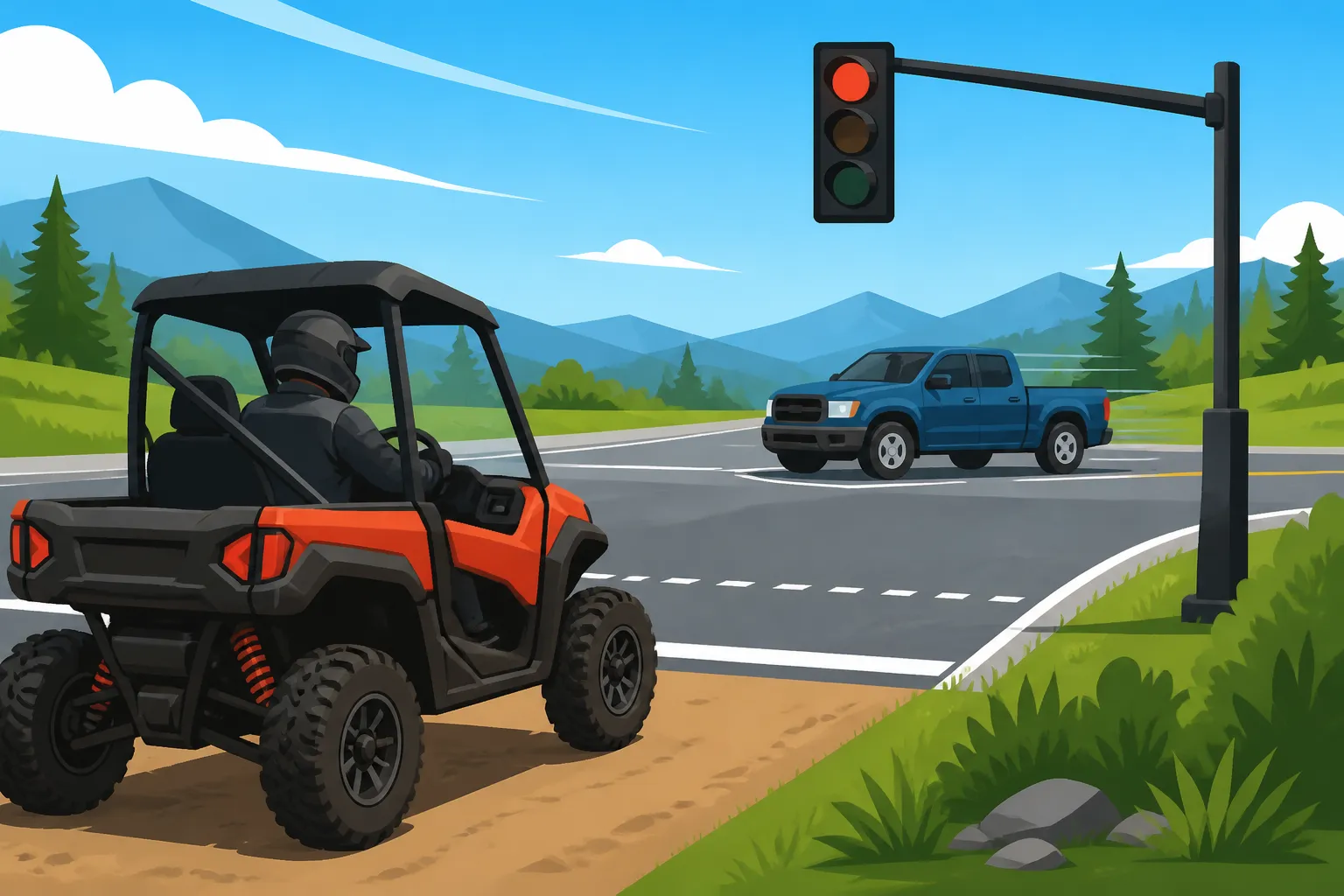
- Observe Traffic Signals: Just like any other vehicle, you must obey the traffic light. If it's red, stop. If it's green, proceed only when it's safe to do so.
- Yield to Pedestrians and Other Vehicles: Always yield the right-of-way. Just because you have a green light doesn't mean you can barrel through. Look left, right, and then left again, making eye contact with drivers if possible, before entering the intersection.
- Cross Directly: Once it's safe and you have the green light, proceed straight across the highway to the nearest safe point on the other side where you can exit the highway. Do not make turns, do not proceed down the highway. The goal is to get off the highway as quickly and directly as possible.
- Signal Your Intentions: While your ORV might not have turn signals in the same way a car does, use clear hand signals if you need to indicate a slight directional change (though the goal is always direct). Make sure your intentions are clear to other drivers.
Consider a scenario where you’re connecting two sections of trail near the Fraser Canyon. You come to a busy intersection with a traffic light on Highway 1. You pull up to the edge of the pavement, stop your machine, and patiently wait for the light to turn green, just like any car would. Once it’s green and traffic is clear, you accelerate smoothly across the lanes, making a beeline for the trail entrance on the opposite side. No dawdling, no looking for shortcuts down the shoulder. You are in, and you are out. This precise action is what the "quickest and most direct" rule intends.
Specific Equipment and Licensing Requirements
Even for a brief crossing, your ORV and you, as the operator, are still subject to certain requirements. For starters, your ORV must be registered with ICBC. This isn't optional; it became mandatory in 2015 for any ORV operating off private property. So, if you haven't sorted out your [BC ORV Registration You Pay Once], now is definitely the time. Without proper registration, you're already in violation before you even touch the pavement.
Beyond registration, your machine must also meet basic safety standards. This includes having functioning brakes, a horn, and at least one headlight and one taillight, especially if there's any chance you'll be riding near dusk, dawn, or in low visibility conditions. While BC doesn't require specific street-legal conversion kits for crossing (since you're not making it street legal), anything that enhances your visibility is a huge plus. This is where aftermarket accessories can come in handy. Many riders add brighter LED headlights or taillights for better visibility, and some even invest in LED whip lights from companies like SuperATV, especially when riding in dusty conditions or at twilight, ensuring they are seen by other traffic during that brief crossing.
As for the operator, you absolutely need a valid driver's license to operate any motor vehicle on a public highway, even for just a crossing. This means a Class 5 (or equivalent) for most adults. A learner's permit with the appropriate supervision might be acceptable, but check specific regulations. You cannot operate your ORV across a highway without a valid driver's license. [BC Requires a Driver's Licence on a Highway] is a definitive guide on this. You also need to be carrying your [BC Riders Must Carry the Certificate] of registration and photo ID with you at all times when operating on Crown Land or crossing a highway.
Finally, while basic ICBC liability insurance is mandatory for any vehicle operating on a public highway, your ORV registration usually comes with a basic level of liability coverage that extends to these permitted highway crossings. It’s always a good idea to confirm with your insurance provider that you are adequately covered for such maneuvers, especially if you have additional private insurance.
Beyond the Light: General Highway Crossing Etiquette and Safety
While navigating a traffic light is a specific scenario, it's part of a broader need to understand how to interact with highways in BC. The goal is always to prioritize safety, visibility, and compliance with the law. Thinking ahead and preparing for these brief interactions can make all the difference in having a stress-free ride.
Other Permitted Crossing Scenarios
It's not just traffic lights where you might encounter a need to cross a highway. The BC Off-Road Vehicle Act allows for crossing where there isn't a traffic light, often at designated crossing points or where a resource road intersects a highway. The principles remain the same: take the quickest and most direct route. This means stopping safely off the pavement, looking both ways multiple times, and waiting for a significant gap in traffic before crossing straight over.
Sometimes, local police detachments can issue an "Operation Permit" for specific, limited highway use, but these are rare for general recreational riding and usually tied to special circumstances or commercial operations. For the average rider, waiting for the green light or a clear break in traffic is the standard. [BC Rules for Crossing a Highway] details these various scenarios and what's generally allowed. It’s crucial to remember that "crossing" never means riding along the highway for any appreciable distance unless explicitly stated by a rare and specific bylaw or permit, which is not the norm.
| Action | Traffic Light Intersection | Uncontrolled Intersection / Designated Crossing |
|---|---|---|
| Stop Before Pavement | Yes, at the stop line or before the crosswalk. | Yes, completely off the paved surface. |
| Obey Traffic Control | Yes, follow the signal strictly. | No traffic light; rely on clear visibility and traffic gaps. |
| Yield Right-of-Way | Yes, to all other vehicles and pedestrians. | Yes, to all highway traffic. |
| Path of Travel | Quickest, most direct straight across. | Quickest, most direct straight across. |
| Duration on Highway | Minimum time to clear the intersection. | Minimum time to clear the highway. |
| Driver's License Required | Yes, valid driver's license. | Yes, valid driver's license. |
| ORV Registration Required | Yes, always. | Yes, always. |
| Recommended Visibility Enhancements | Highly recommended (lights, reflective gear). | Highly recommended (lights, reflective gear). |
Enhancing Visibility and Safety Gear
Since ORVs are often lower profile and not always equipped with the same level of lighting as highway vehicles, maximizing your visibility during a highway crossing is paramount. This isn't just about legality; it's about your personal safety.
- Lights, Lights, Lights: Ensure your headlights and taillights are clean and fully functional. Consider adding auxiliary LED lighting. Some riders even install bright, reflective safety flags or whip lights, which stand tall above the machine and greatly increase visibility, especially for side-by-sides. Products from brands like SuperATV can offer durable and bright lighting solutions that are critical in these situations.
- Reflective Clothing: Wear bright, high-contrast, or reflective clothing, especially if there's any chance you'll be crossing in low light. A reflective vest over your riding gear is a simple yet effective addition.
- Helmet: Always wear an approved helmet. [BC ATV Helmet Law Explained] covers the specific requirements. Helmets protect you, but a brightly colored helmet can also add to your overall visibility.
- Awareness: Be hyper-aware of your surroundings. Do not assume other drivers see you. Make eye contact, use hand signals, and be prepared for unpredictable actions from other motorists. Remember, many highway drivers are not accustomed to seeing an ORV on the pavement, even briefly.
Think of it this way: when you're crossing a highway, you're operating outside your machine's usual environment. Anything you can do to make yourself more noticeable, more predictable, and safer is an investment in your well-being.
Penalties for Non-Compliance
Ignoring the rules for crossing a highway can lead to significant penalties. Police officers, whether RCMP or local municipal forces, have the authority to ticket you under the Motor Vehicle Act for infractions on the highway, and under the Off-Road Vehicle Act for issues related to your ORV.
Common penalties include:
- Fines for Unregistered Machine: If your ORV isn't registered, you're looking at a fine. [BC Tickets for an Unregistered Machine] can be substantial, and this is a basic requirement.
- Fines for Operating Without a Driver's License: This is a serious offense on a public highway, even for a short crossing.
- Fines for Failure to Obey a Traffic Control Device: Running a red light or stop sign is a standard traffic infraction that applies to you too.
- Fines for Impeding Traffic: If your crossing is not quick and direct, and you cause other vehicles to brake or swerve, you could be fined.
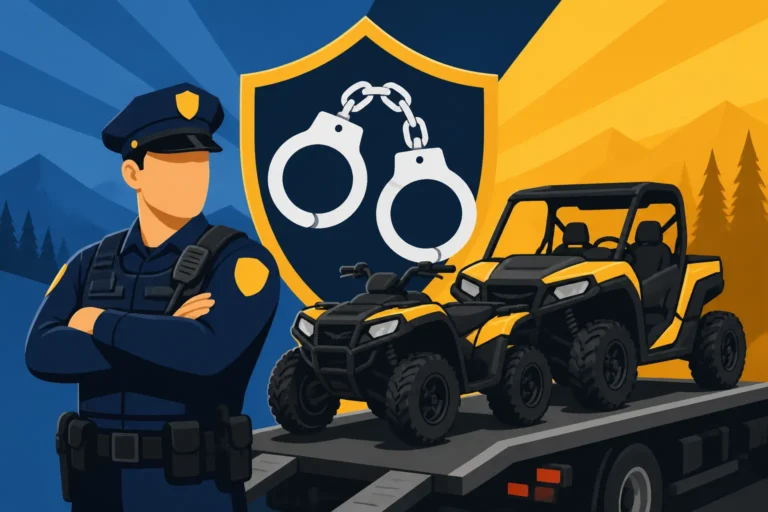
- Seizure of Your Machine: In serious cases, particularly repeat offenses or dangerous driving, your ORV could be seized by law enforcement. [BC Machine Seizures by Police] are a very real possibility if you repeatedly flout the rules or operate unsafely.
These aren't just minor inconveniences; they can put a serious damper on your riding day and your wallet. Understanding and following the rules for crossing a highway at a traffic light isn't about giving up your freedom to ride; it's about ensuring you can continue to enjoy your passion safely and legally in beautiful British Columbia.
Disclaimer
This article is for general informational purposes only and does not constitute professional advice. Laws, prices and regulations vary by location and change over time. Consult a qualified professional for guidance on your specific situation.