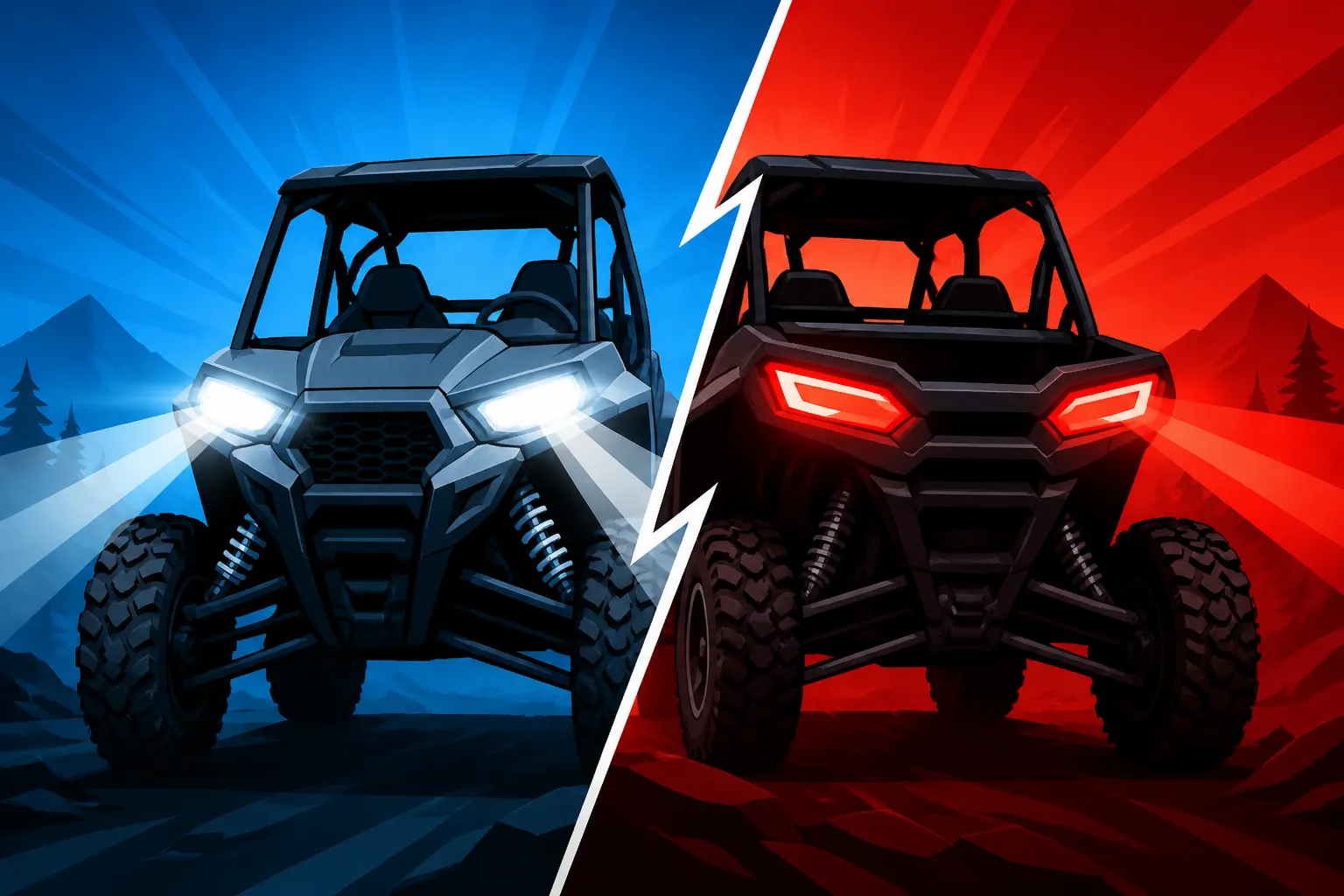
White Front and Red Rear Lights
It's incredibly frustrating when you just want to get out and enjoy the beautiful backcountry of British Columbia on your ATV or UTV, but you're constantly second-guessing whether your machine is properly equipped to meet all the legal requirements. One area that causes a lot of confusion for riders is lighting – specifically, what's mandatory and what's just a good idea. This guide will clarify BC's rules for white front and red rear lights on your off-road vehicle, helping you ride safely and legally.
The Foundation: Why White Front and Red Rear Lights Are Non-Negotiable in BC
When you're out exploring the vast wilderness of British Columbia, especially as the sun begins to dip below the horizon or when the weather turns, visibility becomes paramount. It's not just about you seeing the trail; it's about being seen by others, whether that's another rider, a logging truck on a resource road, or even a wildlife observer. The province has clear, common-sense rules for lighting, and they boil down to a very specific colour scheme: white to the front, red to the rear.
This isn't an arbitrary choice; it's a globally recognized standard for vehicle identification. White lights clearly indicate the front of a moving vehicle, signaling its approach. Red lights, conversely, mark the rear, telling others that you're moving away from them or are stationary. This quick visual cue is essential for preventing accidents, especially on winding trails or in low-light conditions. The Off-Road Vehicle Act and its associated regulations spell this out, aiming to ensure that every machine operating in conditions that demand it can be easily identified. Think of it as your machine's basic communication system with the world around it. Without these, you're not just risking a fine; you're creating a serious safety hazard for yourself and anyone else sharing the trails or resource roads. Getting your machine equipped with the right lights isn't just ticking a box; it's a fundamental part of responsible riding. You'll find these requirements highlighted within the broader [BC Lighting and Seat Belt Requirements] that every ORV operator should be familiar with.
Understanding When and Where Your Lights Are Legally Required
While the "what" is straightforward (white front, red rear), the "when" and "where" often trip up riders. It's not just about riding after dark; the regulations cover any situation where natural light is insufficient for clear visibility. This includes twilight hours, dawn, dusk, and those murky, overcast days when a heavy cloud cover or dense fog makes it hard to see more than a few feet in front of you. Picture yourself deep in a valley with the sun barely cresting the mountains, or a sudden coastal fog rolling in – those are the moments your lights become mandatory, not optional.
Specifically, the rules stipulate that lights must be on from half an hour before sunset until half an hour after sunrise, and at any other time when there isn't enough light to clearly see a person or vehicle at a distance of 150 metres. This is crucial for riders exploring [BC Crown Land Riding Explained] or navigating [BC Forest Service Road Rules for ORVs], where visibility can change rapidly and unexpected encounters with other vehicles or wildlife are common. Conservation officers and local law enforcement are well aware of these rules, and they're empowered to enforce them. Getting caught without proper lighting during these times isn't just a slap on the wrist; it can result in a violation ticket. It’s a good habit to simply turn your lights on whenever you head out, regardless of the time of day, especially if you're venturing into shaded areas or unpredictable weather conditions. It provides an extra layer of safety, making you more visible to hikers, cyclists, or even other riders who might not expect you around the next bend. This proactive approach saves you hassle and keeps everyone safer on the trails.
Here's a quick look at standard versus enhanced lighting needs:
| Light Type | Legal Requirement (BC) | Recommended for Enhanced Safety | Purpose |
|---|---|---|---|
| Headlights | 1 white light (minimum) | 2 white lights (high/low beam) or LED light bar | Illuminates path forward; makes ORV visible from front. |
| Taillights | 1 red light (minimum) | 2 red lights (constant or flashing) | Makes ORV visible from rear; signals presence. |
| Brake Lights | Not explicitly required if tail light acts as one | Dedicated bright red (flashes when braking) | Signals deceleration or stop to trailing vehicles. |
| Signal Lights | Not required | Amber front, red/amber rear | Indicates turns or lane changes (useful on FSRs). |
| Auxiliary Lights | Not required | LED flood/spotlights, work lights | Provides additional illumination for specific tasks or extreme low-light conditions. |
Practical Application and Enhancements for Optimal Visibility
Meeting the minimum legal requirements for white front and red rear lights is your starting point, but savvy riders often go beyond the bare minimum for enhanced safety and functionality. While a single white headlight and a single red taillight might technically pass inspection, the reality of BC's diverse terrain and often challenging conditions suggests that more is usually better. Many stock ATVs and UTVs come with adequate lighting, but aftermarket solutions can significantly improve your visibility and riding experience.
Consider upgrading your headlights to brighter LED units, or even adding an LED light bar across the front of your machine. Not only do these cast a wider and further beam, making obstacles clearer on a dark trail, but they also make your machine far more noticeable to others. Brands like SuperATV offer a wide range of robust aftermarket lighting products, from powerful light bars that turn night into day, to durable, waterproof LED headlights that can withstand the rigours of off-road riding. For your rear, while one red taillight is the rule, adding a second one, or even a brighter unit that incorporates a brake light function (even if not strictly required, it's a huge safety booster), is a smart move. When you're slowing down on a steep descent or coming to a sudden stop, those extra lumens can prevent a rear-end collision from a following rider.
Think about the environment you ride in. If you're frequently on dusty trails, powerful lights cut through the haze more effectively. If you're near active logging operations on a Forest Service Road, being as visible as possible from all angles is paramount. Investing in quality lighting is an investment in your safety and the longevity of your riding adventures. It's similar to ensuring you have all your necessary safety gear, like a helmet, which is mandatory under [BC Helmet Law Covers Every Rider]. Better lighting reduces eye strain, improves reaction time, and ultimately makes every ride more enjoyable and less risky, especially when navigating [BC Rules for Riding at Night].
Maintaining Your Lighting System and Avoiding Unnecessary Fines
Even the best lighting system is useless if it's not working properly or is obscured. Regular maintenance and a quick pre-ride check of your lights are just as important as checking your oil or tire pressure. Before every outing, especially if you anticipate riding in low-light conditions, give your lights a once-over. Are the lenses clean? Mud, dirt, and dust can significantly reduce light output, sometimes making your otherwise compliant lights effectively useless. Are all bulbs working? A quick flick of the switch can confirm your headlights, taillights, and any auxiliary lights are functional.
Check your wiring for any loose connections or damage, particularly if you've been riding through rough terrain or dense brush. Exposed wires can lead to shorts or complete system failure at the worst possible time. It's a small check that can save you a lot of hassle and potential danger. Remember, enforcement officers aren't just looking for the presence of lights; they're looking for functional and visible lights. A light that's caked in mud or has a broken lens might as well not be there at all. In some cases, a broken or non-functioning light could be considered part of [BC Fines for Careless Operation] or a specific equipment violation.
Beyond functionality, ensure your lights are securely mounted and aimed correctly. Headlights pointing skyward or buried under a rack won't do you much good. Similarly, make sure your license plate and decal are clean and visible, as they often rely on ambient light or your taillight to be legible to others. While you're at it, double-check that you're carrying your [BC Riders Must Carry the Certificate] and [BC Riders Must Carry Photo ID] – just like your lights, these are critical for legal operation. Taking a few minutes to ensure your lighting is in top shape is a simple habit that contributes immensely to a safe and compliant ride across BC's incredible landscapes. If you're running aftermarket accessories, be sure they don't block your crucial factory lighting. A great example of a brand like SuperATV emphasizes easy installation and durable designs that integrate well with existing vehicle features, minimizing potential obstructions.
Disclaimer
This article is for general informational purposes only and does not constitute professional advice. Laws, prices and regulations vary by location and change over time. Consult a qualified professional for guidance on your specific situation.