Active Hauling and Closed Roads
There's nothing quite like mapping out a fantastic ATV or UTV adventure across British Columbia's vast and wild landscape, only to find your carefully planned route blocked by a "Road Closed" sign or a formidable gate. It's incredibly frustrating, I know, especially when you've driven hours to get there. This guide is all about helping you understand the ins and outs of active hauling and what those mysterious "closed road" notices actually mean for us off-road enthusiasts in BC, so you can plan smarter and ride safer.
Understanding Active Hauling and Industrial Traffic on BC Resource Roads
When you venture onto the vast network of resource roads in British Columbia, you're not just entering recreational paradise; you're often stepping into an active industrial zone. These roads are the lifeblood of industries like forestry, mining, and hydroelectric power, and they're used daily by heavy machinery, logging trucks, and other industrial vehicles. This "active hauling" is a critical part of BC's economy, but it also means our recreational riding shares the road with some serious heavy hitters.
What "Active Hauling" Really Means
Active hauling isn't just a few trucks here and there; it can mean a constant flow of fully loaded logging trucks, massive excavators, and other specialized equipment. These vehicles are enormous, heavy, and often travelling at speeds that might surprise you on what looks like a rough dirt road. They have long stopping distances, limited visibility, and their drivers are on a tight schedule. From their perspective, a small ATV or UTV can be incredibly hard to spot, especially around blind corners or on dusty sections of road. Many times, these resource roads are single-lane, which means pull-outs and radio communication become absolutely vital for safe passage. It's not uncommon to hear a string of logging trucks "calling kilometres" on a designated radio channel, letting everyone know their position as they ascend or descend the grades. Ignoring these warnings or riding without a radio can put you in a very dangerous situation. You need to be acutely aware of your surroundings, anticipate traffic, and always assume there might be a truck coming around the next bend. [BC Resource Road Radio Practice] is a fantastic resource to learn more about this.
Why You'll Encounter Gates and Restrictions
The presence of gates and various restrictions on resource roads isn't just about limiting access; it's fundamentally about safety and managing industrial operations. When active hauling is underway, a company might close a road to the public to prevent collisions between their heavy equipment and recreational vehicles. These closures can be seasonal, such as during spring thaw when roads are too soft to handle heavy loads, or temporary, covering just a few hours or days while a specific logging block is being cleared. Sometimes, a gate might be installed to protect sensitive environmental areas, prevent vandalism, or manage access to private land or active work sites. It’s not about keeping you out just for the sake of it; it's about protecting both public safety and valuable resources. Respecting these gates and closures is paramount, even if it means altering your plans. Often, these restrictions are clearly posted, but sometimes they can pop up unexpectedly. Checking for [Posted Restrictions on a Road] before you head out is always a good idea.
Decoding "Road Closed" Signs and Gates in the Backcountry
Spotting a "Road Closed" sign or a locked gate can really throw a wrench in your riding plans. It's frustrating when you've loaded up your machine, driven for hours, and are ready for an epic day on the trails, only to be turned away. But these signs and barriers are there for important reasons, and understanding them is key to staying safe and legal.
Temporary Closures for Active Hauling
One of the most common reasons for a road closure in BC's backcountry is active hauling. This means there's a logging operation, a mining project, or some other heavy industrial activity happening further down the road. For safety reasons, these roads are often closed to public access during working hours. Imagine a fully loaded logging truck weighing over 60,000 kilograms coming around a blind corner and unexpectedly encountering your ATV. The physics alone are terrifying. To prevent such incidents, companies will put up gates and "Road Closed" signs, sometimes with specific hours of operation. It's vital to respect these. Trying to sneak around a gate or ignore a sign during active hauling periods isn't just illegal; it's incredibly dangerous. You might think you're just going for a quick ride, but you could be putting yourself directly in the path of industrial traffic that isn't expecting you. Some companies even operate 24/7 during certain seasons, so those gates can be locked around the clock. Your best bet is to find an alternate route or come back when the industrial activity has ceased.
Seasonal and Environmental Closures
Beyond active hauling, resource roads can also be closed seasonally or for environmental reasons. Spring thaw, for example, makes many unpaved roads incredibly soft and prone to significant damage from vehicle traffic. Heavy trucks would create deep ruts and make the road impassable for everyone, and even lighter ATVs can contribute to erosion. To protect the road infrastructure and prevent long-term damage, these roads are often closed for several weeks during this period. You'll see signs indicating "Road Closed Due to Spring Thaw" or similar notices.
Environmental closures are also common, especially to protect critical wildlife habitats during sensitive times, like calving season for moose or elk, or during heavy rainfall to prevent damage to riparian areas near streams and rivers. Some closures might be in place to prevent the spread of invasive species or to allow vegetation to recover after a wildfire. These closures are typically communicated through official channels, like the BC Wildfire Service or Recreation Sites and Trails BC. Always check these sources before you head out to avoid disappointment and ensure you're not inadvertently causing harm. [BC Motor Vehicle Prohibitions Explained] can provide more context on these types of restrictions.
Permanent Deactivations and Road Conditions
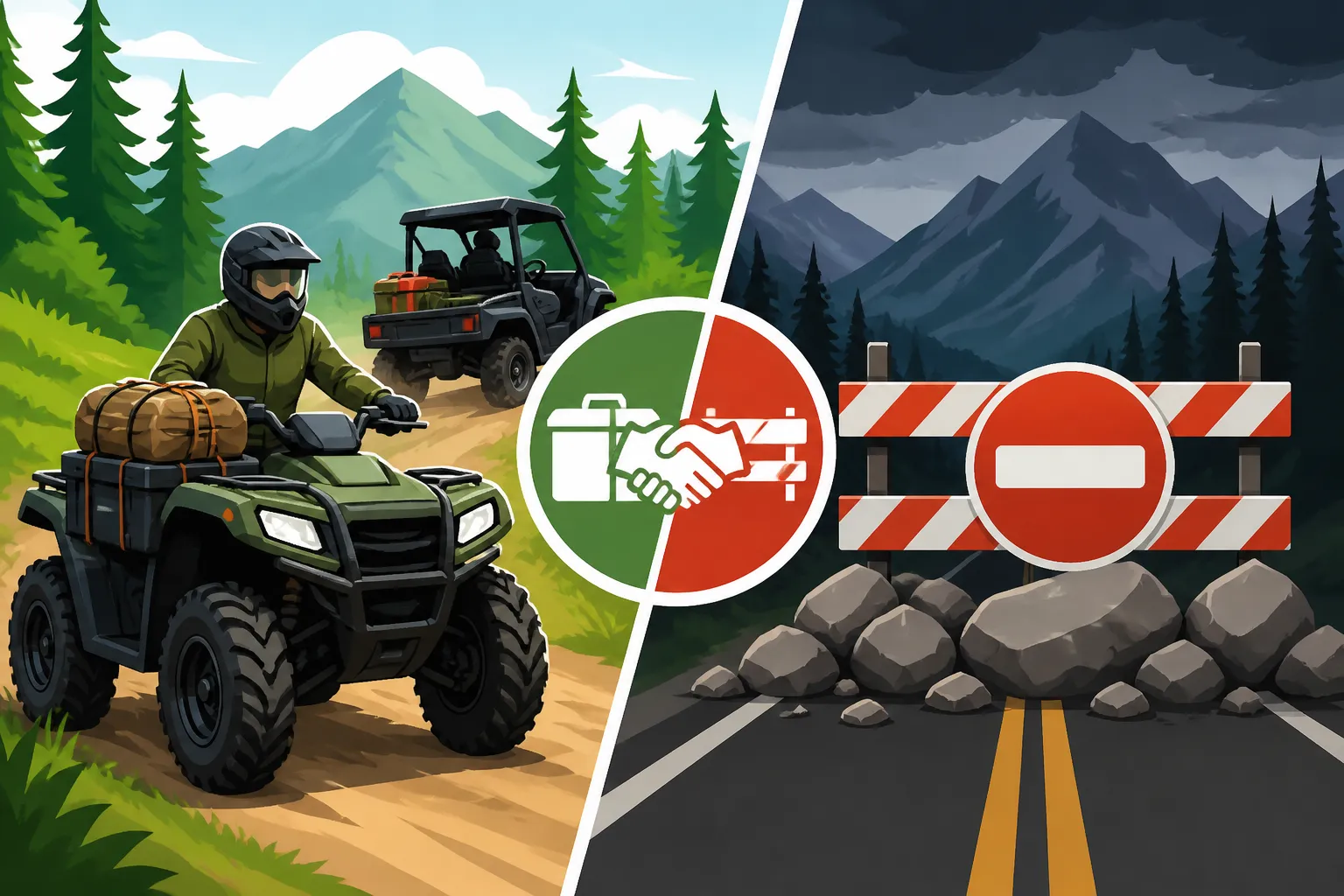
Sometimes, a "Road Closed" sign or a gate signifies a more permanent change: the road might be deactivated. Deactivation means the road is no longer maintained, often because the resource extraction in that area is complete. This can involve removing culverts, blocking the road with large boulders or earthen berms, or letting vegetation reclaim the route. These roads can quickly become impassable, even for ATVs and UTVs, with washouts, fallen trees, and overgrown sections. Trying to force your way through a deactivated road can lead to getting stuck, damaging your machine, or even injuring yourself.
It's also worth noting that even open resource roads can change quickly due to weather, rockslides, or washouts. What was an easy route last month might be a serious challenge today. Always ride within your skill level, know your machine's capabilities, and be prepared for unexpected conditions. Having robust gear, like the heavy-duty skid plates or winches that SuperATV offers, can be a real lifesaver if you do encounter tougher-than-expected terrain and need to self-recover, assuming you're on an open, legal route.
Safety First: Navigating Around Active Industrial Zones
Riding your ATV or UTV in British Columbia's backcountry offers incredible freedom, but it also comes with a significant responsibility, especially when you're in or near active industrial zones. The consequences of not taking safety seriously can range from a hefty fine to a life-threatening accident. It's not just about your safety, but the safety of industrial workers and the continued access for all recreational users.
The Dangers of Encountering Logging Trucks
Logging trucks are the kings of the resource roads, and for good reason. They are massive, powerful, and often hauling extremely heavy loads of timber. Their sheer size means they require a lot of space, especially on corners and narrow sections, and their stopping distances are much longer than any ATV or UTV. If you encounter a logging truck, your priority is to make yourself visible and get out of the way safely. Pull over to the side of the road, if possible into a pull-out, and turn off your engine so the driver can hear if they need to communicate. Never assume they see you, and never try to race past a truck or sneak by on a blind corner. Many resource roads are single-lane, and a loaded truck always has the right of way going downhill, as it's harder for them to stop or manoeuvre. [BC Riders Meeting a Logging Truck] covers this crucial topic in detail. Being prepared with accessories like a high-visibility flag, easily found through a brand like SuperATV, can also make a noticeable difference in how quickly industrial traffic spots you on a dusty road.
Why Respecting Gates and Posted Closures is Non-Negotiable
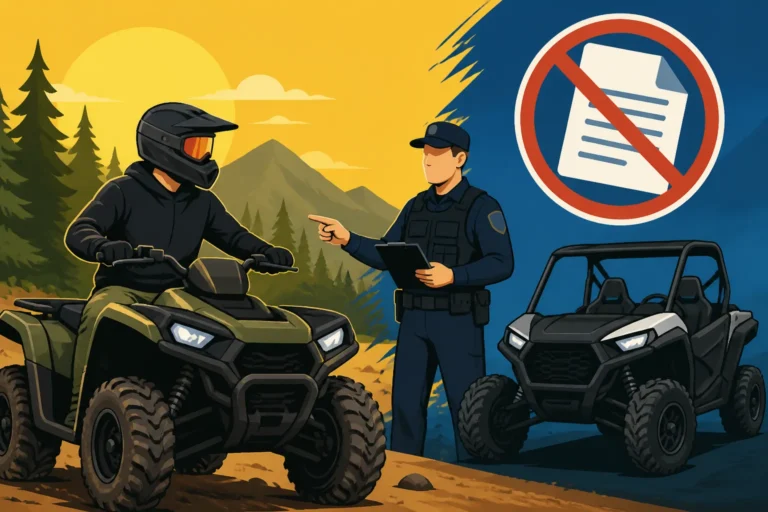
It cannot be stressed enough: if a road is gated and marked "Road Closed," you absolutely must respect it. These closures are in place for serious reasons, whether it's active logging, environmental protection, or road maintenance. Ignoring these signs isn't just a minor infraction; it can lead to severe penalties, including fines for trespassing or for violating the specific orders related to the closure. More importantly, it puts you at extreme risk. If you bypass a gate and enter an active worksite, you could collide with heavy equipment, get caught in a blasting zone, or even be injured by falling trees.
Companies operating in these areas have strict safety protocols, and unauthorized individuals pose a significant hazard to their operations and themselves. Your actions could also lead to a complete loss of recreational access for everyone if land managers or industrial companies deem recreational users to be too much of a risk. We all want to keep our access to BC's incredible backcountry, so abiding by the rules is crucial. For information on general access, you can look up [BC Crown Land Access Rules].
Communication and Preparedness
Staying safe in active industrial zones requires proactive communication and thorough preparedness. If you plan to ride on major resource roads, carrying a VHF radio tuned to the appropriate resource road channel is strongly recommended. This allows you to "call kilometres" and communicate your position to industrial traffic, and vice versa. It's a small investment that can dramatically increase your safety margin.
Beyond communication, ensure your machine is in top mechanical condition, you have a well-stocked first aid kit, and you carry sufficient fuel, water, and emergency supplies. Cell service is often non-existent in these remote areas, so a satellite messenger or GPS device with emergency contact capabilities is a smart addition to your gear list. Always tell someone where you are going and when you expect to return. Being prepared for any eventuality, from a breakdown to an unexpected overnight stay, is part of responsible backcountry riding in BC.
Planning Your Ride: Tools and Tips to Avoid Surprises
There's nothing more frustrating than having your riding day cut short by an unexpected road closure. But with a bit of planning and the right tools, you can significantly reduce the chances of encountering those dreaded "Road Closed" signs or locked gates. Being proactive is the name of the game when exploring BC's resource roads.
Leveraging Online Resources Before You Go
Before you even load your machine onto the trailer, make it a habit to do some online reconnaissance. Several provincial government websites and industry groups provide up-to-date information on road conditions and closures.
Key Resources to Check:
- DriveBC: While primarily for highways, DriveBC sometimes posts alerts for major resource roads that connect to highway networks, especially for large-scale incidents or significant seasonal closures.
- BC Wildfire Service: During fire season, the BC Wildfire Service is your go-to for fire bans and [BC Fire Centre Closures for ORVs]. Wildfires can cause extensive road closures, both for safety and to allow fire suppression efforts.
- Recreation Sites and Trails BC (RSTBC): This agency manages many popular recreational areas and their associated access roads. Their website often has specific alerts for closures or important conditions affecting these areas.
- Forestry and Mining Company Websites: If you know which companies operate in your intended riding area, check their public-facing websites. Many will post alerts about active hauling schedules, specific road closures, or safety advisories for public users.
- Local ATV/UTV Clubs: Joining a local club or checking their online forums can be an invaluable source of real-time, ground-level information. Members often share updates on current road conditions, recent closures, and local tips that you won't find anywhere else. These clubs are often the first to know about changes in access.
- Mapping Apps: Apps like Gaia GPS or BC-specific forestry road maps can show you the network of resource roads and sometimes indicate known gates or restrictions. Remember these are maps, not real-time updates, so always cross-reference with official closure notices.
By spending a little time with these resources, you can often identify potential issues before you even leave your driveway, saving you precious riding time and fuel. This is part of the crucial step of [Checking a Road Before You Go].
The Importance of Maps and GPS
Even with the best online planning, conditions in the backcountry can change rapidly. Always carry a detailed physical map of the area you intend to explore, in addition to any GPS devices or smartphone apps you use. Electronics can fail due to battery drain, water, or impact, so a paper backup is essential.
Your maps should clearly show resource roads, trails, and any known private land boundaries or exclusion zones. Learn how to read a topographic map, understand contour lines, and identify potential alternative routes if your primary one is blocked. Having a reliable GPS unit, or a smartphone app like iHunter or Avenza Maps with downloaded offline maps, can help you track your position, navigate complex road networks, and identify if you're straying into a restricted area. Products that offer robust mounting solutions for your GPS or phone from companies like SuperATV can help ensure your navigation tools stay secure and visible, even on the roughest rides. Remember, proper navigation helps you stay on designated routes and avoid accidentally entering closed areas.
| Type of Road Closure | Common Reasons | Typical Duration | What it Means for Riders |
|---|---|---|---|
| Active Hauling | Logging, mining, heavy industrial work | During work hours/days; can be 24/7 | NO ENTRY. Extremely dangerous. Seek alternate routes or ride outside work hours if permitted. |
| Seasonal | Spring thaw (road integrity), wildfire season (fire risk) | Weeks to months | NO ENTRY. Roads are either too soft, or fire bans are in effect. Check specific dates. |
| Environmental | Wildlife protection, riparian area restoration | Variable; can be long-term | NO ENTRY. Protects sensitive ecosystems. Often clearly signed. |
| Deactivation | End of resource extraction, road no longer maintained | Permanent | NO ENTRY. Road is likely impassable, dangerous, or requires heavy equipment to clear. |
| Emergency | Wildfire, flood, rockslide, search & rescue | Short-term to indefinite | NO ENTRY. Immediate safety risk. Follow official instructions and re-check regularly. |
Disclaimer
This article is for general informational purposes only and does not constitute professional advice. Laws, prices and regulations vary by location and change over time. Consult a qualified professional for guidance on your specific situation.