What Changes When a BC Rider Turns 16
Navigating the rules for off-road vehicles (ORVs) in British Columbia can feel like trying to find your way through a dense forest without a map, especially when it comes to young riders. Many parents and teens get anxious about exactly when and how the regulations shift as a child grows. If your rider is nearing that sweet sixteen milestone, you're probably wondering what new freedoms they gain and what new responsibilities they'll shoulder. This guide will walk you through all the significant changes that occur when a BC ORV rider turns 16, ensuring you both understand the landscape ahead.
Understanding the BC Off-Road Vehicle Act for Young Riders
The Off-Road Vehicle Act in British Columbia is pretty clear about age-based restrictions, and the jump to sixteen is a pivotal one. Before this age, there are quite a few handcuffs, legally speaking, on what a young person can do with an ATV, dirt bike, or side-by-side. The province wants to ensure safety and responsible operation, especially for those who are still developing their judgment and skills.
Age-Based Restrictions Before 16
Prior to turning 16, a young rider in BC operates under much stricter guidelines, primarily focused on supervision. If you have a child between 12 and 15 years old, they are permitted to operate an ORV, but with significant caveats. The biggest one is that they must be under the direct supervision of an adult who is at least 19 years old. This isn't just about having an adult somewhere in the vicinity; the supervising adult must be capable of giving immediate direction to the young rider and must be readily visible. This rule means they often need to be riding a separate machine right alongside the youth, or perhaps even on the same side-by-side. It’s about being able to intervene quickly if something goes wrong, not just loosely overseeing from a distance.
Furthermore, there are specific limitations on carrying passengers. Generally, a child operator under 16 is not permitted to carry any passengers on their ORV, regardless of whether the machine is designed for it or not. The focus is squarely on the young rider's ability to control the machine safely without the added distraction or responsibility of another person. Machine size also plays a crucial role. The regulations defer to manufacturer age and weight guidelines for the specific ORV. You can't put a 12-year-old on an adult-sized quad, even with supervision, if the manufacturer explicitly states it's for older riders. Ignoring these guidelines isn't just unsafe; it can lead to tickets and penalties for the supervising adult. It's really about ensuring the machine is appropriate for the rider's physical capabilities and maturity.
The Legal Shift at Sixteen
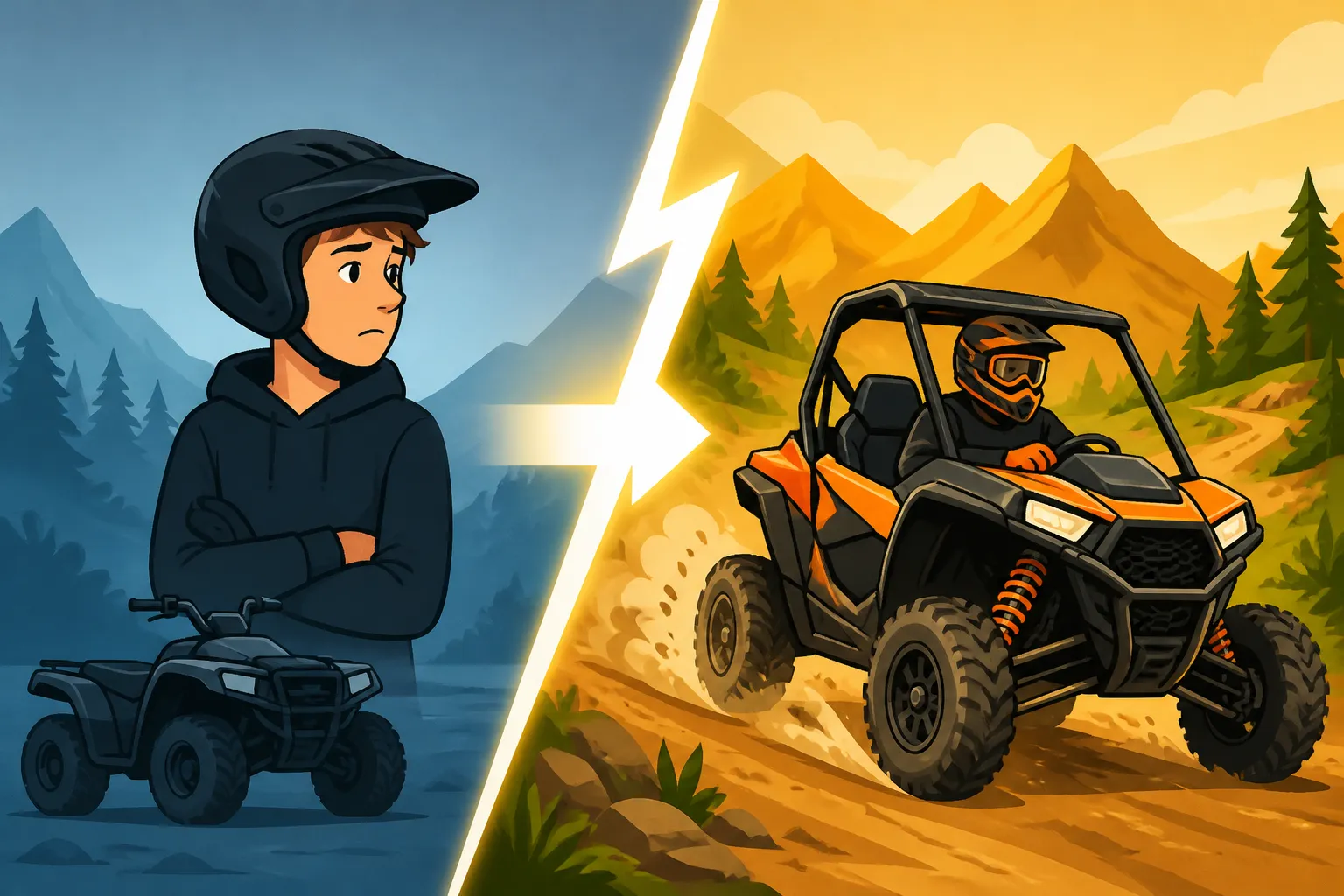
The moment a rider turns 16 in British Columbia, a significant number of these restrictions lift, marking a new era of independence for them on the trails. This age is recognized as a threshold where, legally, a rider is deemed mature enough to handle many of the responsibilities that come with operating an ORV without constant, direct adult supervision. This shift is a huge deal for many young riders who have been eager to explore the backcountry on their own terms, or at least with their peers. Suddenly, the need for a physically present, immediately directing adult supervisor generally diminishes, although responsible adults will always encourage safety.
It means that a 16-year-old can, for the most part, ride an ORV independently on Crown land and designated trails without an adult literally shadowing their every move, provided they meet other requirements like registration and insurance. This newfound freedom comes with an expectation of heightened personal responsibility. They are no longer operating under the explicit legal umbrella of an adult's direct supervision for every aspect of their ride. This is the age where they transition from being a supervised child operator to an independent young adult operator in the eyes of the law. This change aligns somewhat with other age-based regulations, such as being able to obtain a learner's permit for a car, signifying a broader recognition of increasing maturity.
Licensing and Training Requirements
When a BC rider hits 16, one of the most common questions revolves around driver's licensing. It's a bit nuanced because ORVs are generally not street-legal, but there are specific situations where a driver's licence becomes absolutely essential. Understanding these distinctions can save a lot of headaches, and potentially, tickets.
Driver's Licence for On-Highway Crossings
While you generally don't need a driver's licence to operate an ORV on Crown land, trails, or resource roads in BC, that rule changes the moment your wheels touch a public highway. The Off-Road Vehicle Act is very specific about this. If a 16-year-old rider needs to cross a public highway or operate their ORV on the shoulder of a highway – even for a short distance to get to another trail system – they absolutely must possess a valid driver's licence. This could be a learner's permit (L) or a novice licence (N), provided they adhere to all the restrictions associated with that licence type, just as if they were driving a car.
This is a critical point that many new 16-year-old riders, and even some seasoned adults, misunderstand. The moment an ORV interacts with the highway system, it falls under the purview of the Motor Vehicle Act, not just the ORV Act. Therefore, having a [Do You Need a Driver's Licence for an ATV in BC?] becomes mandatory. Without it, even a brief crossing could result in a significant fine. This is a pragmatic rule designed to ensure that anyone operating a vehicle on or near a public road has at least a foundational understanding of road rules, traffic signs, and safe driving practices, regardless of whether it's an ATV or a car.
Voluntary Training and Its Benefits
While formal safety training is generally not mandatory for adults or 16-year-old ORV operators in BC, it is highly, highly recommended. Think of it like this: you can learn to swim by just jumping in the deep end, or you can take lessons. Lessons usually make you a stronger, safer swimmer. The same applies to ORV operation. There are various [BC ATV Safety Training Options] available that can equip a 16-year-old with crucial skills and knowledge that go far beyond what they might pick up just by riding. These courses often cover proper riding techniques for different terrains, emergency braking, obstacle avoidance, and mechanical basics.
Beyond the practical skills, taking a course also instills a greater sense of responsibility and trail etiquette. Knowing how to handle your machine in a tricky situation, or understanding the impact of your riding on the environment, comes from structured learning. Some insurance providers might even offer discounts for riders who have completed recognized safety courses, making it a financial benefit too. Companies like SuperATV offer a wide range of aftermarket parts and accessories that can enhance safety and performance, but no upgrade can replace solid rider training. While the law might not require it at 16, investing in a course is one of the best ways to ensure a long and safe riding career, and it can give parents a lot of peace of mind as their newly independent rider heads out.
Supervision and Passenger Rules
The shift at 16 dramatically alters the supervision requirements and opens up possibilities for carrying passengers, but these changes are still accompanied by important considerations for safety and legality.
Independent Riding and Continued Supervision
As we touched on, turning 16 generally means a BC rider can operate an ORV independently without the "visible and immediate direction" of a supervising adult. This is a big step for many teens, allowing them to join friends on rides or explore on their own. However, while the legal requirement for direct adult supervision largely lifts, the responsibility for safe operation fully lands on the 16-year-old's shoulders. They are now accountable for their actions and adherence to the rules in a way they weren't before. It's crucial for both riders and parents to understand that this independence doesn't mean a free-for-all. All other ORV regulations still apply, including registration, proper equipment, and adherence to trail rules and closures.
Many families will still choose to have some form of informal supervision, especially for younger 16-year-olds or those new to independent riding. This might mean riding with older, more experienced family members, or establishing clear communication protocols and route plans. It's also vital to remember that a 16-year-old is still a young driver, and their decision-making skills are still developing. While the law grants them more freedom, wise parents will continue to encourage responsible choices and provide guidance. Discussions about risk assessment, emergency preparedness, and respecting private property and wildlife remain paramount. This age is a transition, and while the legal leash might lengthen, the need for good judgment remains constant.
Passenger Rules for 16-Year-Old Operators
One of the exciting changes for a 16-year-old rider is the ability to carry passengers, provided the ORV is designed by the manufacturer to carry more than one person. Before 16, [BC Child Operators Cannot Carry Passengers] was a strict rule. Now, if the machine is equipped with a designated passenger seat, handholds, and footrests, a 16-year-old operator can have someone ride along. This is particularly relevant for side-by-sides (UTVs) which are often designed for multiple occupants. For ATVs, it's generally only possible if it's a two-up model specifically manufactured for a driver and a passenger. You cannot legally carry a passenger on a single-rider ATV, even if you're 16.
The same rules apply to the passenger as to the driver when it comes to safety gear: everyone on an ATV or dirt bike must wear an approved helmet. On a side-by-side with a roll cage and seatbelts, the helmet requirement might be superseded by the seatbelt rule, but riders should always confirm the specific regulations for their machine and riding area. While the 16-year-old can carry a passenger, they still need to adhere to [BC Manufacturer Age and Weight Rules] for both the machine and the combined weight of the operator and passenger. Overloading an ORV is not only dangerous but illegal. The responsibility for the safety of their passenger now rests squarely on the 16-year-old operator, making careful and considerate riding even more critical.
Insurance and Other Responsibilities
With increased independence comes increased responsibility, and nowhere is this more evident than in the areas of insurance and general adherence to the rules. A 16-year-old rider now bears the full weight of these obligations.
Insurance for Resource Roads and Highways
Once a BC rider turns 16 and potentially starts riding more independently or making highway crossings, understanding insurance becomes paramount. While basic registration for an ORV is a one-time process and provides unique plates, it doesn't automatically come with liability insurance for all riding scenarios. If a 16-year-old intends to operate their ORV on a Forest Service Road (FSR) – which are very common throughout BC and are considered Crown land but often have industrial traffic – they are legally required to carry a minimum of $200,000 in third-party liability insurance. This is a critical point for any rider accessing these types of roads. This coverage protects you financially if you're deemed at fault in an accident causing injury or damage to others or their property.
For those infrequent but necessary highway crossings, in addition to needing a valid driver's licence, the ORV must also have basic Autoplan insurance, just like a regular car. This covers the minimum liability required for highway operation. For riding on other types of Crown land or private property (with permission), third-party liability insurance is technically voluntary, but it's always, always a smart idea. Accidents happen, and the financial ramifications of an uninsured incident can be devastating. Many riders get their ORV insurance through ICBC, often bundled with their registration or through an Autoplan broker. Understanding [BC ATV Insurance Requirements] is key for every 16-year-old rider who wants to legally and responsibly explore the province. Insurance for your machine can be arranged through a local Autoplan broker, many of whom are familiar with the specific needs of ORV owners. Aftermarket parts from companies like SuperATV can be insured along with the base machine, but always check with your broker for specifics.
| Feature / Rule | Before 16 Years Old | At 16 Years Old |
|---|---|---|
| Supervision Requirement | Direct, visible, immediate adult (19+) | Generally independent riding permitted |
| Driver's Licence (ORV) | Not required for ORV operation off-highway | Not required for ORV operation off-highway |
| Driver's Licence (Highway Crossings) | Not permitted to cross highways | Required for highway crossings or shoulder use (L/N licence) |
| Passenger Carrying | Not permitted (even on multi-seat machines) | Permitted on manufacturer-designed multi-seat machines |
| FSR Liability Insurance | Required if operating on FSRs (often by supervisor) | Required if operating on FSRs ($200,000 minimum) |
| Basic Autoplan (Highway) | Not permitted on highways | Required for highway crossings |
| Legal Accountability | Primarily with supervising adult | Primarily with the 16-year-old operator |
| Safety Training | Highly recommended, not mandatory | Highly recommended, not mandatory |
| Machine Registration | Mandatory | Mandatory |
| Helmet Requirement | Mandatory on ride-astride ORVs | Mandatory on ride-astride ORVs |
General Responsibilities and Safety Gear
Beyond licensing and insurance, turning 16 means a young rider fully steps into the role of a responsible ORV operator in every sense. This includes understanding and adhering to all general safety rules and regulations. For instance, the [BC Helmet Law Covers Every Rider] of a ride-astride ORV, regardless of age, so a proper, certified helmet is always non-negotiable. This also extends to eye protection, gloves, sturdy boots, and appropriate riding apparel. While a side-by-side with a roll cage and seatbelts might allow for a helmet exemption, safety gear remains paramount.
A 16-year-old rider is also expected to be fully aware of other critical regulations, such as carrying their [BC Riders Must Carry the Certificate] of ORV registration and [BC Riders Must Carry Photo ID] at all times while operating their machine. They must also ensure their ORV is properly equipped with a functioning spark arrestor, especially when riding in areas prone to wildfires, as fines for non-compliance can be steep. Respect for the environment, private property, and other trail users becomes their personal responsibility. This means staying on marked trails, avoiding sensitive ecological areas, packing out what you pack in, and yielding to other trail users. Companies like SuperATV produce essential equipment such as winches, skid plates, and lighting, all of which contribute to safer and more responsible riding, but the final responsibility lies with the operator. The transition at 16 is about embracing not just the freedom of the trails, but the full scope of responsibilities that come with it.
Disclaimer
This article is for general informational purposes only and does not constitute professional advice. Laws, prices and regulations vary by location and change over time. Consult a qualified professional for guidance on your specific situation.