Manufacturer Age and Weight Guidance
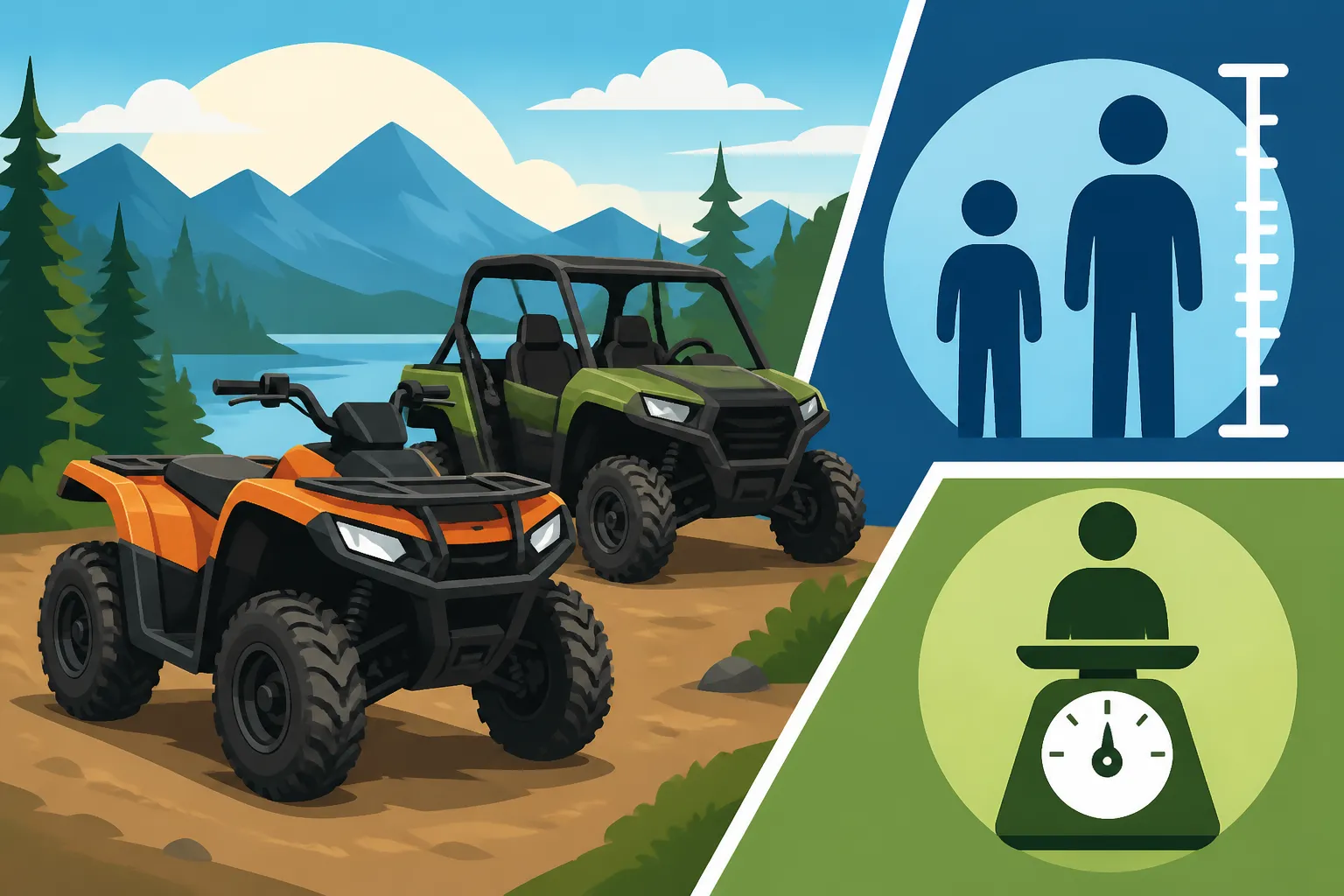
It's a common headache for off-road enthusiasts, especially families, trying to figure out which ATV or UTV is appropriate for a young rider or a smaller adult. The manufacturer's age and weight guidance isn't just a suggestion; it's a critical safety directive that every rider in BC needs to understand to stay safe, compliant with regulations, and ensure everyone has a great time on the trails.
Why Manufacturer Guidance Isn't Just a Suggestion: The Core of ORV Safety
When you buy an off-road vehicle, whether it's a brand-new quad from a dealership or a used side-by-side from a private seller, you'll notice stickers and warnings right on the machine. You'll also find detailed sections in the owner's manual covering things like minimum operator age, maximum rider weight, and passenger limits. It's really easy to see these as generic warnings, something the manufacturer has to put there for legal reasons, but that misses the crucial point: this guidance is the foundation of safe operation. Ignoring it isn't just taking a small risk; it's actively undermining the very engineering and design that makes the machine predictable and safe under normal conditions.
Beyond the Sticker: Understanding the "Why"
Think about it – these machines are designed by engineers who consider a multitude of factors. They don't just pull an age or weight out of a hat. The manufacturer's guidance is derived from extensive testing related to stability, braking capability, acceleration response, and overall handling dynamics. A smaller rider on a machine too large for them might not be able to reach the brake levers effectively, operate the throttle smoothly, or properly shift their weight to control the vehicle on uneven terrain. Conversely, a rider who exceeds the machine's weight limit could compromise its suspension, tire integrity, and braking performance, turning a stable ride into a hazardous one, especially during sudden maneuvers or on challenging inclines.
This isn't just about how fast you can go; it's about fundamental control. Consider a youth ATV designed for younger, lighter riders. Its suspension, engine power, and overall size are scaled down to be manageable for a specific age group. Putting an adult on it changes the centre of gravity drastically, overworks the components, and makes it unsafe. Similarly, asking a small, inexperienced fourteen-year-old to control a powerful utility side-by-side designed for adult work tasks is setting them up for a potential accident, even if they technically fit on the seat. The [BC Youth Riding Rules Explained] lay out some of the provincial expectations around this, but manufacturer guidance often goes even further into the specifics of machine capabilities.
Physics, Ergonomics, and Rider Capability
The guidance directly ties into the physics of operating an ORV. Consider cornering: a full-sized ATV requires a rider to lean into turns and shift their weight significantly. If a child's legs are too short to grip the machine properly or their arms too short to turn the handlebars fully, they simply cannot execute these critical maneuvers safely. Braking is another key area. Small hands might lack the strength or reach to apply the brakes with the necessary force, especially in an emergency. The ergonomics, or how a human interacts with the machine, are paramount. Everything from seat height to handlebar reach to footpeg position is calibrated for a rider within a specific size and weight range.
Beyond physical fit, there's the element of cognitive and motor skill development. Younger riders are still developing their judgment, reaction times, and spatial awareness. Manufacturers consider this developmental stage when recommending age ranges. While a physically large 12-year-old might fit on an adult machine, their decision-making skills might not be mature enough for the speed and power that machine delivers. This is where [BC Rules for a Child Under 16] become incredibly important, emphasizing supervision and appropriate machine size. Even if you've added rugged accessories from a company like SuperATV to your machine, the underlying physics and ergonomic design for the intended rider remain unchanged and critically important.
Legal Ramifications in British Columbia
Ignoring manufacturer age and weight guidance isn't just a safety oversight; it can also have significant legal consequences here in BC. If an accident occurs and an investigation reveals that the machine was being operated outside of its manufacturer's recommendations for age or weight, it can complicate everything. Your insurance provider might deny coverage, arguing that the terms of your policy were violated by unsafe operation. This could leave you personally liable for damages, medical costs, and potential lawsuits, which can quickly become financially devastating.
Furthermore, disregarding these guidelines can factor into charges under the Off-Road Vehicle Act. For example, if a young rider is operating a machine unsuitable for their age and causes an incident, there could be penalties related to [BC Fines for Careless Operation] or even more serious charges depending on the outcome. While the provincial regulations set minimum standards for supervision and age, they implicitly expect that operators will also adhere to the machine's specific design limitations. It's a layer of responsibility that all ORV owners and operators must take seriously to avoid both physical harm and legal trouble.
Deciphering ATV and UTV Size and Age Categories
The off-road vehicle market offers a huge range of machines, each designed for different purposes and, crucially, for different riders. It's not a one-size-fits-all world, and understanding the distinct categories can help you make an informed decision for yourself and your family. Manufacturers segment their offerings quite clearly, often labelling machines as "youth," "mid-size," "full-size," or specifying them as two-seater or multi-passenger UTVs. This segmentation isn't arbitrary; it reflects significant differences in engine size, power output, weight, dimensions, and handling characteristics.
Youth ATVs: The First Step for Young Riders
Youth ATVs are specifically engineered for younger, often inexperienced riders, typically ranging from ages six to fifteen. These machines feature smaller engines, often with adjustable speed limiters, to keep power output manageable. Their chassis and ergonomics are scaled down, meaning shorter seat heights, narrower handlebars, and lighter overall weight, making them easier for smaller bodies to control. The suspension systems are usually softer, designed for lighter loads, and the brakes are typically easier to operate with less hand strength. It's paramount that a child's first experiences on an ORV are on a machine that fits them well, allowing them to learn fundamental riding skills in a safe and controlled environment.
When considering a youth ATV, always look for the manufacturer's specific age and weight recommendations. Don't be tempted to put a young child on a machine designed for an older teen, or an adult on a youth machine "just to try it out." These vehicles are not built to withstand the stresses of a larger, heavier rider, and doing so could cause damage to the machine or, more importantly, lead to a loss of control. Safety features like tethers and remote shut-offs are common on youth models, providing an extra layer of protection as young riders gain confidence. Always ensure the child can comfortably reach and operate all controls while seated correctly.
Adult ATVs: Where Size and Power Converge
Adult ATVs encompass a broad spectrum, from sport quads built for speed and agility to utility quads designed for work and hauling. These machines typically feature larger engines, more robust frames, and sophisticated suspension systems capable of handling higher speeds, rougher terrain, and heavier loads. The ergonomics are set up for an adult physique, meaning wider handlebars, higher seats, and footpegs positioned for adult leg lengths. Manufacturers generally recommend these machines for operators aged sixteen and older due to the increased power, weight, and handling demands.
Within the adult ATV category, there are still variations. A 450cc sport quad handles very differently from an 800cc utility quad. The sport model is designed for aggressive riding and quick maneuvers, requiring a high degree of rider skill and physical input. The utility model, while powerful, is often heavier and geared for stability and pulling power, demanding a different kind of control. When considering an adult ATV, always consult the specific model's manual for its recommended operator age and maximum load capacity. Overloading an ATV, even with appropriate aftermarket accessories from a company like SuperATV, can compromise its stability and braking, creating a dangerous situation.
Side-by-Sides: Shared Rides and Different Considerations
Side-by-sides (SxS or UTVs) offer a different riding experience, often featuring multiple seats, a steering wheel, and foot pedals similar to a car. They typically have roll-over protection structures (ROPS) and seatbelts, leading some to assume they are inherently safer or suitable for younger riders. However, manufacturers still provide strict age and weight guidance for SxS vehicles, and it's just as crucial to adhere to it. Many recreational side-by-sides are powerful machines capable of high speeds and can weigh significantly more than an ATV, presenting unique handling challenges. The [BC Rules for Riding a Side-by-Side] also outline specific requirements for these machines.
For multi-passenger SxS models, manufacturers will specify both a minimum driver age and a maximum passenger weight. It's critical that the driver is mature enough and experienced enough to handle the machine, especially with passengers on board, as their responsibility extends to everyone in the vehicle. Passengers, particularly children, must meet height requirements to properly use seatbelts and should always be secured according to manufacturer instructions. Never exceed the stated passenger capacity or the combined weight limit for occupants and cargo. Just because there's an empty seat doesn't mean it's safe to fill it if you're already at capacity.
Here’s a general overview of manufacturer guidance, though specific models will always have their own details:
| ORV Type | Common Minimum Operator Age | General Rider Weight Range | Typical Passenger Guidance | Key Considerations |
|---|---|---|---|---|
| Youth ATV | 6-15 years (varies by CC) | Up to 75-150 lbs | No passengers | Scaled-down controls, speed limiters, focus on learning |
| Adult ATV | 16+ years | 150-250+ lbs | No passengers | Full-sized controls, higher power, demanding handling |
| Youth Side-by-Side | 10-16 years (driver) | Varies by model | Limited/specific passengers | Reduced speed, often parent-controlled speed limiters |
| Adult Side-by-Side | 16+ years (driver) | 150-300+ lbs (driver) | 1-3 passengers (adult/child) | Full power, steering wheel, seatbelts, higher cargo capacity |
Note: These are general guidelines. ALWAYS consult your specific machine's owner's manual for exact manufacturer recommendations.
Real-World Scenarios and Practical Applications for BC Riders
Understanding the manufacturer's age and weight guidance is one thing; applying it in the real world, especially with growing kids and changing riding needs, is another. It’s easy to find yourself in situations where a child is almost old enough, or a machine almost fits, leading to a grey area of decision-making. However, when it comes to ORV safety, there’s not much room for "almost." Prioritizing safety means making tough calls and sometimes investing in the right machine or the right training, even if it feels inconvenient or expensive in the moment.
When Your Rider Doesn't Quite Fit: Making Safe Adjustments
Let's say your child is fourteen, growing fast, and has outgrown their youth ATV but isn't quite physically or mentally ready for a full-sized adult machine. What do you do? The safest answer is to look for an intermediate-sized ATV if available, or, if not, wait until they meet the manufacturer's age and physical requirements for the next category up. Trying to "make do" by modifying an adult machine for a smaller rider, or pushing a child onto a machine too powerful for them, is a recipe for disaster. Customizing with aftermarket parts from a company like SuperATV is great for performance and utility on an appropriately sized machine, but it doesn't change the fundamental design for rider ergonomics and safety.
Sometimes, it's not just about age but about physical stature. A petite sixteen-year-old might technically meet the minimum age for an adult ATV but could struggle with the reach to controls or the strength needed for proper handling. In such cases, choosing a smaller displacement adult ATV (e.g., a 250cc or 300cc model) rather than a large 700cc machine might be a safer option, even if the larger one is what "everyone else" has. The goal is always to match the rider's capability and physical fit to the machine, ensuring they can operate it safely and confidently. Always remember, [BC Rules for a 16-Year-Old Rider] still emphasize safe and responsible operation.
The Importance of Training and Supervision
Even if a rider perfectly matches the manufacturer's age and weight guidance for a specific machine, proper training is absolutely indispensable. Manufacturer guidance assumes a baseline level of skill and judgment, which rarely comes naturally. Enrolling in an accredited [BC ATV Safety Training Options] course can equip riders with essential skills, from basic controls and turns to emergency braking and navigating obstacles. This training reinforces safe riding practices and teaches riders how to handle their machine proactively, rather than reactively, which is crucial on varied BC terrain.
For younger riders, supervision is not just recommended; it's legally mandated in BC under specific conditions. [BC Youth Riding Rules and Supervision] clearly state requirements for supervising adults for riders under a certain age. Even if a child is on an age-appropriate machine, an adult supervisor must be present and capable of providing immediate direction. This means being within sight and earshot, not just in the general vicinity. A supervising adult should also understand the manufacturer's guidance for the youth machine and be able to assess if the child is truly handling it safely throughout the ride.
Maintaining Your Machine's Intended Design
Finally, adhering to manufacturer guidance also extends to how you maintain and modify your ORV. While many riders enjoy customizing their machines with accessories like winches, cargo racks, or lift kits (which you might find from companies like SuperATV), it's important to understand how these additions can impact the machine's original design specifications. Heavy accessories can alter the vehicle's weight distribution, potentially affecting stability and handling, especially for smaller riders or when nearing maximum load capacity.
Always ensure any modifications or aftermarket parts are installed correctly and that you re-evaluate the machine's handling characteristics afterwards. Sometimes, even seemingly minor changes can subtly shift the balance or responsiveness. Always keep your machine well-maintained, ensuring brakes are sharp, tires are properly inflated, and all controls are functioning as intended. Regular maintenance ensures the vehicle continues to operate within its designed parameters, which is a critical part of upholding the manufacturer's original safety guidance and ensuring years of safe riding in beautiful British Columbia.
Disclaimer
This article is for general informational purposes only and does not constitute professional advice. Laws, prices and regulations vary by location and change over time. Consult a qualified professional for guidance on your specific situation.