BC Rules for a 14-Year-Old Rider
The thought of your 14-year-old hitting the trails on an ATV or UTV in British Columbia is exciting for many parents, but the legal landscape for young riders can feel like a confusing maze. Navigating the specific rules and requirements for teenagers can be frustrating, leaving you wondering if you're truly doing everything by the book to keep them safe and avoid unexpected penalties. This comprehensive guide is designed to cut through that confusion, clearly outlining what 14-year-olds can and cannot do when operating off-road vehicles in BC, ensuring both legality and peace of mind.
The Foundations: Legal Age and Supervision in BC
Understanding the core legal framework for young riders in British Columbia is the absolute first step. It's not just about having a machine; it's about who can operate it, under what conditions, and with what permissions. The BC Off-Road Vehicle Act and its associated regulations lay out clear guidelines designed to protect young riders and the public.
What the Law Says About Young Riders
In British Columbia, the law makes a distinct difference between children of different ages when it comes to operating off-road vehicles (ORVs) like ATVs and UTVs. For a 14-year-old, they are generally permitted to operate an ORV, but there are crucial caveats. They aren't simply allowed to hop on and ride wherever they please, especially on Crown land, which makes up a vast majority of the province's riding areas. The rules are designed to balance the thrill of riding with essential safety and accountability.
A 14-year-old can operate an ORV, but the primary legal requirement often boils down to supervision. If they are under 16, they cannot operate an ORV without an adult present, unless specific conditions are met. This isn't just a suggestion; it's a legal obligation. Ignoring these age-based rules can lead to serious consequences, not just for the young rider but for the supervising adult and even the machine's owner. It's about recognizing that while a 14-year-old might have the physical ability, they may lack the judgment, experience, and understanding of risks that come with operating powerful machinery in varied terrain. For a deeper dive into the age rules, you can check out [BC Youth Riding Rules Explained].
The Critical Role of Adult Supervision
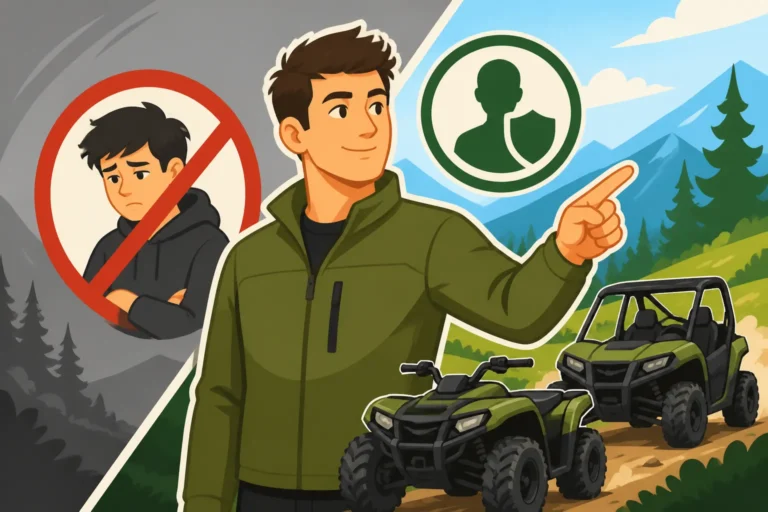
For any rider under the age of 16, including a 14-year-old, an adult's presence is usually non-negotiable on Crown land. The law specifies that the supervising adult must be at least 19 years old. This isn't just about being in the same general area; the adult needs to provide "visible and immediate direction." Imagine a scenario where your 14-year-old is tearing down a trail, and you're half a kilometre behind, casually riding your own machine. That likely wouldn't meet the legal definition of "visible and immediate direction."
What does "visible and immediate direction" actually mean in practice? It implies that the supervising adult must be close enough to see the young rider at all times and be able to intervene instantly if a dangerous situation arises. This could mean riding directly behind them, or alongside them on parallel trails, ensuring constant visual contact and the ability to communicate. The intent is to ensure that the adult can guide, instruct, and take control if necessary, mitigating risks. It's a significant responsibility for the adult, as they are ultimately accountable for the young rider's actions and safety. More details on this specific requirement can be found in [BC's Visible and Immediate Direction Test].
Written Permission: A Must-Have for 14 and 15-Year-Olds
Here's where it gets a little more nuanced for 14-year-olds. While supervision is generally required for those under 16, the BC Off-Road Vehicle Act allows for a specific exception for 14 and 15-year-olds to ride without immediate adult supervision on Crown land, provided they have written permission from a parent or guardian. This isn't a free pass to ride recklessly; it's a recognition that some older teens have the maturity and training to operate an ORV more independently.
This written permission isn't just a casual note. It should clearly state that the parent or guardian is authorizing their 14- or 15-year-old to operate an ORV on Crown land without direct supervision. It’s wise to include the child’s full name, date of birth, the parent/guardian’s full name and contact information, and the date the permission is issued. Think of it as a formal document that shows you, as the parent, are aware of the risks and have granted permission for this increased independence. Even with written permission, the child still needs to comply with all other ORV rules, such as wearing a helmet and not carrying passengers. This particular rule about written permission is thoroughly explored in [BC's Written Permission Rule at 14 and 15].
Safety First: Gear, Training, and Machine Suitability
Ensuring your 14-year-old is safe on their ORV goes far beyond just following the legal age and supervision rules. It’s about creating a comprehensive safety net that includes proper equipment, adequate training, and choosing a machine that is appropriate for their size, strength, and experience level. Neglecting any of these aspects significantly increases the risk of injury.
Essential Safety Gear for Young Riders
Safety gear is not optional; it’s absolutely critical for every rider, especially a 14-year-old who is still developing their judgment and reflexes. The most non-negotiable piece of equipment is a helmet. In BC, an approved helmet is mandatory for anyone operating or riding as a passenger on a ride-astride ORV, which includes most ATVs. This means a helmet that meets recognized safety standards like DOT, Snell, or ECE. It's not enough to just wear a helmet; it needs to be the right helmet, properly fitted, and in good condition. A helmet that's too loose or too old won't offer adequate protection. More on helmet rules can be found in [BC Helmets on Ride-Astride Machines].
Beyond the helmet, a 14-year-old should always wear sturdy, over-the-ankle boots, long pants, a long-sleeved shirt or jacket, gloves, and eye protection (goggles or a face shield). Imagine taking a spill on a rocky trail – without this gear, a minor fall could result in serious scrapes, fractures, or worse. The terrain can be unpredictable, branches can snap back, and dust or mud can obscure vision. Proper gear acts as the first line of defense, significantly reducing the severity of potential injuries. It's an investment in their safety that you should never skimp on.
The Importance of Formal Rider Training
While many parents teach their kids to ride, formal rider training offers invaluable benefits that informal instruction often misses. These courses, often provided by certified instructors, cover crucial skills like proper riding posture, throttle control, braking techniques, turning, navigating obstacles, and emergency stopping. They also emphasize responsible riding practices, environmental awareness, and adherence to trail etiquette. For a 14-year-old, who might be eager to push limits, structured training instills discipline and a deeper understanding of their machine's capabilities and limitations.
Consider a scenario where a young rider suddenly encounters an unexpected steep incline or a slippery patch. Without proper training, panic can set in, leading to incorrect reactions. A trained rider, however, would have practiced these scenarios in a controlled environment and would be much more likely to react calmly and correctly. While not always legally mandatory for adult riders, safety courses are highly recommended for young operators, making them more competent and confident. You can find out more about recognized training options in [BC ATV Safety Training Options]. Many clubs and organizations, some even supported by companies like SuperATV for safety advocacy, offer these programs.
Choosing the Right Machine: Size and Manufacturer Guidelines
One of the most common mistakes parents make is putting a young rider on a machine that is too big or too powerful for them. This isn't just about strength; it's about control, reach, and the ability to manage the machine's weight and power safely. Manufacturers provide specific age and weight recommendations for their ORV models for a very good reason. A 14-year-old on an adult-sized ATV might struggle to reach the footpegs properly, have difficulty operating the throttle and brake levers, or lack the body weight to shift and balance effectively during turns or over rough terrain.
For example, a full-size utility quad might be perfectly fine for a grown adult, but for a smaller 14-year-old, it could be a handful, leading to fatigue, loss of control, and increased risk of an accident. It's crucial to select an ORV that allows the rider to comfortably reach all controls, maintain proper posture, and have their feet flat on the ground when standing on the footpegs. Always consult the manufacturer's guidelines, which are typically found on a label on the machine itself or in the owner's manual. Ignoring these guidelines for your 14-year-old is a recipe for potential disaster and could even void insurance coverage. For a deeper understanding of these guidelines, refer to [BC Manufacturer Age and Weight Rules].
Where a 14-Year-Old Can Legally Ride in BC
Knowing the rules for who can ride is only half the battle; understanding where they can legally ride is equally important. British Columbia offers vast opportunities for ORV riding, but these opportunities come with specific access regulations that apply to all riders, including 14-year-olds.
Crown Land vs. Private Land: The Key Distinction
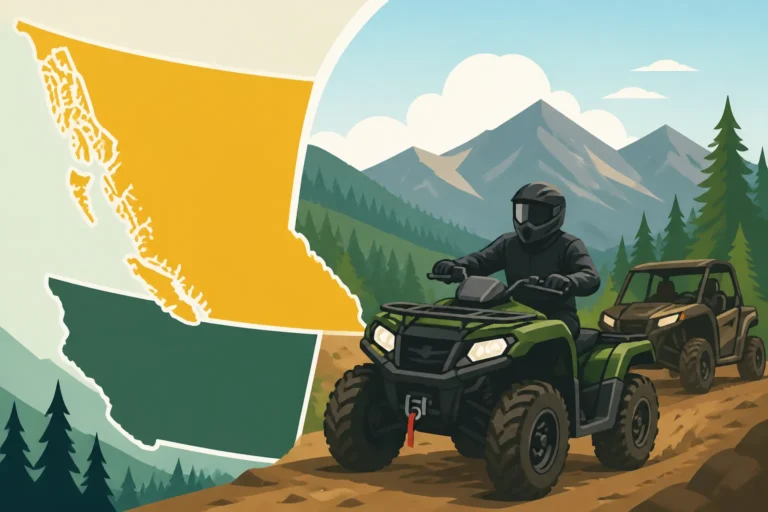
In British Columbia, the vast majority of land outside of municipal boundaries is considered Crown land, and this is where most ORV riding occurs. The BC Off-Road Vehicle Act primarily governs ORV use on Crown land, which includes everything from sprawling forests to remote mountain trails and even designated recreation sites. This is where the registration, licensing (for adults), insurance, and age-based rules for 14-year-olds truly kick in. If your 14-year-old is riding on Crown land, they must comply with all the regulations discussed previously. [BC Crown Land Riding Explained] provides a great overview.
Private land, on the other hand, operates under different rules. If you own a large parcel of land, or have explicit permission from a private landowner, your 14-year-old can generally ride on that private property without being subject to the full scope of the ORV Act's specific age and supervision requirements, assuming the landowner permits it. However, even on private land, common sense and safety still prevail. Helmets, proper gear, and responsible operation are always recommended, regardless of legal mandates. But the moment they leave that private parcel and venture onto an access road or public trail, the Crown land rules immediately apply.
Understanding Restricted Areas and Prohibitions
Not all Crown land is open to ORVs, and this is a critical point that many riders, young and old, overlook. There are numerous designated areas where ORV use is restricted or entirely prohibited to protect sensitive ecosystems, wildlife habitats, or for public safety reasons. These areas might include provincial parks (which typically ban motorized vehicles), ecological reserves, certain protected areas, or land that has seasonal closures due to fire risk or wildlife migrations.
It's absolutely essential for you and your 14-year-old to know how to identify these restricted areas before heading out. Information on closures and prohibitions is often available through government websites, local recreation site maps, or signs posted at trailheads. Riding an ORV, even by a supervised 14-year-old, in a prohibited area can lead to significant fines and penalties. Ignorance of the rules is not an excuse. Always "Know Before You Go" and check for any current restrictions or bans, especially concerning wildfire season, which can bring widespread ORV prohibitions.
Forest Service Roads and the Rules for Young Riders
Forest Service Roads (FSRs) are a common network of roads throughout BC's backcountry, used for resource extraction like logging and mining, but also frequently by recreational users including ORV riders. While they are considered Crown land, FSRs have their own set of rules, some of which are particularly important for 14-year-old riders. One key aspect is insurance. While basic liability insurance is voluntary for ORVs on much of Crown land (beyond what's included with registration), it becomes mandatory to have at least $200,000 in third-party liability insurance when operating on a Forest Service Road. This is because FSRs often have industrial traffic, making the risk of serious collisions higher.
For a 14-year-old, this means not only the supervision rules apply, but the ORV they are operating must have the correct insurance coverage if they are on an FSR. Additionally, all other rules like helmet use and not carrying passengers still stand. Remember, FSRs can be active hauling routes, meaning large logging trucks or other industrial vehicles could be around any blind corner. Teaching your 14-year-old proper FSR etiquette – yielding to industrial traffic, calling out kilometres on a radio (if equipped and on the correct channel), and maintaining a safe speed – is crucial. For detailed requirements for riding on these roads, refer to [BC Forest Service Road Requirements].
Avoiding Penalties: Common Mistakes and How to Prevent Them
Nobody wants to face fines or legal trouble while enjoying the outdoors. Understanding the potential penalties for non-compliance with ORV regulations, especially concerning young riders, is a powerful motivator for adhering to the rules. Preventing these issues often comes down to awareness and proactive preparation.
Fines for Unsupervised or Under-Aged Riding
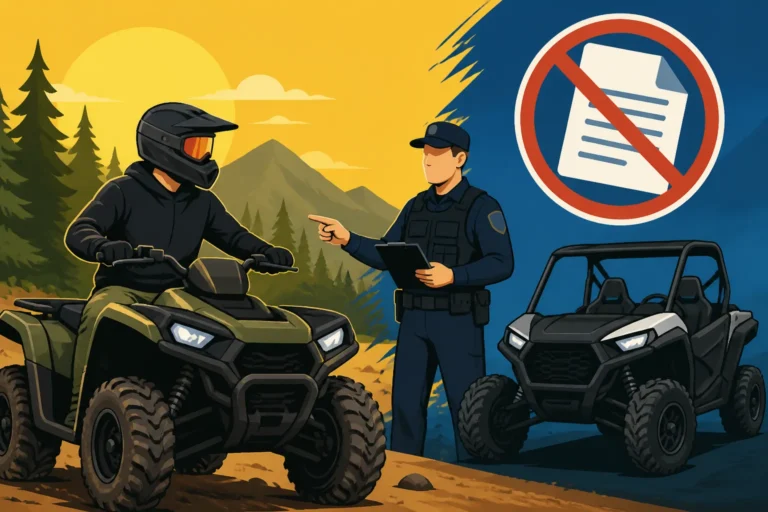
The BC Off-Road Vehicle Act carries real teeth when it comes to enforcement. If a 14-year-old is found operating an ORV without the required supervision or written permission on Crown land, both the young rider and the supervising adult (or the machine's owner, if different) could face fines. These aren't just slaps on the wrist; violation tickets can be substantial. For instance, operating an ORV without a supervisor when required, or without proper written permission, can lead to monetary penalties.
Imagine a conservation officer encountering your 14-year-old riding alone on a trail without the necessary written permission. That initial excitement for their ride can quickly turn into a costly and upsetting experience. The fines serve as a deterrent, emphasizing the importance of compliance with safety and age regulations. It's not about punishing fun, but about ensuring responsible and safe operation that protects everyone on the trails. You can learn more about the specific fines in [BC Fines for Careless Riding].
Machine Seizure and Other Consequences
Beyond financial penalties, serious or repeated infractions can lead to even more severe consequences. In some cases, peace officers, including conservation officers and RCMP, have the authority to seize an ORV if it's being operated illegally, especially in cases of repeated violations, dangerous operation, or if the operator is found to be grossly negligent. This means your 14-year-old's quad could be impounded, resulting in impoundment fees, storage costs, and the hassle of recovering the machine.
Furthermore, these violations can go on a record, potentially affecting future privileges or even leading to court appearances for more serious offenses. It's not just about the immediate incident; it's about the broader implications for the family and the machine owner. Understanding that these powers exist should reinforce the commitment to ensuring your 14-year-old always rides legally and responsibly. Details on these serious consequences can be found in [BC Machine Seizures by Police].
The Broader Implications of Irresponsible Riding
The consequences of irresponsible riding by a 14-year-old extend beyond direct legal penalties. An accident, even a minor one, can have lasting physical and psychological impacts. There's also the significant financial burden of medical costs, repairs to the machine, and potential liability if another person or property is involved. Without proper insurance, these costs can be devastating.
Moreover, every incident of irresponsible riding by a young person can contribute to a negative public perception of ORV enthusiasts as a whole. This can lead to increased restrictions, trail closures, and stricter regulations for everyone. By ensuring your 14-year-old is well-trained, properly equipped, supervised when necessary, and fully aware of the rules, you're not just protecting them; you're also contributing to the preservation of ORV access for future generations in BC. It's about being a good steward of the trails and a responsible member of the riding community.
Here's a quick summary of key rules for 14-year-old ORV riders in BC:
| Rule Category | Requirement | Details |
|---|---|---|
| Minimum Age | 14 Years Old | Can operate an ORV on Crown land. |
| Supervision (Under 16) | Required | An adult (19+ years old) must provide "visible and immediate direction" unless written permission is present. |
| Written Permission | Mandatory for 14- and 15-year-olds | Required from a parent or guardian if riding unsupervised on Crown land. Must be carried by the rider. |
| Helmet | Mandatory | Approved helmet (DOT, Snell, or ECE certified) required for ride-astride machines (ATVs) for both operator and passenger. |
| Passengers | Not Allowed | A 14-year-old operator cannot carry any passengers on an ORV. This is a strict rule regardless of machine size or passenger age. BC Children Cannot Carry Passengers |
| Machine Suitability | Must meet Manufacturer's Guidelines | The ORV must be appropriate for the rider's age, size, and weight as per the manufacturer's recommendations. |
| Riding Location | Crown Land (with rules) & Private Land (with permission) | Strictly adhere to all ORV Act rules on Crown land. Respect private property; only ride with explicit permission. Be aware of restricted areas and closures. |
| FSR Insurance | Mandatory for FSRs | At least $200,000 in third-party liability insurance is required if operating on a Forest Service Road. |
| Registration | Mandatory for Machine | The ORV itself must be registered with ICBC or an Autoplan broker if riding on Crown land (since November 2015). This is separate from rider rules but essential for legality. |
| Training | Highly Recommended | While not always legally mandatory for adults or youth in BC, formal rider training greatly enhances safety, skill, and responsible riding habits for young operators. |
Disclaimer
This article is for general informational purposes only and does not constitute professional advice. Laws, prices and regulations vary by location and change over time. Consult a qualified professional for guidance on your specific situation.