BC Rules for a Visiting Washington Rider
Heading north on the I-5, the dream of exploring British Columbia’s vast backcountry on your ATV or UTV is incredibly appealing. But as many Washington riders quickly discover, crossing the border with your machine isn't as simple as just gassing up and going. Different regulations, registration requirements, and insurance rules can turn an exciting adventure into a frustrating bureaucratic maze. This guide is designed to help Washington riders understand exactly what they need to do to ensure a smooth, legal, and enjoyable off-road experience in beautiful British Columbia.
Understanding BC's Registration Requirements for Out-of-Province Machines
One of the first questions many Washington riders have when planning a trip to BC is about registering their ATV or UTV. You've already handled the paperwork back home, so why would you need to do it again? It's a valid concern, and thankfully, BC has specific provisions for visitors.
Do You Need to Register Your Washington ATV/UTV in BC?
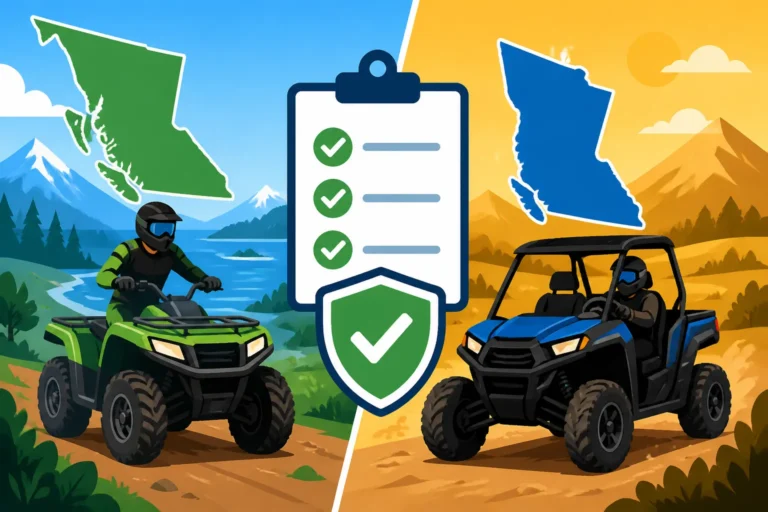
British Columbia introduced its Off-Road Vehicle Act in 2015, making registration mandatory for all off-road vehicles (ORVs) operated on Crown land (which is most of BC's public land). This system requires a unique number plate and a Certificate of Registration, which is quite different from Washington's titling process. However, the good news for visiting Washington riders is that you generally do not need to register your machine with BC's provincial system if it's already properly registered in Washington State.
The key here is that your machine must be "ordinarily resident" in Washington, meaning that's where its primary home and registration is. As long as you're visiting BC for recreational purposes and not moving here permanently with your machine, your existing Washington registration should suffice. The intent of the BC Act is to ensure all machines using public land are identifiable, and your home state's registration generally fulfills that for short-term visits. Just make sure you understand the difference between temporary visits and a full move, which would trigger the need for [BC Registration for an Imported Machine].
What Proof of Ownership and Registration Do You Need?
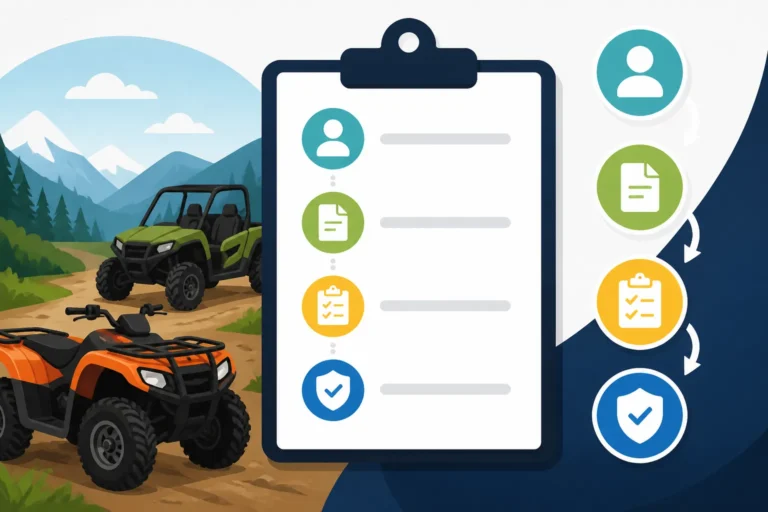
While you might not need a BC plate, carrying the correct documentation from Washington is absolutely critical. Think of it as your machine's passport. When you're stopped by a Conservation Officer, RCMP, or other enforcement personnel, they'll want to see proof that your machine is legitimately yours and registered in your home jurisdiction.
You should carry:
- Your Washington State ATV/ORV registration document: This is usually a sticker or card that confirms your machine is registered for off-road use in Washington. Make sure it's current and clearly visible if it's meant to be displayed on the machine.
- Proof of ownership: This could be your vehicle's title, a bill of sale, or a similar document showing you are the rightful owner. Washington typically issues titles for ATVs/UTVs, which is different from BC's system where they issue a Certificate of Registration and do not "title" these machines in the traditional sense. Regardless, your Washington title is important proof.
- Your personal identification: A valid driver's license or other government-issued photo ID is essential to prove you are the person listed on the registration and ownership documents.
Having these documents readily accessible, preferably in a waterproof pouch on your person or securely on your machine, can prevent a lot of headaches and potential delays. Officers need to verify your machine's status, and having everything in order demonstrates responsibility and helps them do their job efficiently. For a more general overview of visitor requirements, check out [BC Non-Resident Riding Rules].
Insurance and Financial Responsibility for Visiting Riders
Understanding insurance in British Columbia can be a bit tricky, even for residents. For Washington riders, it's crucial to clarify your coverage before you cross the border, as BC has some specific requirements for off-road vehicles, especially when riding on Crown land.
What Kind of Insurance is Required in BC?
Unlike Washington, where your ORV insurance might primarily cover property damage or personal injury, BC has a mandatory minimum third-party liability insurance requirement for off-road vehicles operating on Crown land. This is not necessarily about protecting your machine or you personally, but about protecting others if you cause an accident.
Specifically, the BC Off-Road Vehicle Act requires a minimum of $200,000 in third-party liability insurance for any ORV operated on Crown land. This is especially relevant if you plan to ride on the extensive network of Forest Service Roads (FSRs) that crisscross the province, as these are considered Crown land and often involve shared use with industrial traffic. You can learn more about BC's specific needs at [BC ATV Insurance Requirements].
Here's where it gets complicated for Washington riders:
- Check your existing policy: Your Washington ATV/UTV insurance policy might extend to cover you in Canada, but this is not guaranteed. Many policies have geographical limits or specific exclusions for off-road use in other countries. You absolutely must contact your insurance provider in Washington before your trip to confirm whether your policy meets BC's $200,000 third-party liability requirement for Crown land. Get it in writing if possible.
- Consider temporary BC coverage: If your Washington policy does not provide sufficient coverage, you will need to purchase temporary insurance in BC. This can often be done through ICBC (British Columbia's public auto insurer) or a private insurance broker who offers ORV liability coverage. This short-term policy would specifically address the BC requirement, giving you peace of mind.
Failing to have the proper insurance can result in significant fines and personal liability if you're involved in an accident. It's not a risk worth taking when visiting such a beautiful but potentially remote area.
How to Obtain Proof of Insurance for BC Riding
Just like with registration, merely having the right insurance isn't enough; you need to be able to prove it when asked. An enforcement officer will want to see physical or easily accessible digital proof of your $200,000 third-party liability coverage.
Here’s how to prepare:
- Contact your Washington insurer well in advance: Request a clear statement or "pink card" that specifically confirms your third-party liability coverage meets or exceeds $200,000 CAD and extends to British Columbia for off-road vehicle use. If they can't provide this, then you know you need to seek local BC coverage.
- Visit a BC Autoplan broker: If you need to purchase temporary insurance in BC, head to an Autoplan broker office, which you'll find in most towns. These brokers can help you navigate the options for short-term liability insurance for your ORV. It’s wise to do this shortly after crossing the border, perhaps in the first major town you stop in, rather than waiting until you’re deep in the backcountry.
- Carry proof on your person: Keep your insurance documents, whether from Washington or BC, in a waterproof bag along with your driver's license and registration. In the event of an emergency or an enforcement stop, you want these documents readily available and protected from the elements.
Remember, many of BC’s best riding areas are remote. Having all your paperwork in order means you can focus on the incredible scenery and trails, rather than worrying about legal technicalities.
Navigating BC's Riding Rules and Regulations
Once your registration and insurance are sorted, the next big step is understanding the rules of the road – or, more accurately, the rules of the trail! BC's ORV Act governs where and how you can ride, and these rules apply equally to visiting Washington riders.
Where Can You Ride Your ATV/UTV in BC?
British Columbia boasts a vast network of trails and resource roads, but not all areas are open to ORVs. Knowing where you can legally ride is paramount to avoiding fines and respecting the environment.
- Crown Land: This is where most ORV riding in BC takes place. Crown land includes the provincial forests, mountains, and vast wilderness areas. Forest Service Roads (FSRs) are a common way to access these areas and are usually open to ORVs, though always be mindful of industrial traffic. [BC Forest Service Road Rules for ORVs] detail what you need to know about sharing these vital arteries.
- Private Land: You can ride on private property in BC only with the express permission of the landowner. Trespassing is taken seriously and can lead to significant penalties.
- Prohibited Areas: Provincial parks, ecological reserves, protected areas, and many municipal lands are generally off-limits to motorized recreation. Always check local signage and regulations. Ignorance of these closures is not a valid defense.
- Public Roads and Highways: This is a major point of difference and a common pitfall for visitors. Generally, ATVs and UTVs are not street legal in BC. You cannot operate your machine on paved public roads, highways, or even most municipal roads, except for very specific and limited crossings. Trying to ride your quad down a highway will quickly earn you a ticket. If you're wondering, [Can You Ride an ATV on the Road in BC?] provides a comprehensive overview.
Always research your intended riding area before you go. Many local ATV clubs and tourism websites provide maps and information on approved trails.
Key Equipment and Safety Rules for All Riders
BC's ORV Act includes several safety and equipment requirements designed to protect riders and the environment. These are non-negotiable for all riders, including those from Washington.
- Helmets: If you're riding a ride-astride ORV (like a quad or dirt bike), a helmet is mandatory for all riders, regardless of age. For side-by-sides (UTVs) with roll-over protection and seatbelts, helmets are not mandatory if you are wearing your seatbelt. However, they are always recommended for maximum safety. Make sure your helmet meets safety standards; [BC ATV Helmet Law Explained] details these.
- Seatbelts: If your ORV is equipped with seatbelts (e.g., a side-by-side), you and your passengers must wear them.
- Spark Arrestors: Every ORV operating on Crown land in BC must be equipped with a properly functioning spark arrestor. This is a critical wildfire prevention measure, especially during the dry summer months. Officers frequently check for these, and fines are steep if you're caught without one or with a modified exhaust that bypasses it. [BC Spark Arrestor Rules and Fines] can tell you more. If your machine's exhaust system needs an upgrade or a proper spark arrestor, companies like SuperATV offer a range of compliant options to help you meet these regulations.
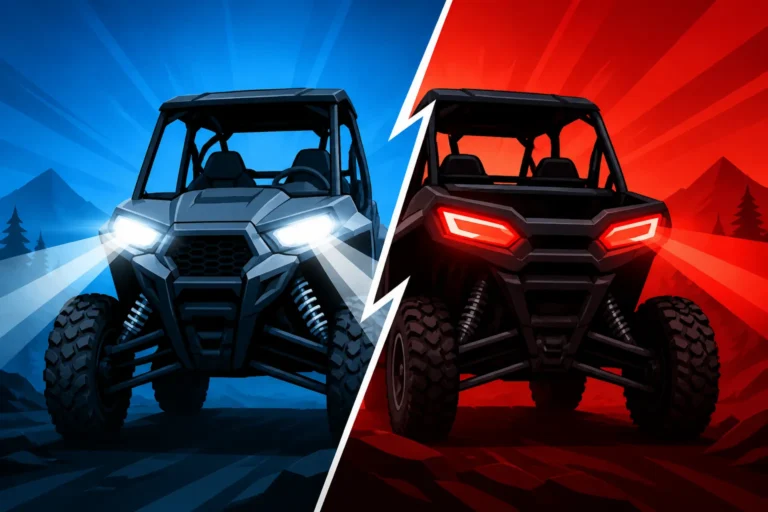
- Lights: Your ORV must have working headlights and taillights if you are riding in low light conditions (e.g., dawn, dusk, night, or fog). Even during the day, good lighting improves visibility.
- Documents & ID: As mentioned, carry your Washington registration, proof of ownership, valid BC insurance (or sufficient Washington insurance), and your photo ID at all times while riding. [Carrying Your Certificate of Registration on Every Ride] (or your Washington equivalent) is vital.
- Fire Bans: British Columbia experiences wildfire season annually, and riding bans are common during hot, dry periods. Always check the current fire danger ratings and any [BC Fire Centre Riding Bans] before you head out. Riding during a ban can result in enormous fines.
Special Considerations for Road Crossings and Permits
While ATVs/UTVs aren't street legal, there are limited situations where you can legally cross a public road or highway. This is often necessary to connect trails or access staging areas.
- Highway Crossings: You can cross a highway or road at a 90-degree angle, but only after stopping, yielding to all traffic, and proceeding safely. You must also have a valid driver's license for highway crossings, even if you don't need one to operate your ORV purely on Crown land. [BC Rules for Crossing a Highway] lays out the specifics. These crossings are meant to be brief and direct, not for traveling on the highway.
- Operation Permits: In extremely rare circumstances, usually for specific community events or to access very isolated properties, local police detachments might issue an "Operation Permit" for limited use on specific sections of highway. For visiting recreational riders, these are almost never an option, and you should not rely on one. However, if you're curious about the process, [BC Operation Permit Application Steps] explains how BC residents might obtain one.
For the vast majority of Washington riders, sticking to Crown land, FSRs, and designated trails is the safest and most enjoyable way to explore BC.
Practical Tips for a Smooth Riding Trip
Preparing properly can make all the difference between a trip full of adventure and one fraught with stress. Here are some practical tips to ensure your visit to British Columbia with your ATV or UTV is a memorable one.
Pre-Trip Checklist for Washington Riders
A little planning goes a long way when crossing an international border with your off-road machine.
- Documentation: Double-check that your Washington registration, proof of ownership, and valid driver's license are current. Confirm with your insurance provider that your policy covers the mandatory $200,000 third-party liability in BC for ORV use. If not, plan to purchase temporary BC insurance.
- Machine Readiness: Perform a thorough inspection of your ATV/UTV. Ensure your tires are in good condition, brakes are working, lights are functional, and that you have a compliant spark arrestor. Accessories from a reputable brand like SuperATV, such as durable tires, winches, or enhanced lighting, can improve safety and capability on BC's rugged trails.
- Safety Gear: Pack appropriate safety gear. Helmets are mandatory for quads, and always recommended for UTVs. Bring goggles, gloves, sturdy boots, and appropriate layers for potentially changing weather conditions, especially in the mountains.
- Emergency Supplies: BC's backcountry is vast and often remote. Carry a first-aid kit, a repair kit for your machine, extra fuel, water, food, and communication devices like a satellite messenger or two-way radio (cell service is spotty outside major towns). Bear spray is also highly recommended and legal to carry for self-defense against wildlife in Canada.
- Research Your Route: Identify specific riding areas you plan to visit. Check for any local restrictions, trail closures, or [BC Fire Centre Riding Bans] before you leave and regularly during your trip. Know the emergency contact numbers for the area.
- Fuel & Services: Plan your fuel stops. Many remote areas have limited services, so know your machine’s range and carry extra fuel if necessary.
What to Do in Case of an Incident or Fine
Even with the best preparation, incidents can happen. Knowing how to react can mitigate stress and potential legal problems.
- Police Stop: If you are stopped by an enforcement officer (RCMP, Conservation Officer, Park Ranger), pull over safely, turn off your engine, and keep your hands visible. Present your identification, registration, and proof of insurance promptly and politely. If you are issued a ticket, understand the infraction. While you might not get a ticket for an "unregistered machine" in the BC sense if your Washington registration is valid, you could face fines for other infractions like lack of a spark arrestor, no helmet, or riding in a prohibited area. For context, refer to [BC Fines for Riding an Unregistered Machine] to understand the gravity of these penalties.
- Accidents: In case of an accident, ensure everyone's safety first. If there are injuries, call for emergency services (911). Document the scene with photos, gather witness information, and exchange insurance details if another party is involved. If the accident occurs on Crown land and involves significant damage or injury, you should report it to the authorities.
- Trespassing: If you accidentally stray onto private property, immediately turn around and leave the way you came. Do not argue with landowners.
- Wildlife Encounters: BC is rich with wildlife, including bears, cougars, and moose. Give animals plenty of space. If you encounter a bear, make noise, make yourself look big, and carry bear spray in an easily accessible location.
Respecting the Land and Local Communities
British Columbia’s natural beauty is its greatest asset, and respecting the environment and local communities is crucial for all riders.
- Leave No Trace: Pack out everything you pack in. Do not litter. Stay on designated trails to prevent environmental damage and erosion. Avoid sensitive areas like wetlands or alpine meadows.
- Yield to Others: On FSRs, industrial traffic (especially logging trucks) always has the right of way. Pull over safely and give them ample room. Be courteous to other trail users, including hikers, mountain bikers, and horseback riders. Following [BC Forest Service Road Requirements] means you'll know how to safely navigate these shared-use roads.
- Noise: While ATVs and UTVs are inherently noisy, be mindful of residential areas. Avoid excessive revving or riding at high speeds near homes, particularly early in the morning or late at night. Some managed riding areas have decibel limits, and your machine's exhaust should meet these. High-quality aftermarket parts, such as those from SuperATV, can help optimize performance while adhering to noise regulations where applicable.
- Fire Safety: Be extremely careful with any open flames or hot exhaust during dry periods. Carry a shovel and water for emergencies.
By being informed, prepared, and respectful, your ATV/UTV adventure from Washington State into British Columbia can be a truly incredible experience.
| Requirement/Document | Washington Rider (Visiting BC) | Notes |
|---|---|---|
| Machine Registration | Valid Washington State ATV/ORV registration | Generally no BC registration needed for visitors. |
| Proof of Ownership | Washington title or bill of sale | Carry with you; essential for proving ownership. |
| Third-Party Liability Insurance | Minimum $200,000 CAD, must extend to BC ORV use | Crucial for Crown land/FSRs; confirm with your insurer or buy locally. |
| Driver's License | Valid Washington driver's license | Required for any highway crossings; recommended for all riding. |
| Helmet | Mandatory for quads/dirt bikes; recommended for UTVs if not seat-belted | Must meet safety standards. |
| Seatbelts | Mandatory if machine is equipped with them (e.g., UTVs) | Always use them. |
| Spark Arrestor | Mandatory, properly functioning | Crucial for fire safety; check your exhaust. |
| Lights | Headlights and taillights for low visibility | Essential for safety during dawn, dusk, night, or fog. |
| Off-Road Travel | Generally restricted to Crown land (including FSRs) and private land (with permission) | No riding on paved public roads/highways except for specific crossings. |
| Fire Bans | Check current BC Fire Centre bans before and during your trip | Riding during a ban carries severe penalties. |
Disclaimer
This article is for general informational purposes only and does not constitute professional advice. Laws, prices and regulations vary by location and change over time. Consult a qualified professional for guidance on your specific situation.