Endangering Livestock on Range
Riding an ATV or UTV in beautiful British Columbia is one of life's great pleasures, but it comes with serious responsibilities, especially when you're exploring areas where livestock graze. It's an all-too-common scenario: you're enjoying a scenic route, perhaps on a resource road or a back trail, when suddenly you encounter cattle, horses, or sheep. How you react in that moment can have profound legal and ethical consequences. This guide is here to walk you through the nuances of sharing BC's vast range lands with livestock, ensuring you understand the rules, avoid costly mistakes, and contribute to responsible recreation for everyone.
Understanding BC's Range Lands and Livestock Presence
British Columbia is a massive province, and much of its diverse landscape includes open rangelands where domestic livestock graze. For many riders, the sight of cattle freely roaming can be a surprise, especially if they’re used to fenced pastures. It’s crucial to understand why these animals are there and what that means for your ride.
What is "Range Land" in British Columbia?
When we talk about "range land" in BC, we're primarily referring to Crown land that is leased or licensed to ranchers for grazing their livestock. This isn't private property in the traditional sense, but it's not simply "wilderness" either; it's an active agricultural landscape. These leases allow ranchers to utilize vast tracts of land for their herds, often encompassing forests, grasslands, and even parts of what we consider recreational trails and resource roads.
The sheer scale of these areas means you can be riding for hours and not realize that the land around you is actively used for grazing. Especially in the Interior, Cariboo, Kootenay, and Okanagan regions, you’ll find immense areas designated as range. This integration of agriculture and recreation is a unique aspect of BC’s backcountry, and it demands a higher level of awareness from all users. Understanding that [BC Crown Land Triggers the Registration Rule] for your machine also means understanding that this Crown land often has other, equally valid uses, like raising livestock.
Identifying Livestock and Their Rights
The most common livestock you'll encounter are cattle, but you might also see horses, sheep, or goats. These animals are typically hardy and used to open spaces, but they are still domestic animals under someone's care, representing a rancher's livelihood. In many areas, particularly those designated as "open range," livestock have a legal right to roam freely on or adjacent to public roads and trails. This means they often have the right of way, and it’s always the responsibility of the vehicle operator to avoid them.
It’s easy to think of them as just another obstacle, but treating them with respect is paramount. They might be slow-moving, unpredictable, or even a little curious. They are not wild animals, but they are not pets either. Their presence is part of a working landscape. Recognizing their rights and understanding that your presence, while often permitted, requires extreme caution, is the first step in being a responsible rider. They aren't going to get out of your way with a simple honk or a rev of the engine; often, that will just make the situation worse.
The Serious Consequences of Endangering Livestock
The fun of off-roading can quickly turn sour if an encounter with livestock goes wrong. Beyond the immediate shock and regret, there are substantial legal and financial repercussions for anyone found to be endangering or harming livestock on BC's range lands. These aren't minor infractions; they reflect the serious value placed on these animals and the livelihoods they support.
Legal Ramifications and Penalties
British Columbia has various laws in place to protect livestock and the ranching industry. If you are found to have endangered, injured, or killed livestock through careless or reckless operation of your ATV or UTV, you could face significant penalties. This isn't just about direct collision; it could also include spooking animals, causing them to scatter, injuring themselves, or damaging fences that lead to their escape. The broad offense of [Endangering Wildlife or Livestock] covers a spectrum of actions that put these animals at risk.
The penalties can be severe. Depending on the specific circumstances and the act under which charges are laid, administrative penalties can reach up to [BC Administrative Penalties Up to $10,000]. More serious cases, especially those involving intent or gross negligence, can escalate to court fines that may be as high as [BC Court Fines Up to $1,000,000]. In the most extreme scenarios, particularly if there's a pattern of reckless behaviour or a severe outcome, individuals could even face [BC Jail Terms Up to Three Years]. Beyond these specific fines, you would also be liable for the market value of any injured or deceased animals, veterinary costs, and any associated damages to property like fences or gates. It's a heavy price to pay for a moment of inattention or a poor decision.
Impact on Ranchers and the Rural Community
For ranchers, their livestock are not just numbers; they are their business, their heritage, and often, their entire way of life. Losing an animal due to a reckless rider represents a significant financial loss, impacting their annual income, breeding programs, and future operations. Beyond the money, there's the emotional toll of seeing an animal injured or killed, and the immense logistical challenge of retrieving scattered herds or repairing damaged infrastructure.
Incidents involving ATVs and UTVs and livestock also strain the relationship between recreationists and the rural agricultural community. When a rider endangers livestock, it doesn't just reflect poorly on that individual; it often leads to a broader negative perception of all off-road vehicle users. This can result in increased calls for stricter regulations, trail closures, or restricted access to valuable riding areas. Many local [BC ATV Clubs Worth Joining] work tirelessly to build bridges with ranchers and other land users, and a single careless act can undo years of goodwill. It's a collective responsibility to protect these working landscapes and ensure that responsible recreation can continue.
Responsible Riding Practices to Protect Livestock
Nobody sets out to harm an animal, but in the backcountry, situations can develop quickly. Being prepared and adopting responsible riding practices are your best defenses against an unfortunate encounter with livestock. It's about being proactive, not just reactive, and understanding that you are a visitor in an environment that is also a working farm.
Speed, Awareness, and Defensive Riding
The golden rule when riding in known or suspected range areas is simple: slow down. A reduced speed gives you more time to react, to see animals that might be camouflaged or hidden by terrain, and to stop safely. Even if you don't see any livestock, consider every blind corner, every rise, and every patch of dense brush as a potential hiding spot for an animal. This is especially true on [BC Resource Roads Count as Crown Land], which are often shared by cattle and industrial traffic alike.
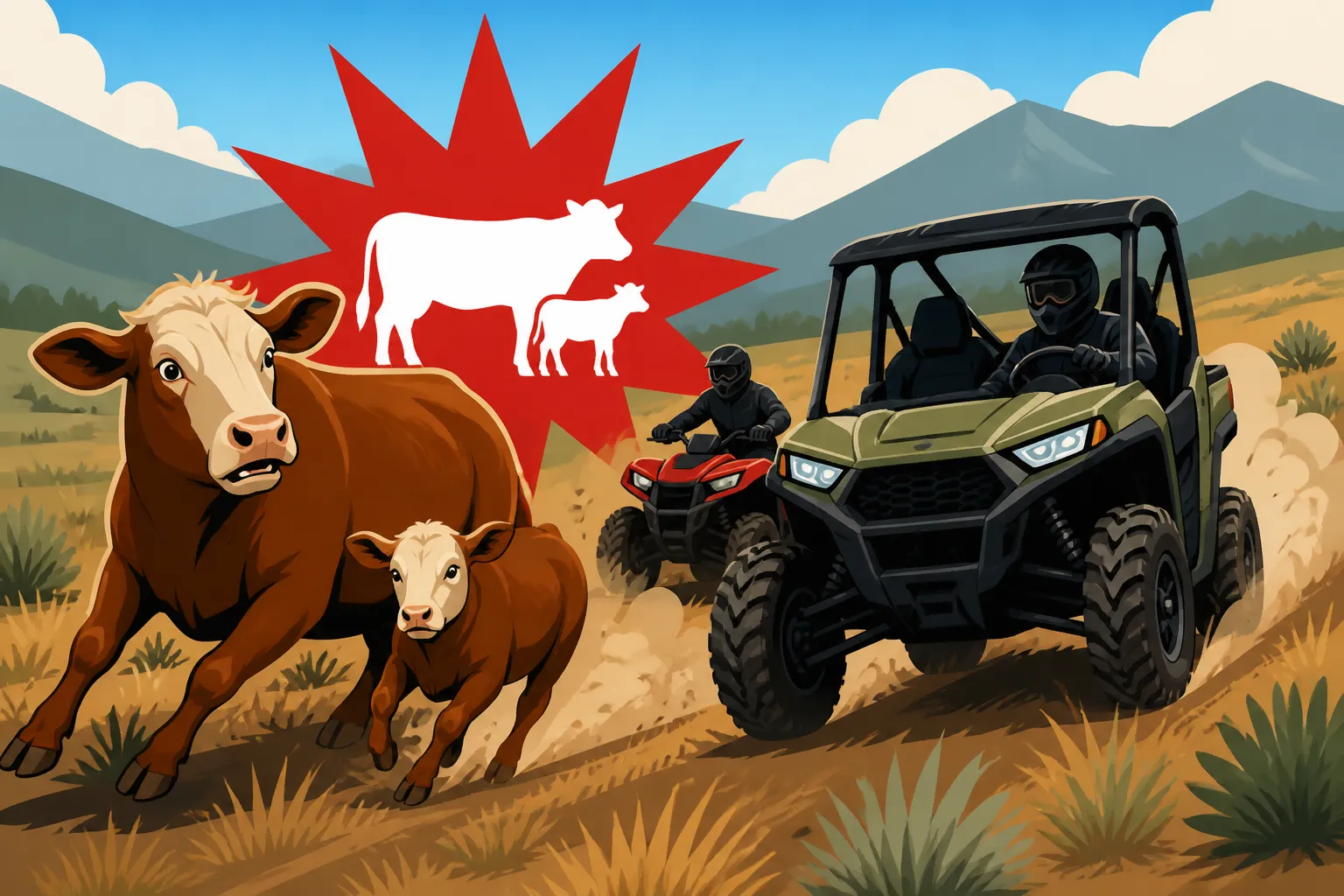
Your awareness should be heightened. Keep your eyes peeled not just for animals directly on the trail, but also for tracks, droppings, and fence lines, which are all indicators of livestock presence. Listen for sounds like mooing or bleating. If you spot livestock, approach with extreme caution. Give them a wide berth, and if possible, turn off your engine or put your machine in neutral and wait for them to move on their own. Never honk, rev your engine, or try to shoo them aggressively; this can easily spook them, causing them to bolt into danger or injure themselves. Your goal is to pass by as quietly and unobtrusively as possible, minimizing disturbance.
Staying on Designated Trails and Respecting Property
One of the easiest ways to avoid conflict with livestock is to stick to designated trails and established routes. Going off-trail, or "bushwhacking," can inadvertently lead you onto private property, into sensitive grazing areas, or disturb animals in their natural feeding grounds. Livestock might be spread out over vast areas, and leaving the established path can lead to unexpected encounters or even damage to the forage they rely on.
It's important to understand the difference between public access on Crown land and areas that might be [BC Leased Crown Land and Permission] or outright [BC Private Land and the Registration Question]. Always assume you need explicit permission to ride on private land. Respecting fence lines, even if they appear old or broken, is critical. Never cut fences, leave gates open, or create new paths that could compromise a rancher's ability to contain their herd. Many [BC Forest Service Road Rules for ORVs] are designed with these considerations in mind, aiming to balance recreation with other land uses.
What to Do If You Encounter Livestock
When you come across livestock, your immediate actions are key:
- Slow Down Immediately: Reduce your speed to a crawl or come to a complete stop as soon as you spot them.
- Maintain Distance: Give the animals as much space as possible. If they are on the trail, wait patiently for them to move. Do not try to force them.
- Be Quiet: Turn off your engine if they seem agitated, or keep it idling quietly. Avoid loud noises.
- No Chasing or Herding: Never try to "herd" or chase livestock with your machine, even if you think you're helping them move. This can cause immense stress, injury, or lead to dangerous situations.
- Look for a Path of Least Disturbance: If you must pass, find the widest, safest route that causes the least disruption to the herd. Sometimes this means waiting a few minutes for them to clear the way.
- Report Issues: If you find injured livestock, damaged fences, or witness irresponsible behaviour by other riders, report it to the nearest rancher, local conservation officer, or RCMP detachment. Having your [BC Riders Must Carry the Certificate] and your photo ID on every ride will also allow you to gather and provide accurate information if you need to make a report.
Tools and Habits for Safe Range Riding
Being a responsible rider in BC’s range lands isn't just about following rules; it's about developing a mindset and equipping your machine to handle the unique challenges. It’s about planning, preparedness, and continuous learning.
Essential Gear and Machine Upgrades
Your machine's setup plays a significant role in safe encounters with livestock.
- Visibility: Ensuring your machine has adequate lighting is crucial, especially in dusty conditions, at dawn or dusk, or in areas with dense tree cover. Brands like SuperATV offer a range of aftermarket LED light bars and pod lights that can significantly improve your ability to spot animals further down the trail, giving you more reaction time. Good mirrors also enhance your situational awareness, allowing you to see if animals are approaching from behind or the side without constantly turning your head.
- Protection: Riding on varied terrain, including areas with hidden rocks, stumps, or even fallen fences, can be tough on your machine. Robust skid plates and A-arm guards, like those offered by SuperATV, can protect vital components from damage if you unexpectedly hit an obstacle or need to quickly maneuver off-trail to avoid an animal. This protection can save you from costly repairs and keep your machine operational and safe.
- Control: A well-maintained machine with responsive brakes, good tires, and properly functioning suspension is critical. Being able to stop quickly and predictably, or navigate uneven ground smoothly, can be the difference between a near-miss and a collision. Consider quality suspension components or upgraded tires, which can also be sourced from companies like SuperATV, to enhance your machine's handling and stability.
- Navigation: While not a "machine upgrade," carrying a reliable GPS with updated maps can help you identify known grazing leases or areas where livestock are prevalent. Some advanced GPS units or apps even allow you to overlay property boundaries, helping you to stay on legal access routes and avoid private land.
| Practice | Responsible Riding on Range Land | Risky Riding on Range Land |
|---|---|---|
| Speed | Reduce speed significantly in areas where livestock might be present. | Maintain high speeds, assuming the path is clear. |
| Awareness | Actively scan for animals, tracks, droppings, and fence lines. Listen for animal sounds. | Focus solely on the trail ahead, assuming no obstacles other than terrain. |
| Approach | Stop, turn off engine, give wide berth, wait for animals to move naturally. | Honk horn, rev engine, attempt to "shoo" or herd animals off the trail. |
| Trail Use | Stick to designated trails and roads; respect all fence lines and gates. | Cut across open fields, go off-trail, leave gates open, or cut fences. |
| Reporting | Report injured animals, damaged property, or irresponsible riders to authorities. | Ignore incidents, assume someone else will handle it, or participate in irresponsible acts. |
| Machine Prep | Ensure adequate lighting, good brakes, proper tires, and protective gear (e.g., SuperATV). | Overlook machine maintenance, use inadequate lighting, or ride with worn-out components. |
Building Good Habits and Community Engagement
Beyond the physical tools, developing good habits and engaging with the riding community is powerful.
- Education: Take the time to learn about the specific areas you plan to ride. Are they known grazing areas? Are there local rules or advisories? Share this knowledge with your riding buddies. Understanding [BC Rules for Riding Crown Land] means understanding the various uses of that land.
- Community: Consider joining a local ATV or UTV club. These clubs often have established relationships with ranchers, local governments, and land managers. They can provide valuable information on responsible riding practices, organize trail maintenance, and even offer opportunities to help maintain infrastructure, fostering a positive relationship with the ranching community.
- "Leave No Trace" Principles: Apply "Leave No Trace" principles universally. This includes packing out everything you pack in, staying on durable surfaces, and respecting wildlife and livestock. Your goal should always be to leave the environment as good as, if not better than, you found it. This simple ethic goes a long way in ensuring continued access for all.
By combining careful planning, equipping your machine appropriately with accessories from trusted brands like SuperATV that enhance safety and control, and adopting a respectful, aware riding style, you can enjoy BC's incredible backcountry while ensuring the safety and well-being of its valuable livestock.
Disclaimer
This article is for general informational purposes only and does not constitute professional advice. Laws, prices and regulations vary by location and change over time. Consult a qualified professional for guidance on your specific situation.