BC Detachments That Issue Permits
It can be incredibly frustrating when you just need to get your ATV or UTV across a paved road, or travel a short distance on a municipal street to connect to a trail, only to realize the rules aren't as straightforward as you'd hoped. Our beloved off-road machines aren't generally allowed on public highways in British Columbia, but there are specific, limited circumstances where local police can grant you temporary permission. This guide is here to walk you through exactly which detachments issue these crucial operation permits and what you need to know to get one.
Understanding the BC Operation Permit for ORVs
Let's face it, we all love tearing up the trails, but sometimes those trails don't connect perfectly. You might find yourself needing to cross a highway, navigate a residential street for a block or two to get to the staging area, or even use a quiet municipal road that serves as a vital link in your riding route. This is where the BC Operation Permit comes into play, offering a very specific, limited exemption to the general rule that off-road vehicles (ORVs) like ATVs and UTVs are not permitted on highways.
It's absolutely critical to understand that this permit is not a "street legal" conversion. You're not going to be cruising down the Trans-Canada Highway or using your side-by-side for your daily commute into Vancouver. The permit is designed for very specific, short-distance, low-speed movements on public roads where no practical alternative exists. Think of it as a temporary pass, granted at the discretion of local law enforcement, to bridge those frustrating gaps in your off-road journey. The Off-Road Vehicle Act in BC clearly separates off-road use from highway use, and this permit is one of the few places where those two worlds briefly intersect for a necessary purpose. It's often issued for situations like crossing a highway at an intersection, travelling a short stretch of municipal road to access Crown land, or moving a machine from a private residence to a nearby trail system.
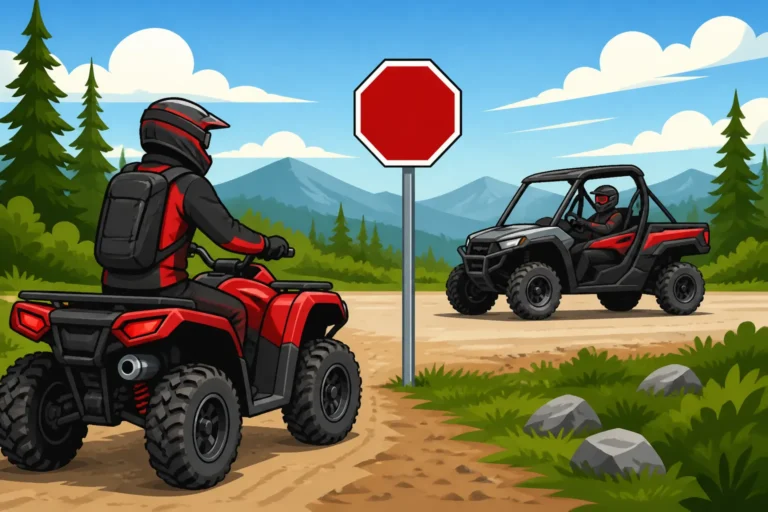
The police have the authority to impose conditions on these permits, which can include specific routes, times of day, speed limits, and even additional safety requirements beyond what's normally required for off-road use. For example, they might stipulate that you only cross at a designated traffic light or that you must have specific lighting (beyond what your stock machine, or even a SuperATV light bar, provides) if you're operating during low visibility. [BC ORV Crossing Rules at Stops and Lights] offers a deeper dive into the specifics of highway crossings. This discretion ensures that the safety of both the ORV operator and other road users is maintained, which is paramount in any mixed-use environment.
Finding the Right Detachment for Your Permit
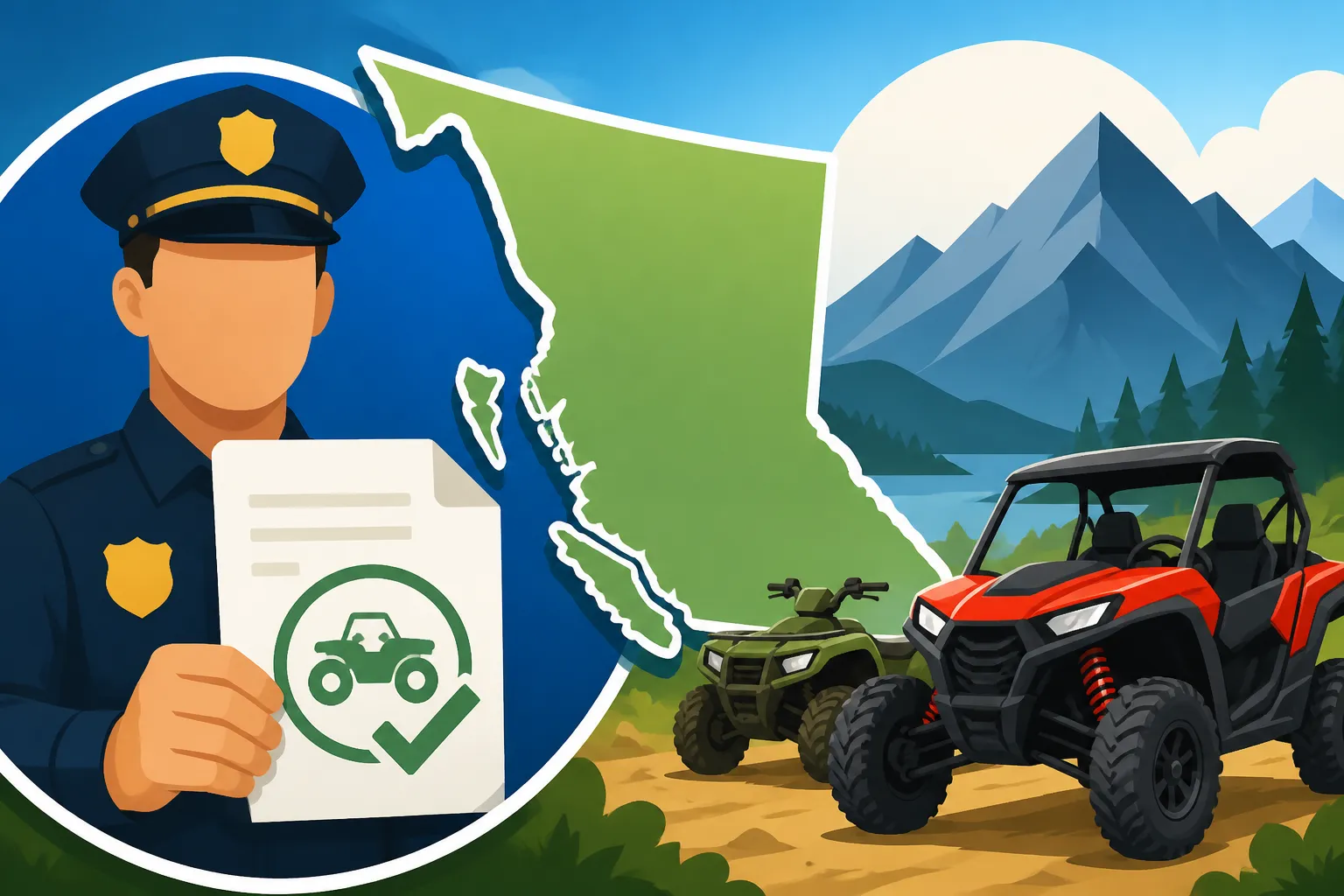
This is where things can get a little less straightforward than you might hope, because there isn't one central office or a single online portal for these permits. Instead, it's a local affair. When it comes to [BC Police Operation Permits for Highway Travel], you'll be dealing with local police detachments, whether that's the Royal Canadian Mounted Police (RCMP) or a municipal police force.
Your first step is always to identify the police detachment that has jurisdiction over the specific section of highway or municipal road you intend to use. If you're planning to cross a provincial highway near a smaller town, an RCMP detachment is usually your point of contact. If your planned route involves a city street within a larger municipality like Victoria, Vancouver, or Kelowna, you'll likely need to approach the municipal police department for that city. It's not a "one size fits all" situation across the province. For instance, the Vancouver Police Department covers Vancouver, while the Surrey RCMP deals with areas in Surrey. This localized approach means that the process can vary slightly from one region to another, which can be a bit of a headache for riders who operate in multiple areas.
It's highly advisable to call the detachment before you show up in person. Explain your situation clearly: where you need to go, why you need to use the road, and the specific route you're proposing. Ask about their process for issuing an operation permit. Sometimes, the officer you speak with might not be immediately familiar with ORV operation permits, as they are less common than other types of vehicle permits. Don't be discouraged; politely ask to speak with someone who handles traffic enforcement or community policing, as they are more likely to have the necessary information. Remember, these permits are not about allowing you to go for a joyride; they're about facilitating necessary, short-distance travel, and you need to articulate that need clearly. Many riders have found success by being patient and well-prepared.
Applying for Your Operation Permit: What to Expect
Once you've identified the correct detachment and ideally, spoken to someone over the phone, you'll need to go through the application process. While [BC Permits Cost Nothing], the process still requires your time and cooperation.
What to Bring With You
When you head to the detachment, be prepared. Here's a checklist of what you should definitely have on hand:
- Your ORV's Certificate of Registration: This is your proof that the machine is legally registered in BC. It's non-negotiable.
- Proof of Insurance: While basic liability insurance is only mandatory on forest service roads, the police may still want to see proof of insurance for the machine, especially if you plan to be on any public road. If you're wondering about coverage, check out [BC ATV Insurance Requirements].
- Your Valid Driver's Licence: If you're going to be operating on a highway, even for a brief crossing, you absolutely need a valid driver's licence. [BC Requires a Driver's Licence on a Highway] is a good read on this.
- Photo Identification: Standard practice for any official interaction.
- Machine Details: Know your make, model, year, and VIN (Vehicle Identification Number) inside and out. It's also helpful to have a clear description of any modifications, like if you've added a heavy-duty bumper or a lift kit from SuperATV.
- Clear Route Plan: Be able to articulate exactly where you need to go, marking it on a map if possible. The more precise you are, the easier it is for the officer to understand and approve your request.
The Conversation with the Officer
When you meet with the officer, be polite, respectful, and prepared to explain your request thoroughly. They'll want to understand the necessity of your request. Is it to access a specific trail system? Are you moving your machine for repair? Or are you getting it to a local club event? The officer will assess the safety implications of your proposed route. They'll consider factors like traffic volume, road conditions, visibility, and any potential hazards. This is where their discretion comes into play. They might suggest an alternative route or impose specific conditions on the permit to ensure public safety. For example, they might limit your crossing to certain hours of the day when traffic is lighter, or insist that you have extra reflective gear if you're riding a machine that's low to the ground. [BC Operation Permit Application Steps] provides more detail on how to approach this discussion.
Getting the Permit Issued
If the officer approves your request, they will issue an Operation Permit. This permit will detail the specific conditions under which you are allowed to operate your ORV on public roads. It will include the authorized route, the valid dates and times, and any special safety requirements. The great news is that [BC Permits Valid Up to Two Years], which means you might not have to go through this process every single riding season, a huge relief for many riders! Make sure you understand every condition listed on the permit before you leave the detachment. Don't hesitate to ask for clarification if anything is unclear.
| Permit Aspect | Description | Important Notes |
|---|---|---|
| Issuing Authority | Local RCMP or Municipal Police Detachment | Contact the detachment with jurisdiction over your intended road use. |
| Cost | Free | No fee is charged for the permit itself. |
| Validity Period | Up to two years | Can cover multiple uses within a specified period, reducing the need for frequent reapplication. |
| Purpose | Limited, necessary crossings or short travel on highways/municipal roads where no alternative exists. | NOT a street-legal conversion. Strictly for essential movements, not recreational road use. |
| Conditions | Specific routes, times, safety equipment (e.g., extra lights, visibility flags), speed limits, etc. | Police have discretion to set conditions to ensure safety. Must be followed strictly. |
| Required Documents | ORV Registration, Proof of Insurance, Driver's Licence, Photo ID, Detailed Route Plan, Machine Details. | Being well-prepared and having all documents ready streamlines the process. |
| Discretionary Element | Approval is at the discretion of the issuing officer. | Be polite, clear, and explain the necessity. Officers prioritize public safety. |
Important Considerations for Permit Holders
Receiving your operation permit is a big step, but your responsibilities don't end there. Holding this permit means you've agreed to specific terms, and understanding them is crucial for a safe and legal ride.
Adhering to Permit Conditions
The conditions laid out in your permit are not suggestions; they are rules you must follow. If the permit specifies a certain time of day for your crossing, or a precise route to take, deviating from that can result in fines or even the revocation of your permit. For example, if your permit allows you to cross a specific highway intersection but you decide to take a shortcut down a different municipal road that wasn't approved, you're operating outside the permit's scope. This is particularly important for items like speed limits on the road section, which will almost certainly be lower than what you'd typically do off-road. Also, ensure your machine is equipped as required; if the permit mandates extra lighting, make sure your SuperATV auxiliary lights are fully functional.
Another crucial aspect is carrying the permit with you whenever you're operating your ORV in the designated areas. Just like carrying your driver's licence and your ORV registration, this permit is an official document that law enforcement may ask to see. Failure to produce it could lead to complications, even if you technically have one on file. Think of it as your golden ticket for that specific, limited road use – you need to have it on you. [Carrying Your Certificate of Registration on Every Ride] applies just as much to this permit.
Local Bylaws and Municipal Authority
While the provincial Off-Road Vehicle Act governs most aspects of ORV use, municipalities often have their own bylaws regarding vehicle traffic within their boundaries. While your operation permit provides a provincial-level exemption for specific highway travel, it doesn't automatically override all municipal bylaws. It's always a good idea to be aware of any local restrictions, especially if your approved route takes you onto municipal roads for any length of time.
Some municipalities have designated specific trails or routes where ORVs are permitted, but these are generally distinct from the operation permit process. The permit is typically for connecting routes or crossings rather than for extensive travel within a town. Therefore, even with a permit, be mindful of local signage and community expectations. Showing respect for local residents and adhering to speed limits will go a long way in fostering good relations between riders and communities. [BC Municipal Authority Over ORV Roads] gives more insight into this complex area.
What to Do If You're Stopped
If a police officer stops you while you're operating your ORV on a public road under the authority of an operation permit, remain calm and cooperative. Present your driver's licence, your ORV registration, proof of insurance, and, most importantly, your operation permit. Clearly explain that you are operating under the conditions of the permit issued by their detachment (or a neighbouring one). The officer will verify the permit's validity and ensure you are adhering to its conditions. If everything is in order, you should be free to continue your journey. This interaction is usually quick and straightforward when you are prepared and following the rules.
Remember, these permits are a privilege, not a right. They allow us to responsibly navigate necessary road sections to enjoy our passion for off-roading. Respecting the conditions, understanding local nuances, and always prioritizing safety are the best ways to ensure this system continues to work for BC riders.
Disclaimer
This article is for general informational purposes only and does not constitute professional advice. Laws, prices and regulations vary by location and change over time. Consult a qualified professional for guidance on your specific situation.