Finding a Gate Across a Resource Road
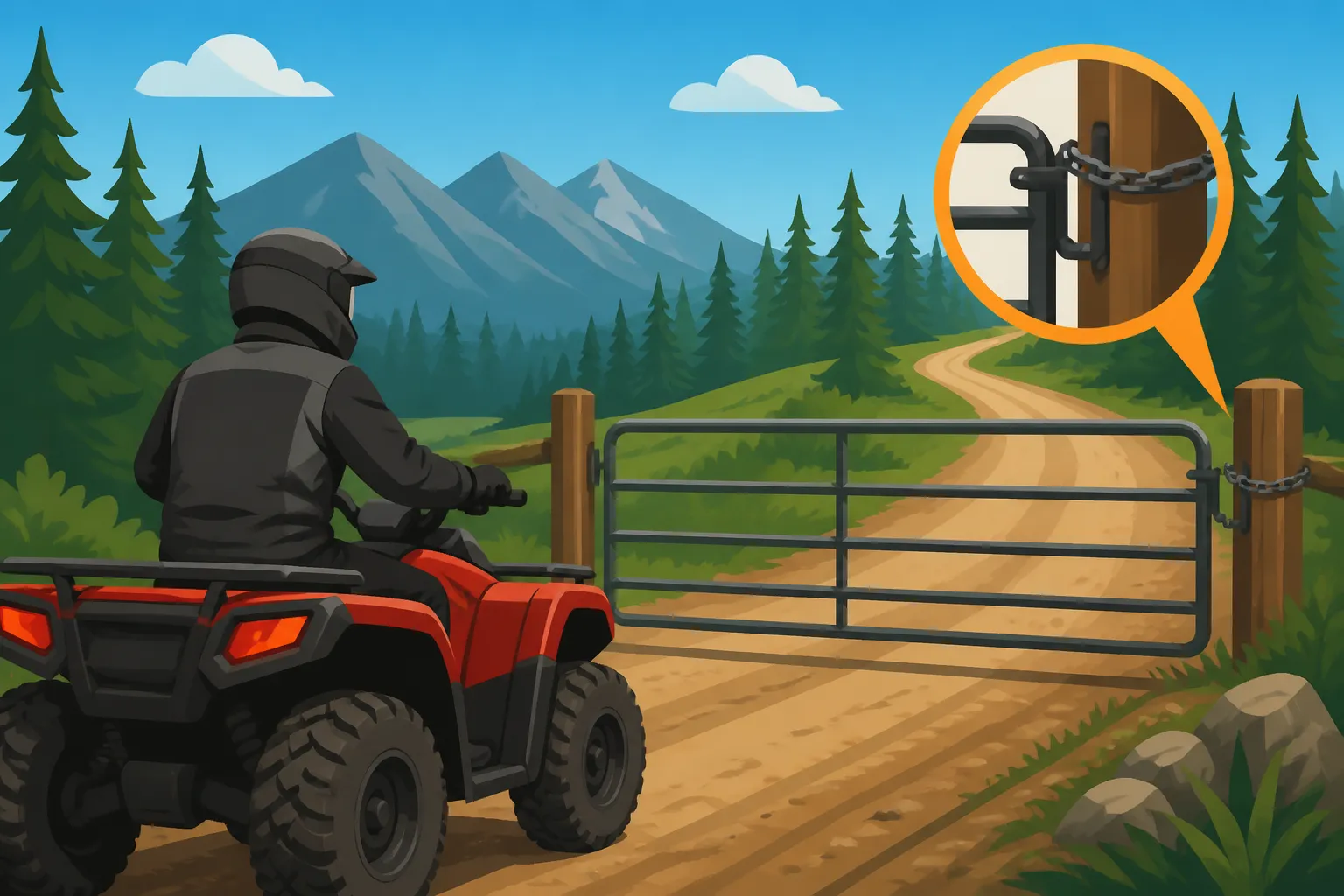
There’s nothing quite like the thrill of planning an epic ATV or UTV adventure into the vast wilderness of British Columbia, pouring over maps, and imagining those winding resource roads stretching out before you. But then, you hit a snag. You’ve driven for what feels like ages, your anticipation building with every kilometre, only to round a bend and find your path abruptly blocked by a sturdy gate. It’s a frustrating moment that many of us have faced, turning excitement into exasperation. This guide is here to walk you through why those gates are there, how to anticipate them, and what to do when you encounter one, ensuring your backcountry rides are as smooth and hassle-free as possible.
Why Are Gates Even There? Understanding Resource Road Access Restrictions
It’s easy to feel personally targeted when you find a locked gate blocking your favourite route, but these aren't put there just to annoy recreational riders. British Columbia’s resource roads are a complex network, primarily built and maintained for industrial purposes. They are working roads, and as such, access can be restricted for a variety of very real and often critical reasons. Understanding these reasons can help you anticipate closures and plan your trips more effectively.
Active Industrial Operations and Safety Concerns
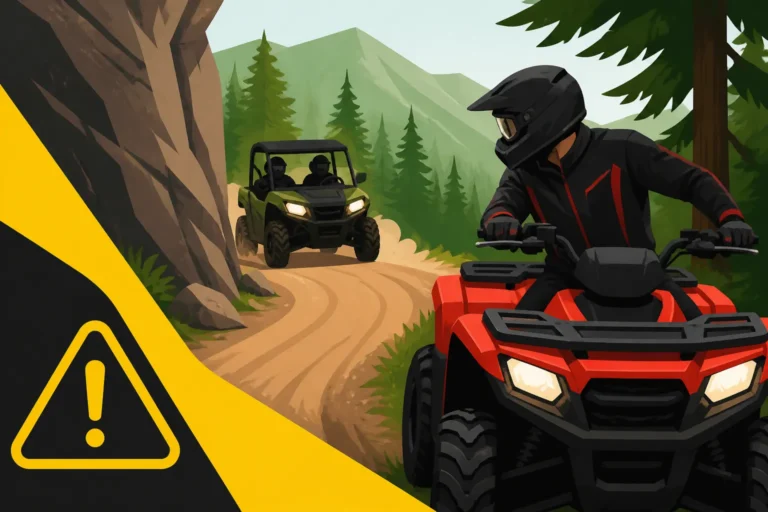
Think about the sheer scale of the forestry, mining, and construction operations happening deep in BC’s backcountry. These are heavy industrial zones, often bustling with massive machinery, loaded logging trucks, and active work crews. Sharing these roads with recreational ATVs and UTVs, especially when you’re not expected, creates significant safety hazards for everyone involved. Imagine a fully loaded logging truck coming around a blind corner – they can't stop on a dime, and neither can you. Gates are often installed to manage the flow of traffic, ensure worker safety, and prevent accidents in these active sites. They protect you from potential dangers, even if it feels like they’re just keeping you out. Sometimes these gates are only closed during working hours, opening up for public access on weekends or evenings, but you should never assume this without clear information.
Environmental Protection and Wildlife Management
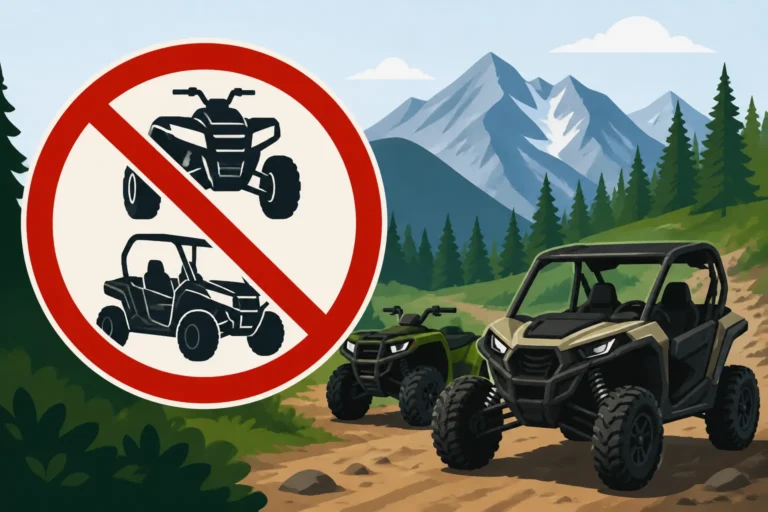
Our stunning BC wilderness is a delicate ecosystem that needs protection. Gates are frequently used to manage access to sensitive environmental areas. This could be to protect critical wildlife habitats, like caribou winter ranges, or to prevent damage to fragile riparian zones near streams and rivers. During certain times of the year, especially spring melt or during extreme fire hazard seasons, roads might be closed to prevent erosion or minimize the risk of wildfires. [BC Motor Vehicle Prohibitions Explained] often details these types of closures, which are designed to safeguard the very natural beauty we go out to enjoy. Ignoring these closures can have lasting negative impacts on the environment and can lead to hefty fines, so it’s crucial to respect these boundaries.
Private Land and Tenure Holders
It might surprise some riders to learn that many resource roads, while appearing to be public access, actually cross private property or land managed under a specific tenure agreement. This could be a large ranch, a private timber holding, or even a guide outfitter leasing Crown land for their operations. In such cases, the gate serves to protect the private interests and property rights of the landowner or tenure holder. They have the right to control who accesses their land, and resource roads are often their primary means of access. Knowing [BC Crown Land Access Rules] is important here because while much of BC is Crown land, the specific parcels that these roads traverse might not be. Always assume a gate means restricted access unless you have explicit permission from the owner or operator.
How to Spot a Gate (or a Potential Gate) Before You Go
Forewarned is forearmed, especially when you’re heading deep into the backcountry. The last thing you want is to waste precious riding time backtracking because of an unexpected gate. While you can't predict every single closure, there are some excellent strategies and resources you can use to minimize your chances of a frustrating dead end. A little bit of homework before you load up the machine can save you a lot of grief on the trail.
Pre-Trip Planning with Maps and Online Resources
This is your first and most crucial step. Before you even think about firing up your machine, get intimately familiar with your route. Government mapping tools, like iMapBC or the Recreation Sites and Trails BC website, are invaluable. They often show active logging blocks, tenure areas, and sometimes even marked road closures or gates. Forest district offices can also provide maps and up-to-date information on active hauling routes or temporary closures. Many provincial forest service roads are actively managed, and their status can change quickly. [Checking a Road Before You Go] should be a mandatory part of your routine. Look for any notices about industrial activity, road maintenance, or fire bans that might affect access. Don't just rely on consumer GPS units; cross-reference with official sources.
Local Knowledge and Community Forums
Never underestimate the power of local wisdom! The folks who live and work in the areas you plan to ride often have the most current information. Stop by a small-town coffee shop, talk to gas station attendants, or visit the local hardware store – they often know which roads are active or what’s recently been gated. Even better, join a local ATV or UTV club. Organizations like the [BC ATV Clubs Worth Joining] often have members who ride these areas regularly and share real-time updates on trail conditions, closures, and active hauling. Online forums dedicated to BC off-roading are also fantastic resources where riders post about recent experiences, including encountering unexpected gates or [BC Trail Closures After a Storm]. These communities are often happy to share their knowledge and help you avoid a headache.
Signs on the Ground: What to Look For
Even with the best pre-planning, conditions on the ground can change. As you approach a resource road or intersection, keep your eyes peeled for clues. Look for signs of active industrial use: fresh gravel, tire tracks from heavy machinery, or even signage warning of [BC Resource Roads With Active Hauling] or "Industrial Traffic Ahead." These are strong indicators that you might encounter a gate further in, or at the very least, you'll need to exercise extreme caution and be prepared to [Yielding to Loaded Trucks].
Gates themselves come in many forms:
- Simple Chain & Lock: Often a temporary measure.
- Heavy Metal Gates: Designed for more permanent access control.
- Barbed Wire Across an Old Track: A clear sign of restricted access, often on less-maintained routes.
- Earth Berms or Trenches: Sometimes roads are completely de-activated or intentionally blocked to prevent vehicle access.
Beyond the gates, look for official "No Entry," "Road Closed," "Private Property," or "No Trespassing" signs. Sometimes there will even be specific company names or phone numbers posted if the gate is tied to a particular industrial operation. These are not suggestions; they are directives that must be respected.
What to Do When You Encounter a Gate
The moment of truth: you’ve ridden for an hour, the scenery is amazing, and then boom—a locked gate. It’s a definite buzzkill, but your reaction in that moment is critical. Getting frustrated is natural, but acting impulsively can lead to serious consequences. This isn't the time to push boundaries or assume you can sneak around.
No Trespassing: Respecting Closures and Private Property
This is non-negotiable. A gate, especially one accompanied by "No Trespassing" or "Road Closed" signs, means exactly that. You cannot go around it, cut the lock, or force it open. Doing so constitutes trespassing and potentially vandalism. The legal ramifications in BC are significant. You could face hefty fines under the Off-Road Vehicle Act or other provincial statutes, and in more severe cases, your machine could be seized by law enforcement. [BC Seizure Powers Under the ORV Act] are real, and officers do enforce them. Remember, these are often working roads or private property, and disrespecting these boundaries can sour relationships between recreational riders and industrial operators, potentially leading to even more closures in the future. Always turn back and find an alternative route. Your adventure isn’t worth a ticket or losing your machine.
Seeking Permission or Alternative Routes
If you encounter a gate that you suspect might be temporarily closed or managed by a specific entity, and there's clear signage with contact information, you might be able to seek permission. For example, if it's a logging road and you see a company name, you could try calling their office to inquire about weekend access. However, understand that permission is rarely granted on the spot for recreational use, and you'll likely need to arrange it well in advance. More often than not, the most practical solution when facing a gate is to pivot. Open up your maps (paper or digital, ideally both!) and look for alternative [BC ATV Trails: Where to Ride] or resource roads that might lead you to your desired destination. This is where good pre-trip planning truly pays off, as you might have scouted backup routes. If you’re truly out in a [Cell Dead Zones in the Interior] and need to re-route, having a satellite messenger can be a lifesaver for communicating your change of plans or calling for assistance.
Gear for Unexpected Obstacles (But Not for Breaking Rules!)
While you should never bring gear with the intention of forcing open a gate or bypassing a closure, certain equipment can be invaluable for navigating legitimate obstacles on open trails or for self-recovery. For instance, a quality winch – like one from SuperATV – is an essential piece of equipment for any serious off-road rider. It can help you recover your machine if you get stuck in mud, climb a tricky incline, or move a fallen tree if doing so is safe and permitted on an open trail. Recovery straps, shovels, and a hi-lift jack also fall into this category. These tools are for responsible self-sufficiency and navigating the expected challenges of the backcountry, not for circumventing rules. Always prioritize safety and legality over forcing a path.
| Reason for Gate | Typical Appearance | What to Do | What NOT to Do |
|---|---|---|---|
| Active Industrial Operation | Heavy metal gate, "Active Hauling" signs, industrial vehicle tracks | Turn back, find alternative route, check for weekend access notices | Force gate, drive around, enter active work zones |
| Environmental Protection/Wildlife | Wooden gate, signs about sensitive habitat, seasonal closure dates | Turn back, respect closure, research alternative routes | Ignore signs, damage fragile ecosystems, ride during prohibited seasons |
| Private Land/Tenure | Chain across road, "Private Property" signs, rancher's gate | Turn back, seek explicit permission from landowner (in advance) | Trespass, cut locks, assume implied permission |
| Road De-activation | Earth berms, deep trenches, fallen trees intentionally placed | Turn back, accept road is permanently closed | Attempt to move obstacles, damage the landscape |
Navigating the Unknown: Best Practices for Resource Road Riding
Riding BC's resource roads offers unparalleled access to incredible landscapes, but it also comes with a unique set of responsibilities and challenges. By adopting some best practices, you can ensure your rides are not only thrilling but also safe, respectful, and sustainable for everyone who uses (and depends on) these vital arteries of the backcountry.
Always Be Prepared for the Unexpected
The backcountry is unpredictable. Weather can change in an instant, mechanical failures happen, and unforeseen obstacles (like those gates!) are always a possibility. Always carry more than you think you’ll need. This includes extra fuel, a well-stocked [First Aid on a Remote Interior Loop] kit, a tire repair kit, basic tools, and a way to communicate (satellite messenger, two-way radio). Even if your phone has service at the trailhead, assume it won't deep in the mountains. Tell someone your route and expected return time, and stick to it. Having a spare belt or clutch kit, especially if you have a powerful side-by-side that you like to push a little, can save your trip. Companies like SuperATV offer a range of spare parts and accessories designed for durability, which can be a real game-changer when you're far from any help.
Responsible Riding and Minimizing Impact
Our privilege of accessing these incredible areas depends heavily on our responsible behaviour. Stay on marked trails and resource roads. Going off-road, especially into sensitive areas, can cause significant damage to delicate ecosystems. Avoid [BC Riparian Areas to Avoid] and never ride through creeks or wetlands where you can damage fish habitat or cause erosion. If you encounter wet, muddy trails, try to ride through them, not around them, to prevent widening the trail and further erosion. Be especially mindful of [Staying Off Wet Alpine Ground], as these areas are incredibly fragile and take decades to recover from tire tracks. Pack out everything you pack in, and leave no trace. Respect wildlife by giving them ample space and never feeding them. Our actions today determine the access we'll have tomorrow.
Communication and Safety on Remote Roads
Resource roads are often shared by various users, including industrial traffic, other recreationalists, and wildlife. Effective communication is key to safety. Consider carrying a two-way radio and monitoring active logging channels (often posted on signs or available from local clubs) if you’re on a road with industrial traffic. Learning [BC Resource Road Radio Practice] is a skill every backcountry rider should develop, especially knowing how to call out your kilometre markers and direction of travel. Always assume there's industrial traffic, even on weekends. Be prepared to slow down, pull over, and yield to larger vehicles, especially fully loaded logging trucks, as discussed in [BC Riders Meeting a Logging Truck]. Your ATV or UTV might be powerful, but it's no match for an 18-wheeler. Safe riding is not just about avoiding gates; it's about making sure you come home safely from every adventure.
Disclaimer
This article is for general informational purposes only and does not constitute professional advice. Laws, prices and regulations vary by location and change over time. Consult a qualified professional for guidance on your specific situation.