BC Hunting Closed Areas for Vehicles
There's nothing quite as frustrating as planning a hunting trip, loading up your ATV or side-by-side, and then discovering that your intended access route is completely off-limits to vehicles. It can feel like the goalposts are always moving, especially when you're trying to figure out where you can and can't legally take your machine to pursue game in British Columbia. This guide is here to untangle the often-confusing web of BC hunting closed areas for vehicles, helping you understand the rules, find the right information, and avoid hefty fines or having your adventure cut short.
Understanding BC's Hunting Closed Areas for Vehicles
When you're out hunting in British Columbia, the vast wilderness can sometimes feel like an open invitation, but the reality is that many areas have specific restrictions on vehicle use, especially during hunting season. These aren't just arbitrary lines on a map; they're carefully considered measures put in place for a variety of ecological and management reasons. Understanding the 'why' behind these closures can help you appreciate their importance, even when they seem inconvenient.
Why Are Vehicle Closures in Place?
At their core, vehicle closures for hunting are about conservation and ensuring sustainable wildlife populations for future generations. One primary reason is to reduce hunting pressure on certain species or in sensitive habitats. Imagine an area where a specific deer herd winters, or where caribou are particularly vulnerable to disturbance; allowing unrestricted vehicle access could stress these animals, push them out of their essential habitat, or make them too easy for hunters to pursue, leading to over-harvesting. These closures create sanctuaries where wildlife can thrive with less human interference.
Another significant factor is habitat protection. ATVs and UTVs, while incredibly useful for accessing remote areas, can cause damage to fragile ecosystems if not managed properly. Driving off-trail or through wetlands can erode soil, spread invasive species, and disturb sensitive plant communities. Closures help protect these delicate environments, ensuring that the natural landscape remains intact for both wildlife and future recreational use. It's about finding that balance between access and preservation.
Finally, these regulations also play a role in fair chase and public safety. By limiting vehicle access, wildlife managers aim to ensure a more ethical hunting experience, often requiring hunters to rely more on foot travel and traditional scouting methods. This also contributes to a safer environment, reducing potential conflicts between hunters, or even between hunters and other outdoor enthusiasts like hikers or mountain bikers who might also be using the same backcountry roads or trails. These rules are part of a larger plan to manage our shared natural resources responsibly.
What Kinds of Vehicles Are Affected?
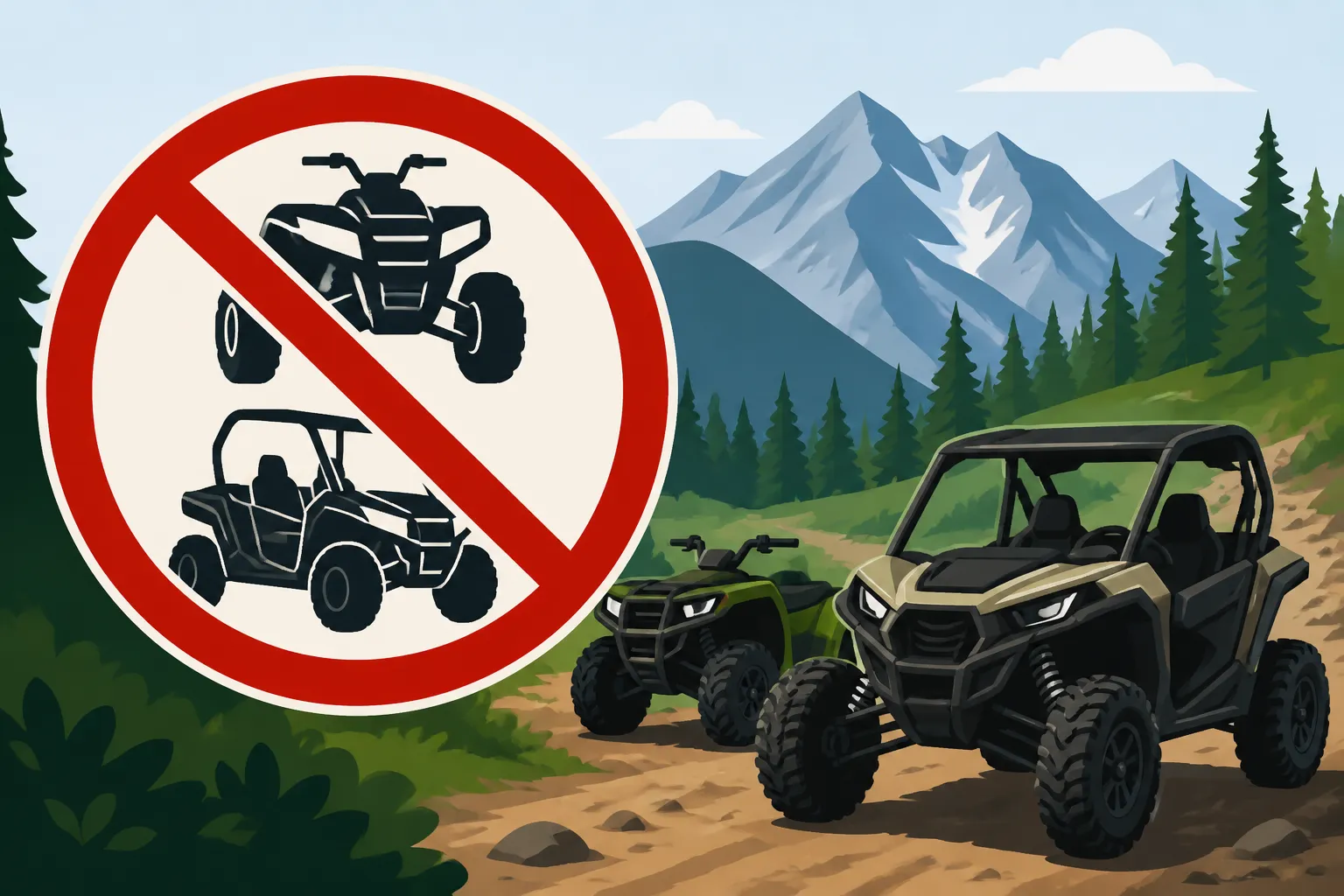
When we talk about "vehicle closures," it's easy to assume we're just talking about roaring quads and side-by-sides. And while your [BC Registration for a Side-by-Side] or ATV is certainly a focus, the regulations often cast a wider net. Many closures apply to any motor vehicle, which means everything from your big pickup truck, to a smaller 4×4, and yes, even electric bicycles. It's not just about the size or power of the engine, but the principle of motorized access itself.
The definition of a "motor vehicle" in the context of these closures can be quite broad. It typically includes off-road vehicles (ORVs) like ATVs, UTVs, dirt bikes, and snowmobiles, but also encompasses highway vehicles when they're used off designated public roads or specific resource roads. The intention is to control the impact of motorized travel in sensitive areas, regardless of the vehicle type. So, if you're thinking of using an e-bike to zip into a restricted zone, thinking it's not a "motor vehicle" in the same vein as a quad, you might be in for a rude awakening and a hefty fine.
It's absolutely crucial to remember that these rules are about access for hunting. You might be able to use your [BC Crown Land Triggers the Registration Rule] for other recreational purposes in some areas, but when it comes to hunting, specific restrictions can override general access. A trail that's open for recreational riding might be closed to all vehicles if you're carrying a hunting rifle during an open season. Always read the specific closure details carefully – they'll tell you exactly which types of vehicles are restricted and for what purpose.
Where to Find Vehicle Closure Information
The biggest hurdle for many hunters isn't necessarily understanding the rules, but finding them in the first place. British Columbia's regulations can be dynamic, with closures changing seasonally or in response to specific environmental factors like wildfire activity or wildlife migrations. Relying on outdated information or hearsay is a sure-fire way to end up on the wrong side of the law.
The BC Hunting Synopsis
For any hunter in British Columbia, the BC Hunting Synopsis is your absolute bible. This annual publication, available both online and in print, contains all the official, legally binding regulations for hunting seasons, bag limits, and critically, all current vehicle closures. It's updated every year, usually in late spring or early summer, and it's your responsibility to review it before heading out. Don't just skim it; dive deep into the sections relevant to your hunting region.
Within the synopsis, you'll find maps and detailed textual descriptions of all the Limited Entry Hunting (LEH) areas, Management Units (MUs), and specific closures for vehicle use. These descriptions will outline the boundaries, the types of vehicles prohibited (e.g., "all motor vehicles," "ORVs only"), and the dates the closure is in effect. It's not always the easiest read, but it's the official source, and pleading ignorance won't hold up if you're caught in a closed area. Think of it as your primary [BC Registration Paperwork Checklist] for legal hunting.
Many seasoned hunters print out the relevant pages or save them to a tablet for offline access in the field, as cell service can be spotty in the backcountry. While helpful apps and maps exist (and we'll get to those), the synopsis remains the legal document. If there's a discrepancy between an app and the synopsis, the synopsis wins every single time. Make it a habit to check the synopsis for your chosen hunting area well in advance of your trip.
Online Resources and Maps
Beyond the official synopsis, there are several fantastic online tools that can help visualize and keep track of vehicle closures. The BC government's own website, particularly the FrontCounter BC portal, offers interactive maps and GIS data that can be invaluable. These maps often overlay various land classifications, hunting zones, and closure areas, allowing you to get a clearer picture of where you can and cannot go. It takes a bit of navigating, but the data is robust.
Various hunting and outdoor recreation apps have also emerged, many of which integrate provincial hunting regulations and closure data. While these can be incredibly convenient, always exercise caution and cross-reference with the official synopsis where possible. Some apps are better maintained and more current than others. Members of local ATV clubs or hunting associations, like those found in the [BC ATV Clubs Worth Joining] list, often share insights on which digital tools they find most reliable. They might even have custom maps or KML files for specific local closures.
Don't forget the power of community! Online forums and social media groups dedicated to BC hunting and off-roading can be a great place to ask questions and get real-time updates on conditions or recent changes. However, always take unofficial advice with a grain of salt and verify any critical information with official sources. It's a great way to learn about the nuances of specific areas, but not a substitute for checking the official rulebook.
Local Knowledge and Signage
Sometimes, the most direct information comes from the ground itself. Physical signage indicating vehicle closures is often posted at access points to restricted areas. These signs, while not always perfect (they can get vandalized or weather-beaten), are a clear indication that you're entering or approaching a regulated zone. Always be on the lookout for them, even if your maps tell you the area is open. If you see a sign, obey it.
Engaging with local communities can also provide invaluable insights. Talk to outfitters, guides, or even residents in small towns near your hunting grounds. They often have firsthand knowledge of specific local nuances, recent changes that might not yet be fully reflected in online resources, or even temporary closures due to logging, wildfires, or other activities that could impact your access. A quick chat over coffee can save you a lot of grief and potential fines.
Resource roads, particularly in active logging areas, can have dynamic closures that are unrelated to hunting but still affect your access. Always pay attention to logging road radio call-in procedures and check for active hauling signs. Even if an area is open for hunting, a road could be temporarily closed for industrial traffic. [BC Resource Road Radio Practice] and yielding to loaded trucks are essential for safety and compliance. When in doubt, err on the side of caution and find an alternative route or activity.
Navigating and Complying with Vehicle Closures
So, you've done your homework, read the synopsis, and checked your maps. Now comes the practical part: actually navigating the backcountry while adhering to the vehicle closures. This requires careful planning, keen observation, and a solid understanding of how these restrictions are applied on the ground.
Interpreting Closure Maps and Descriptions
Official closure maps, often found in the BC Hunting Synopsis or on government websites, use specific boundaries and designations. These might be drawn along geographic features like rivers, ridges, or established roads, or they might follow the boundaries of a specific Management Unit (MU) or Wildlife Management Area (WMA). It's crucial to understand these lines, which might not always perfectly align with what you see on a standard topographic map. Using GPS with pre-loaded closure layers (if available from a reliable source like FrontCounter BC) is highly recommended for precision.
The textual descriptions in the synopsis are just as important as the maps. They will clarify nuances that a map alone cannot convey. For example, a map might show a general area as closed, but the text might specify "closed to all motor vehicles except for the retrieval of legally harvested game on designated trails" during certain hours or dates. Or it might exempt certain types of vehicles. Pay close attention to these details, as they can make a significant difference to your access. For your [BC Registration for a Dirt Bike], it could mean the difference between a legal ride and a ticket.
Remember, the responsibility lies with you, the hunter, to know exactly where you are and whether your vehicle is permitted. Don't rely on faint tracks or assumptions about where previous riders have gone. If a boundary is described as "the north bank of Smith River," ensure you know precisely which bank that is. Tools like SuperATV GPS units or mapping apps on your phone can be powerful aids, but they're only as good as the data you feed them and your ability to interpret it correctly alongside the official regulations.
Penalties for Violating Vehicle Closures
Ignoring vehicle closures for hunting can have serious repercussions that go far beyond a slap on the wrist. The penalties in British Columbia are designed to deter violations and protect wildlife and habitat. Fines can be substantial, often in the hundreds or even thousands of dollars, depending on the severity and nature of the offense. These aren't just minor infraction tickets; they can hit your wallet hard.
Beyond financial penalties, you could face administrative actions, such as the suspension of your hunting license or the forfeiture of your harvested game. In more egregious cases, particularly involving repeat offenses or significant environmental damage, your vehicle could even be seized. Imagine your beloved side-by-side being impounded, leading to storage fees and a lengthy legal process to get it back, if you ever do. [BC Machine Seizures by Police] are a very real possibility.
The long-term impact on your reputation as a hunter is also something to consider. Violations contribute to a negative public perception of ORV users and hunters, potentially leading to even stricter regulations for everyone. Being a responsible hunter means respecting the rules, even when they're inconvenient. Conservation officers are out there, and they are well-versed in the regulations and how to enforce them.
Planning Your Hunt Around Closures
Successfully hunting in BC often means adapting your plans to work within the framework of vehicle closures. This starts with thorough pre-season scouting, both physically and on maps, to identify open access points and potential travel routes that don't violate any rules. If an area you wanted to access by ATV is closed, can you park further out and hike in? This might mean a longer trek, but it could open up new, less pressured areas.
Consider your game retrieval strategy. If you're hunting big game in an area with vehicle restrictions, you need to have a plan for how you'll get your animal out. This might involve packing it out on foot, using pack animals, or knowing if there are specific times or designated routes where vehicle use is permitted only for game retrieval. Always confirm these details in the synopsis, as general "retrieval" clauses are not universal.
Finally, think about when you hunt. Some vehicle closures are seasonal, often aligning with sensitive periods like calving or rutting seasons, or specific periods of heavy hunting pressure. Planning your trips outside of these peak closure times might give you more vehicle access options, or at least help you understand why certain areas are restricted. Utilizing SuperATV winches and recovery gear is a smart move if you're venturing into remote areas where you might have to park far from your target zone. Being prepared for foot travel and manual game retrieval is often the key to a successful hunt in BC's regulated landscapes.
| Type of Vehicle Closure | Typical Reason for Closure | Affected Vehicles (Commonly) | Example Impact on Hunters |
|---|---|---|---|
| Wildlife Sanctuary/Core Habitat | Protect vulnerable species (e.g., caribou), reduce disturbance, allow recovery | All motor vehicles (trucks, ATVs, UTVs, e-bikes) | Must park at boundary and hike in to hunt or retrieve game. |
| Sensitive Ecosystems | Prevent habitat degradation, soil erosion, spread of invasives | ORVs (ATVs, UTVs, dirt bikes, snowmobiles) | No motorized travel off designated main roads; no off-trail use. |
| Reduced Hunting Pressure | Manage harvest rates, ensure fair chase, distribute hunters | All motor vehicles (or specific ORVs) | May need to walk further to find game, limiting easy access to high-pressure zones. |
| Seasonal Closures | Protect animals during breeding, calving, or wintering periods | All motor vehicles (or specific ORVs) | Hunting permitted, but vehicle access restricted during certain months. |
| Specific Resource Roads | Protect road integrity, ensure public safety, manage industrial traffic | All motor vehicles | Road may be open for general travel, but closed for hunting access in specific areas or times. |
Remember, understanding and respecting BC's hunting vehicle closures isn't just about avoiding penalties; it's about being a responsible outdoor enthusiast and contributing to the conservation of our incredible wildlife and natural spaces. By doing your homework and planning ahead, you can enjoy successful and legal hunting experiences for years to come.
Disclaimer
This article is for general informational purposes only and does not constitute professional advice. Laws, prices and regulations vary by location and change over time. Consult a qualified professional for guidance on your specific situation.