What Conditions Police Attach to an Operation Permit
It can be incredibly frustrating when you need to cross a paved road or move your ORV a short distance on a highway to access another trail, only to find yourself in a legal grey area. While BC generally prohibits ATVs and UTVs from highway use, there are very specific, limited exceptions, and these often come with an "operation permit" issued by local police. This guide will walk you through what these permits are, why they're necessary, and crucially, the conditions police often attach to them, so you know exactly what to expect and how to stay compliant.
Understanding the BC Operation Permit for ORVs
You've probably heard it countless times: "ATVs and UTVs aren't street legal in BC." And largely, that's true. The Off-Road Vehicle Act in British Columbia clearly defines where ORVs can and cannot operate, generally restricting them to Crown land, forest service roads, and private property with permission. Highways, for the most part, are off-limits. However, the legislation does allow for very narrow exceptions, primarily for crossing a highway, moving between trails, or accessing a service in specific, low-speed scenarios. This is where the operation permit comes into play.
An operation permit is essentially a temporary permission slip from your local police detachment (RCMP or municipal police) that allows you to operate your ORV on a highway for a very specific purpose and duration. It's not a blanket approval to commute to work on your quad, nor is it a way to make your side-by-side fully street legal. Think of it more as a tightly controlled exemption for a critical point-to-point movement. Without this permit, riding on any part of a highway—even just crossing it—can lead to significant fines and penalties. Remember, the goal is always safety, both for ORV riders and other road users, which is why these permits are so restrictive. [BC ORV Crossing Rules at Stops and Lights]
Why These Permits Exist
The primary reason these permits exist is to bridge the gap between where we can ride our ORVs and the practicalities of getting to those riding areas. Imagine you're riding a fantastic trail system, and suddenly, it's cut off by a short stretch of paved road, or perhaps you need to cross a highway to refuel in a small town. Without some legal mechanism, you'd be forced to load your machine onto a trailer for what might be a 500-meter journey, which is just not practical for many riders. The permit acknowledges these real-world scenarios while still prioritizing public safety on shared roadways.
It’s about balancing access with responsibility. Police detachments, like the RCMP, understand that ORV enthusiasts need a way to navigate these small highway segments. But because highways are designed for faster, different types of vehicles, the permit is designed to mitigate risks. This often means very specific instructions on how and when you can operate your ORV on that particular piece of pavement. It’s not about convenience; it’s about avoiding unnecessary and potentially dangerous interactions between off-road vehicles and highway traffic.
Who Issues the Permits
Operation permits are issued by local police detachments, which means you'll typically need to visit or contact the RCMP or municipal police force that has jurisdiction over the specific area where you intend to operate your ORV on the highway. This is important because a permit issued by the Vernon RCMP detachment might not be valid for operations within the City of Kelowna's municipal police jurisdiction, even if it's just a few kilometers away. You can't just walk into any police station; you need to go to the one covering your intended route. [BC Operation Permit Application Steps]
When you apply, you'll need to clearly articulate your route, your reason for needing the permit, and likely provide details about your ORV and yourself. They want to know you've thought this through and aren't just looking for an easy pass. Since these permits are free, there's no financial barrier, but the administrative hurdle exists to ensure genuine need and responsible use. Some detachments might have a formal application form, while others might simply process it based on a conversation with an officer. It’s always best to call ahead and understand their specific process.
Common Conditions Attached to an Operation Permit
When a police detachment decides to issue an operation permit for your ORV, don't expect a blank cheque. These permits nearly always come with a set of very specific conditions designed to ensure safety and minimize disruption to highway traffic. Think of these conditions as the fine print that allows you to operate on the road while protecting everyone. These aren't arbitrary rules; they're based on years of experience managing both highway safety and ORV access challenges in British Columbia.
Understanding these conditions is paramount. Violating them isn't just a breach of the permit; it can result in tickets, fines, and even the immediate cancellation of your permit. The police are giving you a privilege, not a right, and they expect you to respect the boundaries they set.
Specified Routes and Areas
One of the most common and stringent conditions is the explicit designation of the route and area where your ORV is permitted to operate. This is never a broad allowance to ride on "any highway." Instead, the permit will typically specify exactly which roads, and often which specific sections of those roads, you are allowed to use. For example, it might state: "Permitted to operate on Highway 97 from the intersection of Elm Street to the intersection of Oak Avenue, and no further."
This level of detail is critical. It prevents riders from using the permit as an excuse to travel widely on highways. Police want to ensure your journey is as short and direct as possible, minimizing your exposure to faster traffic. You might even find the permit specifies which side of the road or shoulder you are to use. If you need to access a gas station, the permit might specifically include the short turn-off into the station's parking lot but not allow you to cruise the main street of the town. Always carry your [BC Riders Must Carry the Certificate] of registration and your permit, and stick to the letter of the route.
Time Restrictions
Police often attach time restrictions to operation permits, limiting when you can operate your ORV on the designated highway section. This could be a specific window during daylight hours, for example, "Monday to Friday, 9:00 AM to 4:00 PM." The rationale here is usually tied to traffic volume and visibility. Operating an ORV on a highway during peak rush hour or in the dark increases the risk of collision and is generally discouraged.
For example, a permit might prohibit operation at night or during adverse weather conditions like heavy rain or fog, when visibility is already compromised. An ORV, with its smaller profile and different lighting, can be harder to see in low-light conditions compared to a standard vehicle. These restrictions are in place to reduce the likelihood of accidents and ensure that your movement on the highway occurs when it is safest for all road users.
Equipment Requirements
While ORVs have their own equipment standards for off-road use, operating on a highway, even temporarily, often means additional requirements. The police may stipulate that your ORV must meet specific lighting requirements, even if it’s daytime, to enhance its visibility to other motorists. This could mean ensuring your headlights and tail lights are fully functional, or even requiring additional reflective tape or safety flags. [BC Lighting and Seat Belt Requirements]
They might also specify the use of a helmet, even if your side-by-side has seatbelts and a roll cage, depending on the specific ORV class and local interpretation. While many UTVs offer factory-installed seatbelts, some older or modified machines might not meet contemporary safety standards for highway use. [BC Helmets on Ride-Astride Machines] Some permit conditions might even require specific tires or a certain level of maintenance to ensure the machine is roadworthy for its brief highway stint. This ensures that the ORV is as conspicuous and safe as possible while sharing the road with other vehicles. Think of it as adding an extra layer of visibility, much like high-visibility vests for workers on roadways.
Safety Protocols
Beyond equipment, police permits can also lay out specific safety protocols that the rider must follow. This could include requirements regarding speed, often stipulating a maximum speed significantly lower than the posted highway limit. For example, you might be required to travel at no more than 30 km/h, regardless of the speed limit for other vehicles. This is to minimize the speed differential between your ORV and other traffic, giving everyone more time to react.
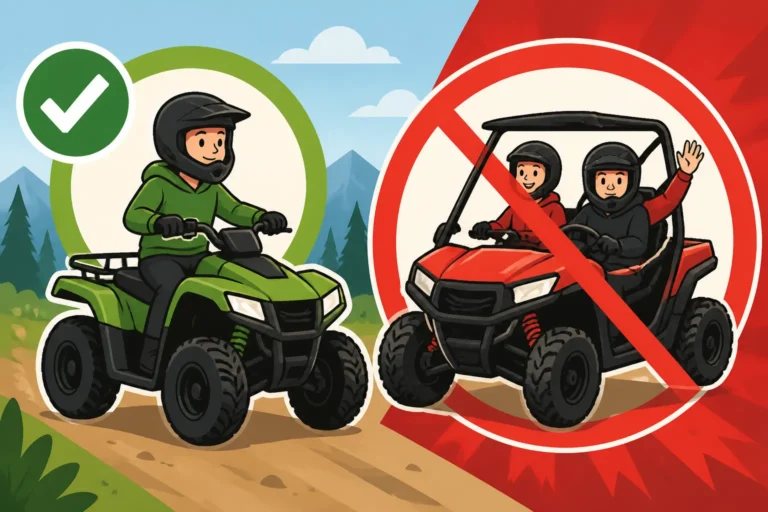
Another common safety protocol is the requirement for the ORV to display an "agricultural implement" or "slow-moving vehicle" sign (a reflective orange triangle) on the rear, even if your machine isn't technically an agricultural implement. This clearly signals to other drivers that your vehicle will be moving slower than typical highway traffic. Some permits might also specify that you must ride as far to the right as safely possible, or that you must not carry passengers if your machine is not designed for them, or if the permit is specifically for a single-operator machine. Companies like SuperATV offer a range of accessories that can enhance safety and visibility, which might be helpful to review before seeking a permit.
Duration and Validity
Operation permits are never indefinite. They always come with a clear expiry date. Most often, these permits are issued for a very short duration, perhaps a single day, a specific weekend, or for a period not exceeding two years, as stated in the Off-Road Vehicle Act Regulation. The permit will clearly state the "valid from" and "valid until" dates. Once that period is over, the permit is no longer valid, and you revert to the general prohibition of ORVs on highways. [BC Permits Valid Up to Two Years]
It's crucial to understand that these permits are not renewable in the same way your driver's license might be. If you need to operate your ORV on a highway again after your permit expires, you'll need to go through the application process all over again. This ensures that the police can re-evaluate the need and conditions each time, adapting to any changes in local traffic patterns or regulations. Always keep your permit on you and be ready to show it if stopped. [Carrying Your Certificate of Registration on Every Ride]
Why These Conditions Matter for Riders
For many of us who enjoy the freedom of ORV riding, dealing with highway restrictions can feel like a bureaucratic headache. You just want to get from Point A to Point B. But the conditions attached to operation permits are there for very good reasons, and understanding them isn't just about avoiding a ticket; it's about ensuring your safety and the longevity of ORV access in BC. Ignoring these conditions can have serious repercussions, not only for you but for the entire riding community.
When you're issued a permit, you're essentially being granted a temporary, conditional privilege to operate your off-road machine in an environment it wasn't designed for. The police are taking a calculated risk, and they expect you to uphold your end of the bargain by strictly adhering to their rules.
Ensuring Public Safety
The primary reason for all these conditions is public safety. Highways are high-speed environments where mistakes can have catastrophic consequences. An ORV, with its different handling characteristics, lower top speed, and sometimes less visible profile, can be a hazard if not operated with extreme care on a paved road. The conditions on your permit are designed to minimize that hazard.
Imagine a fast-moving logging truck on a resource road suddenly encountering an ATV doing 20 km/h on a highway shoulder. The speed differential alone is a massive risk. The conditions, like specified routes, time restrictions, and slow-moving vehicle signage, are all about making your ORV as predictable and visible as possible to other motorists, giving them ample time to react. Adhering to these rules protects you, your passengers, and everyone else on the road.
Maintaining ORV Access
Every time an ORV rider is involved in an incident on a highway due to non-compliance with permit conditions or illegal highway use, it tarnishes the reputation of the entire ORV community. This can lead to tighter restrictions, more difficult permit applications, or even the outright elimination of certain access points. Police and local authorities are constantly evaluating the balance between ORV access and public safety.
By diligently following every condition on your permit, you demonstrate responsible riding. This helps maintain a positive relationship with law enforcement and local communities, which is crucial for preserving and even expanding ORV access in the long run. Showcasing that riders are responsible and can adhere to rules builds trust, making it easier for future riders to obtain similar permits and access critical crossover points.
Avoiding Legal Penalties
Let's not forget the practical consequences of non-compliance. Operating an ORV on a highway outside the conditions of your permit is essentially operating it illegally. This can lead to significant fines for violating the Off-Road Vehicle Act, potentially having your machine seized, or even facing charges under the Motor Vehicle Act if your actions are deemed dangerous. [BC Penalties for Riding Unregistered]
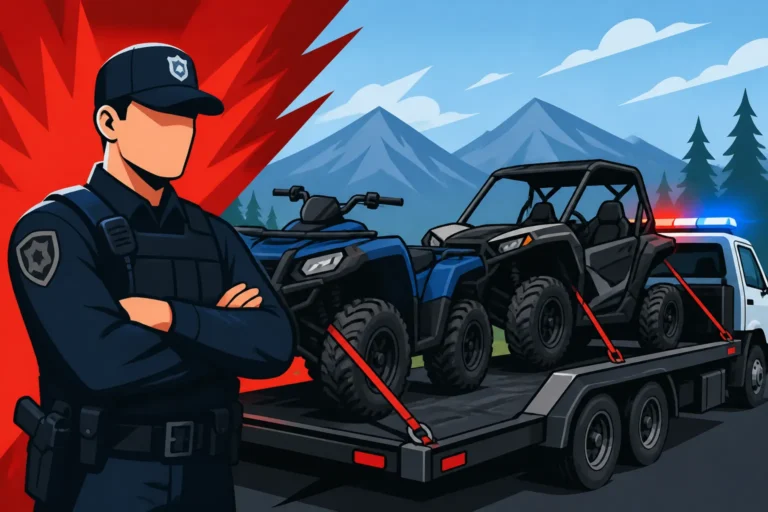
The financial and logistical headaches of dealing with these penalties can far outweigh the minor inconvenience of adhering to permit conditions. Having your ORV impounded, for example, comes with towing fees, storage fees, and the hassle of getting it back. It’s always cheaper and less stressful to ride by the book. Ensure your machine, perhaps with aftermarket parts from a brand like SuperATV, is fully compliant with all the required safety and visibility standards before you even consider highway travel.
Navigating Your Ride with Permit Conditions in Mind
So, you've got your operation permit in hand, and you understand the conditions. Now what? The next step is to put that knowledge into practice. Navigating your ORV under these specific conditions requires a bit more planning and mindfulness than simply hitting the trails. It's about being a responsible, visible, and predictable road user for that short, critical stretch of highway.
Think of it as temporarily entering a different mode of operation for your ORV. You're no longer in the wild, free-ranging off-road environment. You're in a shared space with vehicles often moving at much higher speeds. This shift in mindset is key to safely and legally traversing those permitted highway sections.
Pre-Ride Checklist for Permitted Sections
Before you even turn the key, make sure you've gone through a mental or physical checklist for any permitted highway sections.
First and foremost, have your permit, your [BC Riders Must Carry Photo ID], and your ORV's Certificate of Registration easily accessible. These documents are your lifeline if you're stopped by police. Have them in a waterproof bag or pouch that you can quickly retrieve.
Secondly, physically inspect your ORV. Are all your lights working? If the permit specified additional reflective material or a slow-moving vehicle sign, is it securely attached and clearly visible? Is your helmet on and properly secured, even if it feels unnecessary for such a short distance? If your UTV has seatbelts, are they buckled? Many off-road modifications might not be suitable for highway use, so double-check any accessories you have installed, perhaps from a brand like SuperATV, to ensure they don't impede visibility or create a hazard on pavement.
On the Road: Safety and Awareness
Once you're actually on the permitted highway section, your focus needs to be laser-sharp. Adhere strictly to the speed limit specified on your permit, which will almost certainly be lower than the posted highway limit. Drive predictably, avoid sudden movements, and use your turn signals well in advance if you're changing lanes (if permitted) or turning.
Be hyper-aware of your surroundings. Continuously check your mirrors for approaching traffic. Remember, other drivers might not expect to see an ORV on the highway, so assume they haven't seen you. Make yourself as visible as possible. If the permit allows you to use the shoulder, do so safely, but be mindful of road debris that could puncture a tire. If you're crossing multiple lanes, do it decisively and only when you have a clear, safe gap in traffic.
Communication with Law Enforcement
Should you be stopped by law enforcement while operating under an operation permit, remain calm and cooperative. Clearly state that you have an operation permit and immediately present it along with your other required documents. An officer might not be familiar with every permit issued in their jurisdiction, so be prepared to explain your route and purpose as outlined in your permit.
Do not argue or become defensive. Answer questions truthfully and politely. If you have any modifications or accessories that might look unusual for highway use, and you're asked about them, explain their purpose in relation to your ORV use, but always refer back to the permit's conditions for your highway travel. Being respectful and prepared can make a brief stop go smoothly and keep you on your way.
| Condition Category | Common Examples | Rider Action / Consideration |
|---|---|---|
| Route & Area | "Hwy 1, km 120 to km 121, shoulder only." | Stick exactly to specified road and distance. |
| Time Restrictions | "Daylight hours only (sunrise to sunset)." | Plan your travel to avoid dawn, dusk, or night. |
| Equipment Requirements | "Working headlights, taillights, slow-moving vehicle sign." | Inspect all lights pre-ride, affix SMV sign securely. |
| Speed Limits | "Max 30 km/h." | Travel significantly slower than highway traffic, if necessary. |
| Safety Protocols | "Stay right, no passengers, helmet required." | Follow all instructions for positioning, cargo, and PPE. |
| Duration | "Valid Jan 1 – Dec 31, 202X." | Note expiry; re-apply well in advance for future needs. |
Disclaimer
This article is for general informational purposes only and does not constitute professional advice. Laws, prices and regulations vary by location and change over time. Consult a qualified professional for guidance on your specific situation.