Basic Coverage on a Highway
It's incredibly frustrating, isn't it, when you're trying to figure out the rules for your off-road vehicle (ORV) in British Columbia? There's so much talk about "registration" and "insurance," but when it comes to riding your quad or side-by-side on actual public roads or highways, the information can feel like a tangled mess of "no, but also maybe." This guide is here to untangle that knot, explaining exactly what "basic coverage on a highway" means for your ORV in BC, when it applies, and what protections (or lack thereof) it actually provides.
Understanding the Hard Truth About ORVs and BC Highways
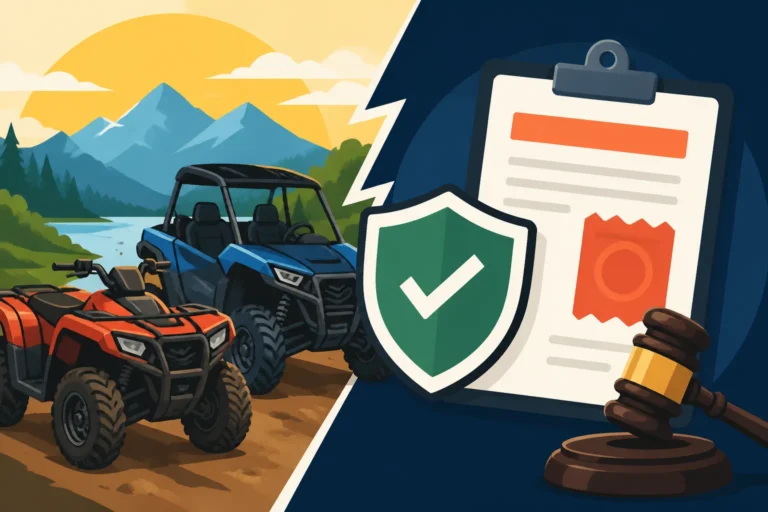
Let's start with the cold, hard reality: for the vast majority of cases, your ATV or UTV is simply not street legal on BC highways. I know, I know – you see them in movies, or maybe in other provinces, and it feels like there should be a straightforward path. But in British Columbia, the Off-Road Vehicle Act and the Motor Vehicle Act are distinct, and your ORV falls squarely under the former. This means that highways, which are governed by the Motor Vehicle Act, are generally off-limits for machines like ours.
The frustration here is palpable, especially when you just need to get from one section of trail to another, or cross a small stretch of pavement to reach a staging area. It feels like an arbitrary barrier when you're otherwise being responsible. This fundamental separation is why even when we talk about "basic coverage on a highway," it's almost always in the context of very specific, highly restricted scenarios, not general highway travel. Your machine gets a [BC's Certificate of Registration Explained] when you register it, not a vehicle title that permits road use like a car. The rules are designed to keep ORVs off the main road network.
When Basic Autoplan Actually Applies to Your ORV
So, if ORVs aren't generally allowed on highways, why do we even talk about "basic coverage on a highway"? This is where the nuances of the BC laws come into play, specifically for those extremely limited circumstances where an ORV might briefly interact with public pavement. The key word here is briefly, and it's usually tied to specific permissions.
The primary scenarios where your ORV might legally touch a highway are:
- Crossing a Highway: If you're on an established trail network that requires you to cross a highway or road at a designated intersection, you might be permitted to do so. This isn't about riding along the highway, but literally crossing from one side to the other. You'll often find these rules detailed when discussing [BC Rules for Crossing a Highway].
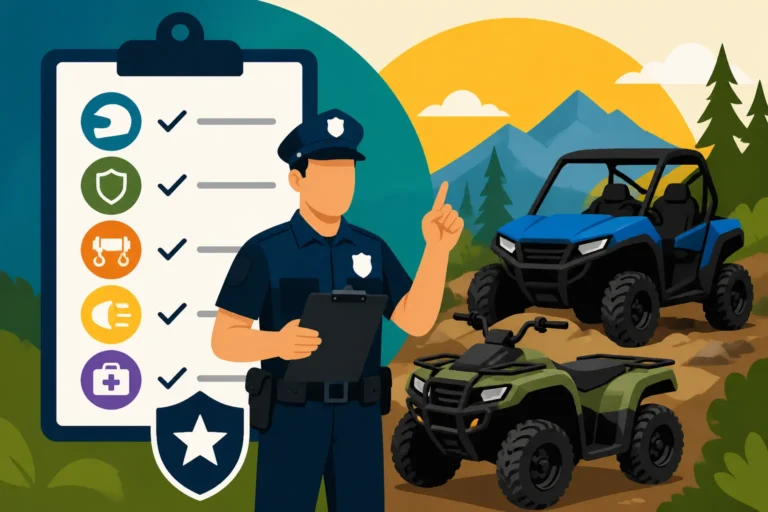
- Operating on a Shoulder with a Police Permit: In very specific, often local circumstances, a police detachment might issue an [BC Police Operation Permits for Highway Travel]. These permits are rare and typically granted for short distances on the shoulder of a highway, usually to connect two otherwise separated trail systems or for specific community events. It's not a free pass to drive on the highway, but a tightly controlled exception.
- Emergency Situations: While no one plans for these, an ORV might be involved in an emergency response where it briefly accesses a highway for critical purposes.
In these specific, limited situations, your ORV must carry basic liability insurance, which in BC, means Basic Autoplan. When you register your machine through an Autoplan broker, they'll typically explain the different layers of coverage. The crucial point is that this Basic Autoplan coverage only becomes active when you are operating your ORV in a way that falls under these permitted highway interactions. For all other ORV use on Crown land or designated trails, the insurance requirements are different, or coverage is voluntary.
The Specifics of Autoplan Coverage for Highway Crossings
Let's dive into what "basic coverage" actually means in these very tight highway contexts. When your ORV is required to have Basic Autoplan for a legal highway crossing or permitted shoulder use, you're primarily getting third-party liability coverage. This means that if you're involved in an accident during that permitted highway interaction, and you're found to be at fault, your Basic Autoplan policy would help cover the costs of damages or injuries you cause to other people or their property. It's about protecting you from financial ruin if something goes wrong involving a motor vehicle or pedestrian on the highway.
It's absolutely vital to understand what this basic coverage doesn't include:
- Damage to Your Own Machine: Basic Autoplan doesn't cover repairs to your quad or side-by-side if it's damaged in a collision or incident on the highway. If you collide with a car while making a legal crossing and your ORV is wrecked, you're on the hook for those repair costs. This is why many riders choose additional coverage through private insurers, especially if their machine is valuable.
- Extended Highway Travel: This coverage is strictly for the permitted interactions. It doesn't magically make your ORV highway-legal for cruising down the road. If you venture beyond a permitted crossing or the conditions of your police operation permit, you're operating illegally, and your insurance could be voided.
- Personal Injury to Yourself: While it covers third-party injuries, your own medical costs beyond provincial healthcare are typically not covered by Basic Autoplan in an ORV accident unless you've purchased additional optional coverage.
Think of it this way: for a car, Basic Autoplan is your foundation for driving on all public roads. For an ORV, it's more like a very thin, specific safety net for the minuscule moments it might legally intersect with that road network. This distinction is incredibly important. When you're talking to your broker about [BC Insurance Bought With Registration], make sure they clearly explain the limits for highway use.
Navigating Exceptions and What Your Broker Needs to Know
As we've established, truly street-legal ATVs or UTVs are not a thing in BC. There's no pathway to register your quad for regular highway use, unlike some other jurisdictions. However, there are two primary "exceptions" to the general prohibition on highways that are worth exploring, which we've touched on: highway crossings and police operation permits.
Highway Crossings: The Brief Encounter
For highway crossings, the rules are generally quite strict. You must come to a complete stop, yield to all highway traffic, and proceed across the highway at a right angle as quickly and safely as possible. You cannot ride along the shoulder to make a crossing easier, nor can you turn onto the highway and ride even a short distance. It's a point A to point B direct line across the pavement. This is where you might appreciate certain visibility accessories. While SuperATV might offer robust lighting kits and mirrors for enhanced trail safety, these are aids, not licenses for highway use. Always confirm local bylaws and provincial regulations regarding highway crossings, as they can vary slightly in their application.
Police Operation Permits: A Special Dispensation
The [BC Operation Permit Application Steps] is where the most flexibility might exist, but it's still highly conditional. These permits are issued by local police detachments for specific machines, routes, and durations. They're typically for:
- Access to Remote Property: If the only way to get your ORV to a remote cabin or property is via a short stretch of highway shoulder.
- Community Events: Parades, charity rides, or other events where ORVs are part of a controlled procession on a limited route.
- Specific Industrial/Agricultural Use: Though many industrial/agricultural machines have their own exemptions, sometimes an ORV needs a permit for specific road segments.
When applying for such a permit, you'll need to provide significant detail about your machine, the exact route, the reason for the travel, and the duration. Police detachments have full discretion to grant or deny these permits and can attach any conditions they deem necessary, such as specific times of day, speed limits, or requirement for escort vehicles. These permits are also usually free and can be valid for up to two years.
| Aspect | Highway Crossing (Permitted) | Police Operation Permit (Specific Use) | General Highway Riding (Not Permitted) |
|---|---|---|---|
| Basic Autoplan Required? | Yes, for liability | Yes, for liability | N/A (Illegal) |
| Type of Coverage | Third-party liability | Third-party liability | N/A |
| Covers Damage to Your ORV? | No | No | N/A |
| Allowed Route | Direct, perpendicular crossing | Specified route/shoulder on permit | Not allowed |
| Duration of Use | Brief moment of crossing | Specific times/duration on permit | N/A |
| Purpose | Connects trail segments | Access, event, specific work | Recreation/Transportation (Illegal) |
| Penalties for Misuse | Fines, potential insurance voiding | Fines, permit revocation | Significant fines, seizure, charges |
What to Tell Your Autoplan Broker
When you register your ORV with an Autoplan broker, it's essential to be clear about your intentions. If you anticipate any scenario where your ORV might legally touch a highway (like a regular crossing to access a favourite trail), discuss this with your broker. They can ensure your Basic Autoplan is correctly set up to provide that minimum liability coverage for those specific instances. Don't assume anything, and certainly don't misrepresent your intended use. Being honest upfront can save you a world of trouble and potential financial headaches down the line if an incident occurs.
Remember, the goal isn't to find a loophole to ride your ORV on the highway; it's to understand the precise, limited situations where the law allows for interaction and how your basic insurance plays a role in those moments. [Why Your Quad Gets a Certificate and Not a Title] really highlights this separation. Keep your rides on the trails and designated off-road areas, and save the highway for your car or truck.
Disclaimer
This article is for general informational purposes only and does not constitute professional advice. Laws, prices and regulations vary by location and change over time. Consult a qualified professional for guidance on your specific situation.