BC Rules for Crossing a Highway
We’ve all been there: you’re out on a fantastic off-road adventure, exploring the incredible backcountry British Columbia has to offer, when suddenly, your path is blocked by a highway. You can see the perfect continuation of your trail just on the other side, but a cold knot of anxiety forms in your stomach. Is it legal to cross? How do you do it? What are the rules? The fear of getting a ticket or, worse, causing an accident because you’re unsure of the exact regulations is a very real concern for many riders. This guide is here to untangle the complexities of BC’s rules for crossing a highway on your ATV or UTV, helping you understand precisely what you can and cannot do to connect those trails safely and legally.
The Highway Hurdle: Understanding Why It's Tricky for ORV Riders
Let's be honest, the moment a paved highway enters the picture, things get complicated for us off-road enthusiasts. Our ATVs and UTVs are built for dirt, rocks, mud, and uneven terrain, not for cruising alongside cars and trucks at highway speeds. The provincial government, through its various pieces of legislation, has made a clear distinction between where off-road vehicles (ORVs) belong and where they absolutely do not. This fundamental difference is the root of most of the confusion and frustration when it comes to highways.
The Legal Divide: Off-Road Vehicle Act vs. Motor Vehicle Act
In British Columbia, ATVs and UTVs fall primarily under the [What the Off-Road Vehicle Act Covers in BC]. This act governs everything from registration to riding conduct on Crown land, resource roads, and designated trails. It's designed specifically for the unique nature of off-road riding. However, highways – those paved ribbons of asphalt we all use for daily commuting – are the domain of the Motor Vehicle Act. This act has a completely different set of rules, safety standards, and enforcement for vehicles like cars, trucks, and motorcycles.
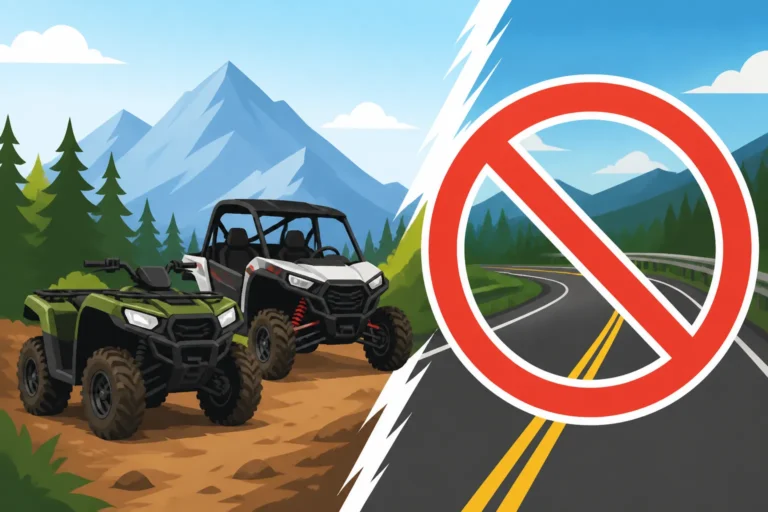
The challenge arises because our ORVs, by design, don't meet the vast majority of the Motor Vehicle Act's requirements for highway-legal vehicles. Things like turn signals, specific headlight configurations, horn requirements, and even braking standards are often different or non-existent on an off-road machine. This is why [BC Has No Street-Legal Path for an ATV] for sustained highway travel. You can’t just throw a license plate on your quad and head down the Trans-Canada Highway for a joyride. The two acts, in essence, create two separate legal universes, and bridging them, even for a brief crossing, requires very specific, limited allowances.
Why Are the Rules So Strict? Safety, Visibility, and Speed Differentials
The strictness isn't just to make our lives harder, though it often feels that way! It's fundamentally about safety. Imagine trying to merge your nimble, sometimes loud, and often slower ORV onto a busy highway with cars moving at 80-100 km/h. The speed differential alone is a massive hazard. ORVs also have different handling characteristics on pavement, shorter braking distances in certain situations, and a far less visible profile compared to a car.
Visibility is a huge factor, especially for smaller quads. Drivers on highways aren't expecting to see an ATV pop out from a trail entrance. This is where quality aftermarket accessories, like bright LED lighting options from brands such as SuperATV, can make a difference in your visibility to other road users, though they don't make you highway legal. The regulations are in place to minimize the risk of collisions, protect both ORV riders and other motorists, and maintain the smooth flow of highway traffic. It's a delicate balance, and the rules reflect the inherent dangers when these two worlds collide, however briefly.
The Legal Lowdown: Understanding BC's Rules for ORV Highway Crossings
Okay, so we know ORVs aren't street legal in BC, but the good news is, the province isn't entirely unreasonable. There are specific, tightly controlled circumstances under which you can legally cross a highway. It's not a free-for-all, but it’s not an absolute ban either. The key is knowing precisely what those conditions are and adhering to them without fail.
The Explicit Allowance: Connecting Trails and Accessing Staging Areas
The Off-Road Vehicle Act and its associated regulations understand that sometimes, the most practical or even only way to get from one section of a trail network to another, or to reach a staging area, involves traversing a highway. This is why the rules allow for very limited, direct crossings. This isn't permission to ride along the highway, but literally to cross from one side to the other.
Think of it as a brief, tactical maneuver. You identify your entry point on one side and your exit point on the other, and you execute the crossing as quickly and directly as possible. You are not permitted to travel any significant distance along the highway shoulder or median, unless specifically allowed by a police operation permit (which we'll discuss in a moment). The intent is to facilitate access, not to provide alternative transportation.
Conditions for Crossing: What You Absolutely Must Do
When it comes to crossing a highway, there are strict conditions that must be met. Ignoring even one of these can land you a hefty ticket or, worse, put you and others in danger.
1. Stopping and Observing: You must come to a complete stop at the edge of the highway before entering. Just like a car at a stop sign, you need to check for traffic in both directions. This isn't a suggestion; it's a legal requirement. You need to ensure the way is clear and you can cross without impeding the flow of traffic or forcing other vehicles to slow down or swerve.
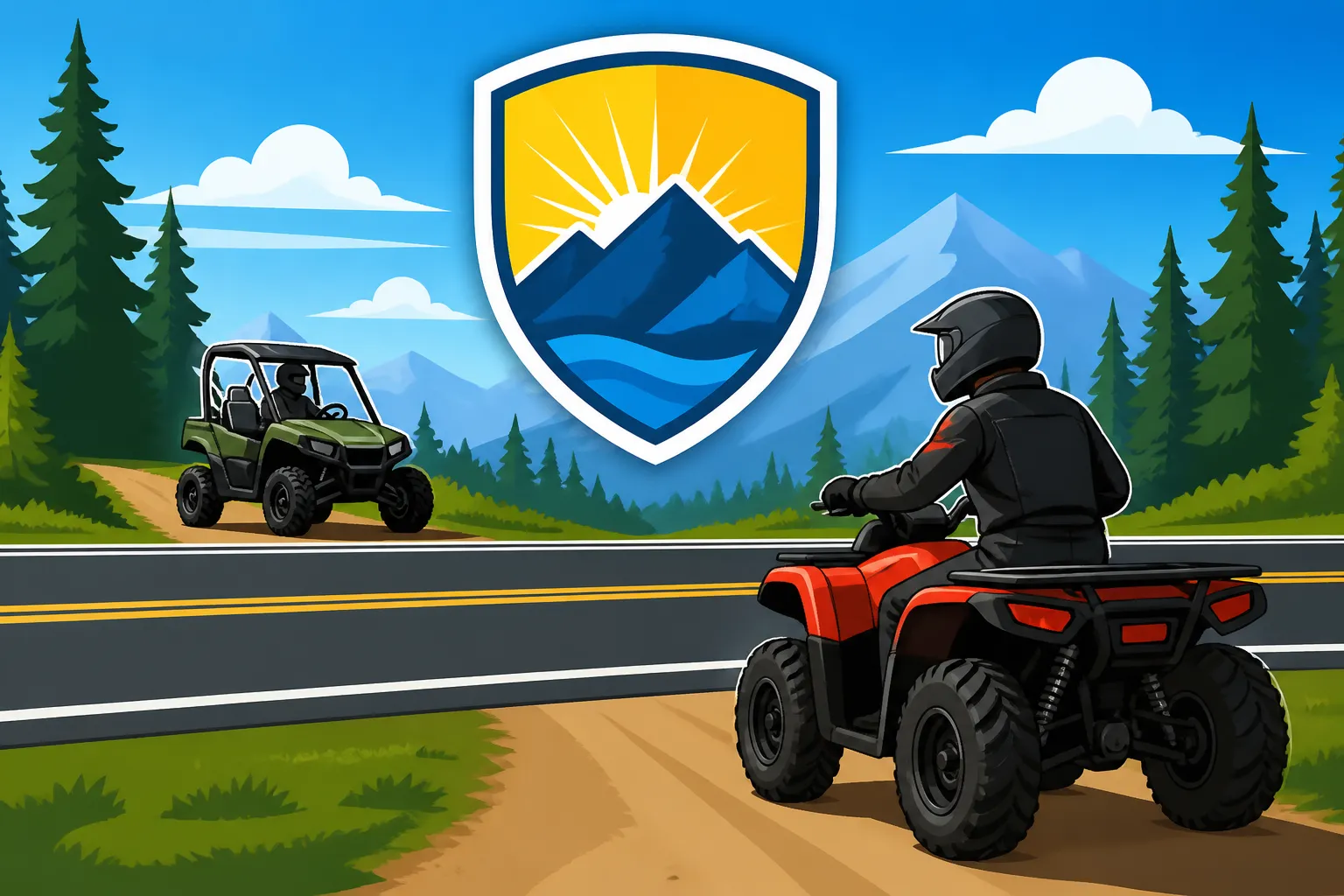
2. Crossing at a Right Angle: The crossing must be made as directly as possible, at an angle as close to 90 degrees (a right angle) as conditions allow. This minimizes the time your machine is exposed to highway traffic and makes your intentions clear to other drivers. You're not trying to merge; you're just getting across.
3. Yielding to All Traffic: This is non-negotiable. Every single vehicle on the highway has the right-of-way over your ORV. You must wait for a safe gap in traffic – one that allows you to cross completely and safely without causing any disruption.
4. Driver's Licence and Basic Insurance: Even for a brief crossing, you are still interacting with the Motor Vehicle Act world, however briefly. This means the operator of the ORV must possess a valid driver's licence. No learner's permits, no exceptions for age on a highway. Additionally, while on Crown land and most trails, liability insurance is often voluntary (or minimal), for any interaction with a public highway, even crossing, you need to have [BC Requires Basic Autoplan on a Highway]. This basic third-party liability coverage from ICBC is crucial. While SuperATV offers great products to enhance your machine, they don't sell insurance, so you'll need to sort that out with an Autoplan broker. Make sure you understand [BC ATV Insurance Requirements] and carry proof.
5. Helmet Use: For ride-astride ATVs, helmets are always mandatory in BC. This extends to highway crossings. For side-by-sides with roll cages and seatbelts, a helmet might not be legally required during the crossing if you are properly belted in, but it's always a good idea to wear one. It's just smart safety. Always check [BC ATV Helmet Law Explained] for the specifics.
Specifics: Crossing at a Stop Sign vs. a Traffic Light
The general rules apply, but there are slight nuances depending on the type of intersection.
Crossing at a Stop Sign
If you're at an intersection controlled by a stop sign, the process is straightforward:
- Stop Completely: At the stop line or before entering the intersection.
- Look Left, Right, Left: Ensure absolutely no highway traffic is approaching that would pose a hazard.
- Cross Directly: At a right angle, as quickly and safely as possible.
- No Dwelling: Do not linger on the highway or its shoulder. Get across and off the pavement.
This is a common scenario when you're transitioning from a resource road directly onto a highway. Always remember, the stop sign applies to you, and the highway traffic does not have to stop for you. [BC Crossings at a Stop Sign] means you must yield to everyone.
Crossing at a Traffic Light
Crossing at a traffic light requires an extra layer of attention:
- Approach and Stop: Pull up to the light, just as a car would, ensuring you're visible.
- Wait for Green: You cannot proceed on a red light, even if you intend to cross. Wait for the green light for your direction of travel.
- Yield on Green: Even with a green light, you must still yield to any vehicles already in the intersection or making turns. The green light doesn't magically make you highway-legal for an extended period; it simply grants you the right to proceed through the intersection, not to travel along the highway.
- Cross Directly: Again, make your crossing at a right angle, without delay.
[BC Crossings at a Traffic Light] are often busier, so patience and vigilance are your best friends. Don't assume other drivers see you, especially on a smaller machine.
When You Can't Cross: Alternatives and Avoiding Trouble
Sometimes, despite your best intentions, a legal and safe highway crossing just isn't feasible. The traffic might be too heavy, the intersection might be poorly designed for ORV visibility, or there might simply be no designated access point. In these situations, attempting a risky or illegal crossing is never worth it. The penalties are severe, and the risk to life and limb is even greater.
The "No Go" Zones: Where Crossing is Illegal or Too Risky
There are definitive scenarios where you should absolutely not attempt to cross a highway:
- No Designated Access: If there's no clear trail or path directly opposite where you are, and you'd have to ride along the shoulder to find one, then it's a no-go. The rules are for direct crossings.
- Blind Corners or Hills: Never attempt to cross where you or other highway traffic have limited visibility. This is an accident waiting to happen. Prioritize clear lines of sight above all else.
- Heavy Traffic: If the gaps in traffic are too short, or you feel pressured to rush, it's safer to find an alternative. Waiting for an hour is better than a collision.
- Divided Highways with Barriers: Trying to cross a highway with concrete barriers or wide, landscaped medians is generally a recipe for disaster and is not permissible. These are designed to separate traffic, not to be traversed by ORVs.
Remember, common sense plays a huge role here. If it feels unsafe or questionable, it probably is.
Alternatives to Crossing: Backtracking, Detours, and Permits
So, what do you do if a crossing isn't an option? You have a few choices, and each depends on your specific situation.
1. Backtrack and Find Another Route
Sometimes the simplest solution is to admit defeat and find another way. This might mean backtracking several kilometres to a safer, clearly designated crossing point, or taking an entirely different route to your destination. It's inconvenient, but it ensures you stay legal and safe. Many riders plan their routes carefully, using GPS and maps that highlight legal crossing points, often facilitated by local clubs.
2. Trailer Your Machine
If you're close to a community or a main road, an increasingly popular and often the safest option is to load your ORV onto a trailer and transport it to the other side. [BC Parking Lots for Loading and Unloading] are explicitly allowed for this purpose. This completely removes your machine from the highway environment and eliminates any legal ambiguities or safety risks associated with crossing. It's the ultimate "play it safe" move.
3. Operation Permits from Police
Did you know that local police detachments can issue special permits for ORV operation on or along highways under very specific circumstances? [BC Police Operation Permits for Highway Travel] are generally reserved for things like agricultural purposes (moving a farm quad between fields), community events, or perhaps a work-related task that absolutely requires a brief stretch of highway travel.
These permits are not a blanket allowance for recreational riding. They are usually temporary, for a specific route, and come with strict conditions. You'll need to apply to your local police detachment and justify why the highway travel is necessary. They are typically granted sparingly and are very specific. You will need to carry this permit, along with your registration and proof of insurance, at all times if you are granted one.
Penalties for Illegal Highway Operation
The consequences for operating an ORV illegally on a highway in BC are serious and can include:
- Violation Tickets: Fines for driving an unregistered ORV, operating without a valid driver's licence, or operating without required insurance can add up quickly. A single ticket for illegal operation can cost you hundreds of dollars. [BC Fines for Careless Operation] can also apply if your actions are deemed reckless.
- Vehicle Seizure: In some cases, especially for repeat offenders or serious infractions, police have the authority to seize your ORV. Getting it back can be a lengthy and expensive process.
- Insurance Implications: If you're involved in an accident while operating illegally, your insurance could be voided, leaving you personally liable for damages, which could be catastrophic.
- Criminal Charges: In extreme cases, such as impaired driving or highly reckless operation, criminal charges could be laid, leading to much more severe penalties, including potential jail time.
It's clear that the risks far outweigh any perceived convenience of an illegal highway crossing. Always prioritize safety and legality.
Navigating the Rules: Practical Tips for BC Riders
Understanding the rules is one thing, but applying them safely and effectively in the real world is another. Here are some practical tips to help you navigate highway crossings with confidence and compliance.
Pre-Ride Planning: The Best Defense
The absolute best way to handle highway crossings is to plan for them before you even hit the trail.
- Map Your Route: Use dedicated ORV trail maps, GPS devices, or online resources to plan your route. Identify any highways you might need to cross and pinpoint the safest, most legal crossing points. Look for major intersections with good visibility and traffic controls. Many trail apps now include overlay maps that show highway crossings.
- Check Traffic Conditions: If you know you'll be crossing a particularly busy highway, consider checking traffic conditions online before you leave, especially if it's a long weekend or a peak travel time. You might decide to postpone or alter your route.
- Know Your Machine: Ensure your ORV is in good working order. This means functional brakes, proper tire pressure for the brief paved section, and especially [BC Lighting and Seat Belt Requirements]. While your machine might not have highway-grade turn signals, ensuring your headlights and tail lights are bright and clean will significantly improve your visibility to other drivers. SuperATV, for example, offers many lighting upgrades that can enhance your visibility.
During the Crossing: Focus and Execution
When it's time to actually make the crossing, execute it with precision and full attention.
- Be Patient: Do not rush. Wait for a clear and ample gap in traffic. It's better to wait a few extra minutes than to force yourself into a dangerous situation.
- Make Eye Contact: If possible, try to make eye contact with drivers of approaching vehicles. This confirms they've seen you and acknowledges your presence.
- Signal Your Intentions: While your ORV might not have official turn signals, use clear hand signals if you can safely do so. Point in the direction you intend to cross. This communicates your plan to other drivers.
- Stay in Control: Maintain a steady speed appropriate for the crossing. Avoid sudden accelerations or braking that could cause you to lose control on the paved surface, which might offer less grip than you're used to.
- Move Quickly, But Safely: The goal is to minimize your time on the highway. Once you've committed to crossing and confirmed it's safe, do so efficiently and directly to the other side.
What to Carry: Your Essential Documents
Always, always, always carry your necessary documents when riding, especially if there's any chance you'll encounter a highway.
| Document Type | Purpose | Why It's Crucial |
|---|---|---|
| Certificate of Registration | Proof of ownership and ORV registration in BC | Mandatory for riding on Crown land, resource roads, and for any highway interaction. [BC Riders Must Carry the Certificate] |
| Driver's Licence | Valid ID and proof of legal driving privilege | Required for any highway crossing, as per Motor Vehicle Act rules. [BC Riders Must Carry Photo ID] |
| Proof of Insurance | Shows you have the minimum liability coverage (Basic Autoplan) | Essential for any interaction with a public highway. |
| Operation Permit (if applicable) | Special permission for highway use beyond basic crossing | If you've obtained one, it's your specific legal authority. |
Keeping these documents in a waterproof, secure pouch on your person or your machine is highly recommended. You never know when you might need to produce them for a conservation officer or police officer.
By understanding these rules, planning ahead, and executing crossings with care, you can safely and legally connect those incredible BC trails without the stress of navigating the highway dilemma. Happy riding!
Disclaimer
This article is for general informational purposes only and does not constitute professional advice. Laws, prices and regulations vary by location and change over time. Consult a qualified professional for guidance on your specific situation.