Riding in Fog and Low Light
There's nothing quite like the crisp air and serene solitude of an early morning ride on your ATV or UTV in British Columbia, or pushing through that last stretch of trail as dusk settles in. But let's be real, those moments can quickly turn from peaceful to petrifying when a thick bank of fog rolls in without warning, or the sun dips behind the mountains faster than you anticipated, plunging you into an eerie twilight. Suddenly, your once-clear path becomes a ghostly blur, and the simple act of riding feels like navigating a minefield. This guide is here to walk you through the practical, real-world challenges of riding in fog and low light conditions in BC, and equip you with the knowledge and strategies to keep yourself, your passengers, and your machine safe.
The Unique Challenges of Fog and Low Light Riding in BC
Riding an off-road vehicle in British Columbia is an incredible experience, but the landscape here can be unpredictable. From coastal mists that cling to the valleys to the sudden whiteout conditions in higher elevations, fog and low light present a distinct set of hurdles that every rider needs to respect. It's not just about turning on your headlights; it's about a complete shift in your riding mindset and preparation.
Visibility: The Rider's Nightmare
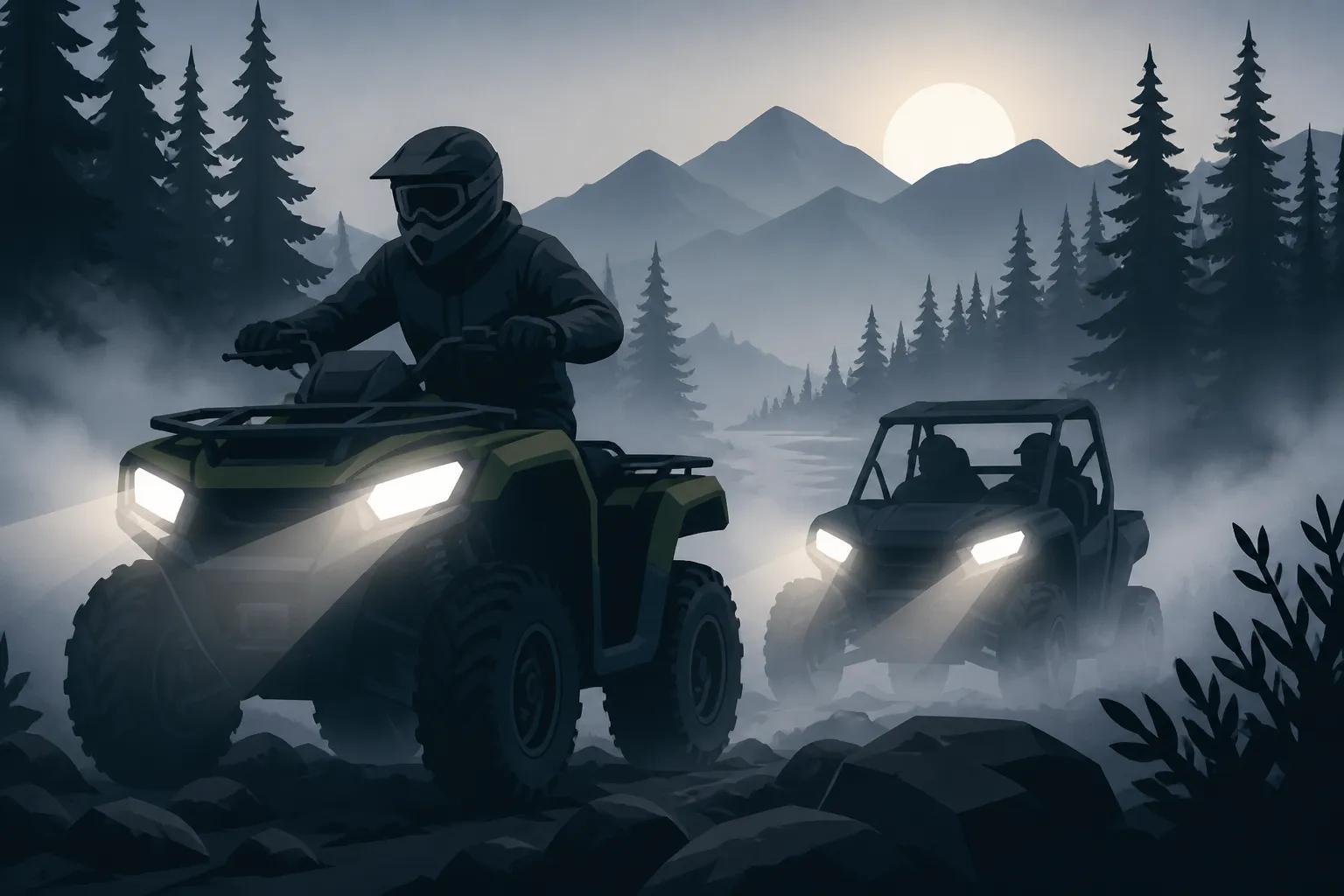
When fog descends, it feels like the world shrinks around you. That wide-open trail you were just enjoying can suddenly feel like a narrow, claustrophobic tunnel. The biggest frustration here is the loss of depth perception. What looked like a gentle dip moments ago might now be a significant drop-off, lurking just beyond the reach of your headlights. Boulders, fallen logs, washouts, and even other trail users can appear out of nowhere, leaving you with mere seconds to react. It's a terrifying feeling, that split-second panic when you realize something is in your path that wasn't there a moment before, purely because the fog swallowed it until you were almost on top of it.
Think about those moments when you're cruising along, enjoying the scenery, and then bam—a sudden patch of dense fog. Your eyes strain, your shoulders tense, and you find yourself slowing down drastically, peering into the grey abyss. It's exhausting, both mentally and physically, trying to discern contours and hazards in what feels like a perpetually moving wall. This isn't just a minor inconvenience; it's a genuine safety hazard that demands your full attention and the right equipment to mitigate.
Being Seen: A Critical Safety Factor
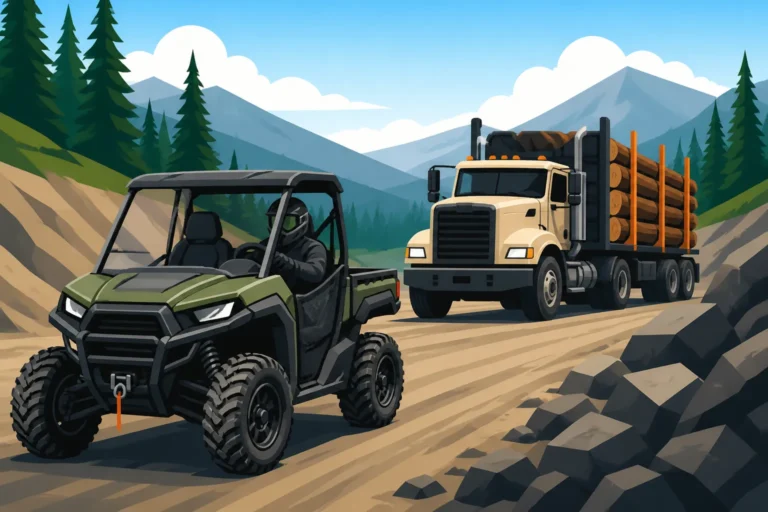
While your own ability to see is paramount, the flip side of the coin is equally critical: other people's ability to see you. On BC's vast network of Crown land, resource roads, and managed trails, you're rarely truly alone. Loggers might be moving heavy equipment, other riders could be coming around a blind corner, hikers might be sharing a multi-use trail, or even wildlife could be on the move. In fog or low light, your machine, which might be a vibrant colour in daylight, becomes a shadowy silhouette, almost invisible until it's too late.
This is a real worry, especially on narrower trails or active resource roads. Imagine the stress of knowing you're on a busy logging road, trying to make good time, but also constantly fearing that a massive industrial truck won't spot your smaller ATV or UTV in the gloom until it's bearing down on you. It's not about arrogance; it's about the sheer physics of light and visibility. Ensuring you stand out, even when the environment conspires to hide you, is a vital part of responsible off-road riding in BC.
Environmental Factors and Trail Conditions
Fog and low light rarely come alone. They're often accompanied by other challenging environmental factors that compound the danger. Fog, by its very nature, means moisture. This moisture settles on everything: the ground, rocks, roots, and your machine. What was a dry, grippy trail can quickly become slick and treacherous, reducing your traction and increasing your braking distances. The combination of poor visibility and reduced grip creates a recipe for disaster, especially on inclines, declines, or off-camber sections.
Consider a situation where you're climbing a rocky ascent. In good conditions, you'd pick your lines, manage your throttle, and power through. But add dense fog and a layer of dampness, and those rocks become slippery, the edges less defined. Your tires might spin, you might lose momentum, and the risk of a rollover or getting stuck escalates dramatically. The challenges aren't just visual; they extend to how your machine interacts with the terrain, making careful assessment of both your surroundings and your speed absolutely essential.
Essential Lighting and Visibility Gear for BC Riders
You can't control the weather, but you can absolutely control how well prepared you are for it. When it comes to fog and low light, having the right gear isn't just a recommendation; it's a non-negotiable part of safe riding. Thinking beyond the basic factory setup can make all the difference between a nerve-wracking crawl and a confidently cautious journey.
Headlights and Taillights: More Than Just the Basics
Your ATV or UTV comes with headlights and taillights from the factory, and they're designed to meet basic safety standards. However, "basic" often falls short when you're battling dense BC fog or navigating winding trails in the pre-dawn hours. The issue with many stock lights is their intensity and beam pattern. They might illuminate a small area directly in front of you, but they often lack the spread or punch to cut through heavy moisture or cast light far enough down a trail to give you adequate reaction time. This is where upgrading becomes incredibly important.
Think about the difference between a dim flashlight and a powerful floodlight. While both produce light, their effectiveness in challenging conditions varies wildly. Aftermarket LED headlights can offer significantly brighter output and more focused, or broader, beam patterns that truly help you see the trail's contours, hidden obstacles, and the edges of the path. Moreover, brighter taillights and brake lights ensure that riders behind you, or anyone approaching from the rear, can spot you sooner, especially if they're coming around a corner or over a rise. When you're considering your setup, remember that [BC Lighting and Seat Belt Requirements] dictate minimum standards, but exceeding those for safety's sake is always a wise choice.
Auxiliary Lighting: Cutting Through the Murk
This is where you really start to gain an advantage against low visibility. Auxiliary lighting, like LED light bars and pod lights, are game-changers for cutting through fog and illuminating the trail's periphery. Unlike your main headlights, these lights can often be aimed independently and offer different beam characteristics. A flood beam can illuminate a wide area immediately around your machine, making obstacles on the sides of the trail more visible, while a spot beam can pierce further ahead, giving you precious extra seconds to react to distant hazards. Many riders swear by a combination, using a smaller light bar on the bumper for flood illumination and a pair of focused pod lights higher up for spotting.
The key with auxiliary lighting is strategic placement and proper aiming. Mounting a light bar high on the roof of a UTV can give you a different perspective, casting shadows that reveal trail undulations, while lower-mounted pod lights can illuminate the immediate foreground more effectively in very dense fog by reducing glare back into your eyes. Brands like SuperATV offer a wide range of robust and waterproof LED light bars and pods designed specifically for off-road vehicles, built to withstand the tough conditions you'll encounter in BC. They can turn a daunting, barely lit path into a manageable, visible corridor, significantly boosting your confidence and safety.
Reflective Gear and High-Visibility Clothing
While powerful lights help you see and be seen by machines with their own lights, what about hikers, horseback riders, or other situations where the light sources aren't direct? This is where high-visibility clothing and reflective gear become absolutely vital. Wearing a brightly coloured jacket, especially in fluorescent yellow, orange, or lime green, can make you stand out dramatically, even in dim conditions. These colours are designed to be easily spotted by the human eye, even when light levels are low.
Beyond the base colour, reflective strips or panels on your jacket, pants, helmet, and even your machine can catch and bounce back any available light, whether it's from another vehicle's headlights, a flashlight, or even ambient light filtering through the fog. Think about the reflective tape used on emergency vehicles or road construction signs – it serves the same purpose for you. Every bit of reflective surface on your body and your machine increases your profile and makes you easier to detect, reducing the chance of an unexpected encounter with someone who didn't see you coming. Don't forget that a [BC Helmet Law Covers Every Rider], and many modern helmets come with reflective decals or are available in high-vis colours.
Communication and Signalling Tools
In low visibility, verbal communication can be difficult, even with riders directly behind you. This is why having reliable communication and signalling tools is so important, especially when riding in groups. Two-way radios are invaluable, allowing you to warn fellow riders about sudden hazards, indicate turns, or confirm your location if someone gets separated. For groups on shorter runs, FRS/GMRS radios are often sufficient, but for longer backcountry trips or on active logging roads, a VHF radio with appropriate licensing can be a literal lifesaver, allowing you to communicate with industrial traffic or emergency services. [BC Resource Road Radio Practice] often involves specific channels and call-out procedures to avoid collisions.
Beyond radios, simple signalling tools have a place. A loud horn or air horn can be used to alert others to your presence around blind corners or in extremely dense fog. Some riders even rig up a flashing amber beacon on their UTV's roof, similar to those seen on utility vehicles, to provide a constant, omni-directional warning. Flags, particularly tall, brightly coloured ones, can also increase your machine's profile, making it easier to spot over bushes or small rises. These simple, often overlooked tools can make a significant difference in preventing incidents when visual cues are scarce.
Safe Riding Practices for Foggy and Low Light Conditions
Having the right gear is only half the battle; knowing how to use it and adapting your riding style is just as crucial. Riding in fog or low light isn't the time for speed records or aggressive manoeuvres. It demands patience, heightened awareness, and a commitment to conservative riding.
Slow Down and Scan Ahead
This might seem like a no-brainer, but it's astonishing how many riders overestimate their visibility or reaction time. The most fundamental rule for riding in fog or low light is to drastically reduce your speed. Give yourself ample time to see, process, and react to whatever might be lurking in the gloom. On a clear day, you might confidently take a corner at a certain speed, but in fog, that same corner could hide a deep rut or an unexpected obstacle. Slowing down means your stopping distance is shorter, and you have more time to react to the unexpected.
Beyond just slowing down, actively scan the trail ahead, not just focusing on the immediate foreground. Your eyes should be constantly sweeping, looking for changes in texture, subtle shifts in colour, or the faint outline of something that shouldn't be there. It's also incredibly useful to listen. When visibility is poor, your other senses become even more important. Can you hear water running, suggesting a creek crossing? Do you hear the rumble of another vehicle or the snap of branches that might indicate wildlife? Sometimes, stopping completely, shutting off your engine, and just listening can give you valuable information about what's ahead that your eyes simply can't provide. This "stop and listen" technique is a lifesaver in dense conditions.
Maintain Safe Distances and Ride in Pairs/Groups
When riding with others in low visibility, spacing becomes critical. The natural instinct might be to stick close to the rider in front of you so you don't lose them, but this is incredibly dangerous. If the lead rider has to brake suddenly for an unseen obstacle, you need enough space to react without rear-ending them. A good rule of thumb is to increase your normal following distance significantly, perhaps even doubling or tripling it, depending on the density of the fog and your speed. Communicate constantly, either verbally or with hand signals (if visible) or radios, about hazards encountered.
Riding alone in dense fog or darkness is inherently riskier. If you encounter an issue—a breakdown, a fall, or an injury—it could be hours before anyone finds you. Riding with a buddy or in a group provides an immediate support system. You can take turns leading, watch each other's backs, and offer assistance if something goes wrong. If you must ride alone, ensure someone knows your exact route and expected return time. Safety in numbers is a real advantage when visibility is compromised.
Navigating Resource Roads and Industrial Areas
British Columbia's backcountry is crisscrossed with active Forest Service Roads (FSRs) and resource roads, which are often shared with heavy industrial traffic. These roads present unique challenges even in perfect conditions, but in fog or low light, they become exponentially more dangerous. Logging trucks, graders, and other industrial vehicles are large, heavy, and often travelling at speed, and their drivers may not expect smaller recreational vehicles, especially when visibility is poor. Yielding the right-of-way is not just polite; it's a matter of survival.
Before entering any resource road, it's wise to research if there's active hauling and what radio channels are used for call-outs. Many industrial users will call out their location by kilometre marker and direction of travel. In fog, this practice becomes absolutely vital. If you encounter a logging truck, pull over completely to the widest, safest part of the road and let them pass. Their visibility might be even more compromised than yours. Familiarize yourself with [BC Forest Service Road Requirements] and always assume there's something big coming around the next corner. Your life literally depends on it.
Pre-Ride Checks and Planning
Preparation is your best friend when facing unpredictable BC weather. Before you even leave home, check the local weather forecast for your riding area, paying close attention to fog warnings, temperature drops, and precipitation. If heavy fog is predicted or already present, seriously consider postponing your ride or choosing an area with known good visibility. If you decide to go, ensure your machine is in top shape, especially your lighting system. Check all bulbs, ensure lenses are clean and free of mud or grime, and verify your battery is fully charged.
Carry essential safety gear, including a comprehensive first-aid kit, emergency shelter, extra layers of clothing, food, water, and navigation tools. A GPS device with pre-loaded maps is invaluable when landmarks disappear in the fog. Inform someone reliable of your precise route, expected departure, and return times. Make sure your cell phone is fully charged, but also consider a satellite messenger or personal locator beacon (PLB) for areas with no cell service, which is common in BC's backcountry. Regular [BC Equipment Checks by Conservation Officers] often include ensuring you have appropriate safety gear.
Avoiding Risky Areas and Knowing When to Turn Back
Sometimes, the safest decision is to turn around. When fog becomes too dense, or the light fades to the point where you're struggling to make out the trail, pressing on can be foolish. Pushing through extremely dense fog can lead to disorientation, falls, or collisions. Be especially cautious of areas known for steep descents, narrow ridges, complex rock gardens, or deep water crossings. These are challenging enough in good visibility; in fog, they become high-risk zones.
Trust your gut feeling. If you're feeling anxious, disoriented, or simply uncomfortable with the conditions, it's a clear signal to re-evaluate. It's far better to turn back, find a safe spot to wait for conditions to improve, or cut your ride short than to push your luck and end up in a dangerous situation. There's no shame in admitting that the conditions are beyond your comfort or skill level. The mountains will still be there to ride another day.
Legal Considerations and Local Bylaws
Beyond the practical safety measures, it's also important to understand the legal framework governing ATV and UTV use in BC, especially as it relates to visibility and equipment. Being compliant isn't just about avoiding a ticket; it often goes hand-in-hand with being prepared for varied conditions.
BC's Lighting Rules for ORVs
The Off-Road Vehicle Act in British Columbia has specific requirements for lighting on ATVs and UTVs, particularly when operating during certain times or in low visibility. Generally, if you're riding between 30 minutes before sunset and 30 minutes after sunrise, or at any other time when visibility is limited to less than 150 metres, your machine must be equipped with at least one headlight (white or amber) and at least one taillight (red). These lights must be visible from specific distances.
It's not just about having the lights; they must be operational and properly maintained. A dirty, cracked, or misaligned light won't meet the standard and certainly won't help you in a fog bank. While the regulations set minimums, as we discussed, often these minimums are insufficient for truly challenging BC backcountry conditions. It’s always a good idea to exceed the minimums for your own safety and the safety of others. For a full breakdown, refer to [BC Lighting Rules in Low Visibility].
Spark Arrestors and Fire Bans in Low Visibility
While not directly related to fog or low light, it's crucial to always remember other critical BC regulations, regardless of visibility. One such regulation involves spark arrestors. All off-road vehicles operating on Crown land in BC must be equipped with a spark arrestor. This is a device designed to prevent hot carbon particles from escaping your exhaust and potentially igniting a wildfire. Even if fog is present and conditions seem damp, the fire risk is still there, especially during drier periods before or after a rain.
Compliance with spark arrestor requirements is strictly enforced, and fines for non-compliance are substantial. Furthermore, always be aware of active fire bans, even if it feels cool and damp. A fire ban means no off-road vehicle use in certain areas, regardless of current local conditions. These rules are in place to protect BC's precious forests and communities, and ignorance is no excuse. Always check the BC Wildfire Service website or local postings for current restrictions before heading out. Information about [BC Spark Arrestor Rules and Fines] and [BC Fire Centre Riding Bans] is readily available and critical to know.
Where Specific Rules Apply: Crown Land vs. Managed Sites
It's important to remember that while the provincial Off-Road Vehicle Act sets the baseline for most riding in BC, specific managed riding sites or parks may have their own additional rules or recommendations regarding lighting, visibility, and operation hours. For example, some organized recreation sites might have quieter hours, specific speed limits, or even designated one-way trails, which could impact your approach to riding in low light or fog.
Always check the rules and signage for any specific area you plan to ride, especially if it's a managed trail system or a provincial park (though many provincial parks prohibit motorized vehicles entirely). While general [BC Rules for Riding Crown Land] apply broadly, understanding local nuances can prevent misunderstandings or fines.
| Feature | Stock ATV/UTV Headlights | Aftermarket LED Light Bar (e.g., SuperATV) |
|---|---|---|
| Output | Moderate to low lumens | High to very high lumens |
| Beam Pattern | Often focused, limited spread | Wide flood, narrow spot, or combo options |
| Glare in Fog | Moderate, can reflect back | Can be high if not properly aimed, but options like amber lights reduce this |
| Durability | Designed for general use | Often built tougher for off-road demands |
| Power Draw | Lower | Higher, may require wiring upgrades |
| Visibility | Adequate in clear conditions | Superior in low light/fog for seeing and being seen |
| Cost | Included with machine | Variable, from budget to premium |
Conclusion
Riding your ATV or UTV in British Columbia is an unparalleled adventure, but the beauty of our diverse landscapes comes with the responsibility to be prepared for anything, especially challenging conditions like fog and low light. From ensuring your machine is equipped with the best possible lighting and visibility gear—even considering robust aftermarket options like those from SuperATV—to adopting a cautious and disciplined riding style, every step you take contributes to a safer, more enjoyable experience. Remember to slow down, maintain safe distances, communicate with your group, and always be aware of your surroundings, particularly on busy resource roads. By respecting the conditions and preparing thoroughly, you can navigate the murkiest of trails with confidence, ensuring you get home safely to tell the tale.
Disclaimer
This article is for general informational purposes only and does not constitute professional advice. Laws, prices and regulations vary by location and change over time. Consult a qualified professional for guidance on your specific situation.