BC ATV Helmet Law Explained
It can feel like a real head-scratcher trying to figure out all the rules for riding ATVs and UTVs in British Columbia, especially when it comes to something as vital as helmet use. You just want to get out on the trails and enjoy our incredible backcountry, but you're constantly worried about whether you're following the letter of the law and keeping yourself and your passengers safe. This guide is here to untangle all the complexities of BC's ATV helmet laws, making sure you understand exactly when a helmet is mandatory, when it's optional, and what kind of helmet actually meets the provincial standards.
Why Helmets Are Mandatory on Ride-Astride Machines in BC
Let's face it, when you picture someone on an ATV or a dirt bike, a helmet is almost always part of that mental image. There's a very good reason for that, and it's rooted deeply in the physics and realities of riding these types of off-road vehicles. BC's regulations are designed to protect you from the moment you hit the throttle.
The Core Principle: Protection on Open Machines
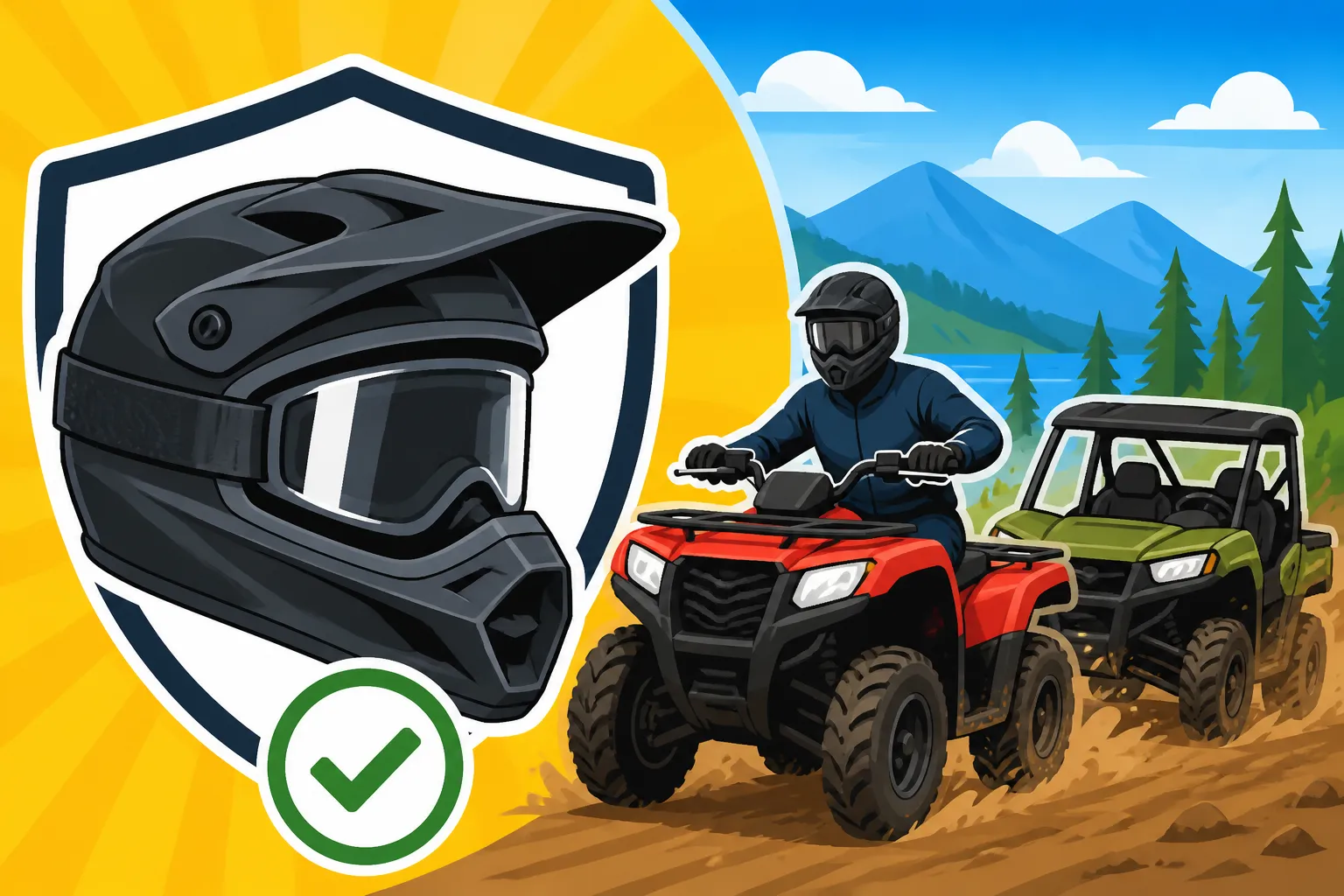
The fundamental reason helmets are mandatory for what we call "ride-astride" machines like ATVs (quads) and dirt bikes is straightforward: there's absolutely nothing else between you and the ground, or a tree, or another machine, if things go sideways. Unlike a car, you don't have a metal cage, airbags, or seatbelts offering protection. When you ride an ATV, you are fully exposed to the elements and, more importantly, to impact forces in the event of an accident.
Think about the typical riding experience: you're navigating uneven terrain, often at speed, making sharp turns, climbing hills, and sometimes even dealing with unexpected obstacles like rocks, roots, or sudden dips. A slight miscalculation, a momentary lapse in concentration, or an unforeseen trail hazard can easily lead to being thrown from the machine. In such scenarios, your head is incredibly vulnerable. The provincial government, through the [What the Off-Road Vehicle Act Covers in BC], recognizes this inherent risk and has legislated helmet use as a primary safety measure. It's not about stifling your fun; it's about minimizing the risk of severe, life-altering head injuries.
The impact of even a low-speed fall can be significant. We're talking about potential concussions, skull fractures, and brain trauma. Riders of all skill levels, from seasoned veterans to absolute beginners, are susceptible to these types of incidents. The law essentially serves as a blanket rule to ensure that every rider on an exposed, ride-astride machine has that critical layer of protection. This is why you'll find that whether you're ripping through a mud bog or just cruising a gentle forest trail, if you're on a quad or dirt bike, that helmet needs to be securely fastened.
What Constitutes a "Ride-Astride" Machine?
This is where some confusion can sometimes creep in, but it's actually quite simple once you break it down. A "ride-astride" machine, for the purposes of BC's helmet law, refers to any off-road vehicle where the operator (and any passenger) straddles the seat. The most common examples, of course, are all-terrain vehicles (ATVs), commonly known as quads, and dirt bikes.
When you sit on an ATV, your legs are typically on either side of the machine, similar to how you would sit on a horse or a conventional motorcycle. The same applies to dirt bikes. This riding position, while offering excellent control and maneuverability in off-road conditions, leaves the rider entirely open. There's no roll cage, no doors, no windshield that forms part of a protective cabin. You are truly "out in the open." The law applies universally to these machine types, regardless of their engine size, intended use (recreational or work), or where you are riding, provided it's subject to the Off-Road Vehicle Act – which primarily means Crown land, including [BC Forest Service Road Requirements].
It’s important to distinguish these from side-by-sides (UTVs), which we'll get to in the next section. For quads and dirt bikes, the rule is crystal clear: if you’re riding it, you’re wearing a helmet. This includes the driver and any legally allowed passenger. Yes, even if your machine is only going to be used on your own private property, the spirit of the law, and good common sense, dictates helmet use. However, the mandatory aspect of the law primarily kicks in when you venture onto public or Crown land. But seriously, for your own sake, just wear it.
When Helmets Aren't Required: The Side-by-Side Exemption
Now, here's where the nuance comes in, and it's often the source of questions from riders. While helmets are a must for quads and dirt bikes, the rules change for side-by-sides (SxS) or utility terrain vehicles (UTVs).
Enclosed Cabs and Seatbelts: The Key Difference
The primary reason side-by-sides often don't require helmets in BC is due to their fundamental design differences compared to ride-astride machines. Side-by-sides are built with a more protective structure, mimicking, in a very basic sense, the safety features of a car. They typically feature a roll-over protective structure (ROPS), often referred to as a roll cage, and come equipped with seatbelts, much like a car or truck.
When you're strapped into a seatbelt within a UTV that has a robust ROPS, the vehicle itself offers a significant degree of protection in the event of a roll-over or impact. The ROPS is engineered to prevent the vehicle from crushing the occupants, while the seatbelt keeps you securely within that protective envelope. This combination provides a level of safety that simply isn't present on an open ATV or dirt bike. This is why the legislation, specifically outlined in sections like [BC Seat Belts Instead of Helmets], acknowledges that if you are wearing the provided seatbelt in a side-by-side that has a ROPS, a helmet is often not legally required. It's a key distinction based on the engineering of the machine itself.
However, a crucial point here is that all the safety features must be used correctly. That means you and your passengers must be properly buckled into the seatbelts. If you're riding a side-by-side but neglecting to use the seatbelts, you're essentially negating the primary safety mechanism that allows for the helmet exemption. In such a scenario, you're putting yourself and others at significant risk, and potentially running afoul of other safety regulations, even if there isn't a direct "no helmet" fine for a UTV. Always ensure that everyone in your side-by-side is properly restrained before moving.
Manufacturer Guidelines and Passenger Safety
While the law provides for the helmet exemption in side-by-sides when seatbelts are worn, it's always wise to consider the manufacturer's specific guidelines for your particular UTV model. Manufacturers often provide detailed recommendations regarding passenger weight, age, and any additional safety gear they advise, even if not strictly mandated by law. These recommendations are based on extensive testing and are designed to ensure the safest possible operation of their machines.
Furthermore, consider the terrain you'll be tackling. While a helmet might not be legally required when cruising a smooth gravel road in your side-by-side, if you're venturing into extremely rocky, steep, or technical terrain, wearing a helmet (along with other protective gear like goggles and gloves) is simply a smart move. An unexpected jolt, a quick stop, or an impact that jostles you inside the cabin could still lead to a head bump against the ROPS or another part of the vehicle. Many seasoned UTV enthusiasts, especially those pushing the limits of their machines, will choose to wear helmets regardless of the legal requirement, understanding that extra protection is never a bad thing. For those who want to enhance the safety of their UTVs, looking into aftermarket accessories like reinforced cages or specialized harnesses from reputable brands like SuperATV can provide an even greater sense of security for passengers and drivers alike, going above and beyond the minimum legal requirements.
When it comes to passengers, especially children, always refer to your UTV's manual for specific age and size restrictions. Just because the vehicle has four seats doesn't mean it's appropriate for all ages in all positions. [BC Rules for a Child Passenger] are strict for ride-astride machines, and while UTVs offer more protection, good judgment is still paramount.
Understanding BC's Specific Helmet Standards
It's not enough to just put any old helmet on your head and assume you're good to go. BC, like most jurisdictions, has specific standards that helmets must meet to be considered legally compliant and, more importantly, genuinely protective. This is all about ensuring that the gear you're relying on actually does its job when it counts.
What Makes a Helmet "Legal" in BC?
In British Columbia, the law dictates that any helmet worn while operating a ride-astride off-road vehicle must meet recognized safety standards. This isn't just a suggestion; it's a legal requirement designed to ensure your head protection is up to snuff. The common certifications you'll see stamped or stickered on the back of a legal helmet include:
- DOT (Department of Transportation): This is a standard widely used in the United States and is recognized in BC. It signifies that the helmet meets minimum performance standards for impact absorption.
- Snell: Often considered a higher standard than DOT, Snell ratings (like Snell M2020) are developed by the Snell Memorial Foundation, a non-profit organization dedicated to helmet safety. Helmets meeting Snell standards undergo more rigorous testing.
- ECE (Economic Commission for Europe): This is a European standard (ECE 22.05 or newer ECE 22.06) that is also recognized in Canada. It's known for its comprehensive testing protocols.
- CSA (Canadian Standards Association): While less common for powersports helmets than for, say, industrial hard hats, any CSA certified helmet designed for motor vehicle use would also typically be accepted.
When you're buying a helmet, always check for these certification marks. They are usually found on a sticker on the back of the helmet or inside the lining. If a helmet doesn't have one of these marks, it likely doesn't meet the legal requirements in BC, which can leave you exposed to fines and, more critically, to inadequate protection. Think of it like this: if you're going to invest in protective gear, make sure it's actually protective and legally sound. For more details on this, you can look up [BC Helmet Standards in the Regulation].
It's tempting to grab a cheap helmet online that looks cool, but if it lacks the proper certification, it's essentially a glorified hat in the eyes of the law and, more importantly, in the face of an impact. Don't compromise on this. A certified helmet has been rigorously tested to absorb and dissipate impact energy, crucial for protecting your brain.
The Importance of a Proper Fit and Condition
Even the most expensive, top-tier certified helmet is useless if it doesn't fit correctly or if it's compromised. A helmet's ability to protect you is directly linked to how well it fits your head and its overall condition.
Fit:
A proper fitting helmet should be snug, but not painfully tight. It shouldn't shift around on your head if you shake your head from side to side or nod up and down. If it wiggles freely, it’s too big and won't stay in place during a fall. If it causes pressure points that are intolerable, it's too small. When you try one on, it should feel like it's hugging your head evenly, and your cheeks should feel a gentle, firm pressure. You should not be able to insert your fingers between your forehead and the helmet. Many people buy helmets that are too large, mistakenly thinking that more room is more comfortable, but this actually reduces its effectiveness. Make sure to try on several sizes and styles to find the one that fits your unique head shape best. Different brands and models have different internal shapes, so don't assume your size in one brand is your size in another.
Condition:
Helmets are designed for a single major impact. If your helmet has been involved in a crash, even if it looks fine on the outside, its internal structure (the EPS foam liner) may have compressed and lost its ability to absorb energy. In such cases, it must be replaced. Don't try to save a few bucks by continuing to use a damaged helmet; your brain isn't worth the risk. Over time, UV exposure, sweat, and general wear and tear can also degrade a helmet's materials. Manufacturers generally recommend replacing helmets every 5-7 years, even if they haven't been in an accident, due to this material degradation. Always inspect your helmet before each ride for any cracks, loose parts, or signs of wear. Remember, [BC Helmet Law Covers Every Rider] of a ride-astride machine, and that includes ensuring their helmet is in good, functional condition.
Consequences of Non-Compliance and Best Practices
Ignoring BC's helmet laws isn't just a minor infraction; it carries real consequences, both legal and, more critically, personal. Understanding these ramifications can help underscore why compliance is so important.
Fines and Safety Risks of Riding Without a Helmet
Let's talk about the legal side first. If you're caught riding a quad or dirt bike on Crown land in British Columbia without a helmet that meets the prescribed standards, you're looking at a pretty hefty fine. While specific dollar amounts can change, these tickets are designed to be a significant deterrent. It's not just a slap on the wrist. Enforcement officers, whether RCMP, conservation officers, or other authorized personnel, have the authority to issue these tickets. This is part of a broader push to ensure safety on our public lands and trails.
Beyond the immediate financial penalty, there's the much more severe personal cost. Riding without a helmet dramatically increases your risk of severe injury or fatality in an accident. As mentioned earlier, there's no protective cage on a ride-astride machine. Your head is completely exposed. In a rollover, a fall, or an impact with an object, your skull is incredibly vulnerable. Common injuries from unhelmeted ATV accidents include:
- Concussions: Even minor impacts can cause concussions, leading to symptoms like headaches, dizziness, confusion, and long-term cognitive issues.
- Skull Fractures: Direct impact can fracture the skull, potentially leading to brain injury, bleeding, and infection.
- Traumatic Brain Injury (TBI): This is the most serious risk. TBIs can result in permanent physical, cognitive, and emotional impairments, dramatically altering your life and the lives of your loved ones.
It's not a matter of "if" but "when" an accident might occur in off-road riding. Even experienced riders can make mistakes or encounter unforeseen circumstances. The helmet is your last line of defense, a critical piece of equipment that literally saves lives and prevents devastating injuries. The fine is temporary; a severe brain injury is often permanent. When you ride unregistered or without proper safety gear, you're also potentially looking at [BC Fines for Careless Operation], which can add to your troubles.
Going Beyond the Law: Why a Helmet is Always a Good Idea
While the law clearly delineates when a helmet is mandatory (for ride-astride machines) and when it's not (for side-by-sides with seatbelts and ROPS), adopting a "helmet-optional-but-recommended" mindset for all off-road vehicles is a truly best practice.
Think about the dynamics of riding a side-by-side. While you have the protection of a roll cage and seatbelts, you're still in a high-speed, off-road environment. Dust, flying debris, branches, and sudden jolts are all common. A helmet, even in a UTV, offers a host of benefits:
- Impact Protection: Even with a roll cage, minor impacts or sharp jostling can cause your head to hit the interior of the vehicle. A helmet provides cushioning. For riders tackling extreme trails, this is a no-brainer.
- Eye Protection: Most helmets come with a visor or are designed to be worn with goggles. This is invaluable for keeping dust, mud, insects, and branches out of your eyes, ensuring clear vision and preventing distracting injuries. If you're on a multi-day trip, maintaining good vision is key.
- Hearing Protection: Off-road vehicles can be noisy. A helmet provides a degree of sound dampening, protecting your hearing over long rides and reducing fatigue.
- Weather Protection: Helmets shield you from wind, rain, and cold temperatures, making your ride more comfortable and enjoyable, especially during colder months or at higher elevations.
- Dust Filtration: Combined with a good set of goggles or a full-face visor, a helmet helps keep inhaled dust and grit to a minimum, particularly important on dry, dusty trails. Companies like SuperATV offer a range of windshields and dust-blocking accessories that, when combined with a helmet, can dramatically improve comfort and safety in dusty conditions.
Ultimately, wearing a helmet, regardless of the legal requirement for your specific machine type, is a proactive choice for your safety and comfort. It speaks to a commitment to responsible riding and a clear understanding that while off-roading is incredibly fun, it also carries inherent risks that should be managed with the best possible protective gear. Whether you're a casual weekend rider or an aggressive trail conqueror, making a helmet part of your essential riding kit for every adventure is a decision you'll never regret.
Disclaimer
This article is for general informational purposes only and does not constitute professional advice. Laws, prices and regulations vary by location and change over time. Consult a qualified professional for guidance on your specific situation.