BC Riders Asking a Town for Access
It can feel incredibly frustrating when you're out enjoying British Columbia's vast wilderness on your ATV or side-by-side, only to hit an invisible wall when it comes to accessing the amenities and services in nearby towns. Many riders experience this dilemma: you want to grab a coffee, fuel up, or even just connect one great trail system to another, but local bylaws often treat your off-road machine like an alien intruder. This guide is all about empowering BC riders to understand these challenges and effectively approach their local municipalities to advocate for sensible, safe, and mutually beneficial access.
The Roadblock to Town Access: Why It's So Hard for ORV Riders in BC
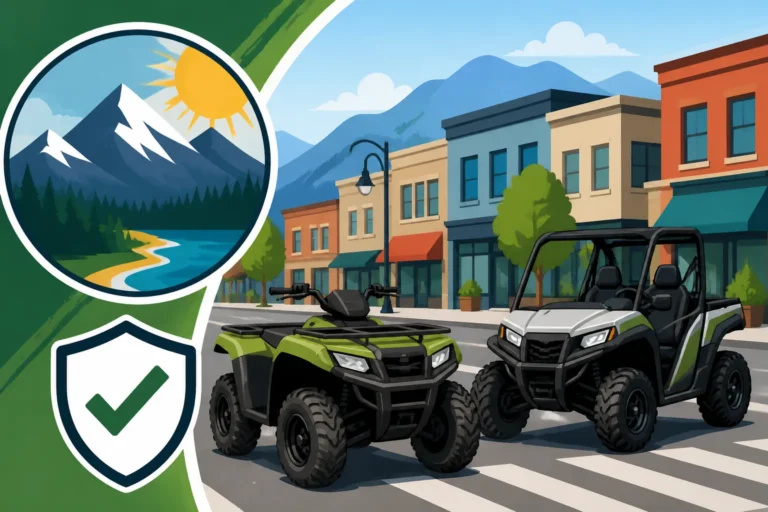
Riding an off-road vehicle (ORV) in British Columbia offers unparalleled freedom, allowing us to explore incredible landscapes that many never see. However, that freedom often feels constrained when the trails meet the pavement, especially within town limits. It’s a common frustration for many riders: you can legally traverse hundreds of kilometres of backcountry, but a short stretch of municipal road to get to a gas station or diner suddenly becomes a legal no-go zone. This isn't just an oversight; it's a complex issue rooted in varying legal jurisdictions, public perception, and a general misunderstanding of modern ORVs.
The Legal Maze: Highways vs. Crown Land vs. Municipal Roads
One of the biggest hurdles is simply understanding which rules apply where. British Columbia's Off-Road Vehicle Act does an excellent job of outlining the rules for ORV use on Crown land, which is where most of us spend our riding time. It clearly defines what an ORV is, what equipment it needs, and how it must be registered. You'll hear us talk a lot about how [BC Crown Land Triggers the Registration Rule] for your machine. But here's the kicker: that provincial act largely stops at the edge of dedicated highways and municipal roads.
The Motor Vehicle Act, which governs cars, trucks, and motorcycles, applies to public roads. Your ORV, by definition, isn't designed or equipped to meet those standards for general highway use. Then, layered on top of that, are municipal bylaws. These are the specific rules and regulations that individual towns, cities, and districts create for themselves. While the province sets the overarching framework for ORVs, local governments have significant autonomy to regulate what happens on their streets and within their boundaries. This creates a patchwork of rules, where one town might have a different stance than its neighbour, leading to confusion and frustration for riders just trying to navigate from point A to point B.
Public Perception and the "Noise and Nuisance" Factor
Let's be honest, for many non-riders, the image of an ATV or side-by-side is often tied to noise, speed, and potential disruption. This public perception, unfortunately, plays a huge role in why municipal councils are often hesitant to grant ORV access. Residents worry about increased noise disturbing their peace and quiet, especially if machines are perceived as having loud exhausts or being ridden irresponsibly. Concerns about safety also arise, with people picturing fast-moving vehicles sharing residential streets with children, cyclists, and pedestrians.
Environmental impact, even if unfounded with responsible riding, can also be a talking point. People might associate ORVs with mud-slinging and trail destruction, even when riders are diligently sticking to designated paths. These perceptions, whether fair or not, become powerful arguments against ORV access in council chambers. It's vital for riders to acknowledge these concerns and be prepared to demonstrate that modern ORVs, operated responsibly and within designated parameters, are far from the disruptive menace some imagine. Many aftermarket parts, like those offered by companies such as SuperATV, are designed to meet or exceed certain noise or environmental standards, which can be part of the solution when addressing these concerns. [BC Sound Limits of 96 Decibels] are often a point of discussion at managed riding sites, and this concern extends to urban areas.
The "Street Legal" Myth: No Easy Pavement Pass for Your Quad
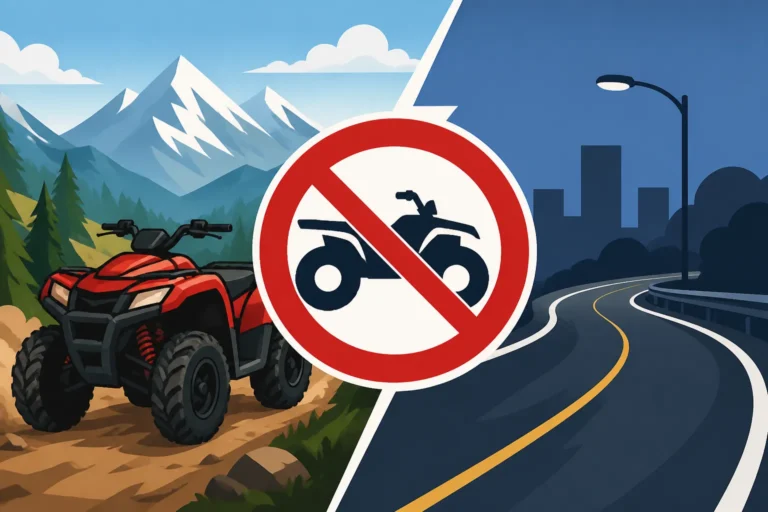
One of the most persistent misunderstandings is the idea that you can simply "make" your ATV or side-by-side "street legal" in BC. The truth is, [BC Has No Street-Legal Path for an ATV] for general, everyday use on public roads. Unlike some other jurisdictions, British Columbia does not have a straightforward process to convert an off-road vehicle into a highway-legal one. This is a significant point of frustration for many riders who feel their machines, especially modern side-by-sides, are perfectly capable of safely navigating local streets for short distances.
The equipment requirements for highway vehicles (headlights, tail lights, turn signals, mirrors, horn, tires, safety glass, etc.) are extensive and often fundamentally different from what's on an ORV. While you can add some of these accessories to your machine, doing so doesn't automatically reclassify it or make it legal for road use. This lack of a provincial "street legal" pathway means that any municipal access granted is almost always through a special bylaw or permit system, rather than your machine being re-registered as a highway vehicle. This distinction is crucial when you're preparing to speak with your local council, as it frames the discussion around controlled access rather than a wholesale redefinition of your vehicle.
Understanding Your Local Government's Power Over ORV Use
When you're trying to gain access for your ATV or side-by-side into a BC town, it's absolutely crucial to understand the rules and regulations that govern that specific municipality. You can't just assume provincial ORV laws automatically extend into city limits. Often, it's the local council that holds the real power to open or close those doors.
Municipal Bylaws: The True Gatekeepers of Town Riding
This is where the rubber meets the road, quite literally. While the provincial Off-Road Vehicle Act lays down the groundwork for riding on Crown land, it generally doesn't dictate what happens on local streets. That power typically falls to individual municipalities, which means every town or city can (and often does) have its own specific bylaws regarding ORV use. These bylaws can be incredibly varied, ranging from outright bans on all ORV traffic to specific designated routes, limited hours of operation, or even special permit systems for certain purposes.
For example, a town might have a bylaw that simply states, "No off-road vehicles on municipal roads," full stop. Another might allow ORVs on certain low-traffic side streets to access trails, but prohibit them on main thoroughfares. Understanding these existing bylaws is your very first step. You need to know what you're up against and what kind of changes or exemptions you're proposing. Ignorance of local bylaws won't just hinder your advocacy efforts; it could also lead to [BC Fines for Careless Operation] if you inadvertently ride where you're not allowed. Always remember that [BC Municipal Authority Over ORV Roads] gives them the right to create these specific local rules.
Limited Exemptions: The Role of Police Operation Permits
You might have heard whispers about "operation permits" and wondered if this is your ticket to town access. It's important to clarify what these are and their limitations. Under the Motor Vehicle Act, local police detachments do have the authority to issue an "operation permit." These permits are typically granted for very specific, temporary, and controlled circumstances – for example, a parade, a special event, or perhaps to move a piece of oversized farm equipment a short distance on a highway. [BC Operation Permit Application Steps] exist, but they are not designed for general recreational ORV access.
Think of it this way: a police operation permit isn't a long-term solution for recreational riders to connect trails or drive to a local store. It's a discretionary tool for law enforcement to allow a machine that wouldn't normally be on a highway to be there for a very specific, limited purpose. It's not a means to bypass municipal bylaws or the fundamental lack of a "street legal" designation for ORVs. While you might consider it for a one-off organized event, it's not the answer for everyday access or for advocating for broad changes to municipal policy. Your focus should remain on engaging directly with municipal council members for systemic change.
Building a Winning Argument: What to Present to Your Town Council
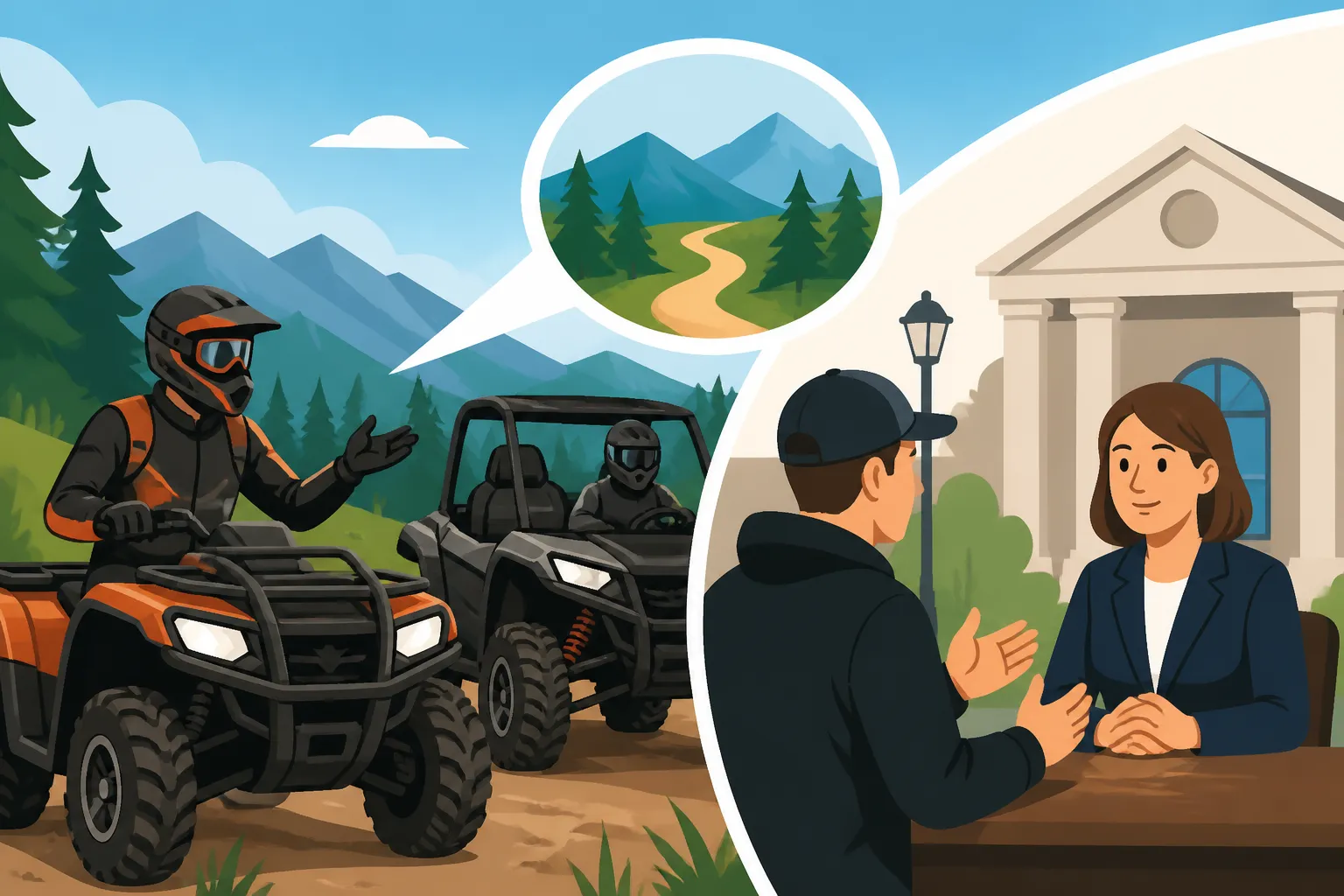
When you decide to approach your local town council about ORV access, you're essentially making a business case. It's not enough to say, "We want to ride here because it's fun." You need to articulate why allowing ORV access is beneficial for the community, safe for everyone, and aligns with the town's broader goals. This requires shifting the conversation from a perceived problem to a genuine opportunity.
Highlighting Economic Benefits: Fueling Local Businesses
One of the most powerful arguments you can make is the economic one. ORV riders are tourists and consumers, and they spend money! When trails are connected to towns, riders have a reason to stop, refuel their machines, buy snacks and drinks, grab a meal at a local restaurant, perhaps even stay overnight in a local motel or campsite. Think about the direct injection of cash into the local economy from gas stations, grocery stores, hardware shops (for those unexpected repairs!), and eateries.
Many communities across North America have seen significant boosts to their economies by embracing ORV tourism. Presenting case studies from other towns that have successfully implemented ORV access and reaped economic rewards can be very compelling. Frame it not as a demand, but as a partnership that can help local businesses thrive, especially in smaller, rural communities that might be looking for new revenue streams. Emphasize that ORV clubs, such as those that are part of [BC ATV Clubs Worth Joining], often organize events and rides that specifically aim to support local businesses.
Prioritizing Safety and Responsibility: Training, Gear, and Etiquette
Addressing safety concerns head-on is non-negotiable. Many residents and council members will immediately worry about accidents, reckless driving, and shared road use. Your presentation must clearly demonstrate that the ORV community is committed to safety, education, and responsible operation.
Highlight initiatives like rider training courses, promoting proper safety gear (like helmets, which are crucial and covered by [BC ATV Helmet Law Explained]), and adhering to strict speed limits and road rules within town boundaries. You can even propose a code of conduct for riders accessing town routes, emphasizing courtesy, respect for other road users, and quiet operation. Show that riders understand the importance of avoiding situations that could lead to [BC Fines for Careless Operation]. If possible, bring testimonials from experienced riders or club leaders who can speak to the high standards of safety within the riding community. Sometimes, having an operator's permit or proof of a rider safety course can also bolster your case, even if it's not a legal requirement for adults.
Integrating with Existing Trail Networks: Connectivity is Key
Often, the desire for town access isn't about joyriding through residential streets, but about practical connectivity. Imagine a situation where two fantastic trail systems are separated by just a kilometre or two of municipal road, or where the most convenient staging area for a major trail network is right on the edge of town, requiring riders to trailer their machines right past the entrance. By allowing limited, designated ORV access, towns can essentially become vital hubs, linking these trail systems and making the overall riding experience much more seamless and attractive.
This connectivity can turn a good riding area into a great one, attracting more visitors who might have otherwise gone elsewhere. It means riders can spend more time on the trails and less time hauling their machines around. Explain how these designated routes would function as connectors, not as playgrounds, and how they would enhance the functionality and appeal of the region's outdoor recreation offerings.
Proactive Problem-Solving: Addressing Concerns Before They're Raised
A strong presentation doesn't just make a case for access; it anticipates and addresses potential objections. Think about the concerns town council and residents are likely to have, and come prepared with solutions.
- Noise: Can you propose specific routes away from residential areas? What about encouraging riders to use quieter exhausts or limiting access hours? Many riders, especially those with machines like those from SuperATV, often upgrade their vehicles with an eye toward performance and safety, and sometimes this can include components that reduce overall operational noise, helping to meet any proposed sound limits.
- Safety: Propose slow speed limits (e.g., 20 km/h or less on designated routes), clear signage, and educational campaigns for both riders and residents.
- Environmental Impact: Reassure the council that riders will stick to paved or clearly designated routes within town, avoiding sensitive areas.
- Enforcement: Discuss how local clubs can help educate members, promote compliance, and even report irresponsible riders. A well-organized club can be a powerful partner for local law enforcement.
Coming to the table with solutions, rather than just problems, shows respect for the community and a genuine desire to be a responsible part of it. This proactive approach helps to de-escalate potential conflicts and builds trust.
Navigating the Municipal Process: From Idea to Bylaw
Getting your local town council to consider, let alone approve, ORV access is rarely a quick win. It's a marathon, not a sprint, and requires strategic planning, persistence, and a healthy dose of community engagement. Think of it as a multi-stage process where each step builds on the last.
Organizing Your Efforts: The Strength of a Collective Voice
One rider asking for access might get a sympathetic ear, but a well-organized group of riders will be taken much more seriously. This is where local ATV clubs and associations become invaluable. Forming a united front allows you to pool resources, knowledge, and manpower. Clubs can formally represent the riding community, collect data, organize events, and speak with a single, coherent voice. [BC ATV Clubs Worth Joining] are often already established and have experience advocating for rider rights and responsible land use.
A club lends credibility and demonstrates that this isn't just a fringe request, but a need from a significant portion of the population. They can organize petitions, gather support letters, and mobilize members to attend council meetings. If there isn't an active club in your area, consider starting one or reaching out to a regional or provincial association for guidance on how to organize and represent your local riding community effectively. A collective voice is much harder for a council to ignore.
Research and Preparation: Know the Rules and Your Neighbours
Before you even think about stepping into a council meeting, you need to do your homework. Start by thoroughly researching your municipality's existing bylaws regarding ORVs. Are there any current prohibitions? Are there any specific clauses that might offer a loophole or a starting point? You need to understand the legal landscape you're operating within. Look at [BC Rules for Riding in a Town] for general context, but remember, local bylaws will be the most specific.
Beyond the legalities, try to gauge the general sentiment of the community. Are there known anti-ORV groups? What are the common concerns residents express about noise, safety, or environmental impact? The more you understand these potential objections, the better prepared you'll be to address them proactively in your proposal. Identifying and connecting with local businesses that might benefit from ORV tourism can also be a powerful step, as their support can add significant weight to your argument.
Engaging Council and Community: Respectful Dialogue is Paramount
When it comes time to present your case, whether to individual council members, at a committee meeting, or a full public hearing, respect and professionalism are key. Avoid confrontational language or accusations. Instead, focus on clear, concise, and fact-based arguments, backed by your research and proposed solutions. Have a well-prepared presentation, but be ready to answer questions directly and honestly.
Public hearings can be intimidating, but they are crucial opportunities for community input. Be prepared to listen to concerns from residents, even if you disagree with them. Frame your responses respectfully, acknowledging their worries before presenting your solutions. Remember, you're trying to build bridges, not burn them. If a council member raises a concern about safety, reference your proposed speed limits or rider education initiatives. If they bring up environmental damage, reiterate your commitment to designated routes and responsible riding practices. You can even draw parallels to how other vehicle types, like those on [BC Forest Service Road Rules for ORVs], coexist with other users through specific rules and etiquette.
Phased Implementation: Starting Small to Build Trust
Sometimes, the best way to achieve a big goal is to start with a smaller, more manageable one. Instead of asking for unrestricted ORV access throughout the entire town, consider proposing a pilot project or a phased implementation plan. For example, you might suggest:
- Designated Connector Route: A specific, short route on a low-traffic street that connects a major trail system to a gas station or a particular staging area.
- Limited Hours: Restricting ORV access to specific daylight hours to minimize noise concerns during evenings or early mornings.
- Seasonal Access: Perhaps allowing access only during prime riding seasons when tourism might be higher, or during off-peak times for other traffic.
- Specific Event Access: Proposing access for an organized charity ride or poker run, which can demonstrate responsible use and generate positive publicity.
These smaller steps allow the municipality to test the waters, observe rider behaviour, and build confidence in the ORV community's commitment to responsibility. If a pilot project is successful, it creates a powerful precedent for expanding access in the future, making subsequent requests much easier to approve.
Common Objections and Smart Counter-Arguments
It's inevitable that when you propose ORV access in a town, you'll face some common objections. Being prepared to address these head-on, with thoughtful and realistic counter-arguments, is essential for a successful outcome. Don't be defensive; be informative and solution-oriented.
Noise and Environmental Concerns: Debunking Myths and Offering Solutions
These are almost always at the top of the list of concerns. Residents worry about loud engines disrupting their peace, and some might mistakenly believe ORVs inherently damage the environment.
Counter-Arguments & Solutions:
- Modern Machines Are Quieter: Emphasize that modern ATVs and side-by-sides, especially those well-maintained, are significantly quieter than the machines of decades past. Many are built to specific noise standards. You can also point out that some riders choose aftermarket accessories, like specific exhaust systems available from companies such as SuperATV, which are designed to comply with or even reduce noise levels further, showcasing a commitment to responsible operation.
- Designated Low-Traffic Routes: Propose routes that avoid dense residential areas and focus on commercial districts or industrial zones where ambient noise levels are already higher.
- Strict Speed Limits & Hours: Reinforce that ORVs would operate at very low speeds within town limits and during specific, reasonable hours, minimizing sound duration and intensity.
- Stay on Paved Routes: Clarify that within town, ORVs would stick to designated paved or gravel roads, not veering off into green spaces or sensitive ecological areas. The focus is on access, not off-roading within town.
- Education on Responsible Riding: Highlight club initiatives that promote staying on designated trails, respecting private property, and minimizing environmental impact when outside of town limits.
Safety and Congestion Worries: Education and Designated Routes
Concerns about safety for pedestrians, cyclists, and other vehicles, as well as worries about traffic congestion, are also very common. People might envision ORVs weaving dangerously through traffic or causing gridlock.
Counter-Arguments & Solutions:
- Low Speed Limits: Propose mandatory, very low speed limits for ORVs on designated routes within town (e.g., 20 km/h or less), ensuring they operate safely and predictably alongside other traffic.
- Clear Signage: Advocate for clear, highly visible signage indicating ORV routes, speed limits, and any other rules, ensuring everyone knows what to expect.
- Rider Education & Rules: Reiterate the ORV community's commitment to rider training, wearing helmets (which are already mandatory in many situations), and adhering to all rules of the road, just like any other vehicle.
- Designated Routes & Crossings: Identify specific, low-traffic roads, shoulders, or controlled intersections for ORV use and crossings. This prevents machines from randomly appearing on busy streets. [BC Rules for Crossing a Highway] already exist in limited forms and can be adapted for municipal intersections.
- Visibility Enhancements: Discuss how ORVs will have proper lighting, mirrors, and potentially even high-visibility flags to ensure they are easily seen by other road users. SuperATV offers a range of lighting and safety accessories that can enhance visibility.
Enforcement Realities: Partnerships with Local Authorities
Municipal councils and local police might express concerns about the practicalities of enforcing new ORV bylaws. They might fear it will strain resources or be difficult to manage.
Counter-Arguments & Solutions:
- Self-Policing & Club Involvement: Emphasize the role of local ORV clubs in educating their members, promoting responsible behaviour, and even helping to identify and report irresponsible riders. A strong club can be a partner in enforcement.
- Clear & Simple Bylaws: Advocate for bylaws that are easy to understand and enforce, with clear consequences for violations.
- Designated Routes Minimize Complexity: When routes are clearly marked and limited, enforcement becomes much simpler than if ORVs were allowed everywhere.
- Existing Enforcement Frameworks: Point out that police already have the power to enforce existing traffic laws, and these new bylaws would simply add a specific layer to that. [BC Penalties for Riding Unregistered] and [BC Fines for Careless Operation] already exist, showing there's a framework for accountability.
- Collaboration with Local Law Enforcement: Suggest regular meetings or communication channels between the ORV community and local police to address issues as they arise and refine the system.
By presenting these solutions, you're not just asking for access; you're offering a well-thought-out plan that addresses the municipality's concerns and demonstrates your community's commitment to being a responsible and positive addition to the town.
The Future Horizon: Greater Access for BC ORV Enthusiasts
The journey to gaining greater ORV access in British Columbia's towns is a long one, but it's not impossible. Every successful step, no matter how small, builds momentum and creates a blueprint for other communities. The landscape is slowly changing, with more municipalities beginning to recognize the economic and recreational benefits that responsible ORV use can bring.
Continued Advocacy: The Long Game for ORV Rights
Change in municipal policy doesn't happen overnight. It requires consistent, patient, and persistent advocacy. Don't be discouraged if your initial proposal isn't immediately embraced. It might take multiple presentations, public hearings, and ongoing dialogue with council members and staff to move the needle. Think of it as a long-term project.
Maintain regular communication with your council, continue to highlight the positive impacts of ORV recreation, and be ready to adapt your proposals based on feedback and evolving community needs. Support your local ORV clubs, as they are often at the forefront of this advocacy. Their collective voice and organized efforts are crucial for keeping the issue on the radar and demonstrating the widespread support for sensible access. The more visible and organized the ORV community is, the harder it is for decision-makers to overlook your concerns.
Positive Examples Across the Province: Learning from Successes
While progress may feel slow, it's important to remember that some communities in BC and elsewhere are already embracing ORV access. These positive examples serve as powerful case studies and proof of concept. Research towns that have successfully implemented designated ORV routes or created ORV-friendly policies. Understand how they achieved it, what challenges they faced, and what benefits they've seen.
These success stories can be incredibly persuasive when presenting to your own council. You can show them that it can work, and highlight the economic uplift, increased tourism, and enhanced recreational opportunities these other towns have experienced. Drawing on these precedents helps to alleviate fears and provides a tangible model for your own community to follow. It also demonstrates that you've done your homework and are proposing something that has been proven viable elsewhere.
The Role of Responsible Riding: Our Best Advertisement
Ultimately, the most powerful advocate for ORV access is the ORV community itself. Every time a rider operates their machine responsibly, adheres to all rules, respects private property, and minimizes their impact, they are building goodwill and changing public perception. Conversely, a single instance of irresponsible riding can undo months of advocacy work.
This means consistently practicing safe riding habits, maintaining your machine to minimize noise and emissions, staying on designated routes, and being courteous to other trail and road users. Our actions speak louder than any words we can present to a council. By showcasing ourselves as responsible, community-minded recreationists, we not only make a strong case for access but also demonstrate that ORV riders are a valuable and respectful part of the broader community. This positive image is key to unlocking greater access in BC towns and fostering a more inclusive environment for off-road enthusiasts for years to come.
Disclaimer
This article is for general informational purposes only and does not constitute professional advice. Laws, prices and regulations vary by location and change over time. Consult a qualified professional for guidance on your specific situation.