Buying a Site Pass Straight From a Club
Buying a site pass directly from a club can be the simplest way to access a managed BC riding area, but the pass may have limits on where and when it works. Before paying, confirm the site, dates, eligible machines and riders, and how to show proof if your phone has no service.
What a club site pass covers
A site pass is permission to use a particular managed recreation area under the conditions set by the organization that manages it. In BC, passes are not one province-wide ticket to ride anywhere. A pass sold by one club may apply only at the site or trails that club manages, and another riding area may have its own pass or access rules. For context, see BC Passes Exist Only at Managed Sites and BC Has No Province-Wide Trail Pass.
The pass is separate from your machine’s registration, insurance, and any legal requirements for riding. Buying one does not register an ATV or side-by-side, make an unregistered machine legal to use where registration is required, or provide insurance coverage. Check those obligations independently; BC ATV Registration Requirements and BC ATV Insurance Requirements cover two different parts of ride preparation.
A pass also is not the same as club membership. Membership may support trail work or provide other member benefits, but it does not automatically grant access to every managed site or replace a site-specific pass. The club’s terms should say whether membership is required, optional, or unrelated to the pass. Why Club Membership Is Not the Same as a Pass explains the distinction.
Before buying, identify the access you actually need:
- A specific managed site: Check which club or operator manages it and whether it currently sells a pass.
- A particular riding date: A day pass or other short-term option may suit a single outing, if offered.
- Repeated visits: Ask whether the site has a longer-validity pass and which dates or locations it covers.
- A group or family ride: Confirm whether each rider, machine, or household needs separate proof.
- A broader route: Find out whether the route leaves the managed site and crosses land with different access rules.
The key question is not simply “Do I have a pass?” It is “Does this pass authorize this rider and machine to use this area on this date, under these conditions?” A pass can be valid but still not cover an adjoining road, trail, or destination.
How to buy directly from a club
Buying from the club or site manager can help you confirm that the pass is accepted for the riding area you plan to visit. It also gives you a direct place to ask about local conditions, payment, and proof of purchase. The exact sales process varies, so use the club’s own current instructions rather than assuming every site uses the same system.
- Identify the managing organization. Check the site’s posted information and the club’s own communications. A club name associated with a region does not necessarily mean it manages every trail in that region.
- Confirm the pass applies to your destination. Give the club the name of the access point or riding area you intend to use. If your route connects multiple areas, ask whether the pass covers all of them or only one managed site.
- Ask which pass options are currently available. Some sites may offer a pass for one visit and others may provide different validity periods. Do not assume a pass type, duration, or price from another site applies here.
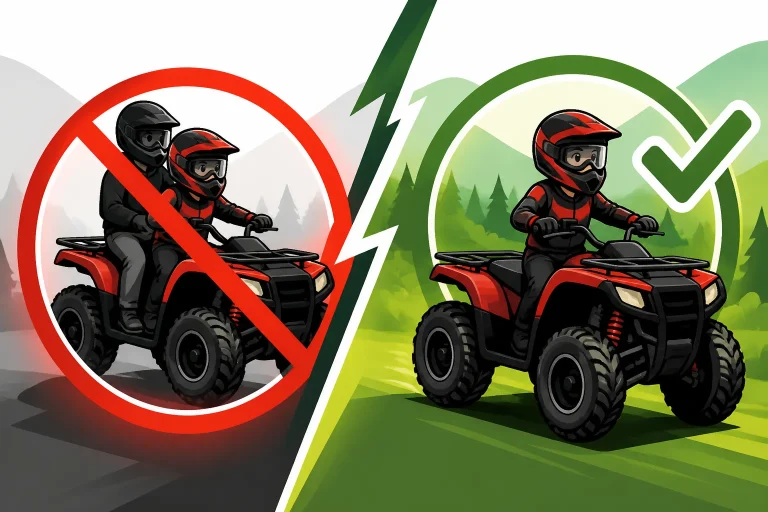
- Check who and what the pass covers. Ask whether it applies per person, per machine, per household, or on another basis. If you are bringing a passenger, a youth rider, a second machine, or a side-by-side, make sure the pass terms account for them.
- Confirm the validity dates and conditions. Find out when the pass starts and ends, whether it is limited to particular days, and whether any operating conditions apply. A payment confirmation does not necessarily mean the pass is valid for every day you might ride.
- Use the club’s authorized purchase method. Follow the payment and delivery instructions provided by the managing club. If buying online, make sure the page or sales channel is the one the club identifies. If buying in person, confirm where and when passes are available before setting out.
- Save the proof and read the terms. Keep the receipt, pass, or confirmation in the format the club requires. Read any instructions about displaying a pass, showing it to site staff, or carrying it while riding.
- Check for changes before departure. Access conditions, sales availability, and trail status can change. Recheck the club’s notices before you load up, particularly if your trip depends on a specific trail or site.
Buying directly does not mean a pass will be available at the trailhead or that a site will accept a late purchase. If your plans depend on access, settle the purchase and proof requirements before travelling.
If the club uses an online checkout, take care to distinguish the actual site pass from an optional membership, donation, event registration, or merchandise purchase. Those items may appear together, but they do not necessarily serve the same purpose. If an order confirmation is unclear, ask the club before riding rather than treating every payment receipt as proof of site access.
What to check before you pay
A short check before checkout can prevent a frustrating trip. Ask for plain answers to the points below; if a term is unclear, request clarification from the organization selling the pass.
| Check | What to confirm | Why it matters |
|---|---|---|
| Site and boundaries | Which managed area, access point, or trails are included | A pass may not cover nearby land or connected routes |
| Validity | Start date, expiry, and any day or seasonal limits | A pass can be unsuitable for your planned date |
| Rider coverage | Whether each rider needs a pass, including youth riders or passengers | Rules can differ by site and pass type |
| Machine coverage | Whether the pass applies to each ATV, UTV, or other eligible machine | A household’s purchase may not automatically cover multiple machines |
| Membership | Whether club membership is required or optional | Membership and site access are separate unless the terms say otherwise |
| Proof | Whether a receipt, digital pass, printed copy, or visible display is required | You need to show that the pass applies to your ride |
| Refunds or changes | What happens if plans change or the site closes | Do not assume a pass is refundable or transferable |
| Local conditions | Closures, access restrictions, and operating requirements | A pass does not override a closure or posted restriction |
Site, route, and land status
A pass for a managed recreation site is not a general permit for every nearby trail. Your route may cross onto Crown land, private property, leased land, a resource road, or another managed area. Each can have distinct access conditions. If you are unsure where the site ends, ask the club for a map or a clear description of the pass boundary.
For riding on Crown land, check the applicable access rules and any posted closures rather than relying on a site pass alone. BC Crown Land Riding Explained provides broader context. If your route uses a forest service road, review BC Forest Service Road Requirements as well; access permission at a recreation site does not cancel road-specific requirements.
Pay attention to signs and notices at the staging area. They may identify a closure, a restricted route, or a condition that applies to all users. A pass is permission only within its terms. It does not authorize entry where access is closed, nor does it replace permission needed to cross private or leased land.
Rider and machine coverage
Do not infer coverage from who paid. A pass bought by one adult might cover a particular machine, a particular rider, or a defined group, depending on the site’s terms. Ask whether a youth rider needs separate proof, whether a passenger is covered, and whether multiple machines require separate passes.
The same care applies to machine type. If you ride a UTV or side-by-side, verify that the pass and the site accommodate it. Trail width, posted restrictions, and local operating rules can affect whether a machine is suitable or allowed. BC Trails That Allow Side-by-Sides can help frame the question, but confirm current site-specific access with the manager.
If a youth is riding, a pass does not replace the rules that apply to the rider’s age, supervision, or machine. Check BC Youth Riding Rules Explained and the manufacturer’s age and size guidance. If you are riding with a child as a passenger, confirm both the site’s pass terms and the applicable passenger rules.
Cost, cancellation, and changes
The club sets its own pass terms, and costs can vary by site and pass type. Check the current amount with the organization before purchasing. If the checkout offers different options, compare what each one covers rather than choosing only by validity period or headline cost.
Ask whether the pass can be transferred, changed, or refunded if your plans shift. Also ask what happens if a closure affects the date you planned to ride. Do not assume a pass is refundable because the trail is closed, or that a pass can be used at another site as a substitute. Those conditions depend on the seller’s terms.
Carrying proof and preparing for the ride
Once you buy, keep proof in a form you can access at the site. The club may require a printed pass, a digital confirmation, a displayed permit, or another method. Follow its instructions; an email receipt may not be enough if the actual pass must be presented or displayed.
If you use a phone, save the confirmation for offline access before leaving home. Mobile coverage can be limited in remote areas, and a purchase page or email may not load at the trailhead. A printed copy can serve as a useful backup when permitted by the club. For more on preparing for limited connectivity, see BC Pass Proof Without Cell Service.
Before loading, check that the proof is readable and matches the relevant details, such as the validity dates or machine information if those appear on the pass. If the club issues a physical pass that must be displayed, place it as directed and keep it visible for any site check. Do not alter or share a pass unless the terms specifically allow it.
A practical departure check looks like this:
- The pass is for the riding area you plan to visit.
- Its validity covers your intended date.
- The listed riders and machines match your group.
- You have the proof in the required format, with an offline backup if useful.
- You know where the managed site ends and what rules apply beyond it.
- You have checked for current closures and posted restrictions.
- Your machine has the registration, insurance, and equipment required for the places you will ride.
Keep access proof distinct from vehicle documents. You may need to carry both, and one does not replace the other. For registration paperwork, see Carrying Your Certificate of Registration on Every Ride. Where a rule requires photo identification as well, a site pass is not a substitute; BC Riders Must Carry Photo ID discusses that separate requirement.
At the site, follow the signs and any directions from staff or volunteers. A pass does not give the holder priority over other users, permission to damage trails, or an exemption from safety rules. Stay within authorized routes, respect closures, and avoid assuming that a trail is open just because it appears on a map or was open during a previous visit.
If you are asked to show proof, present the pass or confirmation in the way the club specifies. If you cannot access it, explain the situation and contact the managing organization when possible. Do not assume that a payment notification alone resolves an access issue; the club determines what proof it accepts.
If you are visiting or riding beyond the site
A club site pass is usually a site-access question, not a reciprocity document for riding across BC. Visitors should distinguish three separate issues: whether their machine is recognized under applicable registration rules, whether they may access the land or road, and whether a managed area requires a pass. Satisfying one does not automatically satisfy the others.
If you are visiting from another province, check what proof of ownership or registration you should carry and whether your home registration is recognized for the riding you plan to do. BC Non-Resident Riding Rules and BC Riders From Alberta Use Alberta Plates are relevant starting points for visitors, but confirm your own situation and the destination’s rules.
For a route that leaves a managed site, check the rules for the next segment before riding it. A club’s permission may not extend to a resource road, an adjoining trail network, private land, or a crossing. Where road travel is involved, review the requirements for the road itself, including any insurance, helmet, licence, or permit rules that apply. The pass does not make a road open to ORVs.
This matters especially when a ride begins at a managed staging area and then follows a longer route. A map can show a connected trail without establishing that the same pass covers the entire trail. Ask the club whether the route is included, then check the responsible authority or land manager for any section beyond its boundaries. If the route crosses a posted closure, do not proceed just because your pass is valid.
If the site does not sell a pass directly, ask the club where authorized purchases are made and whether access is currently available. Do not rely on an old receipt, another rider’s pass, or a pass from a neighbouring area. If access rules are unclear, pause and get confirmation before unloading. That small check is easier than resolving a dispute after you have ridden into an area where your pass does not apply.
Frequently Asked Questions
Does a club site pass work across BC?
No. A club site pass applies according to the seller’s terms and may be limited to a particular managed area. BC does not have one province-wide pass that grants access to all riding sites.
Is club membership the same as a site pass?
Not automatically. Membership and site access are separate unless the club’s terms explicitly connect them. Confirm whether you need both for the area you plan to visit.
Does buying a pass register or insure my ATV?
No. A site pass does not replace registration or insurance requirements. Check those separately for the machine and the land or roads on your route.
Can I show a pass on my phone?
Follow the club’s instructions. If digital proof is accepted, save it for offline access before travelling. Carry a printed backup if the club permits it and you want a fallback.
Disclaimer
This article is for general informational purposes only and does not constitute professional advice. Laws, prices and regulations vary by location and change over time. Consult a qualified professional for guidance on your specific situation.