BC Riders Must Carry Photo ID
It's an all too common scenario for off-road vehicle (ORV) enthusiasts in British Columbia: you're out on a fantastic trail, soaking in the beautiful BC backcountry, when suddenly you see a conservation officer or RCMP vehicle. Your stomach might do a little flip, even if you know you're doing everything right. One crucial piece of the puzzle that many riders sometimes overlook, or perhaps don't fully understand the importance of, is carrying proper photo identification. This guide will delve into why having your photo ID with you is not just a good idea, but a mandatory requirement under BC law when you're out riding your ATV or UTV, and what it means for you on the trails.
Why Carrying Photo ID Is Essential in BC's Backcountry
Riding an off-road vehicle in BC is an incredible experience, but it comes with responsibilities. Just like driving a car on a highway, operating an ORV on Crown land, resource roads, or even crossing a public road means you're operating a registered motor vehicle, and certain rules apply. The requirement to carry photo ID isn't just about proving who you are; it's a fundamental aspect of ensuring accountability, safety, and compliance with the province's Off-Road Vehicle Act and its regulations.
The Legal Mandate for Identification
The Off-Road Vehicle Act in British Columbia clearly outlines the obligations for ORV operators, and this includes carrying specific documents. While the [BC Riders Must Carry the Certificate] of registration is paramount, your photo identification plays a critical role in validating that you are indeed the person associated with those documents or that you are authorized to operate the machine. Without it, the documents you carry may not hold up to scrutiny if an enforcement officer needs to verify your identity.
Imagine a scenario where you've just bought a used quad, and you're still waiting for your new [BC Transfer of Ownership Explained] to be fully processed. You might have the bill of sale and the previous owner's registration, but without your own photo ID, there's no way for an officer to confirm you're the rightful new owner or even permitted to ride it. This legal requirement is designed to prevent unlawful operation, enhance enforcement of rules, and maintain a clear chain of accountability for ORVs throughout the province, whether it's for compliance checks or after an incident.
Identity Verification for Safety and Enforcement
Beyond simple compliance, carrying photo ID is crucial for your own safety and for the efficiency of law enforcement. In the event of an accident, a medical emergency, or if your ORV is reported stolen, having immediate and verifiable identification can make a world of difference. First responders and law enforcement need to quickly identify you to notify next of kin, access medical information (if permissible), or to confirm ownership of the vehicle you are operating.
Consider a situation where you're riding alone and have a serious spill, rendering you unconscious. Without photo ID, identifying you and contacting your emergency contacts becomes a much slower, more difficult process. Similarly, if there's an incident involving damage to property or another rider, immediate identification streamlines the investigation and ensures that the correct parties are held responsible. It’s not just about getting a ticket; it's about the broader implications of operating a vehicle in remote areas where quick and accurate identification can be vital.
What Constitutes Valid Photo ID for ORV Riding in BC?
So, you understand why you need it, but what kind of photo ID is actually accepted when you're out on the trails? It's not just any old card with your picture on it; there are specific types of government-issued identification that are universally recognized and legally acceptable for these situations in British Columbia. Knowing what to carry will save you a lot of headaches if you're ever stopped.
Accepted Forms of Government-Issued Identification
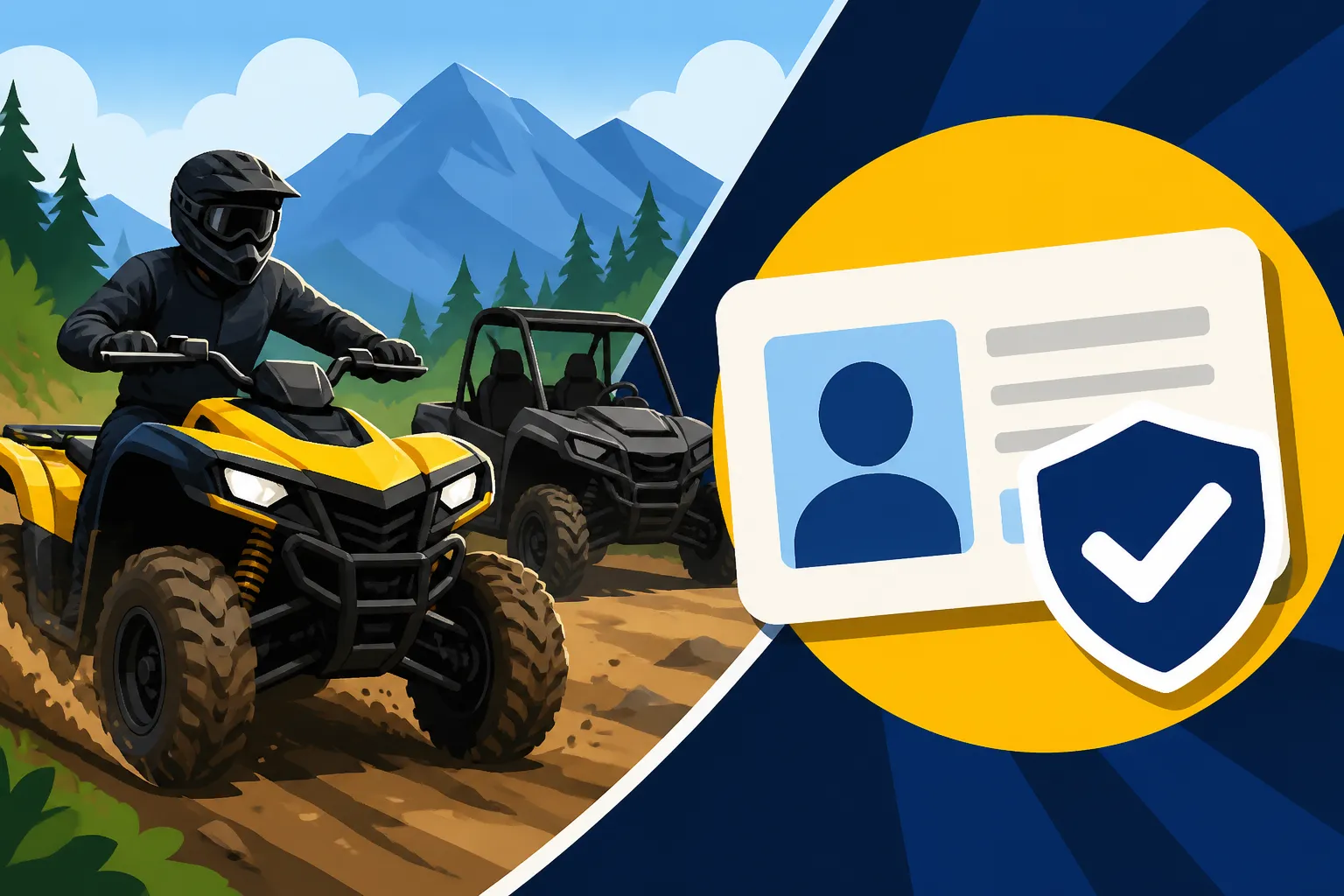
Generally, the most straightforward and universally accepted form of photo ID for ORV operators in BC is a valid driver's licence issued by a Canadian province or territory. For BC residents, this would typically be your BC Services Card with a driver's licence component, or your standalone BC driver's licence. These documents are designed specifically for identity verification and demonstrate your authorization to operate motor vehicles.
Other forms of government-issued photo ID can also be acceptable, particularly if you don't hold a driver's licence or are visiting from out of province. This could include a valid passport, a Canadian permanent resident card, or an official provincial identification card (like the BCID). The key is that the identification must be current, include a clear photograph, and be issued by a recognized government authority. Carrying expired identification is essentially the same as carrying no valid ID at all, as its authenticity and currency cannot be verified.
Considerations for Non-Residents and International Riders
If you're visiting British Columbia from another province or even another country and plan to ride an ORV, the rules regarding photo ID still apply. [BC Non-Resident Riding Rules] state that you must carry valid photo identification issued by your home jurisdiction. For instance, a rider from Alberta would carry their Alberta driver's licence, while someone from Washington State would carry their Washington driver's licence or passport. The enforcement officers are familiar with a variety of identification types.
However, it's always a good idea to ensure your foreign-issued ID is accompanied by an official translation if it's not in English or French. While not strictly required in all cases, it can significantly speed up any interaction with law enforcement and prevent misunderstandings. Having your passport readily available if you are from outside Canada is also highly recommended, as it's the most widely recognized international identification document. Remember, the goal is always clear, unambiguous identification when you're enjoying BC's incredible landscapes on your ORV.
The Synergy of Photo ID with Your ORV Documents
Think of your photo ID and your ORV's registration documents as two sides of the same coin. They work together to paint a complete picture of who you are and your legal right to operate that specific machine. Simply carrying one without the other can lead to complications, even if you're an upstanding, law-abiding rider. The system is designed for these documents to be presented in conjunction for full verification.
Your Photo ID Validates Your Certificate of Registration
When you register your ORV in British Columbia, you receive a [BC's Certificate of Registration Explained]. This document is specific to your machine and is tied to you, the registered owner. An enforcement officer, when conducting a check, will not only want to see this certificate but also your photo ID to confirm that the name on the registration matches the person operating the vehicle. It's a fundamental step in ensuring that the machine is not being operated illegally or by someone who shouldn't be riding it.
If you happen to be riding an ORV that isn't registered in your name—perhaps you're borrowing a friend's machine, or it's a rental from a local tour operator—your photo ID becomes even more critical. In such cases, you should also carry documentation that proves you have permission to operate that specific ORV. This might be a written authorization from the owner, or in the case of a rental, the rental agreement. Without your photo ID to verify who you are, any other paperwork you carry becomes less effective in proving your legitimate right to be on that machine. Sometimes, for complex ownership scenarios, a statutory declaration or an official bill of sale, perhaps using a template from a service like LawDepot, might be necessary, and your ID is essential for validating these too.
Completing the Documentation Checklist
Beyond your photo ID and the Certificate of Registration, there are other documents you might need to carry, depending on where and how you're riding. This comprehensive approach ensures you're fully prepared for any eventuality. For instance, if you're riding on a Forest Service Road, you are required to have adequate liability insurance, so carrying proof of your [BC ATV Insurance Requirements] is also crucial. Your photo ID will be needed to verify you are the policyholder or an authorized operator.
It's about having a complete "packet" of information. This includes your personal identification, your vehicle's identification, and any permits or insurance proof that might be relevant to your specific ride. Many experienced riders keep all these documents, perhaps laminated or in a waterproof pouch, securely stored on their machine or in their riding gear. When an officer asks for your papers, presenting a complete set, easily verifiable with your photo ID, demonstrates responsibility and can make the interaction much smoother. If you ever needed to formalize a purchase agreement for an ORV, looking at resources like LawDepot for a standardized bill of sale template could be a good idea, as official documentation supports your claim to ownership.
Here's a quick checklist of essential documents:
| Document Category | Specific Items | Purpose | Verification by Photo ID |
|---|---|---|---|
| Personal ID | Valid Driver's Licence (BC, Canadian, or foreign) | Confirms identity, age, and driving privilege | Primary |
| Valid Passport (Canadian or foreign) | Confirms identity and nationality | Secondary | |
| BCID or Provincial Identification Card | Confirms identity for non-drivers | Secondary | |
| ORV Registration | BC Certificate of Registration | Proof of ORV registration and ownership | Essential |
| Insurance | Proof of ORV Liability Insurance | Required for FSRs, recommended for Crown land | Essential |
| Ownership Proof | Bill of Sale (if recently purchased/borrowed) | Proves recent purchase or temporary possession | Essential |
| Written Permission (if borrowing) | Authorizes operation of an ORV not registered to you | Essential | |
| Special Permits | BC Operation Permit (for highway crossings) | Allows limited highway crossings | N/A (ID for operator) |
| Site Pass (for managed recreation areas like Bear Creek) | Entry authorization for specific managed riding zones | N/A (ID for operator) |
The Consequences of Not Carrying Photo ID on the Trail
Skipping the step of carrying your photo ID might seem minor, especially if you're just heading out for a quick spin near home. However, the potential repercussions can range from inconvenient delays to significant fines, or even more serious issues. It's truly not worth the risk, and understanding these consequences can serve as a powerful motivator to always be prepared.
Potential Fines and Violation Tickets
Under the Off-Road Vehicle Act in British Columbia, operators are required to carry and produce specific documents upon demand by an enforcement officer. This explicitly includes proof of identification. If you are stopped and cannot produce valid photo ID, you could face a violation ticket. While the exact fine amount can vary, it's generally a penalty you'd rather avoid. These tickets are issued not just for operating an unregistered machine, but also for failing to comply with the documentation requirements.
Think about it: an officer's job is to ensure everyone is riding legally and safely. If they cannot verify who you are, they have reason to be suspicious. This lack of identification can escalate a routine stop into a more time-consuming and frustrating experience for everyone involved. Getting a ticket for something as simple as forgetting your wallet at home is a real bummer, especially when you're trying to enjoy a day on the trails. An officer could issue a ticket for failure to produce identification, which is easily avoidable if you're prepared.
Administrative Headaches and Delays
Beyond the immediate fine, not having your photo ID can lead to considerable administrative headaches and delays. If an officer cannot confirm your identity on the spot, they might need to detain you while they run further checks, which could involve calling in backup or taking you to a local detachment. This isn't just a few minutes of delay; it could easily turn into an hour or more, completely derailing your riding plans.
In more serious situations, such as an accident or if there's suspicion of a stolen vehicle, the absence of photo ID can complicate matters significantly. Without immediate identification, investigations can be prolonged, and you might find yourself in a situation where your ORV is impounded while authorities work to confirm ownership and operator details. While you can usually prove your identity later, the inconvenience and stress of dealing with an impounded vehicle and the associated fees are far greater than the minor effort of remembering your ID. Moreover, if your ownership chain has any gaps, getting a proper [BC Statutory Declaration for an ORV] sorted through a service like LawDepot will require verified ID.
Best Practices for Securing and Carrying Your ID on the Trails
So, how do you make sure you always have your ID and keep it safe while navigating the sometimes rugged and unpredictable BC backcountry? It’s not about just tossing it in your pocket, especially given the vibrations, dust, and potential for moisture that come with ORV riding. There are practical strategies that can help ensure your documents are protected and accessible when you need them most.
Protecting Your Documents from the Elements
The BC backcountry can be wet, dusty, muddy, and full of bumps. Your valuable photo ID and other documents are vulnerable to these conditions. The best practice is to store them in a waterproof and dustproof container. Many riders use small, durable dry bags or waterproof cases designed for phones or wallets, which can then be tucked into a backpack, fanny pack, or a secure compartment on your ORV.
Laminating paper documents like your Certificate of Registration or proof of insurance can also add an extra layer of protection, making them more resilient to moisture and wear. While you can't laminate your driver's licence or passport, keeping them in a dedicated waterproof sleeve within a larger protective case is highly recommended. This ensures that even if you take an unexpected dip in a creek or encounter a torrential downpour, your essential papers will remain legible and intact.
Accessible and Secure Storage Solutions
Where you store your ID is almost as important as how you protect it. You want it to be accessible, but also secure enough that it won't fall out or get lost on a bumpy trail. Many riders prefer to carry their documents on their person, in a secure zippered pocket of their riding jacket or pants, or in a dedicated fanny pack that's always with them when they leave the machine. This ensures that if you step away from your ORV, you still have your crucial identification.
Alternatively, a secure, lockable compartment on your ORV, such as a glove box or an under-seat storage area, can work well. However, if you choose this method, make sure it’s truly waterproof and that you remember to take your ID with you if you're leaving the machine unattended, even for a short time. Losing your wallet or ID in the wilderness is a nightmare scenario, not only for potential identity theft but also for the sheer hassle of replacing everything. When purchasing a used machine, remember to ask for all prior ownership documentation, as this is crucial for [BC Ownership Chains Going Back Decades], and you can find forms like a bill of sale through services like LawDepot.
Interacting with Law Enforcement and Presenting Your ID
Getting stopped by a conservation officer, RCMP, or other law enforcement while riding your ORV can be nerve-wracking. However, knowing how to properly interact and what to present can make the experience far less stressful and significantly more efficient. A calm, cooperative approach, coupled with readily available documentation, is always the best strategy.
What to Expect During a Stop
If you see an officer signalling you to stop, pull over safely and turn off your engine. Keep your hands visible, perhaps resting on the handlebars or your helmet. Wait for the officer to approach you. They will typically introduce themselves and explain why they've stopped you. This might be for a routine document check, a safety inspection, or in response to an incident or complaint.
The officer will almost certainly ask for your photo identification and your ORV's Certificate of Registration. Be polite and cooperative. Inform the officer where your documents are before reaching for them, especially if they are in a difficult-to-reach pocket or compartment. For example, "My driver's licence is in my left jacket pocket, and the registration is in the waterproof pouch on my quad." This transparency helps the officer feel secure and prevents any misunderstandings about your movements. They might also ask for proof of [BC ATV Insurance Requirements] if you're on a resource road.
The Importance of Cooperation and Readiness
Your willingness to cooperate and your readiness to produce the required documents promptly can significantly influence the tone and duration of the interaction. Fumbling around for several minutes, or worse, admitting you don't have your ID, will likely extend the stop and potentially lead to more questions or even a ticket. Having your documents organized, protected, and easily accessible is a sign of a responsible operator.
Remember, the officer's primary concern is ensuring safety and compliance with the law. By clearly identifying yourself with valid photo ID and presenting your other necessary documents, you help them do their job efficiently. If there's an issue with your documents—perhaps you've lost your Certificate of Registration and are in the process of replacing it, or you're riding a machine that's still under [BC Transfer of Ownership Steps]—be honest and explain the situation clearly. While this doesn't guarantee you won't receive a ticket, a truthful explanation backed by any supporting documentation (like a temporary registration or a bill of sale, which you can create using templates from LawDepot) is always better than being unprepared or evasive.
Disclaimer
This article is for general informational purposes only and does not constitute professional advice. Laws, prices and regulations vary by location and change over time. Consult a qualified professional for guidance on your specific situation.