BC Riders Must Carry the Certificate
It's a familiar scenario for many off-road enthusiasts in British Columbia: you're out enjoying a fantastic day on the trails, maybe deep in the forest on a resource road, or exploring some stunning Crown land. Suddenly, you encounter a conservation officer or RCMP member, and the first thing they ask for, after a friendly greeting, is your registration documents. If you're like many of us, you might realize with a sinking feeling that your Certificate of Registration is tucked away at home, not in your gear bag. This guide is here to ensure you understand why carrying that little piece of paper is crucial and how to always be prepared.
Why Your Certificate of Registration is More Than Just Paperwork
For new riders and seasoned veterans alike, the paperwork side of off-roading in BC can sometimes feel a bit like navigating a muddy creek – confusing and easy to get stuck. But when it comes to your Certificate of Registration, it's not just another piece of paper; it's the fundamental proof that your machine is legally allowed to operate on public lands. Misplacing it or forgetting it can turn a great day into a costly one, and nobody wants that kind of souvenir from a ride.
The Legal Mandate to Carry Your Documents
Let's cut right to it: the Off-Road Vehicle Act in British Columbia is crystal clear on this. When you're operating your ATV, side-by-side, dirt bike, or snowmobile on designated Crown land, resource roads, or even crossing a public highway, you are legally required to have your Certificate of Registration with you. This isn't a suggestion; it's a mandatory condition of operation. Think of it like your driver's licence and vehicle registration for your car – you wouldn't leave home without those, would you?
The frustration here is real. We spend good money on our machines, take the time to [How to Register an ATV in BC], and then sometimes the simple act of remembering a document can be overlooked in the excitement of hitting the trails. But that oversight can come with consequences. If an officer stops you and you cannot produce your Certificate of Registration, even if your machine is properly registered, you could face a fine. It’s an administrative hassle that can easily be avoided by making it a habit to always carry the necessary proof. The law doesn't care that you know it's registered; it cares that you can prove it when asked.
What the Certificate Actually Represents
In British Columbia, the Certificate of Registration for your off-road vehicle serves a unique and vital purpose. Unlike highway vehicles that typically come with a "title" document, ORVs in BC do not have one in the traditional sense. This is a common point of confusion for riders, especially those new to the province or coming from jurisdictions with different systems. We often get questions like, "[Why BC Does Not Title an ATV]?" The answer is that the Certificate of Registration is our system's equivalent of ownership proof and registration status.
This certificate is issued by ICBC through an Autoplan broker, and it contains all the critical details about your machine and its registered owner. You'll find the Vehicle Identification Number (VIN), make, model, year, and the name and address of the person or entity it's registered to. It confirms that your machine has been properly accounted for in the provincial registry system, which became mandatory for all ORVs operating on Crown land or designated roads since [BC Registration Became Mandatory in 2015]. When you sell your machine, this is the document you'll need to transfer to the new owner, often involving a trip to the broker to complete the [BC Transfer of Ownership Explained]. Without it, proving you're the rightful owner and moving the machine through the system becomes significantly more complicated.
Where and When You Absolutely Need to Have It
Understanding the "why" is one thing, but knowing the "where" and "when" is just as crucial. It's not about carrying it for every single ride you ever take; it's about carrying it for every ride that legally triggers the requirement. This distinction is important because while some riders might think "private land, no problem," the reality is that many popular riding spots fall squarely under the provincial regulations.
Riding on Crown Land and Resource Roads
This is the big one. If you're planning to ride anywhere that isn't private property—and for most of us, that's where the real fun happens—you must carry your Certificate of Registration. British Columbia is vast, with approximately 94 percent of its land base being Crown land, meaning it's public land managed by the provincial government. The moment your tires hit that public ground, the Off-Road Vehicle Act comes into play. [BC Crown Land Triggers the Registration Rule] is not just a guideline; it's the specific legal trigger for the registration requirement.
This also extends unequivocally to resource roads, often known as Forest Service Roads (FSRs). These are the lifelines for logging, mining, and other resource industries, but they're also hugely popular for recreational riders wanting to access remote areas. Make no mistake: [BC Resource Roads Count as Crown Land] for the purposes of ORV regulations. So, whether you're climbing a mountain access road, exploring an old logging block, or simply using an FSR to get to a staging area, your Certificate of Registration needs to be on your person or stowed securely on your machine. Imagine riding along a beautiful FSR in the Kootenays, enjoying the views, only to be stopped by a conservation officer doing a routine check. If you can't produce your document, you're looking at potential fines, even if you paid your registration fee months ago. It's a critical oversight that can easily be avoided.
Dealing with Law Enforcement
Encountering law enforcement while out riding is a relatively common occurrence, whether it's the RCMP, a conservation officer, or a park ranger. They're often out there to ensure safety, protect the environment, and enforce the rules that keep everyone's experience positive. When they ask for your registration, they're looking for that specific document to verify that your ORV is legally registered. They aren't trying to trick you; they're simply doing their job to ensure compliance with the [What the Off-Road Vehicle Act Covers in BC].
If you're stopped and can't provide your Certificate of Registration, even if your machine is registered, it can lead to a violation ticket. An officer needs immediate proof of registration. While they may have ways to look up your machine's VIN, the onus is on you, the operator, to physically carry and produce the document upon request. Think of it this way: your vehicle's license plate confirms it's been through the system, but the paper registration confirms who it belongs to and that all fees are in order. Similarly, your [BC ORV Number Plates and Decals] are visible identifiers, but the certificate provides the full legal details. While you technically won't receive [BC Tickets for an Unregistered Machine] if your ORV is registered, you could absolutely get a ticket for failing to produce the required documents. It’s a subtle but important difference that highlights why carrying the physical certificate is so important.
Practical Ways to Safely Carry Your Certificate
Okay, so we know why and where you need it. Now, let's talk about the practicalities of how to carry this important document without it getting shredded, soaked, or lost in the backcountry. Our machines are exposed to the elements, and our gear bags often take a beating. Protecting your Certificate of Registration requires a bit of foresight and a good system.
Protecting Your Physical Document
Your Certificate of Registration is printed on standard paper, which means it's highly susceptible to the rigors of off-road riding: mud, water, sweat, and general wear and tear. One of the simplest and most effective ways to protect it is to place it in a heavy-duty, waterproof plastic sleeve or a small, sealable waterproof bag. These are readily available at most outdoor gear stores or even office supply shops. Some riders even go a step further and laminate their certificate. If you do this, just make sure you can still easily read all the information and that it doesn't obscure any important details.
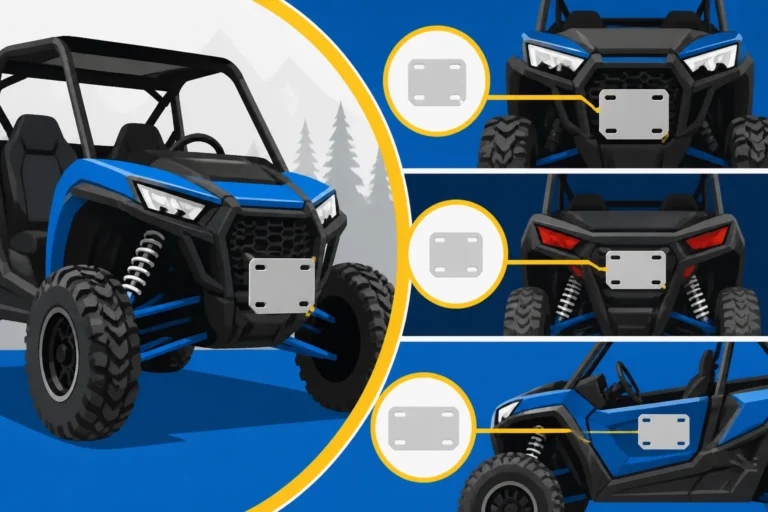
It’s a good practice to keep the original document securely stored in a designated, easily accessible compartment on your machine or in your riding gear. Many modern side-by-sides have glove compartments or small storage bins that are relatively dust and water-resistant. For ATVs and dirt bikes, a waterproof pouch attached to your handlebars or tucked into a waterproof fanny pack or backpack is ideal. The goal is to keep it dry, clean, and intact so that if an officer asks for it, you're not fumbling with a soggy, illegible piece of paper. You also need to make sure that any visible proof of registration, like your [BC Decal Placement on a Quad], is always clear and unobstructed. Just like your plate, the physical certificate needs to be perfectly readable when presented.
Digital Copies and Supplementary Identification
In our increasingly digital world, many of us wonder if a photo of our registration on our phone is sufficient. While an officer might accept a digital copy in a pinch, it's generally best to have the physical document. Phone batteries die, screens crack, and reception can be non-existent in remote areas. The law specifies "produce the certificate," which typically implies the physical document. So, while a digital photo can be a helpful backup, it shouldn't be your primary method of carrying proof.
What's equally important, and often forgotten, is your personal identification. The Off-Road Vehicle Act also stipulates that [BC Riders Must Carry Photo ID] when operating an ORV on Crown land or resource roads. This is so law enforcement can verify that you are indeed the person named on the registration certificate, or at least someone authorized to operate the machine. Furthermore, it's always a good idea to carry a copy of your bill of sale or other proof of purchase if you have it. This can be especially useful if you're riding a machine that's newly acquired or if there's any ambiguity about ownership. While the Certificate of Registration is the official document, having a backup, like a sales receipt or a properly executed bill of sale, can only help. If you ever need to create or track these kinds of documents, services like LawDepot offer templates for [BC Bills of Sale for Every Prior Owner] or even affidavits that can serve as supplementary evidence, ensuring you have a clear paper trail for any future needs.
What Happens If Your Certificate is Lost or Damaged
Life happens, and sometimes, despite our best efforts, important documents go missing or get damaged. The thought of losing your Certificate of Registration can be stressful, especially when you know how vital it is for legal riding and future sales. But don't panic; there's a process in place to replace it.
Replacing a Missing or Damaged Certificate
If your Certificate of Registration goes missing, is damaged beyond recognition, or becomes completely illegible, your first step is to visit an Autoplan broker. These are the same folks who helped you register your machine in the first place, and they are authorized by ICBC to handle ORV registration matters. You'll need to explain the situation and request a replacement. They will likely ask for your personal identification and the VIN of your ORV to locate your registration record in their system.
There will typically be a small administrative fee associated with obtaining a replacement certificate. It's a minor cost compared to the potential fines or headaches you could face by not having it. While the process is generally straightforward, it's not instantaneous. You might not walk out with a replacement in hand on the same day, especially if there are any discrepancies or if your original registration was quite old. So, if you realize your certificate is missing before a planned ride, don't just hope for the best. Take the time to get it sorted, and until you have the replacement, avoid riding on regulated lands to stay compliant. This is definitely one of those situations where an ounce of prevention (i.e., protecting the original document) is worth a pound of cure.
Proving Ownership Without the Original Certificate
In the unfortunate event that you've lost your Certificate of Registration and perhaps even some of the underlying purchase documents, proving ownership can become a bit more challenging. While the broker can issue a replacement certificate based on their records, if there's a serious gap in your ownership chain or questions about who the rightful owner is, it might require more substantial proof. This is where a statutory declaration can come into play.
A statutory declaration is a legal document where you solemnly declare, under oath or affirmation, that certain facts are true. For instance, you might declare that you are indeed the rightful owner of the ORV, explaining how and when you acquired it, and that you no longer possess the original certificate. While not a replacement for the certificate itself, it can be a crucial piece of evidence to help an Autoplan broker process a replacement or for future transfers of ownership, particularly if your machine has [BC Machines With No Paperwork]. Services like LawDepot can provide templates for statutory declarations, helping you draft a legally sound document that addresses your specific situation. Just remember that [BC Statutory Declarations Cost $15] to have declared, usually before a Notary Public or Commissioner for Oaths. This step ensures that you have a formal, legally recognized document to back up your claim of ownership, which can be invaluable when dealing with official channels.
Common Misconceptions and Important Reminders
Riding off-road in BC comes with a unique set of rules that can sometimes feel like a maze, especially with the interplay between registration, insurance, and ongoing responsibilities. Let's clear up some common misunderstandings and offer some final reminders to keep you riding smoothly and legally.
The Difference Between Registration and Insurance Proof
This is a big one that often catches riders off guard. Your Certificate of Registration proves that your ORV is registered with the province. It does not, however, automatically prove that you have the necessary insurance coverage. In BC, off-road vehicle insurance operates on a tiered system. While your basic registration cost of [BC ORV Registration Cost] might feel like it covers everything, it typically provides basic third-party liability coverage only for specific scenarios, like crossing a highway with an Operation Permit.
For riding on Forest Service Roads, you are legally required to carry a minimum of $200,000 in third-party liability insurance. For other Crown land, while not legally mandatory, it is highly, highly recommended. Many riders choose to purchase additional, voluntary liability insurance from either ICBC or a private insurer to cover potential damages or injuries incurred during their rides. Therefore, in addition to your Certificate of Registration, you should also carry proof of any liability insurance you have purchased. [BC ATV Insurance Requirements] are a separate consideration from registration, and you could be fined for not having adequate coverage where it's legally mandated, even if your machine is fully registered. Always carry both proofs of document to ensure you're covered for every scenario.
No Annual Renewal, But Always Carry Proof
Here’s some good news that can also be a source of confusion: once you've registered your ORV in British Columbia, that registration lasts as long as you own the machine. There's no annual renewal sticker to worry about, and you won't receive yearly reminders to pay another registration fee. This is a departure from how highway vehicle registrations work in many places, and it means [BC Has No Annual Renewal Sticker] to affix to your plate. Your initial registration fee covers the lifetime of your ownership.
However, this lifetime registration doesn't negate the need to always carry your Certificate of Registration when riding on regulated lands. Just because you don't renew it doesn't mean the proof of that initial registration becomes optional. The document itself is the enduring evidence that your machine has passed through the provincial system and is legally recognized. So, the mantra should always be: "Register it once, and then make it a permanent part of your riding kit." [BC ORV Registration Lasts as Long as You Own It], which is fantastic, but that very fact makes carrying the physical certificate even more important as the sole, continuous proof of your ORV's legal status. Don't let the convenience of a one-time registration lead you to forget this critical piece of paperwork!
| Document Type | What It Is | Where to Carry It | Why You Need It |
|---|---|---|---|
| Certificate of Registration | Proof your ORV is registered in BC | On your person or machine (waterproof) | Mandatory for riding on Crown land, FSRs; legal proof of ownership |
| Photo Identification | Government-issued ID (e.g., driver's licence) | On your person | Required by law for operators; verifies identity |
| Proof of Insurance | Document showing your ORV's liability insurance coverage | On your person or machine (waterproof) | Mandatory for FSRs ($200k), recommended everywhere else; protects against financial liability |
| Bill of Sale (copy) | Record of purchase, especially recent ones | On your person or machine (waterproof) | Helps prove ownership, especially if registration certificate is new or lost; useful for transfers |
| Statutory Declaration (copy) | Legal document declaring ownership facts | On your person or machine (waterproof) | Useful if original ownership documents are missing; can assist with obtaining replacement registration |
Disclaimer
This article is for general informational purposes only and does not constitute professional advice. Laws, prices and regulations vary by location and change over time. Consult a qualified professional for guidance on your specific situation.