BC Excludes Tractors and Loaders From the ORV Rules
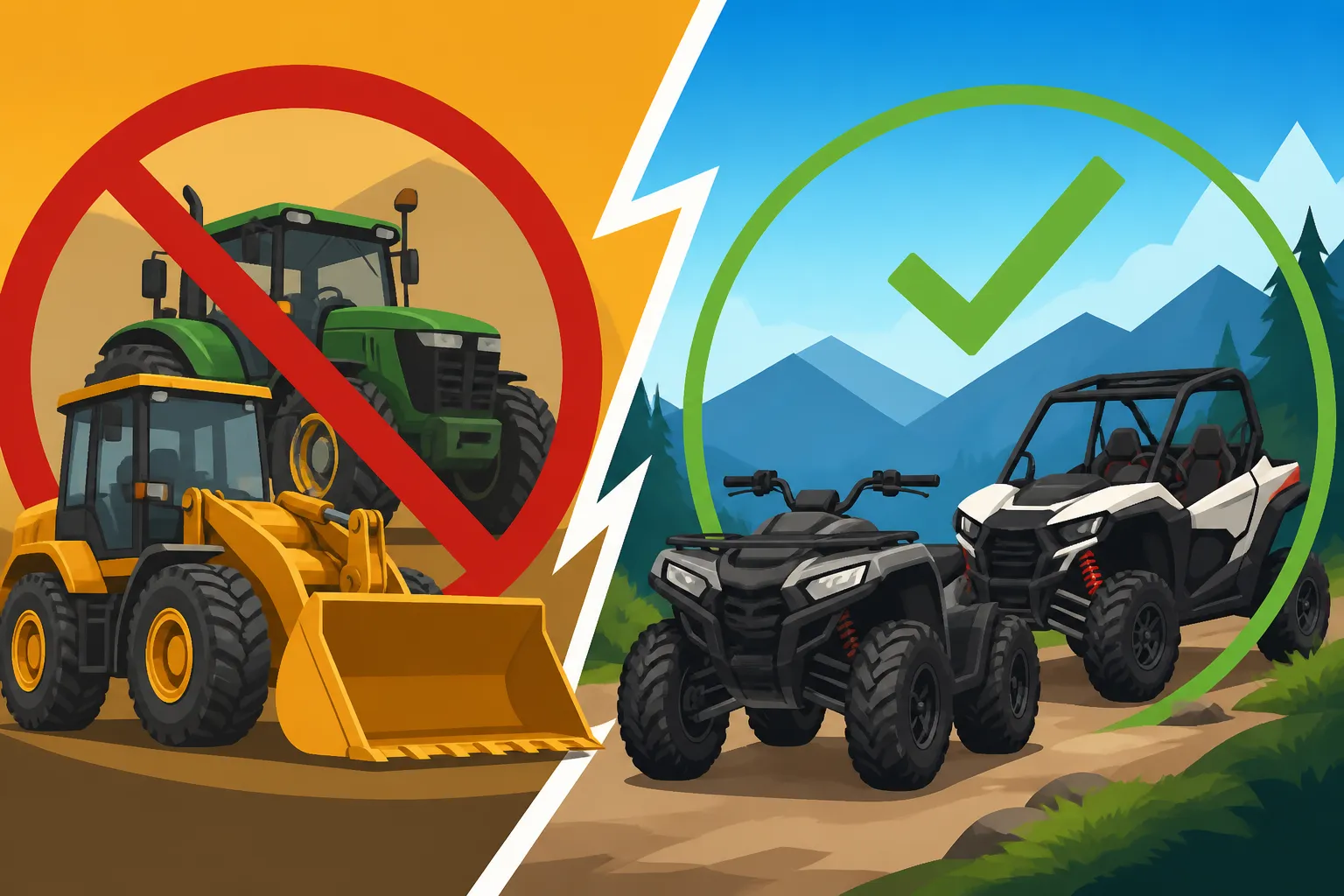
It can be incredibly confusing to figure out exactly which machines fall under British Columbia's Off-Road Vehicle (ORV) Act. Many folks assume that if a machine goes off-road, it must be an ORV, and therefore subject to the same registration rules as their ATV or side-by-side. However, the reality is a bit more nuanced, and this guide is here to clear up that common misunderstanding, explaining precisely why tractors and loaders are excluded from BC's ORV regulations.
Understanding BC's Off-Road Vehicle Act (ORV Act)
When the province introduced the Off-Road Vehicle Act in 2015, it aimed to bring clarity and accountability to the vast world of off-highway riding. Before that, it felt like the Wild West out there, with no clear system for identifying machines or owners, which made enforcement tricky and tracking ownership even trickier. But it's crucial to understand that "off-road" in the Act has a very specific meaning, and it doesn't encompass every single piece of equipment that happens to leave the pavement.
What the ORV Act Actually Covers
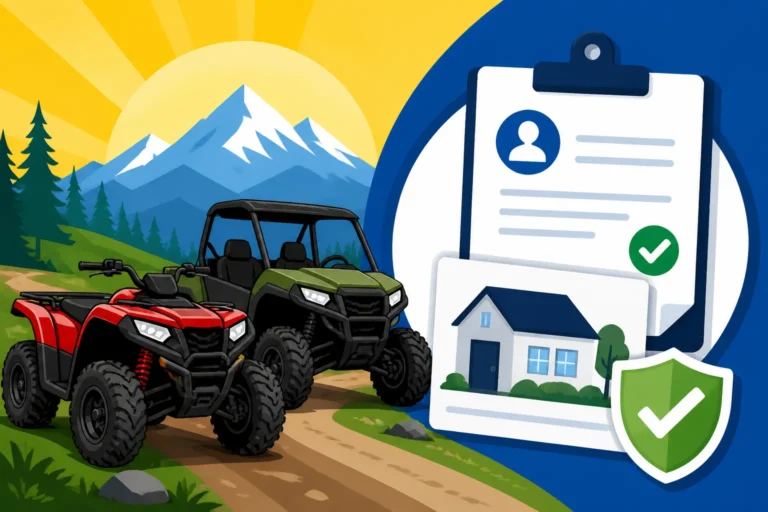
The ORV Act, at its heart, is designed to regulate vehicles primarily used for recreational off-highway activities, as well as certain types of work machines that share characteristics with recreational ORVs. Think of your typical ATVs, side-by-sides, dirt bikes, and snowmobiles. These are the machines that are explicitly defined as "off-road vehicles" under the legislation. They're built for navigating trails, rough terrain, or snow-covered landscapes, often for sport, leisure, or specific utility tasks like checking fences or hauling small loads on a farm.
The Act lays out clear guidelines for [What the Off-Road Vehicle Act Covers in BC], mandating registration, plate display, and specific operational requirements when these machines are on Crown land, which includes things like [BC Crown Land Triggers the Registration Rule] and even [BC Resource Roads Count as Crown Land]. The goal is to ensure that owners are identifiable, promoting responsible riding and aiding in theft recovery or accident investigation. Without this distinction, every single piece of industrial equipment that rolls off-highway would be caught in the same net, which simply wouldn't make sense given their vastly different purposes.
The Core Purpose of ORV Registration
The primary goal behind the mandatory [BC Registration Became Mandatory in 2015] for off-road vehicles was to establish a clear system of identification and ownership. Before 2015, if you saw an ATV tearing up sensitive ecological areas or involved in an incident, there was often no way to trace it back to an owner. This made responsible land management and enforcement incredibly difficult. So, by requiring registration, the province created a framework where every ORV used on Crown land has a unique identifier – that distinctive number plate and decal.
This registration isn't just about enforcement, though. It also helps with accountability. When you register an ORV, you're creating an official record of ownership with the province, which is handled through authorized [BC Autoplan Brokers Handle ORV Registration]. This process helps prevent the sale of stolen machines and provides a clear chain of ownership, which is incredibly important when you're buying or selling a used quad. While some people might grumble about the paperwork, it genuinely makes the ORV community safer and more accountable. The system provides a level of legitimacy and trackability that was sorely missing, making it easier for authorities to distinguish between legitimate users and those who might be causing damage or operating illegally.
Defining Tractors and Loaders in BC's Legal Landscape
So, if ATVs and dirt bikes are clearly ORVs, where do big, beefy machines like tractors and loaders fit in? This is where understanding the specific legal definitions becomes really important. British Columbia has other acts and regulations that govern industrial and agricultural equipment, and these machines are typically addressed there, not under the ORV Act. Their design, primary function, and the environments in which they operate place them in a completely different category.
How the Motor Vehicle Act Classifies Them
While it might seem counterintuitive, machines like tractors and loaders often find their legal footing, or at least their exemptions, within the framework of the Motor Vehicle Act (MVA), even though they aren't "motor vehicles" in the way we think of cars or trucks. The MVA defines various types of vehicles, and while it mostly focuses on those used on public highways, it also includes classifications and exclusions for equipment that might occasionally touch a public road. For instance, it distinguishes between "motor vehicles" (which would require full registration and licensing for road use) and "industrial equipment" or "farm implements."
A tractor, for example, is primarily an agricultural implement, designed for tilling fields, harvesting crops, or moving heavy loads around a farm. Loaders are construction or material-handling machines, built for scooping and moving earth, gravel, or other materials on a job site. Their immense size, slow speeds, and specialized functions mean they don't fit the profile of a recreational ORV. The MVA often grants specific exemptions for these types of machines when they briefly use a highway to move from one field to another or between job sites, usually under strict conditions like having specific lighting or pilot vehicles. They are not subjected to the ORV registration process because their purpose and incidental road use are governed by different legal principles aimed at agricultural or industrial safety and efficiency.
Purpose-Built for Work, Not Recreation
The fundamental distinction lies in purpose and design. When you look at an ATV or a dirt bike, it's clear they are built for agility, speed, and navigating varied terrain, often for the sheer joy of riding. They are designed with seats for one or two riders, handlebars or a steering wheel for direct control, and suspension systems geared towards absorbing impacts from trail riding. These are characteristics that scream "recreation" or "light utility."
Tractors and loaders, on the other hand, are engineered from the ground up to be heavy-duty workhorses. Their design emphasizes brute strength, lifting capacity, and the ability to attach specialized implements. Tractors have power take-offs (PTOs) and three-point hitches for agricultural tools, while loaders feature large buckets or forks for material handling. Their cabs are often enclosed for operator comfort and safety in demanding environments. While you might occasionally see a farmer using a small tractor on their property in a way that looks like off-roading, its primary role remains deeply rooted in agricultural or industrial production. The intent of the machine, as determined by its manufacturer and common use, is the key differentiator here. They are tools for commerce and sustenance, not leisure.
Why the Exemption Makes Sense: Distinct Uses and Regulations
The exclusion of tractors and loaders from the ORV Act isn't an oversight; it's a deliberate and sensible distinction based on their unique operational contexts, the specific risks they pose, and the existing regulatory frameworks that already govern their use. Trying to force them into the ORV registration system would create unnecessary bureaucracy and fail to address the actual concerns associated with their operation.
The 'Industrial Equipment' Distinction
Tractors and loaders fall squarely into the category of "industrial equipment" or "agricultural machinery," and this classification is critical. Unlike recreational ORVs, which are largely operated by individuals for personal use, these machines are often used in commercial settings, on farms, construction sites, or in forestry operations. This means they are already subject to a robust set of regulations that govern workplace safety, equipment standards, and commercial operation. Organizations like WorkSafeBC, for instance, have extensive rules regarding the safe operation, maintenance, and training requirements for such heavy machinery.
These regulations are far more comprehensive and specific to the industrial environment than anything the ORV Act could provide. They cover everything from operator certification and daily equipment checks to safe work procedures and accident reporting. Imposing ORV registration on top of these existing, specialized requirements would be redundant and inefficient. It's about applying the right set of rules to the right type of equipment, ensuring that safety and accountability are addressed through the most appropriate channels.
Different Risks, Different Rules
Consider the inherent risks. Operating a quad on a recreational trail certainly has its dangers – rollovers, collisions, and navigating unfamiliar terrain. The ORV Act and associated safety regulations, like mandatory helmets on ride-astride machines, address these specific risks. However, the risks associated with operating a tractor or a loader are fundamentally different. We're talking about heavy machinery, often with moving parts, high centers of gravity, and the potential to crush, shear, or overturn. The environment is also different: active construction sites, working farms, or industrial yards, where other heavy equipment, workers, and specific hazards are present.
Because the risks are so distinct, the rules need to be distinct as well. Instead of general ORV safety guidelines, tractors and loaders are governed by regulations focused on things like load limits, stability, visibility, attachment safety, and comprehensive operator training programs. For example, a worker operating a forklift or an excavator on a job site would likely need specific certification and adhere to rigorous company safety protocols, none of which would be covered by an ORV certificate of registration. It’s a pragmatic approach that acknowledges the unique demands and dangers of these powerful machines, ensuring they are regulated by the authorities best equipped to manage those specific hazards.
What This Means for Owners and Operators
For individuals and businesses that own and operate tractors and loaders in British Columbia, understanding these distinctions is paramount. It means that while you won't be heading to an Autoplan broker to get an ORV plate for your bulldozer, you still have important responsibilities regarding their legal and safe operation. It's not a free pass; it's just a different set of rules.
Registration Requirements for Tractors and Loaders
Since tractors and loaders are excluded from the ORV Act, you won't be registering them with ICBC for an ORV Certificate of Registration or receiving [BC ORV Number Plates and Decals]. However, this doesn't mean they operate entirely in a regulatory vacuum. If your tractor or loader needs to travel on a public highway – even for a short distance between fields or job sites – it may still fall under specific provisions of the Motor Vehicle Act. This might involve requiring a specific type of permit for oversized loads, displaying slow-moving vehicle signs, or having appropriate lighting, especially during low visibility.
For farm equipment, there are often specific exemptions that allow for limited highway use without full motor vehicle registration, provided certain conditions are met. For commercial construction equipment, particularly large items, transport usually involves loading them onto a flatbed trailer, which itself would be subject to its own registration and weight regulations. The key takeaway is that while the ORV Act isn't relevant, owners still need to be aware of the provincial and municipal rules governing the incidental road use of these heavy machines. It's always best to check with local authorities or provincial transport regulations if you anticipate any highway travel.
Insurance and Safety Considerations Beyond the ORV Act
Just because a machine isn't an ORV doesn't mean you can skimp on insurance or safety. In fact, for tractors and loaders, the insurance and safety requirements are often even more rigorous, reflecting their higher value, greater potential for damage, and use in commercial settings. For recreational ORVs, you might typically consider [BC ATV Insurance Requirements] for liability, especially for resource road riding. But for industrial equipment, you're looking at a different ballgame.
Owners of tractors and loaders typically need comprehensive equipment insurance to cover damage to the machine itself, as these are significant investments. Beyond that, liability insurance is critical. If your tractor causes damage to property or injury to another person while operating on your farm, a construction site, or even during incidental road travel, you need robust coverage. Many businesses will carry general commercial liability insurance that specifically covers the operation of their heavy equipment. From a safety perspective, compliance with WorkSafeBC regulations is paramount if the machine is used in a workplace setting. This includes ensuring operators are properly trained and certified, the equipment is regularly inspected, and safe operating procedures are in place. These measures go far beyond the scope of ORV safety guidelines and are essential for protecting both operators and the public.
Common Misconceptions and Clarifications
It's completely understandable why people get confused about these distinctions. The term "off-road" itself can be misleading, and without a deep dive into the legal definitions, it's easy to make assumptions. Let's tackle a couple of those head-on to solidify your understanding.
"But My Tractor Goes Off-Road!"
This is probably the most common point of confusion. Many people will say, "My tractor spends all its time off the pavement, plowing fields and moving dirt. How is that not an off-road vehicle?" And from a literal, linguistic standpoint, they're absolutely right – it does operate off the road. However, the legal definition of an "off-road vehicle" under BC's ORV Act is much narrower than the general English meaning of "off-road." The Act is specifically concerned with recreational vehicles and certain utility vehicles that fit a particular profile of design and use.
The key is to remember the intent of the legislation. The ORV Act was created to regulate the use of ATVs, side-by-sides, dirt bikes, and snowmobiles, which share characteristics of being relatively mobile, sometimes high-speed, and often used in environments where enforcement and accountability had previously been lacking. Tractors and loaders, while operating off-highway, serve fundamentally different purposes, are designed for different tasks, and are already regulated by other, more appropriate legislative frameworks. So, while your tractor may literally go off-road, it doesn't meet the legal definition of an "off-road vehicle" in BC's ORV Act.
The Farm Quad vs. Farm Tractor Scenario
This is a perfect example to highlight the nuances. Imagine a farmer with both an ATV (a quad) and a large agricultural tractor. Both machines are used exclusively on the farm, often far from any paved road. Yet, the farm quad is an ORV under the Act, while the farm tractor is not. Why the difference? The answer lies in the explicit definitions and the spirit of the legislation.
A farm quad, despite its utility on the farm, shares the core characteristics of other off-road vehicles like recreational ATVs. It's designed for mobility, often carries a single or dual rider, and can navigate varied terrain with relative speed. Therefore, [BC Farm Quads Are Not Exempt] from ORV registration. If that farmer takes their quad onto Crown land – even if it's just to check fences on a leased grazing pasture – it must be registered, plated, and insured according to the ORV Act. The machine's design aligns with what the ORV Act intends to regulate, regardless of its specific work-related application.
The farm tractor, conversely, is purpose-built agricultural equipment. Its design, weight, and operational speed are fundamentally different from a quad. It's optimized for pulling implements, heavy lifting, and ground preparation, not for nimble movement across trails. Even though it's used on the farm and off-highway, its classification as agricultural machinery places it outside the scope of the ORV Act and under other regulations, often related to agriculture or industrial safety. This distinction ensures that the right legal framework applies to the right piece of equipment, avoiding unnecessary red tape for machines already adequately regulated by other means.
Navigating Documentation for These Machines
Even without ORV registration, maintaining proper documentation for tractors and loaders is incredibly important. While you might not be showing an [BC Riders Must Carry the Certificate] to a conservation officer, having clear proof of ownership and purchase history is crucial for other reasons, from resale to insurance claims, and even avoiding potential legal headaches down the road.
Bills of Sale and Ownership Proof for Work Equipment
When you're dealing with substantial investments like tractors and loaders, a simple handshake agreement just won't cut it. You absolutely need a robust bill of sale or other clear proof of ownership. This document should detail the sale date, the purchase price, the names and contact information of both buyer and seller, and, crucially, a detailed description of the machine, including its make, model, year, and serial number (VIN, if applicable). Just like with an ORV, these serial numbers are paramount for identification.
While you won't be using this bill of sale to register your machine under the ORV Act, it's vital for a multitude of other reasons. It protects you as the buyer by proving you legally acquired the equipment, and it protects the seller by confirming the transaction. For insurance purposes, a clear bill of sale verifies your insurable interest and the value of the asset. If you ever decide to sell the machine, having this paperwork makes the process much smoother and instills confidence in your buyer. If you find yourself needing to create a professional, legally sound bill of sale, or even a declaration of ownership in a pinch, services like LawDepot can be very helpful for generating these kinds of legal documents. They ensure all the necessary fields are covered and the language is appropriate for documenting such a transaction.
Understanding Different Forms of "Registration"
The absence of ORV registration doesn't mean these machines are completely unregistered or unidentifiable in all contexts. While they don't get a "Certificate of Registration" from ICBC like an ORV, other forms of official recording or licensing might still apply, depending on their specific use and where they operate.
For example, if a large piece of commercial equipment is used by a business, it will almost certainly be recorded in the company's asset registry. For very large or specialized equipment that might be transported on highways, there could be permits or special licenses required from the Ministry of Transportation and Infrastructure, especially if it involves oversized or overweight loads. In some cases, agricultural machinery might be tracked for specific government programs or subsidies, which would involve documenting its ownership and characteristics. So, while it's not the ORV Act's "registration," there are other administrative or regulatory processes that ensure accountability and identification for these types of machines. It's all about matching the regulatory framework to the specific context of the equipment's operation.
| Feature | Off-Road Vehicle (ORV) | Tractor / Loader |
|---|---|---|
| Primary Purpose | Recreation, light utility, sport, leisure | Agricultural, industrial, construction, material handling |
| BC Act Governing Use | Off-Road Vehicle Act | Motor Vehicle Act (for highway use), WorkSafeBC (for workplace safety), other industry-specific regulations |
| Mandatory BC Registration | Yes, with ICBC/Autoplan Broker for Crown land use (Certificate of Registration, plate, decal) | No, not under the ORV Act. May require permits for specific highway travel or be recorded as business assets. |
| Typical Machines | ATVs, side-by-sides, dirt bikes, snowmobiles | Farm tractors, excavators, skid steers, wheel loaders, forklifts |
| Insurance Needs | Basic liability (mandatory for resource roads), optional collision/comprehensive | Comprehensive equipment insurance, commercial general liability, specific workplace insurance |
| Safety Regulations | Helmet laws (ride-astride), passenger rules, youth operator rules, safe operation on trails | Operator certification, workplace safety standards (WorkSafeBC), load limits, stability rules, specialized training |
| Plate/Decal | Yes, required for Crown land use | Generally no specific provincial plate/decal (other than standard vehicle plates for transport trailers) |
| Ownership Proof | Required for registration (bill of sale, gift letter, statutory declaration) | Recommended for asset tracking, resale, and insurance (bill of sale, purchase agreement) |
Disclaimer
This article is for general informational purposes only and does not constitute professional advice. Laws, prices and regulations vary by location and change over time. Consult a qualified professional for guidance on your specific situation.