BC Farm Quads Are Not Exempt
It's a common story I hear from folks all over British Columbia, especially those living the rural life: "My quad's just for the farm, so it doesn't need to be registered, right?" This assumption, while understandable given how deeply off-road vehicles are integrated into agricultural work, can actually lead to some frustrating and expensive surprises. This guide is here to untangle the confusion surrounding farm quads and BC's ORV registration rules, helping you avoid unexpected tickets and ensure you're riding legally, whether you're mending fences or heading to the back forty.
The Persistent Myth: Why Many Believe Farm Quads Are Exempt
For years, there was a quiet understanding that if a machine was used strictly on private property or for agricultural purposes, it didn't really fall under the same scrutiny as a recreational ATV. This often led farm owners and workers to believe their quads, UTVs, or side-by-sides were automatically exempt from any formal registration. It felt logical, didn't it? After all, it's a tool for work, not a toy for the trails.
The Root of the Misconception
The idea that farm quads are exempt likely stems from a few places. Historically, smaller farm equipment, including some early ATVs used solely on private land, often flew under the radar of broader vehicle registration schemes. People associated "registration" with highway vehicles, not tools used exclusively in fields or barns. Furthermore, there's a general understanding that certain agricultural equipment, like tractors or combines, have different regulatory frameworks. It's easy to lump a quad performing farm duties into that same category, expecting it to be treated similarly. This belief is strong in many communities, passed down through generations of farmers who never had to register their "workhorses." It’s a bit of a legacy belief, if you will, but unfortunately, the modern legal landscape in BC has evolved.
What the ORV Act Actually Says About Farm Use
Here’s the thing: the Off-Road Vehicle Act in British Columbia, which came into full effect in 2015, makes a very clear distinction. It states that most off-road vehicles (ORVs), including ATVs, UTVs, and dirt bikes, need to be registered if they're operated on Crown land or on any private land where public access is permitted. The Act defines "off-road vehicle" quite broadly. While it does exclude some specific pieces of heavy agricultural or industrial equipment (like full-sized tractors and excavators), it generally includes smaller, more versatile machines like quads and side-by-sides, even if their primary purpose is work. [BC Excludes Tractors and Loaders From the ORV Rules] is a good read on that specific nuance. The critical point is that the purpose of the machine (farm work) does not automatically grant an exemption from registration under the Act. It's about where and how it's operated, not just what it's used for.
When Does a Farm Quad Need to Be Registered in BC?
This is where the rubber meets the road, or rather, where your tires leave your private property. The BC ORV Act isn't interested in the brand of your quad or whether you use it to haul feed or just for joyriding. Its primary trigger for mandatory registration is whether the machine is operated on specific types of land.
The Crown Land Trigger: Beyond Your Property Line
The biggest game-changer for farm quads was the introduction of the mandatory registration rule in 2015, which is largely triggered by operation on Crown land. This includes vast tracts of provincial forests, parks, and, critically for many farmers, [BC Resource Roads Count as Crown Land]. If you drive your quad down a forest service road to check on cattle in a remote pasture, access a woodlot, or even just cross a small strip of Crown land to get from one part of your farm to another, your quad needs to be registered.
It’s not just the big, obvious Crown land areas. Even small, less-defined strips of public land, or land that has a public right-of-way, can trigger the requirement. Imagine a farmer whose property is split by a small, unpaved road that's technically a public right-of-way, even if it feels like their own lane. If they take their quad across that road, even for a few metres, they're operating on land that falls under the ORV Act's jurisdiction. This means their "farm quad" needs to have its registration in order, complete with an [BC ORV Number Plates and Decals] displayed properly.
Understanding "Work" vs. "Recreation" in Registration
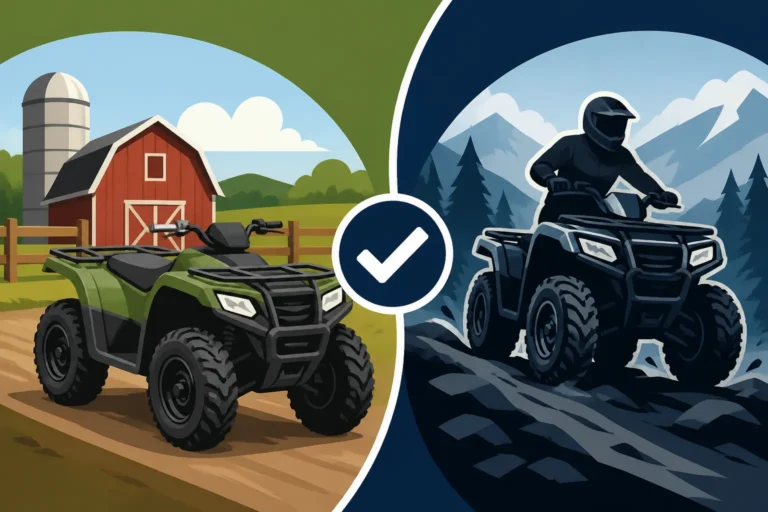
Many farmers might think, "But I'm using it for work! That's different from someone out trail riding for fun." And you're right, the intent is different. However, the BC Off-Road Vehicle Act doesn't differentiate between work and recreation when it comes to the registration requirement. A quad used to check irrigation lines is still an ORV, just like one used for a weekend ride. [BC Registration Covers Work and Recreation] is explicit about this.
This often comes as a shock, especially for those who've been using their quads for farm duties for decades without a second thought. The frustration is palpable when a conservation officer or RCMP officer explains that even if you're tending to livestock or hauling equipment, if you're on Crown land or land with public access, your quad needs to be registered. It's not about punishing farmers; it's about having a unified system to identify machines and their owners for safety, environmental protection, and accountability, regardless of their specific use.
Navigating the Registration Process for Your Farm ORV
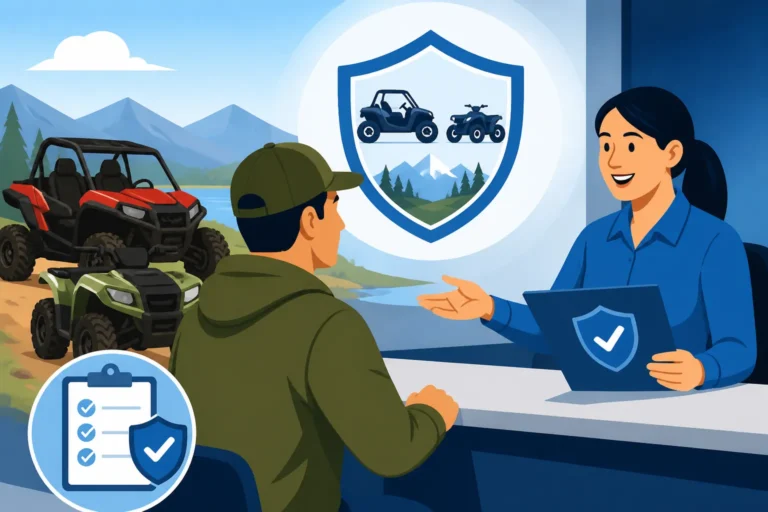
So, your trusty farm quad isn't exempt, and you need to get it registered. Don't worry, it's not as daunting as it might seem. The process is designed to be straightforward, handled by the same Autoplan brokers who deal with your car insurance. They're often very familiar with these kinds of questions, even if ORV registration is a bit less common than car insurance.
Essential Documents and Where to Find Them
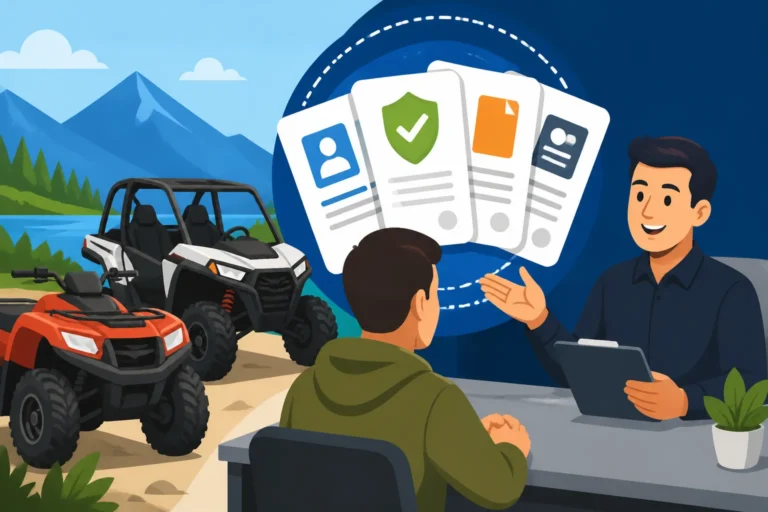
The key to a smooth registration process is having your paperwork in order. For a farm quad, especially an older one that might have changed hands several times, this can sometimes be the trickiest part. You'll typically need proof of ownership, which usually means a bill of sale. If you bought your quad new from a dealer, they would have provided all the necessary documentation. If you bought it used, you'll need the bill of sale from the previous owner. If there have been multiple owners, you'll ideally need a chain of [BC Bills of Sale for Every Prior Owner] tracing ownership back to the original purchase, or at least a point where the previous owner had clear documentation.
You'll also need proof of identity and residency. Your BC Driver's Licence will usually cover this. If you don't have a recent bill of sale, or if the seller has vanished, things can get a bit more complicated, but there are solutions available, which we'll discuss next. For a comprehensive overview, checking the [BC Registration Paperwork Checklist] can be very helpful before you head to the broker.
Overcoming Missing Paperwork Challenges
This is where many long-time farm quad owners hit a snag. "A bill of sale? For that old thing? I bought it from my neighbour twenty years ago for cash!" I hear this all the time. Fortunately, BC has a mechanism for these situations: the statutory declaration. A statutory declaration is a sworn statement, made in front of a commissioner for taking affidavits (often found at Service BC centres or some notary publics), where you declare under oath that you are the rightful owner of the machine. It helps to have as much supporting evidence as possible, such as old insurance papers, repair receipts, or even statements from neighbours who can attest to your ownership. LawDepot can be a useful online resource if you're looking for templates or guidance on drafting a statutory declaration, though you'll still need to get it officially sworn. This document essentially fills the gap where a traditional bill of sale is missing, allowing you to establish ownership. It's a lifesaver for older machines that have passed through many hands informally.
What Happens at the Autoplan Broker
Once you have your identity, residency, and proof of ownership (be it a bill of sale or a statutory declaration) in hand, you'll head to an Autoplan broker. These are the same folks who sell your car insurance, and they're authorized to handle ORV registration. They'll review your documents, verify the VIN (Vehicle Identification Number) if applicable, and input your information into the provincial system. There will be a one-time registration fee, which, compared to yearly vehicle insurance, is usually a relatively minor sum. [BC ORV Registration Cost] is a good item to review before you go.
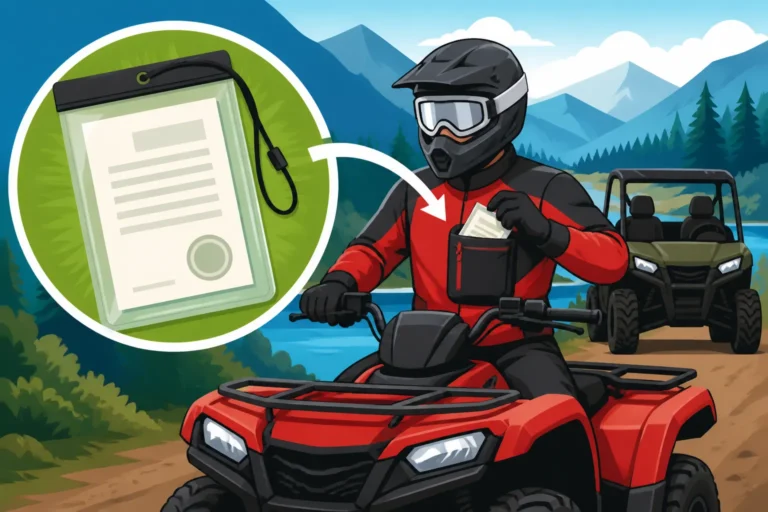
They will process the registration, and you'll walk out with your [BC's Certificate of Registration Explained] and an ORV plate. This certificate is vital; you'll need to carry it with you whenever you're operating the machine on Crown land. The broker might also discuss insurance options, as basic liability coverage is often recommended, especially if you're operating on resource roads or land with potential public access, even for farm work.
Real-World Scenarios: Farm Quads and the Law
Let's look at some practical situations that often arise for farmers and their quads in BC. Understanding these common scenarios can help clarify when registration is absolutely necessary and when you might be able to operate legally without it.
Accessing Remote Pastures and Woodlots
Many farms in BC utilize remote pastures or woodlots that aren't directly adjacent to the main farm property. Often, accessing these areas requires traveling on a forest service road, a gravel road maintained by the province or a logging company. Here's the critical point: [BC Forest Service Road Rules for ORVs] state that these are considered Crown land. If you're using your quad to check on livestock, haul fencing materials, or scout timber in these areas, your quad must be registered.
Imagine you're checking cattle up a logging road near Salmon Arm, a common practice in many ranching communities. Even if you're solely performing farm duties, if that road is a designated forest service road or otherwise on Crown land, your quad needs that plate and registration certificate. Not having it means you're operating an unregistered ORV, which carries penalties. This can be a tough pill to swallow for farmers who have always seen these roads as an extension of their operational needs.
Moving Equipment Between Fields
What if your fields are separated by a small county road or even a municipal road with a shoulder? This gets a little trickier. If you're merely crossing a highway at a designated intersection, the ORV Act has specific provisions for that, provided you have a driver's licence and basic Autoplan insurance on the quad for that brief crossing. [BC Rules for Crossing a Highway] lays out these details.
However, if you're travelling along the shoulder of a public road, or using it to get from one field to another that's not directly adjacent, you're likely entering highway rules territory, which are much stricter for ORVs. ATVs and UTVs are generally not street-legal in BC. So, if your farm quad is travelling anywhere on a public road or shoulder beyond a quick, direct crossing, you risk being in violation. For these kinds of transfers, it's often safer and legally sound to transport the quad on a trailer pulled by a registered highway vehicle. This isn't about avoiding registration, but about understanding the very distinct lines between ORV rules and highway rules.
The Risk of Riding on Resource Roads
As mentioned, resource roads are key for many farm operations. Whether it's to access hay fields, check water sources, or collect firewood for the farm, these roads are essential. However, they are also areas where enforcement of the ORV Act is common. Conservation officers, RCMP, and even forestry officials can check for proper registration. [BC Riders Must Carry the Certificate] of registration, along with valid photo ID, whenever operating on Crown land, which includes these resource roads.
The risk isn't just a fine; it's also about liability. If you're involved in an incident on a resource road with an unregistered machine, even if it's not your fault, the fact that your machine wasn't registered could complicate insurance claims or legal proceedings. Moreover, resource roads often have industrial traffic like logging trucks. Encountering one on an unregistered machine could lead to bigger problems than just a ticket. [BC Resource Road Radio Practice] is a topic many resource road users are familiar with, highlighting the blend of industrial and recreational use that necessitates clear rules.
The Steep Cost of Non-Compliance
Ignoring the registration requirements for your farm quad might seem like a small oversight, but the consequences can be significant. It's not just about an inconvenient conversation with an officer; it can hit your wallet and affect your ability to operate your machine.
Fines and Penalties for Unregistered Machines
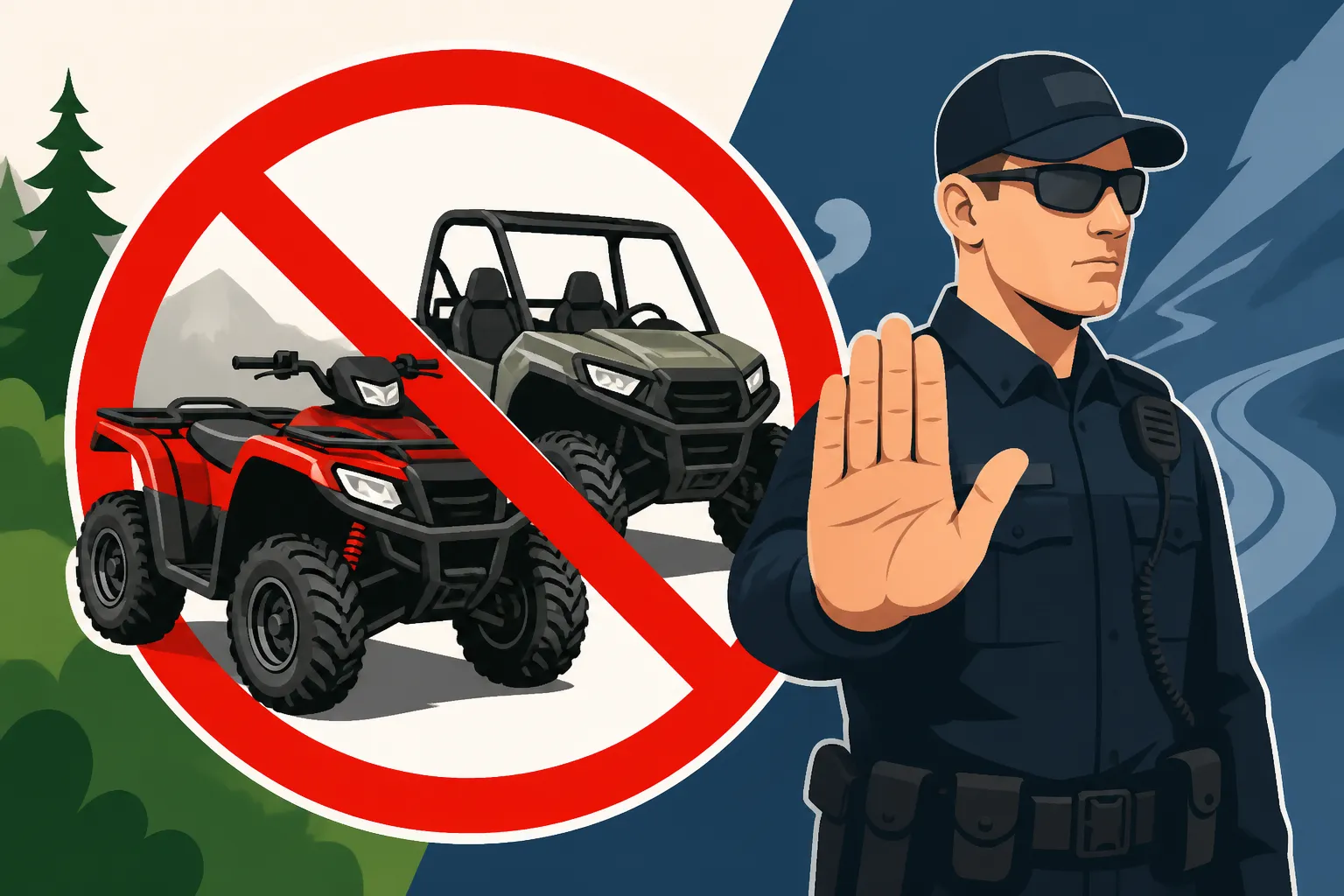
If you're caught operating an unregistered farm quad on Crown land or land where public access is permitted, you're looking at a violation ticket. These aren't just a slap on the wrist; they can be quite substantial. The specific fine amount can vary, but generally, operating an unregistered off-road vehicle in BC will result in a penalty that quickly outweighs the one-time registration fee. [BC Tickets for an Unregistered Machine] can add up fast, and nobody wants that kind of unexpected expense, especially when trying to manage farm budgets.
Beyond the initial fine, there can be additional administrative penalties or even court fines in more severe or repeated cases. In some circumstances, an officer may even have the authority to seize your machine if it's being operated illegally, compounding the financial and operational headache. It's a scenario no farmer wants to face, especially when their quad is a critical piece of their daily operations.
Implications for Insurance and Liability
Registration is also closely tied to insurance and liability. While ORV registration itself doesn't automatically come with comprehensive insurance, it's a prerequisite for obtaining it. In BC, when you register your ORV, you'll generally be offered basic liability coverage, especially if you plan to operate on resource roads where a minimum level of [BC Resource Road Insurance of $200,000] is required.
If your farm quad is unregistered and you're involved in an accident, even if it's a minor fender-bender on a back trail or if you cause damage to property (like accidentally knocking over a fence on adjacent land), the lack of registration could severely complicate any insurance claim. Your private insurance might be voided, leaving you personally liable for damages that could quickly spiral into thousands of dollars. Imagine hitting another ORV on a shared trail or causing damage to a culvert on a forest service road. Without registration and the associated insurance, you'd be on the hook for everything. This is a critical point for any responsible operator, farmer or not.
Beyond Registration: Other Important Rules for Farm Quads
Registration is just one piece of the puzzle. Even when your farm quad is legally registered, there are other rules that apply to its operation, especially when you venture beyond the confines of your truly private property. These rules are in place for safety, environmental protection, and to ensure everyone can share the backcountry respectfully.
Insurance Requirements for Different Riding Areas
We touched on this briefly, but it's worth reiterating: insurance requirements vary depending on where you're riding your farm quad. When you register your ORV, your Autoplan broker will explain the options. While there isn't a mandatory province-wide insurance requirement for all Crown land use, there are crucial exceptions. As mentioned, if you're operating on a [BC Forest Service Road Requirements], you must have a minimum of $200,000 in third-party liability insurance. This is non-negotiable and exists to protect against accidents involving industrial traffic or other recreational users.
For other types of Crown land, liability insurance is voluntary but highly recommended. Given the remote nature of many farm operations and the potential for accidents (even minor ones that cause damage to property or injury to others), carrying adequate liability coverage is just plain good sense. It's a small annual cost compared to the potential financial ruin from an uninsured incident. Many private insurers offer specific ORV policies that can be tailored to your needs, whether you're sticking to designated trails or frequently using remote resource roads for farm work.
Rider Training and Age Restrictions
While most adult farmers have years of experience operating various machinery, formal rider training for ORVs is generally voluntary for adults in BC. However, if younger family members or employees are operating farm quads, age restrictions and supervision rules come into play. [BC Youth Riding Rules Explained] are quite specific. For instance, children under 16 have restrictions on engine size, and typically need supervision by an adult (19 or older) who can provide immediate direction. There are also rules about whether a child operator can carry passengers.
Even if a youth is helping with farm duties, these rules apply. A 14-year-old operating a quad to haul small tools across a field that is technically Crown land still falls under the ORV Act's age and supervision guidelines. Parents and farm owners need to be acutely aware of these rules to avoid fines and, more importantly, to ensure the safety of young riders. Providing proper training, even if not legally mandated for adults, can significantly reduce the risk of accidents, especially given the varied terrain and potential hazards involved in farm work. Many local ATV clubs and safety councils offer courses that cover safe operation and awareness of the rules.
Table: ORV Registration Overview for BC Farm Machines
Here’s a quick overview to help you determine when your farm machine likely needs to be registered under BC's Off-Road Vehicle Act:
| Machine Type | Primary Use Case (Farm) | Common Operating Locations | Registration Required? | Notes |
|---|---|---|---|---|
| ATV (Quad) | Hauling feed, checking fences, spraying | Private land, Crown land, FSRs* | Yes, if on Crown land | Most common farm ORV. Registration is mandatory if operating on Crown land (including FSRs) or private land with public access. Not exempt for farm use alone. |
| UTV (Side-by-Side) | Transporting workers/tools, heavy hauling | Private land, Crown land, FSRs* | Yes, if on Crown land | Similar rules to ATVs. Often used for heavier farm tasks. Registration mandatory if leaving truly private property for Crown land. |
| Dirt Bike | Scouting, quick transport | Private land, Crown land, FSRs* | Yes, if on Crown land | Less common for primary farm work but used for quick access. Registration mandatory if on Crown land. |
| Tractor (Full-Size) | Plowing, tilling, large-scale work | Private land, some public roads | No, generally exempt | Typically excluded from ORV Act due to definition of "motor vehicle" and agricultural equipment. May have separate rules for highway travel. [BC Excludes Tractors and Loaders From the ORV Rules] |
| Loader/Excavator | Earth moving, construction | Private land, construction sites | No, generally exempt | Similar to tractors, these heavy machines are usually excluded from ORV Act definitions. |
| Electric ATV/UTV | General farm tasks, quiet operation | Private land, Crown land, FSRs* | Yes, if on Crown land | Regardless of power source, if it meets ORV definition and operates on Crown land, registration is required. |
*FSRs = Forest Service Roads, which are considered Crown land in BC.
This article is for general informational purposes only and does not constitute professional advice. Laws, prices and regulations vary by location and change over time. Consult a qualified professional for guidance on your specific situation.