Why a Farm Quad Still Counts as an ATV
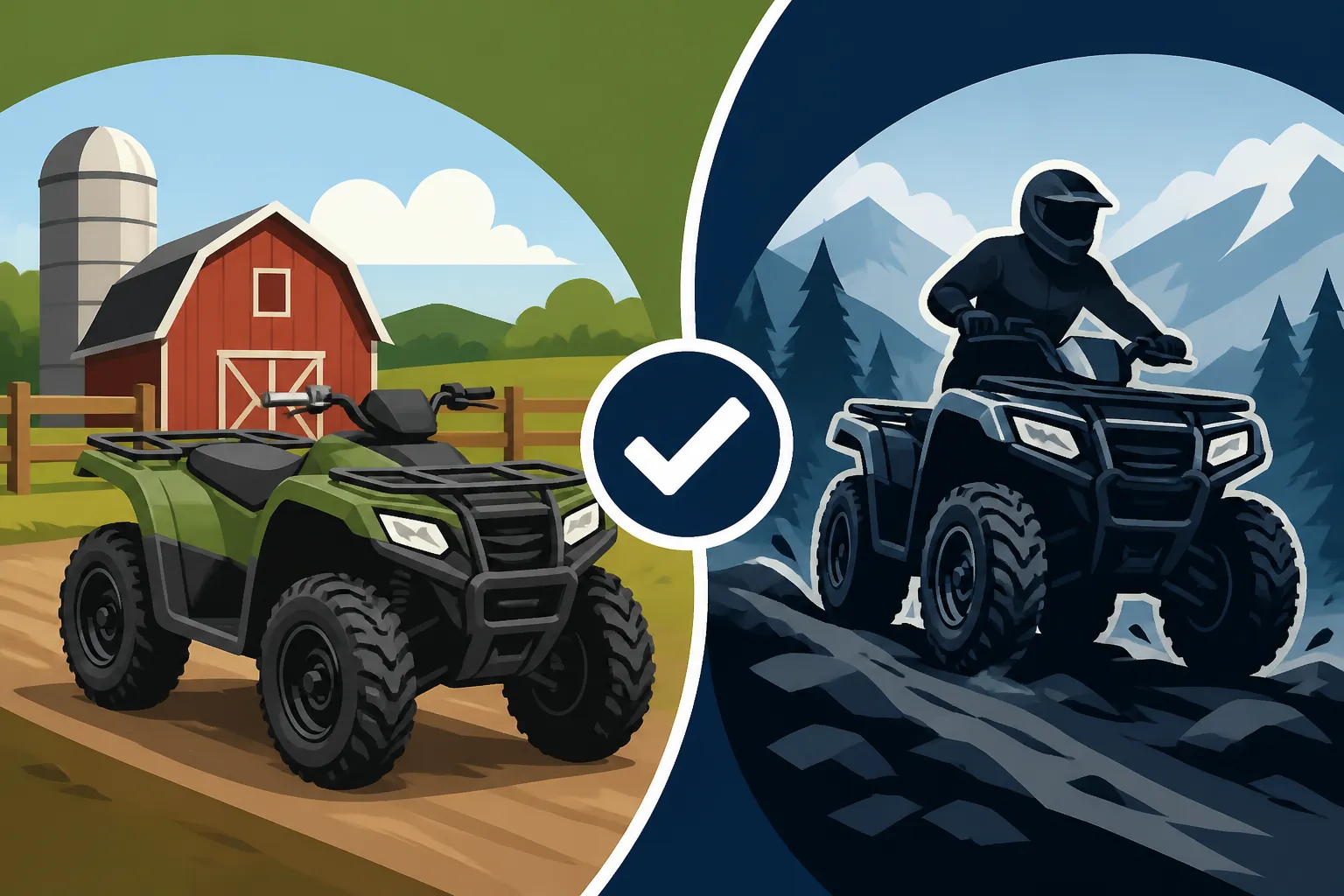
It's a common, understandable assumption: if you're using your quad or side-by-side primarily for work on a farm or ranch, surely it falls under a different set of rules than a machine trail-riding for recreation, right? Many folks in British Columbia operate under the belief that their trusty farm quad is somehow exempt from the usual off-road vehicle (ORV) regulations. But the reality can be quite different, leading to unexpected headaches and potential fines. This guide will clarify why, in BC, a farm quad still firmly counts as an ATV or UTV under the law, and what that means for you.
The Common Misconception: Are Farm Quads Different?
I hear it all the time from farmers and ranchers across BC: "My quad just stays on my land," or "It's a work vehicle, not a toy." And honestly, it makes a lot of sense from a practical perspective. When you're using an ATV to check fence lines, haul feed, move irrigation pipes, or herd livestock, it feels like an essential piece of farm equipment, no different than a tractor or a loader. You’re not out joyriding; you’re performing critical daily tasks that keep your operation running.
This leads many to believe there must be a special carve-out, a hidden clause in the provincial regulations that distinguishes between a work-focused machine and one used for weekend fun. After all, vehicles designed specifically for agriculture, like tractors, do have different rules. It feels logical that a quad used for agricultural purposes would follow suit. The frustration comes from discovering that this intuitive distinction isn't always reflected in the letter of the law here in British Columbia.
The reality is that while the purpose of your ride might be entirely different, the classification of the machine itself under BC's Off-Road Vehicle Act remains the same. This distinction between the machine's design and its intended use is often the root of the confusion, and it’s critical for every farmer and rancher to understand.
What BC's Off-Road Vehicle Act Says About ATVs
Let's dive into the nitty-gritty of what makes an off-road vehicle an off-road vehicle in British Columbia. The Off-Road Vehicle Act, which became law in 2015, defines an "off-road vehicle" quite broadly. It's essentially any motorized vehicle designed to be used off highways. This includes all-terrain vehicles (ATVs), utility terrain vehicles (UTVs, or side-by-sides), dirt bikes, and snowmobiles. The key here is the design and capability of the machine, not how you primarily intend to use it.
Think about your farm quad. Does it have four wheels, handlebars, and a seat you straddle? Or is it a side-by-side with a steering wheel, bucket seats, and a roll cage? Does it have knobby tires and suspension built for uneven terrain? If the answer to these questions is yes, then your machine, regardless of its agricultural duties, fits the definition of an off-road vehicle under the Act. There's no clause that says, "unless it's painted green and has hay on the back."
The Act does, however, specifically exclude certain types of vehicles from being classified as ORVs. These typically include machines that are already regulated under the Motor Vehicle Act, such as cars, trucks, and motorcycles designed for highway use, and also specific types of industrial or agricultural equipment. For instance, [BC Excludes Tractors and Loaders From the ORV Rules] precisely because they are considered different classes of machinery, often regulated under other statutes or common law. So, while your tractor doesn't need ORV registration, your quad does, even if they're both pulling a trailer of feed.
This distinction is crucial. When the government drafted the ORV Act, they were focused on regulating machines based on their fundamental design and where they operate, primarily off the paved road network. They weren't creating categories based on who owns the machine or for what specific task it's being employed. This means that [Agricultural and Industrial Exclusions] typically apply to larger, purpose-built machinery like combines or excavators, not to versatile ATVs or UTVs that just happen to be used for work.
Why Registration Applies to Farm Quads Too
Given that your farm quad falls under the definition of an off-road vehicle, the next logical step is to understand why that triggers the provincial registration requirement. The core of BC's ORV Act is pretty straightforward: if you operate an ORV on Crown land, it must be registered. And here's where things can get tricky for farmers and ranchers.
Many agricultural operations involve land that isn't purely private property. Your farm might border Crown land, or you might need to cross a short stretch of public road or a forest service road (FSR) to access different parcels of your own land. Maybe you have grazing leases that require you to travel on [BC Resource Roads Count as Crown Land] to check on your herd. Even a brief moment of your tires touching these types of public or Crown-managed lands is enough to trigger the registration requirement. It's not just about recreational trails; it's about any non-private land accessible to the public. [BC Crown Land Triggers the Registration Rule] for any ORV activity, including work-related travel.
This means that even if 99% of your quad's life is spent on your deeded acreage, that 1% on Crown land—even just crossing a rural road shoulder—makes registration mandatory. And it's a one-time registration process, not an annual renewal like vehicle plates. You register it once, and it's registered for as long as you own it. For many, this is a relief, as it's not a recurring bureaucratic hurdle.
The process for registering a farm quad is exactly the same as for any other ORV. You visit an [BC Autoplan Brokers Handle ORV Registration] office. They're equipped to handle the paperwork. You'll need proof of ownership, like a bill of sale. If you're an established farmer and your machine has been passed down through generations, finding original paperwork can be a real challenge. Don't despair! Options like a statutory declaration exist, where you swear under oath that you are the rightful owner. Services like LawDepot can provide templates for a legally sound bill of sale or a statutory declaration, helping you formalize these crucial ownership documents even for older machines. You can learn more about the steps involved in [How to Register an ATV in BC].
Practical Implications for Farmers and Ranchers
Understanding that your farm quad is indeed an ORV under the Act, and therefore subject to registration requirements if operated on Crown land, brings us to the practical realities for your operation. This isn't about shaming anyone; it's about ensuring you're operating within the law and protecting your livelihood.
Avoiding Unnecessary Fines and Headaches
The most immediate implication of an unregistered farm quad operating on Crown land is the risk of a ticket. Conservation Officers, RCMP, and other enforcement personnel do patrol rural areas, and they are authorized to check for ORV registration. An unregistered machine can lead to [BC Tickets for an Unregistered Machine], which no one wants. These fines can quickly add up and are a completely avoidable expense for a busy farmer or rancher. It's much simpler and less stressful to get the registration done once than to constantly worry about getting caught.
The Importance of a Clear Ownership Chain
Even if your farm quad has been part of the family for decades, having proper documentation of ownership is vital. For registration, the broker will need to see a [BC Bills of Sale for Every Prior Owner] to establish a clear chain of ownership back to the original purchase, or at least a point where a proper declaration can be made. This can be a huge hurdle for older machines where receipts are long lost or informal sales occurred years ago.
This is where a document like a statutory declaration comes in handy. If you genuinely can't produce a bill of sale for your existing farm quad, you can complete a [BC Statutory Declaration for an ORV] affirming your ownership. This document essentially serves as legal proof when other records are missing. Websites like LawDepot offer templates and guidance for creating such declarations, making it easier to formalize your ownership and get that essential registration. Similarly, if a machine was gifted within the family, a clear [BC Gift Letters Between Family] can prevent future headaches, and again, LawDepot can be a useful resource for drafting such a letter.
Insurance: Beyond the Farm Gate
While ORV registration and insurance are separate, they often go hand-in-hand. When you register your ORV with an Autoplan broker, they can also help you with [BC Insurance Bought With Registration]. While liability insurance isn't mandatory for all Crown land use, it is a requirement for [BC Resource Road Insurance of $200,000] if you're using Forest Service Roads (FSRs) or other resource roads, which many farmers frequently do to access remote pastures or woodlots.
It's tempting to think your farm insurance policy covers everything, but ORV liability coverage is specific. Without it, if your farm quad is involved in an accident on an FSR, even while performing farm duties, you could be personally liable for damages. This isn't a small risk, especially when heavy industrial traffic, like logging trucks, are also using those roads.
Record Keeping for Peace of Mind
My advice to every farmer is to treat your farm quad's paperwork with the same diligence as you would for any other valuable asset. Keep a dedicated file for each machine, including its Certificate of Registration, any bills of sale, statutory declarations, and insurance policy documents. This small effort can save you immense frustration down the line, whether you're registering an old machine, renewing your insurance, or eventually selling it.
The table below highlights some key differences between common beliefs about farm quads and the actual requirements under BC's Off-Road Vehicle Act:
| Feature | Common Belief for Farm Quads | BC ORV Act Reality for Farm Quads |
|---|---|---|
| Classification | Exempt as 'farm equipment' or 'work vehicle' | Classified as an 'off-road vehicle' based on design, regardless of use |
| Registration | Not required if used mostly on private land | Mandatory if any operation on Crown land (including FSRs, road shoulders) |
| Proof of Ownership | Informal transfers, family hand-downs are sufficient | Requires documented chain of ownership (Bill of Sale, Gift Letter, Statutory Declaration) |
| Required Documents | Verbal agreements, old receipts | Formal Bill of Sale, Gift Letter (e.g., from LawDepot), or Statutory Declaration |
| Insurance | Covered by general farm or homeowner's policy | Specific ORV liability coverage required for FSRs; recommended elsewhere |
| Enforcement | Less scrutiny for work vehicles | Subject to same enforcement as recreational ORVs |
By understanding these distinctions and taking the necessary steps, you can ensure your indispensable farm quad remains a valuable, legal tool for your operations, free from unnecessary legal troubles.
Disclaimer
This article is for general informational purposes only and does not constitute professional advice. Laws, prices and regulations vary by location and change over time. Consult a qualified professional for guidance on your specific situation.