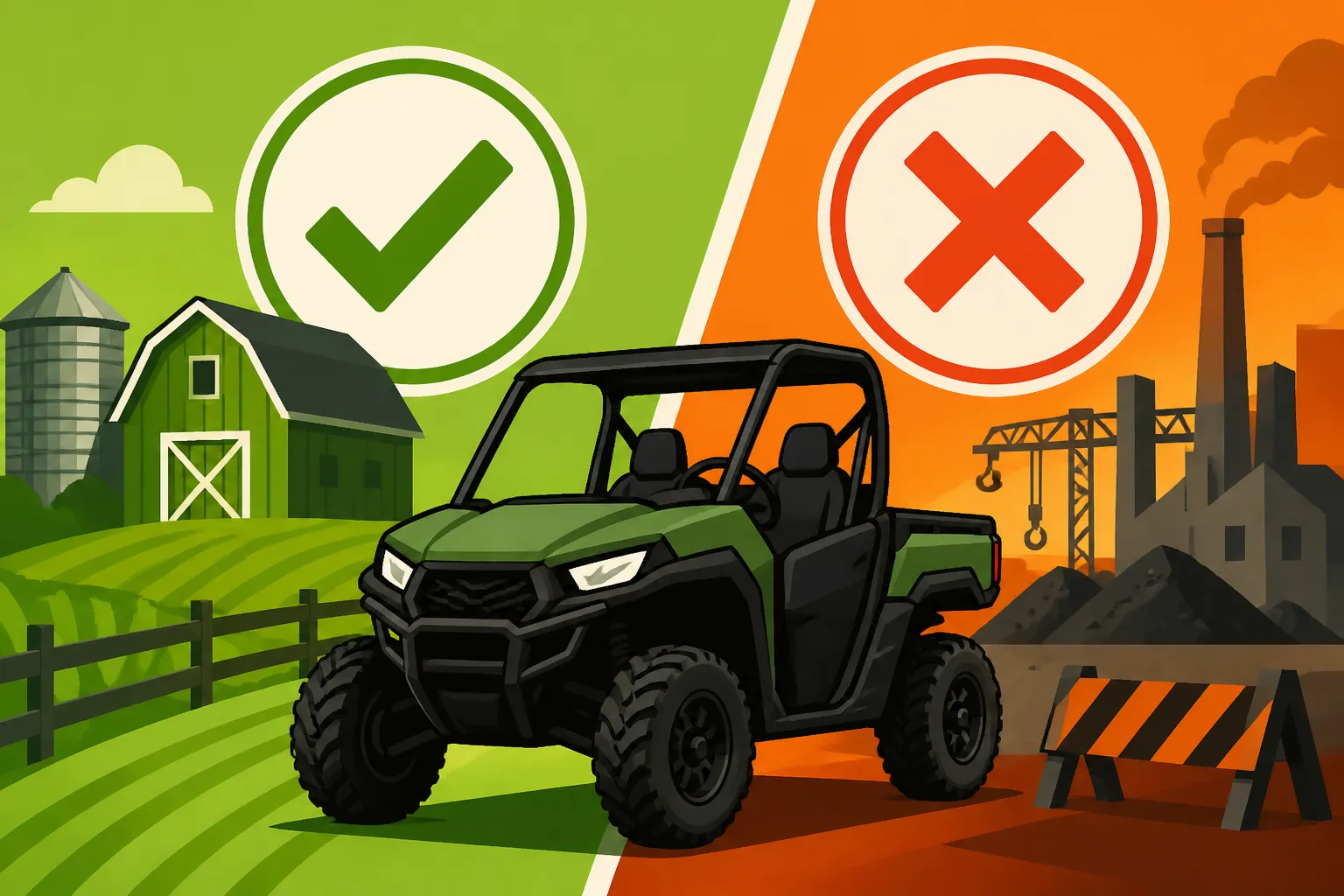
Agricultural and Industrial Exclusions
It's incredibly common for folks in British Columbia, especially those who rely on ATVs or UTVs for work on farms, ranches, or industrial sites, to assume their machines might be exempt from the province's off-road vehicle (ORV) registration rules. After all, if it's not being used for recreation, why would it need to be registered like a leisure vehicle, right? This often leads to confusion, potential fines, and a lot of head-scratching. This guide is here to clear up that widespread misunderstanding, explaining exactly what the BC Off-Road Vehicle Act considers an exclusion and, more importantly, why most work-related quads and side-by-sides still absolutely need to be registered.
Understanding the BC Off-Road Vehicle Act and Its Scope
When the BC government brought in the Off-Road Vehicle Act in 2015, it fundamentally changed how off-road machines are tracked and regulated in the province. Before that, it was a bit of a Wild West out there, with minimal oversight on who owned what and where it was being ridden. The new Act aimed to bring some order to the trails, resource roads, and Crown land that so many of us enjoy (or work on).
The General Rule: Why Most ORVs Need Registration
The core principle behind the Act is straightforward: if you're operating an off-road vehicle on Crown land, which includes pretty much any public land, forest service roads, or even most gravel pits, it needs to be registered. This isn't just a suggestion; it's a legal requirement. [BC Registration Became Mandatory in 2015], and it applies whether your machine is brand new from the dealership or a seasoned workhorse you've had for decades.
An ORV, as defined by the Act, is a pretty broad category. It covers everything from dirt bikes and snowmobiles to ATVs and side-by-sides. The legislature created this definition to encompass a wide array of vehicles designed primarily for off-highway use. The critical trigger for registration isn't just owning the machine, but rather where you intend to operate it. As soon as those tires (or tracks) hit any land classified as Crown land, the registration rules kick in. [BC Crown Land Triggers the Registration Rule], and given that a huge percentage of BC is Crown land, it's very hard to avoid this requirement if you plan on actually using your machine outside of your own backyard. This includes using a side-by-side to access a remote cabin, an ATV to check traplines, or a quad to scout hunting spots. The purpose of the ride doesn't change the fundamental requirement.
Dispelling the Myth of Blanket Exemptions
One of the most persistent myths we hear is that if a machine is used for a "legitimate" work purpose, it automatically gets a pass on registration. People often think, "My quad is just for moving hay bales," or "Our UTV is only for maintenance at the mill," and therefore, it doesn't need to be registered like a recreational toy. This couldn't be further from the truth.
The Act was designed with both recreational and work uses in mind. The legislators understood that many off-road vehicles are vital tools for industries like agriculture, forestry, mining, and construction. However, they didn't create a sweeping exemption based solely on the activity the machine performs. Instead, the focus is on the type of machine itself. The intent was to ensure accountability for all machines that fit the ORV definition, regardless of their daily tasks. The problems that arise from unregistered machines – identifying ownership in case of theft, tracking use on public lands, ensuring some baseline of responsible operation – apply equally to work machines as they do to recreational ones.
Unpacking "Agricultural and Industrial Exclusions" in Detail
So, if the "work-use" exemption is largely a myth, what does the Act actually exclude? This is where the specific language of the legislation becomes incredibly important. It's not about the job your machine does; it's about whether your machine fits a very narrow definition of an excluded vehicle.
What the Act Actually Excludes (and why it's narrow)
The BC Off-Road Vehicle Act does provide exclusions, but they are very specific and generally relate to heavy equipment and dedicated agricultural machinery that are fundamentally different from what we typically call an ATV or UTV. For instance, the Act clarifies that [BC Excludes Tractors and Loaders From the ORV Rules]. This means your large farm tractor, a combine harvester, or a heavy-duty front-end loader used in an industrial setting likely won't need ORV registration.
The key here is that these machines are designed for a singular, heavy-duty purpose and usually don't fit the general characteristics of an "off-road vehicle" as defined by the Act. They are not typically used for fast-paced trail riding or recreational pursuits in the same way an ATV or side-by-side is. Their very design, speed, and operational profile set them apart. An articulating rock truck at a mine site, for example, is clearly an industrial vehicle and doesn't get swept into the ORV registration requirement. A hay bailer being towed by a tractor is also part of an agricultural operation, and not a standalone ORV.
Why Farm Quads Are Not Exempt
This is perhaps the biggest area of confusion for rural residents. Many farmers, ranchers, and homesteaders rely on their ATVs and UTVs every single day for tasks like checking fences, moving livestock, hauling feed, or accessing remote parts of their property. It feels like an extension of their farming equipment, right? Yet, [BC Farm Quads Are Not Exempt].
The reason is simple: an ATV (All-Terrain Vehicle) or a UTV (Utility Task Vehicle, often called a side-by-side) fits the definition of an Off-Road Vehicle under the Act, regardless of how it's being used. The legislation doesn't differentiate between a quad used for joyriding on the weekend and one used for chasing cattle on a Monday morning. Both are inherently designed for off-highway travel and possess characteristics that the Act intends to regulate.
Imagine a rancher using their quad to check fences along a boundary that crosses Crown land. Even though this is a legitimate agricultural activity, the moment that quad touches public property, it needs to be registered. The same machine, if it were confined exclusively to the rancher's private property and never ventured onto Crown land or a forest service road, might not trigger the registration requirement. But few work machines stay solely on private land. The ability of these machines to operate off-road and be used recreationally means they fall squarely within the Act's scope.
Industrial Use and the Registration Requirement
The same logic applies to machines used in industrial settings. If you're running a construction company and use a side-by-side to transport workers and tools around a large building site that happens to be on Crown land, or a forestry company that deploys UTVs to inspect cut blocks or access remote areas of a logging show, those machines still need to be registered. [BC Registration Covers Work and Recreation] – there's no distinction.
Think about a crew using a robust side-by-side to access equipment deep within a remote worksite accessible only via a forest service road. That road is Crown land, and the machine, being a UTV, is an ORV. It must be registered. Businesses that operate fleets of these vehicles for their employees need to ensure every single machine is compliant. Not only does this avoid tickets, but it also provides a clear chain of ownership, which can be important for business assets and liability. For proper record-keeping and ensuring your business adheres to all provincial requirements, sometimes having standardized documentation can be a lifesaver. Tools like LawDepot can provide templates for internal ownership transfers or lease agreements for business-owned machines, which while not directly related to ORV registration, ensure that your internal paperwork is as solid as your ORV's external registration.
The Practical Implications for BC Riders and Businesses
Understanding these distinctions isn't just academic; it has very real consequences for anyone operating an ATV or UTV in British Columbia, whether for personal use or as part of their livelihood. Ignoring the rules can lead to more than just a slap on the wrist.
Avoiding Fines and Complications
The most immediate consequence of operating an unregistered ORV, even one used for work, is the risk of a violation ticket. Conservation Officers, RCMP, and other enforcement personnel regularly patrol Crown land and forest service roads. They are well-versed in the ORV Act, and "it's a farm quad" isn't a valid excuse for lacking registration. [BC Tickets for an Unregistered Machine] can be costly, and repeated infractions could lead to further complications.
Beyond fines, there's the administrative headache. If you're stopped, you'll need to present your Certificate of Registration. [BC Riders Must Carry the Certificate] whenever they're operating their ORV on Crown land. For businesses, this means ensuring that employees who operate these machines carry the proper documentation or can easily access it. Not having this paperwork can lead to delays, further questioning, and potential impoundment of the machine until proof of registration can be verified. This can severely impact productivity if a key piece of equipment is taken out of service due to non-compliance.
Ensuring Compliance: What to Register and How
For most ATVs and UTVs, the path to compliance is clear: they need to be registered with ICBC through an Autoplan broker. [How to Register an ATV in BC] involves presenting a range of documents, including proof of ownership, identity, and sometimes, a statutory declaration if previous paperwork is missing. The process is the same whether the machine is used for recreation or work.
Before heading to a broker, it’s always a good idea to have all your ducks in a row. Our [BC Registration Paperwork Checklist] can help ensure you have everything you need. This might include previous bills of sale, transfer of ownership forms, and proof of your identity and address. For businesses, keeping meticulous records of purchase and any internal transfers is essential. If you’re buying an older machine for your farm or business and the paperwork chain is broken, you might need a statutory declaration. Resources like LawDepot offer templates for legal documents, including bills of sale or statutory declarations, which can be invaluable for establishing a clear paper trail, especially when dealing with private sales or older machines where original receipts are long gone. Having such a document, properly filled out and witnessed, is often critical for the registration process if your ownership isn't immediately obvious.
When to Seek Expert Advice
While the general rules are quite clear, there can be unique situations, especially for complex industrial operations or very specific types of equipment, where it's not immediately obvious if a machine falls under the ORV Act. For instance, if you're developing a custom-built utility vehicle that doesn't fit neatly into existing classifications, or if your business operates in a highly regulated environment, it's wise to seek professional guidance.
Your first stop should be an ICBC Autoplan broker who has experience with ORV registrations. Many brokers are highly knowledgeable in this niche area and can provide specific advice based on your machine and intended use. For complex legal interpretations or for businesses with extensive fleets and unique operational profiles, consulting with a lawyer specializing in motor vehicle or provincial regulatory law in BC can provide peace of mind. They can help navigate the nuances and ensure your business is fully compliant, potentially avoiding significant future penalties. Again, in these situations, having well-documented agreements or statements of use can be vital, and services like LawDepot can assist in creating these foundational legal documents for a business.
Machine Classification for Registration
To help clarify the common distinctions, here's a quick overview of what typically gets excluded versus what almost always needs to be registered under the BC Off-Road Vehicle Act, even if used for work.
| Category | Commonly Excluded Machines (Generally NOT ORVs) | Commonly Included ORVs (Require Registration for Crown Land Use) |
|---|---|---|
| Agricultural Equipment | Large farm tractors, combines, dedicated tillage equipment, hay bailers, heavy crop sprayers | ATVs, UTVs (side-by-sides), older 3-wheelers used on farms |
| Industrial Equipment | Excavators, bulldozers, front-end loaders, road graders, large forklifts, articulating rock trucks | UTVs (side-by-sides) for site transport, smaller utility ATVs, tracked vehicles (like mini-skid steers not primarily for highway use) |
| Other Specialized Gear | Dedicated snow groomers, street sweepers, some golf carts (depending on design and use restrictions) | Snowmobiles, dirt bikes, amphibious ATVs |
Remember, the key differentiator is usually the inherent design and primary function of the machine, not simply the task it performs on a given day. If it looks and behaves like an ATV or UTV, it almost certainly needs to be registered if it's going off your private property.
Disclaimer
This article is for general informational purposes only and does not constitute professional advice. Laws, prices and regulations vary by location and change over time. Consult a qualified professional for guidance on your specific situation.