BC Registration Before Riding an FSR
It's a common misconception, isn't it? Many folks assume that as long as they're not on a paved road, the rules don't quite apply to their ATV or side-by-side. But when it comes to riding on a Forest Service Road (FSR) in British Columbia, ignoring registration requirements can land you in a heap of trouble. This guide will meticulously break down why your off-road vehicle (ORV) absolutely needs to be registered before you venture onto any FSR, detailing the process, the necessary paperwork, and the significant penalties for non-compliance.
Understanding BC's ORV Registration Mandate
Before November 1, 2015, the rules around off-road vehicle registration in British Columbia were, to put it mildly, a bit murky. Many riders operated under the assumption that if they weren't on a highway, their machine didn't need any official paperwork. This led to a lot of confusion and a lack of accountability in the backcountry. The province eventually stepped in to create a clearer, more consistent framework for ORV use, and that included making registration mandatory for almost all off-road vehicles. [BC Registration Became Mandatory in 2015]
This shift wasn't just about collecting fees; it was about safety, managing Crown land, and ensuring that if a machine was involved in an incident, there was a clear record of its ownership. For anyone who enjoys exploring BC's vast wilderness, especially via its extensive network of FSRs, understanding this fundamental requirement is the first step to responsible riding.
The Legal Link: FSRs and Crown Land
Here's the crucial connection: Forest Service Roads, while they might feel like remote backcountry trails, are almost universally located on Crown land. And under the Off-Road Vehicle Act, any operation of an ORV on Crown land triggers the mandatory registration requirement. It's not a suggestion; it's the law. This means whether you're heading deep into the Cariboo, exploring the Kootenays, or just driving a short distance down a resource road to access a favourite fishing spot, your machine needs to be registered.
Many riders, especially those new to the province or returning to the sport after a long hiatus, don't realize that the legal definition of where the ORV Act applies is quite broad. It covers everything from vast wilderness areas to the very roads that crisscross them. Ignoring this connection between FSRs and Crown land is a common pitfall that often leads to unexpected tickets and headaches. [BC Crown Land Triggers the Registration Rule]
What "Registration" Actually Means in BC
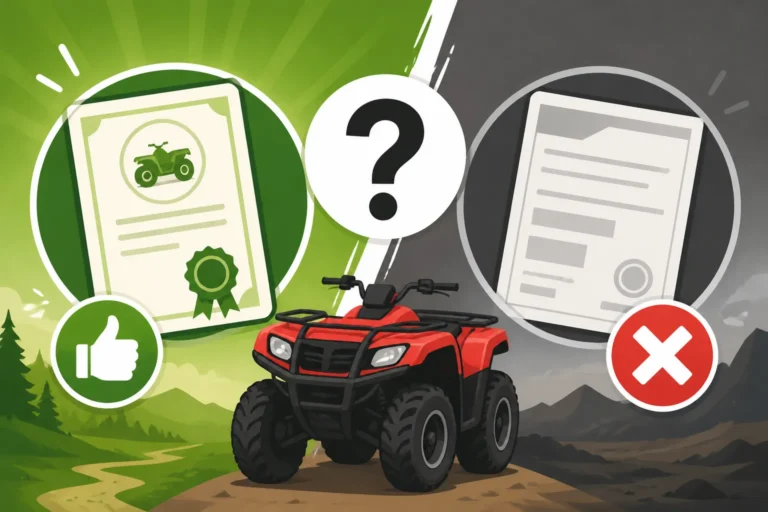
When we talk about "registration" for an ORV in BC, it's important to clarify what that entails because it's quite different from what you might be used to with a car or even in other provinces. In British Columbia, your ORV doesn't receive a "title" in the same way a highway vehicle does. Instead, once registered, you'll be issued a "Certificate of Registration" by ICBC. This certificate serves as your official proof that the machine is recognized by the province and has an associated owner.
This might seem like a subtle difference, but it has significant implications for how ownership is tracked and transferred. The Certificate of Registration is essentially your ORV's identity document, and it's something you must carry with you whenever you're operating the machine on Crown land or an FSR. Losing it or not having it available can lead to delays or issues if you're stopped by an enforcement officer. [BC's Certificate of Registration Explained]
The Specifics of Registering Your Machine for FSR Use
So, you understand why registration is vital for FSRs. Now, let's get down to the practical steps of how to actually get your ATV or side-by-side officially registered. It might seem a bit daunting, especially if your machine is older or you don't have perfect paperwork, but the process is manageable if you come prepared. The key is gathering the right documents and knowing where to go.
Gathering Your Paperwork: The Ownership Chain
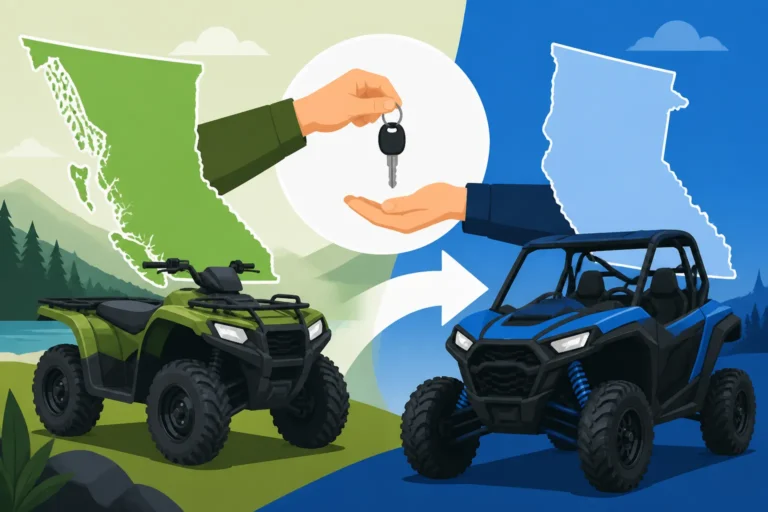
This is often where riders hit their first snag. To register your ORV, you need to prove ownership, and BC's system requires a clear "chain of ownership" from the previous owner (or the original sale if you bought it new) right up to you. This usually means providing a bill of sale or purchase agreement. If you bought your machine new from a dealer, this part is straightforward. They’ll likely have all the necessary documents and might even handle the initial registration for you.
However, if you bought your machine privately, especially if it was a cash deal decades ago or you've owned it for a long time, you'll need the bill of sale from your purchase. If you don't have one, or if there's a gap in the ownership history, things get a bit more complex. You might need a statutory declaration, which is a sworn statement affirming your ownership of the machine. These templates can often be found online, and resources like LawDepot provide useful forms for creating a detailed bill of sale or a statutory declaration, which can be immensely helpful in ensuring all necessary information is included. [BC Bills of Sale for Every Prior Owner] and [BC Registration Without a Bill of Sale]
It's crucial to understand that every single prior owner needs to be accounted for in this chain. If a bill of sale is missing from a prior transaction, or if the seller has vanished, you will likely need to make a statutory declaration. This is a formal, legal document that attests to the facts of your ownership history, signed in front of a notary public or commissioner for taking affidavits. The broker you visit will guide you on what exactly is needed, but having as much documentation as possible, even old handwritten receipts, is always better than nothing.
Visiting an Autoplan Broker: What to Expect
Once you've gathered all your ownership documents, the next step is to visit an Autoplan broker. These are the same offices where you would register and insure your car, truck, or motorcycle. They are authorized by ICBC to handle ORV registrations. Not all brokers deal with ORVs frequently, but they all can. It's a good idea to call ahead to your local broker, especially if your situation is complex, to ensure they have staff familiar with ORV processes. [BC Autoplan Brokers Handle ORV Registration]
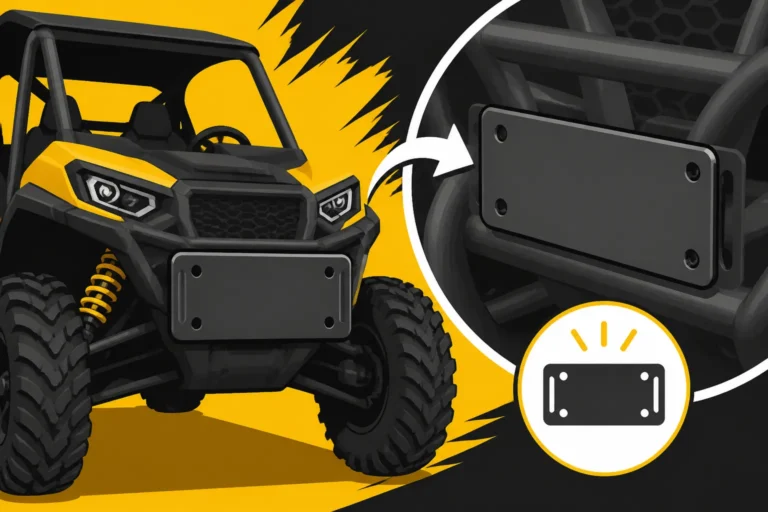
When you go, bring your ORV's vehicle identification number (VIN) or serial number, all your ownership paperwork (bills of sale, statutory declarations), and a valid piece of photo identification. The broker will review your documents, verify the VIN, and process the registration. You'll pay a one-time registration fee, and once everything is approved, you'll walk out with your Certificate of Registration and your new ORV plate and decal. The whole process is usually quite quick if your paperwork is in order.
The broker might ask you some specific questions about the machine, its intended use, and its history. This is normal; they're ensuring everything aligns with the provincial regulations. They might also point you to LawDepot or similar resources if you need to create a statutory declaration on the spot, though it's always best to have this prepared beforehand. Don't be shy about asking questions if anything is unclear – they're there to help you navigate the system. [How to Register an ATV in BC]
Beyond Registration: Other FSR Requirements
While registration is the absolute cornerstone of legal FSR riding in BC, it's certainly not the only requirement. Operating an ORV on a Forest Service Road comes with a host of other responsibilities, from insurance to safety gear and understanding road etiquette. Neglecting these can be just as problematic as riding an unregistered machine.
Insurance: Your Essential Protection on FSRs
This is a critical point that many riders overlook. Just because your ORV is registered doesn't mean you're automatically covered for liability, especially when you're sharing the road with other vehicles, including large industrial traffic like logging trucks. While basic third-party liability insurance is mandatory for highway vehicles, the rules are slightly different for ORVs on FSRs.
For most Forest Service Roads, especially those used by industrial traffic, you are required to have at least $200,000 in third-party liability insurance. This is a specific requirement under the Forest and Range Practices Act. This isn't just about protecting yourself; it's about protecting others in case of an accident. Imagine hitting a logging truck or another recreational vehicle – the damage and potential injuries could be catastrophic, and without proper insurance, you'd be personally on the hook for enormous costs.
You can typically purchase this specific FSR liability insurance through an Autoplan broker when you register your machine, or from private insurance companies. It's often an additional, voluntary purchase beyond the registration itself, but absolutely essential for safe and legal FSR use. Don't assume your home or auto insurance policies will cover you; always confirm with your provider. [BC Resource Road Insurance of $200,000]
Safety Gear and Best Practices for FSRs
Beyond the paperwork, safety is paramount on FSRs. The BC Off-Road Vehicle Act and other regulations mandate certain safety practices, and common sense dictates others.
Firstly, helmets. If you're riding an ATV or a dirt bike – any "ride-astride" machine – a helmet is mandatory for both the operator and any passenger. This isn't just a suggestion; it's a legal requirement designed to protect you in case of a fall or collision. For side-by-sides with roll cages and seatbelts, helmets are generally not required if seatbelts are worn, but they are still highly recommended, especially on challenging terrain. Ensure your helmet meets recognized safety standards. [BC Helmet Law Covers Every Rider]
Secondly, always be prepared for the conditions. FSRs can be rough, muddy, dusty, and prone to washouts. Carry essential tools, a first-aid kit, water, and emergency communication (a satellite messenger is ideal as cell service is often non-existent). For FSRs that see active industrial traffic, it's highly advisable to carry a radio and use the designated resource road channels. This allows you to communicate with logging trucks and other heavy equipment, letting them know your location and avoiding dangerous encounters on blind corners. While not always legally mandated, it's a critical safety measure that many experienced riders swear by.
Finally, respect the road and its users. Yield to industrial traffic, keep your speed appropriate for the conditions, and minimize your impact on the environment. Many FSRs are shared spaces, and responsible riding ensures continued access for everyone.
Consequences of Riding Unregistered on an FSR
Let's not sugarcoat it: riding an unregistered ORV on an FSR in BC is a direct violation of the law, and the consequences can range from inconvenient to severely impactful on your wallet and your freedom to ride. It's simply not worth taking the risk.
Financial Penalties and Legal Repercussions
The most immediate consequence of operating an unregistered ORV on an FSR is a violation ticket. Under the Off-Road Vehicle Act, fines for operating an unregistered machine are significant. These aren't just small nuisances; they're substantial penalties that can quickly sour a day of riding. An officer can issue a ticket right on the spot, and disputing it successfully without proper registration is nearly impossible. [BC Fines for Riding an Unregistered Machine]
Beyond the initial fine, there can be additional administrative penalties or even court fines, especially if there are other infractions involved, such as careless operation or environmental damage. Repeated offenses can lead to even harsher penalties. The province takes the regulation of ORVs seriously, recognizing the potential for environmental impact and safety risks when machines are operated without oversight. This is precisely why the registration system was put in place.
| Infraction | Potential Consequence (Initial) | Additional Risks |
|---|---|---|
| Operating Unregistered ORV on FSR | Significant Violation Ticket (Fine) | Machine Seizure, Increased Fines for Repeat Offenses |
| No FSR Liability Insurance | Potential for Huge Personal Liability in Accident | Financial Ruin from Damages/Injuries |
| No Helmet (on ride-astride machine) | Violation Ticket (Fine) | Serious Head Injury, Further Legal Action |
| Improper Plate Placement/Visibility | Violation Ticket (Fine) | Inability to Identify Machine, Further Stops |
| Operating While Impaired | Criminal Charges, Vehicle Seizure | Jail Time, Licence Suspension, Record |
Why an FSR Isn't "Just the Backcountry"
It's easy to fall into the trap of thinking that an FSR is simply "the backcountry" and therefore, rules are more relaxed. This couldn't be further from the truth. FSRs are often actively managed roads, essential for forestry, mining, and other resource industries. They are also crucial for firefighting access and for other government operations. Because of this, they are subject to specific regulations that ensure safety and accountability. [BC Forest Service Road Rules for ORVs]
When you operate an unregistered ORV on an FSR, you're not just flouting a minor technicality; you're undermining the system designed to manage these critical access routes. Enforcement officers, including Conservation Officers, RCMP, and Forest Protection Officers, have the authority to stop and inspect ORVs on FSRs. They are not just looking for registration, but also ensuring compliance with environmental regulations, spark arrestor requirements, and general safe operation. If your machine is found to be unregistered, they have the power to ticket you, and in some cases, even seize your machine until proper documentation is produced.
Don't let a casual approach to regulations turn your enjoyable FSR adventure into a costly legal headache. Take the time to register your machine, gather all necessary paperwork (perhaps even using LawDepot to prepare any missing documents), and ensure you're fully compliant with all other FSR requirements. Responsible riding ensures not only your safety but also the continued privilege of accessing BC's incredible wilderness.
Disclaimer
This article is for general informational purposes only and does not constitute professional advice. Laws, prices and regulations vary by location and change over time. Consult a qualified professional for guidance on your specific situation.