Registration Mandatory Since November 2015
Riding an ATV or UTV in British Columbia used to feel a bit like the wild west, especially when it came to official paperwork. For many years, you could buy a quad, hit the trails, and never really think about registering it. This lack of clear rules often left riders confused and unprepared, leading to frustrations when trying to sell a machine or understand their legal obligations. This guide is here to cut through that confusion, explaining why registration became mandatory in BC back in November 2015, what that means for you now, and how to navigate the process for your off-road vehicle.
The Shift: Why Registration Became Mandatory in BC
For decades, off-road vehicle (ORV) use in British Columbia operated under a very different set of assumptions. There wasn't a comprehensive system to track these machines, which meant a lot of grey areas for riders, law enforcement, and even those trying to manage our beautiful natural spaces. This free-wheeling approach certainly had its appeal for some, but it also presented significant challenges that ultimately led to a major legislative change.
Before November 2015: The Wild West Days
Before the Off-Road Vehicle Act came into effect in November 2015, the landscape for ATV and UTV owners was largely unregulated from a provincial registration standpoint. You bought your machine, maybe kept the bill of sale in a drawer, and took it out on Crown land or your favourite resource road. If you bought an older machine, tracing its history was often impossible, and frankly, unnecessary at the time. There was no central registry, no requirement for a plate, and no government-issued certificate to prove ownership beyond your personal receipt. This created a situation where stolen machines could be difficult to track, and accountability for accidents or misuse on public land was often murky at best. It truly felt like the "wild west" for many riders, with minimal oversight on how these powerful machines were bought, sold, and used.
The Off-Road Vehicle Act: A New Era for Riders
Everything changed on November 1, 2015, when the BC government fully implemented the Off-Road Vehicle Act. This wasn't just a minor tweak; it was a fundamental shift designed to bring ORVs under a consistent regulatory framework, much like how cars and trucks are managed. The Act made it mandatory for almost all off-road vehicles operating on Crown land (which covers vast stretches of BC's backcountry, including most [BC Forest Service Road Rules for ORVs]) to be registered with the provincial government. This meant obtaining a unique registration number, receiving a certificate of registration, and displaying a number plate. The goal was to modernize ORV management, enhance safety, protect the environment, and provide a clearer path for law enforcement and land managers. It was a big step, and one that required a learning curve for many long-time riders and new purchasers alike.
What This Change Meant for Existing Machines
One of the biggest questions that immediately arose after November 2015 was: "What about my old quad? Do I have to register that too?" The answer was a resounding yes. The new legislation applied to all off-road vehicles, regardless of when they were purchased. This meant that machines bought decades ago, perhaps with only a crumpled handwritten bill of sale or no paperwork at all, suddenly needed to be officially registered. This posed a significant hurdle for many owners, as proving a clear chain of ownership for machines that had changed hands multiple times without formal documentation became a real challenge. You couldn't just show up to an ICBC Autoplan broker and say, "This is mine." You needed proof, and the journey to get that proof became a new adventure for countless BC riders.
Understanding the "Why" Behind the 2015 Mandate
It's easy to feel frustrated by new rules, especially when they add steps to something you've always done a certain way. However, understanding the driving forces behind the 2015 mandate can help shed some light on why these changes were deemed necessary. It wasn't about making life harder for riders; it was about addressing a growing list of concerns that had accumulated over years of unregulated ORV use.
Improving Safety and Accountability
One of the primary reasons for mandatory registration was to improve safety and accountability across the province's vast network of trails and [BC Crown Land Triggers the Registration Rule]. Before 2015, if an ORV was involved in an accident, a hit-and-run, or an incident of reckless driving, it was often incredibly difficult to identify the owner or operator. Without a central registry or unique identifier like a number plate, tracking down individuals responsible for damage, injuries, or unsafe practices was a serious challenge for authorities. The new registration system aimed to address this by providing a clear link between a machine and its owner, thereby increasing accountability. This helps ensure that riders are more mindful of their actions on the trails, knowing there's a record. It also makes it easier for emergency services or land managers to identify an owner if a machine is found abandoned or needs to be moved after an incident.
Managing Crown Land Use and Environmental Impact
British Columbia is blessed with an incredible amount of Crown land, making it a prime destination for ORV enthusiasts. However, with increased popularity comes increased responsibility. Unregulated ORV use can lead to significant environmental damage, including erosion, habitat destruction, and disruption of sensitive ecosystems. The 2015 Act was partly a response to the need for better management of these precious resources. By requiring registration, the government gained a mechanism to better understand the number of ORVs operating on Crown land and, in turn, to develop more informed strategies for trail management, conservation, and addressing environmental impacts. While registration itself doesn't prevent damage, it provides a foundational step for implementing and enforcing other regulations, such as those related to [BC Motor Vehicle Closed Areas] or restricting access to particularly vulnerable areas. It’s about ensuring that our beautiful backcountry remains accessible and healthy for generations to come.
Tracking Ownership and Preventing Theft
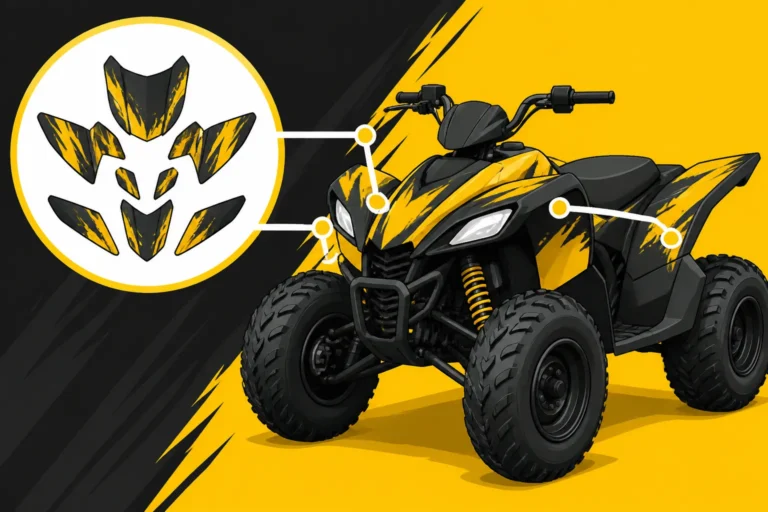
The issue of stolen ATVs and UTVs was a significant concern before 2015. Without a centralized provincial registration system, a stolen machine could easily disappear into the vast network of users, making it incredibly hard for law enforcement to recover. When you purchase an ORV today, you receive a [BC's Certificate of Registration Explained] which is a key document for proving legal ownership. This certificate, along with the requirement for a physical number plate (see [BC ORV Number Plates and Decals]), provides a unique identifier for each registered machine. This dramatically helps in tracking stolen property and deterring theft. If your machine is stolen, the registration makes it easier for police to identify and return it if found. It also provides a clear paper trail for legal transfers of ownership, protecting both buyers and sellers from disputes down the line. This newfound clarity in ownership records helps bring ORVs into a more secure and traceable system, benefiting the entire riding community.
What You Need to Do Now: Registering Your ORV
So, you've got an ORV and you know it needs to be registered. Whether you bought it last week or inherited it from your grandpa, the process can feel a bit daunting, especially if your machine has a long and undocumented history. The good news is that there's a clear pathway, even if it requires a bit of detective work.
Gathering Your Paperwork: The Ownership Chain Challenge
The cornerstone of registering any ORV in BC is proving a clear chain of ownership, right up to you. This is where many riders hit a snag, especially with older machines. Unlike a car, which has a title that gets transferred, ORVs in BC receive a certificate of registration, and the concept of an "ownership chain" is paramount. You need a bill of sale or similar proof for every time the machine changed hands, all the way back to the original retail purchase. This is often the most challenging part, as many previous owners didn't keep meticulous records.
If you bought your machine from a dealer after November 2015, they would have handled the initial registration, and you should have received your certificate and plate directly. For private sales, you'll need a [BC Transfer of Ownership Explained] from the person you bought it from, and they, in turn, needed one from their seller, and so on. This can quickly become a complicated maze, particularly for machines that have [BC Ownership Chains Going Back Decades]. Don't underestimate this step; the Autoplan broker will need to see this full history.
The Role of Autoplan Brokers in the Process
When it comes to registering your ATV or UTV in British Columbia, your first and usually only stop will be an authorized ICBC Autoplan broker. These are the same offices where you go to insure your car or truck, and they are the designated agents for ORV registration. While some brokers are more familiar with ORV rules than others, they all have the necessary systems and training to process your registration. When you walk in, you'll need to present your ownership documentation, your photo ID ([BC Riders Must Carry Photo ID]), and pay the registration fee. The broker will enter your machine's details, including the Vehicle Identification Number (VIN) if it has one, and verify your ownership documents. It's often a good idea to call ahead to your chosen broker to confirm what specific documents they'll need for your situation, especially if your ownership history is a bit convoluted. They can provide initial guidance and potentially save you a trip. For instance, some brokers might suggest using specific forms or declarations.
Dealing with Missing Documents and Statutory Declarations
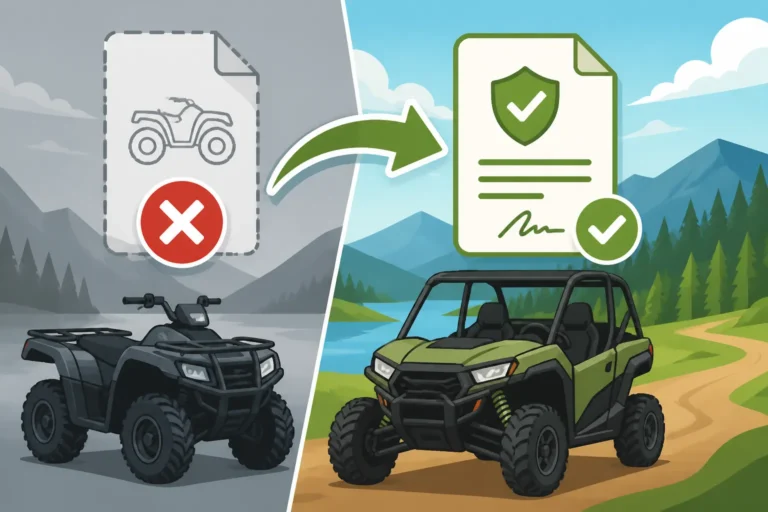
What happens if you've done your best detective work and still can't find every single bill of sale in your machine's history? This is an extremely common scenario, especially for machines bought before 2015. Thankfully, the province has a solution: the statutory declaration. If you cannot provide a complete chain of ownership documents, you can complete a [BC Statutory Declarations Cost $15]. This is a legal document where you declare under oath that you are the rightful owner of the machine, how you came to possess it, and why certain documents are missing. You will need to sign this declaration in front of a lawyer, notary public, or Commissioner for Taking Affidavits (often available at registries or government offices, sometimes even at the Autoplan broker's office itself).
The statutory declaration effectively fills in the gaps in your ownership history, allowing the Autoplan broker to proceed with registration. While it might seem like an extra hoop to jump through, it's a crucial mechanism for legalizing ownership for older machines that would otherwise be impossible to register. Companies like LawDepot offer templates for statutory declarations, which can be a helpful starting point, though always ensure it meets BC's specific requirements for ORV registration. Once you have this document, it acts as the missing link, allowing you to finalize your [How to Register an ATV in BC] and get your plate.
Common Pitfalls and Misconceptions Since 2015
Despite the fact that the Off-Road Vehicle Act has been in place for several years now, there are still some persistent misunderstandings and common pitfalls that riders encounter. Clearing these up can save you time, money, and potential headaches down the trail. It's important to differentiate between what was true before 2015 and what is true now.
The "Private Land Exemption" Myth
One of the most widespread misconceptions since 2015 is the idea that if you only ride on private land, you don't need to register your ORV. While it's true that the [BC Crown Land Triggers the Registration Rule] for mandatory registration, many riders forget that accessing private land often involves crossing or traversing some form of Crown land. Even a short stretch of an undeveloped trail, a bridge over a creek, or a small section of a [BC Forest Service Road Rules for ORVs] that leads to private property can legally be considered Crown land. Unless your private property is entirely self-contained and never requires you to touch public land, you absolutely need your machine registered. Thinking you're exempt because "I only ride on my friend's farm" can quickly lead to a ticket if you're pulled over on a road that's actually Crown land. The safest approach, therefore, is to register your machine if there's any chance you'll operate it beyond the boundaries of completely enclosed private property.
No Annual Sticker: Understanding the One-Time Fee
Another common point of confusion for riders, especially those used to car registrations, is the idea of an annual renewal sticker. Many expect to receive a yearly bill or a sticker to place on their plate. However, this is not how ORV registration works in BC. As you might remember from the internal link [BC Has No Annual Renewal Sticker], once you pay the initial registration fee and receive your certificate and plate, that registration is valid for as long as you own the machine. There are no annual renewal fees or stickers. This is a huge benefit for ORV owners, as it simplifies the process and eliminates recurring costs. The fee you pay when you register your ORV is a one-time charge for the life of your ownership. The only time you'd pay a registration fee again is if you transfer ownership of a machine you bought from someone else, which involves a new registration for the new owner. This can be a pleasant surprise for many who are bracing for yearly expenses.
Penalties for Non-Compliance in the Post-2015 Landscape
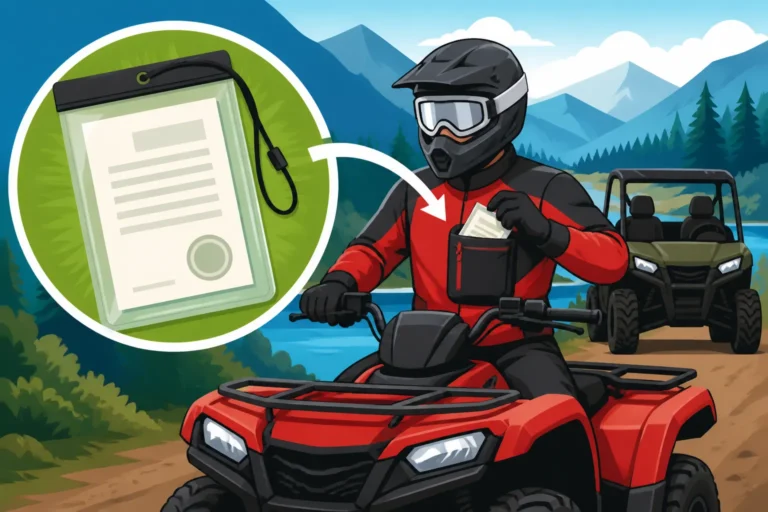
The shift to mandatory registration wasn't just about offering a new system; it came with teeth. Since November 2015, operating an unregistered off-road vehicle on Crown land can lead to significant penalties. We're not talking about a gentle warning anymore. Enforcement officers, whether it's the RCMP, Conservation Officers, or Forest Service personnel, now have clear legal grounds to issue fines. You can face [BC Tickets for an Unregistered Machine], and these aren't minor expenses; they can quickly add up. Beyond the immediate fine, an unregistered machine could also lead to further complications in the event of an accident or incident, as proving ownership and liability becomes much more difficult. It's also worth noting that if you're involved in an incident where an unregistered ORV causes damage, you could be personally liable for costs that an insurer might otherwise cover if the machine were properly registered. Therefore, ensuring your machine is registered isn't just about avoiding a ticket; it's about adhering to the law and protecting yourself from potentially far more serious financial and legal repercussions. Make sure you carry your [BC Riders Must Carry the Certificate] and proper identification with you whenever you ride.
| Requirement/Feature | Before Nov 2015 (Typical) | After Nov 2015 (Mandatory) |
|---|---|---|
| Registration Required? | Generally No | Yes, for Crown Land operation |
| Ownership Proof | Informal (receipts, handshake) | Formal (Cert. of Reg., Bills of Sale) |
| Number Plate | No | Yes |
| Central Registry | No | Yes, via ICBC Autoplan brokers |
| Annual Renewal Fee? | N/A | No, one-time fee per owner |
| Penalties | Minimal for registration issues | Fines for non-compliance |
| Tracing Ownership | Very difficult | Significantly improved |
| Where to Register | Not applicable | [BC Autoplan Brokers Handle ORV Registration] |
This article is for general informational purposes only and does not constitute professional advice. Laws, prices and regulations vary by location and change over time. Consult a qualified professional for guidance on your specific situation.