When a Declaration Replaces a Missing Bill of Sale
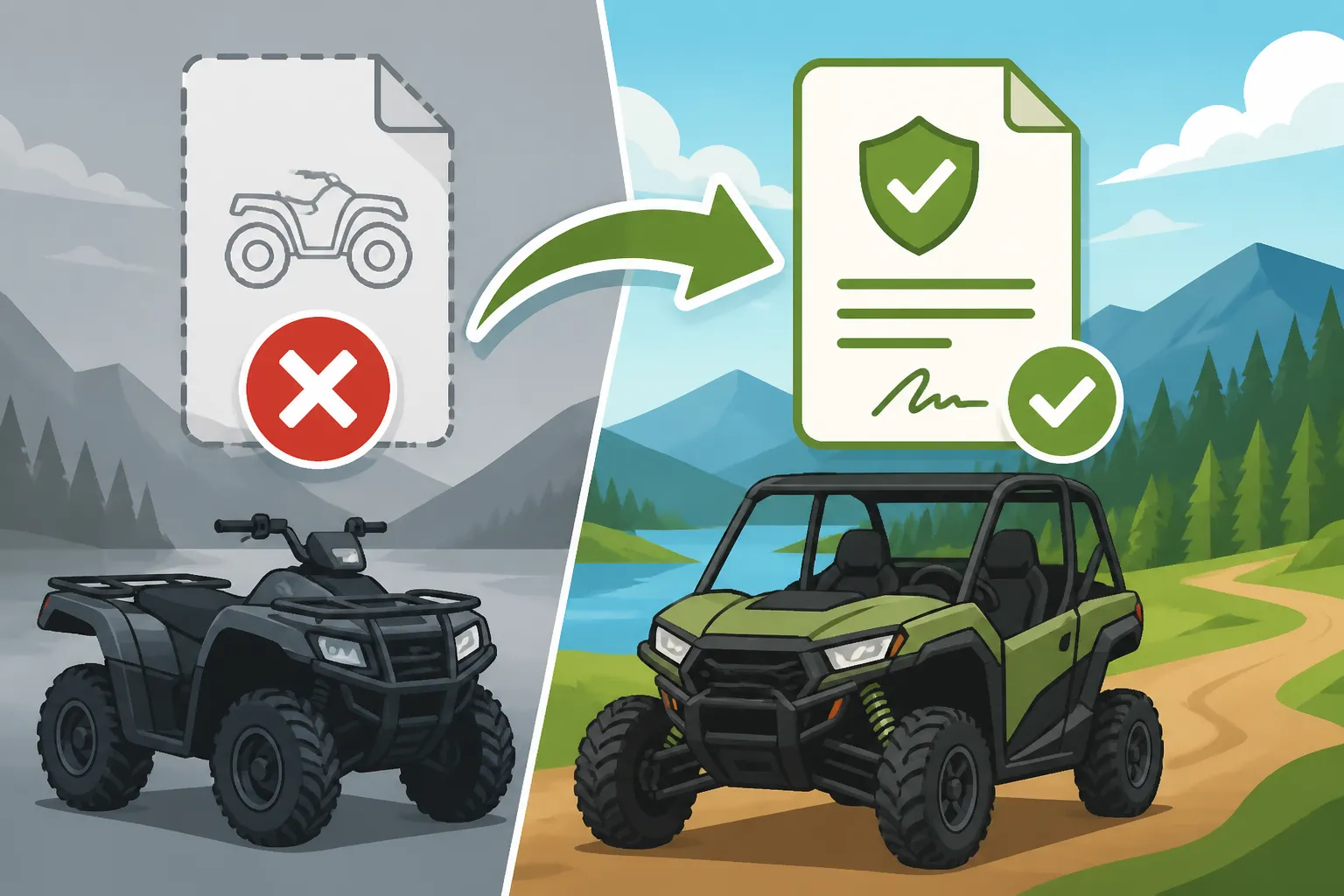
You've just bought what seems like a great deal on a used ATV or side-by-side, only to realize the seller has misplaced the original bill of sale, or perhaps the chain of ownership has a gaping hole from decades ago. This scenario can leave you feeling frustrated and worried about how you'll ever get your beloved off-road vehicle (ORV) legally registered in British Columbia. Fortunately, BC's ORV Act has a practical solution for these tricky situations: the statutory declaration, which can often replace a missing bill of sale, making your registration journey a whole lot smoother.
The Sticky Situation: Why Bills of Sale Go Missing
It's a tale as old as time, or at least as old as off-road vehicles. You find that perfect vintage quad, or maybe a reliable workhorse UTV, and the price is right. The seller seems genuine, you shake hands, cash changes hands, and you're off. But then, when you head to the Autoplan broker to register it, they ask for the bill of sale—and you realize you don't have one, or the one you have is incomplete. This isn't just a minor inconvenience; in BC, a clear chain of ownership is absolutely crucial for registering an ORV. [Why Every Past Sale Has to Be Documented]
Think about it: many of these machines have been passed down through families, sold casually between friends, or bought at farm auctions without the kind of meticulous paperwork we see with road vehicles. Sometimes, the seller genuinely can't find their old bill of sale, or perhaps they bought it years ago from someone who has since moved away or passed on. The frustration is real when you're holding what feels like your machine, but the province doesn't see it that way without the proper documentation. The good news is, there's a formal process to bridge those gaps, and it involves a statutory declaration.
What is a Statutory Declaration and How Does it Help?
A statutory declaration is essentially a formal written statement of facts, signed by you, and witnessed by a qualified legal professional, like a lawyer, notary public, or commissioner for taking affidavits. When you sign it, you're swearing or affirming that the information contained within is true to the best of your knowledge and belief. It carries the weight of an oath, meaning there are serious legal consequences if you intentionally make false statements.
For ORV registration in BC, a statutory declaration steps in to fill critical gaps in your ownership paperwork. It's not just a casual note; it's a legally recognized document that can explain how you acquired your machine, especially when traditional bills of sale are missing. Instead of throwing up your hands in despair, this document provides a pathway for you to declare your ownership formally. The ICBC Autoplan brokers, who handle ORV registration, are well-versed in accepting these declarations when the circumstances warrant it. You can't just write one out yourself and sign it; it needs that official witness to be valid, transforming your personal statement into a document with legal standing.
The Power of an Oath
When you sign a statutory declaration, you're not just jotting down some notes; you're taking an oath. This formal act signifies that you understand the gravity of your statements. It’s a legal commitment to truthfulness, and deliberately false statements can lead to charges like perjury. This serious aspect is precisely why the declaration is accepted as a substitute for a missing bill of sale. It provides a level of legal assurance that an informal handwritten note simply cannot.
Consider a scenario where you've purchased an older machine, say a classic Honda Big Red, from a private seller who inherited it from a relative. They have no original bill of sale from when their relative bought it, and their own record of inheritance is shaky. By completing a statutory declaration, you can describe the circumstances of your purchase, including the seller's name, the purchase price, and the date, effectively creating a documented history that the broker can accept. This protects not only your claim to ownership but also gives the province a clear record for tax purposes.
Common Scenarios Where a Declaration Saves the Day
Let's dive into some real-world situations where a statutory declaration can be your saving grace when trying to register your ORV in BC. These aren't just hypothetical examples; they represent common frustrations that riders face when dealing with machines that have long, informal histories. Understanding these scenarios will help you determine if a declaration is the right path for you.
When the Bill of Sale is Lost or Never Existed
This is perhaps the most frequent reason riders turn to a statutory declaration. You might have bought a quad years ago, and the bill of sale was simply lost in a move, or perhaps you bought it from a friend or family member in a casual transaction where no formal bill of sale was ever created. In these instances, you technically own the machine, but you lack the provincial paperwork to prove it for registration purposes.
Imagine you bought a utility UTV from a retiring farmer ten years ago. You paid cash, shook hands, and used it for work on your property. Now, you want to take it out onto a [BC Forest Service Road] for a bit of recreational riding, and suddenly you need to register it. You go searching for that old receipt or bill of sale, but it's nowhere to be found. A statutory declaration allows you to formally state when and from whom you purchased the machine, the purchase price, and that you have continuously owned it since then. This declaration, signed before a commissioner, acts as the missing link in your ownership chain, giving the broker the necessary proof. [BC Registration Without a Bill of Sale]
Gaps in the Ownership Chain
Sometimes, you have a bill of sale from your immediate seller, but the problem lies further back in the machine's history. Perhaps your seller also bought it without a proper bill of sale from their seller, creating a "gap" in the continuous record of ownership. BC registration rules require a complete chain of bills of sale going all the way back to the original retail purchase (or the first time it entered BC). This can be a huge headache, especially for older machines. [BC Ownership Chains Going Back Decades]
For example, you buy a vintage dirt bike, excited to restore it. The seller gives you a handwritten note, but admits they bought it years ago from a guy who vanished, and they never got formal papers. When you try to register it, the broker can't trace the ownership. In this case, your seller might need to provide a statutory declaration explaining how they acquired the machine, covering the missing link before your purchase. This declaration then becomes part of the complete package you present to the broker, proving that the bike wasn't simply found or stolen. For preparing such documents, resources like LawDepot can be helpful for finding templates and guidance on creating a statutory declaration.
Inherited Machines Without Estate Papers
Dealing with the loss of a loved one is hard enough, and sorting out their possessions can add extra stress. If you've inherited an ORV but the estate didn't provide a specific bill of sale or other transfer documents for it, you're left in a tough spot. The machine is legally yours as part of the estate, but proving it to the province for registration can be complicated.
Let's say your uncle passed away and left you his beloved quad. You have the will, but there's no specific mention of the quad, nor is there a bill of sale amongst his papers. To register it in your name, you would prepare a statutory declaration detailing the inheritance, stating that you are the legal heir, and that the machine was part of the estate. This declaration, along with a copy of the will or probate documents, provides the broker with sufficient evidence to transfer the registration into your name. [Registering a Quad You Inherited From a Relative]
Machines Purchased Decades Ago for Cash
Many older machines were bought with cash, perhaps even before ORV registration became mandatory in BC in 2015. There was less emphasis on formal paperwork back then, and people rarely held onto receipts for decades. Now, with the rules changed, these long-owned machines suddenly need a paper trail they never had.
Consider a rider who bought their trusty ATV back in 2005. They've ridden it exclusively on their own [BC Private Land and the Registration Question] for years. Now they want to explore [BC Crown Land Riding Explained] and realize they need to register it. But that cash receipt from 2005 is long gone. Here, a statutory declaration is perfect. You can attest to having owned the machine since that purchase date, describing the transaction as best you can recall it. This declaration establishes your continuous ownership for the purpose of getting that vital Certificate of Registration. [Registering a Quad Bought for Cash Decades Ago]
Getting Your Statutory Declaration Sorted
Okay, so you've identified that a statutory declaration is likely your ticket to getting your ORV registered. But how exactly do you go about getting one? It's a formal process, but it's not overly complicated once you know the steps.
Step-by-Step: Preparing Your Declaration
First, you'll need to write out the declaration itself. This isn't just a casual letter; it needs to include specific information and be formatted correctly. Here's what you'll typically need to include:
- Your Full Legal Name and Address: Clearly identify yourself as the declarant.
- Date of Birth: For identification purposes.
- Details of the ORV: Include the make, model, year, and crucially, the Vehicle Identification Number (VIN) or serial number. If the VIN is missing or unreadable, you'll need to address that in the declaration and potentially provide additional information. [BC Registration When the VIN Is Gone]
- How You Acquired the Machine: This is the core of your declaration. Be as specific as possible.
- If purchased: State the date of purchase, the name and contact information (if known) of the seller, and the purchase price.
- If inherited: State the date of inheritance, the name of the deceased, and reference any supporting documents like a will.
- If acquired through other means: Clearly explain the circumstances.
- Reason for Missing Bill of Sale: Explain why you don't have the original bill of sale (e.g., "lost during a move," "never provided," "seller no longer reachable").
- Statement of Continuous Ownership: Affirm that you have been the continuous owner of the ORV since the date of acquisition.
- Statement of Truth: A formal statement, often boilerplate legal language, that declares everything you've said is true to the best of your knowledge and belief, and that you understand the consequences of making false statements.
You can find templates for statutory declarations online, including through legal document services like LawDepot. Using a template can ensure you include all the necessary legal jargon and formatting, reducing the chance of rejection when you take it to be sworn.
Finding a Commissioner or Notary Public
Once you have your declaration written out, you can't just sign it at home. It needs to be witnessed and "sworn" before a qualified individual. In British Columbia, this can be:
- A Notary Public: These are legal professionals authorized to administer oaths and witness documents.
- A Lawyer: Any practicing lawyer in BC can also commission an affidavit or statutory declaration.
- A Commissioner for Taking Affidavits: Many individuals hold this designation, including certain government employees at places like Service BC centres, or even some senior staff at financial institutions. Autoplan brokers themselves are often commissioners for taking affidavits, so you might even be able to get it sworn right at the counter where you plan to register, though it's always best to call ahead and confirm. [BC Autoplan Brokers Handle ORV Registration]
When you go to have it sworn, bring photo identification. The commissioner will verify your identity, ensure you understand the contents of the declaration, and then witness your signature. They will also sign and stamp the document, making it official. There will typically be a small fee for this service. [BC Statutory Declarations Cost $15]
Table: When to Use a Statutory Declaration vs. A Bill of Sale
| Situation | Preferred Document | Why It Matters |
|---|---|---|
| Purchased from a private seller today | Bill of Sale | Clear, immediate proof of transaction, required for PST calculation and transfer. |
| Seller lost their bill of sale | Seller's Statutory Declaration | Bridges the gap for their ownership, allowing your purchase to be documented. |
| You lost your bill of sale after purchase | Your Statutory Declaration | Attests to your continuous ownership since the purchase date. |
| Inherited ORV, no specific transfer docs | Your Statutory Declaration & Will | Proves legal inheritance of the machine. |
| ORV acquired through barter/gift | Your Statutory Declaration / Gift Letter | Formally states how you acquired the machine without a cash transaction. |
| Purchased an ORV decades ago, no receipt | Your Statutory Declaration | Establishes long-term, continuous ownership for older machines. |
| Previous owner cannot be found | Your Statutory Declaration | Explains the gap and your efforts to establish a clear chain. |
| Dealer sale (new or used) | Dealer Sales Contract & Bill of Sale | Comprehensive document, usually includes all required information for registration. |
What Happens After You Have Your Declaration?
Once your statutory declaration is properly prepared and sworn, you're one giant step closer to registering your ORV. But what's next? It's not quite the finish line, but you're definitely on the home stretch.
Presenting to the Autoplan Broker
With your statutory declaration in hand, along with any other supporting documents (like any other bills of sale you do have, or a copy of a will for inherited machines), you'll head back to an ICBC Autoplan broker. Make sure you bring your photo identification and proof of address. The broker will review all your paperwork. They're looking for a clear, unbroken chain of ownership, even if some links in that chain are now declarations instead of traditional bills of sale. [BC Registration Paperwork Checklist]
They will assess the declaration's completeness and clarity. If everything is in order, they'll process your registration. This is also when you'll pay any applicable Provincial Sales Tax (PST) on the declared purchase price of the machine, as well as the initial registration fee. [BC PST on an ATV Purchase]
Potential Hurdles and How to Overcome Them
While a statutory declaration is a powerful tool, it's not a magic bullet for every situation. Sometimes, you might encounter further questions or specific challenges:
- Unclear or Incomplete Declarations: If your declaration is vague or missing crucial details, the broker might ask you to revise it and have it re-sworn. This is why using a reliable template, perhaps from a service like LawDepot, can be beneficial, ensuring all pertinent information is included from the outset.
- Missing VIN: If the VIN is entirely missing or illegible, a declaration might not be enough on its own. You might need additional documentation or even an inspection to verify the machine's identity. This is a rarer but more complex issue.
- Suspicion of Stolen Property: In very rare cases, if the circumstances described in your declaration raise red flags, the broker might advise you to contact the police to ensure the ORV isn't stolen. This is why transparency and truthfulness in your declaration are paramount. Always run a stolen vehicle check yourself before handing over cash for a used machine. [Running a Stolen Vehicle Check Before You Hand Over Cash]
- Broker Experience: While all Autoplan brokers handle ORV registration, some may have more experience with complex scenarios involving statutory declarations than others. If you encounter difficulties, don't hesitate to politely ask if another broker in the office has more experience with [BC Machines With No Paperwork] or if you can seek clarification from ICBC directly.
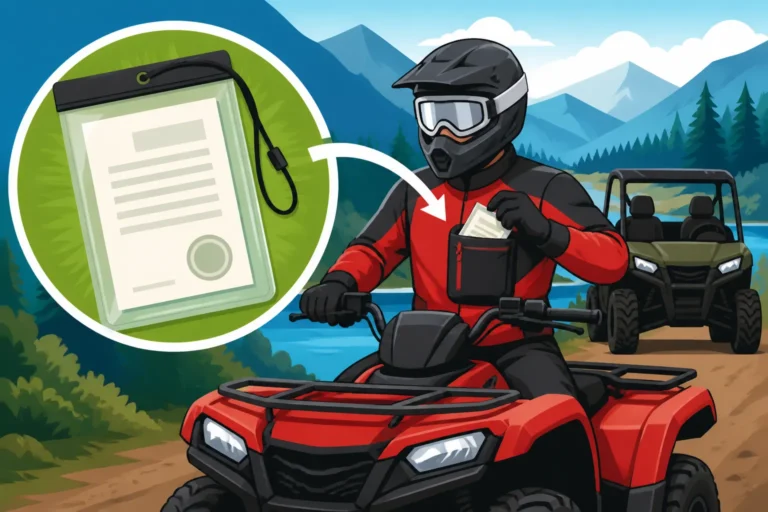
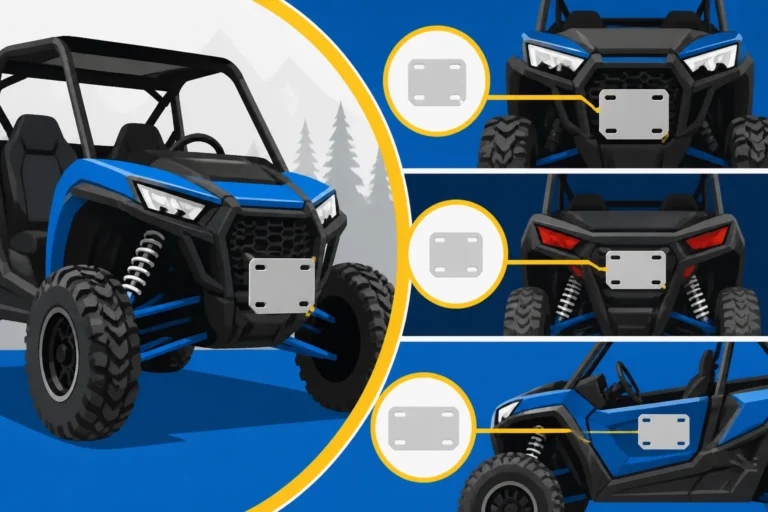
Once your paperwork is approved, you'll pay the one-time registration fee and applicable taxes. You'll then be issued a [BC ORV Number Plates and Decals] and your official [BC's Certificate of Registration Explained]. This Certificate is what you'll need to carry with you whenever you're riding on Crown land or other public access areas. [BC Riders Must Carry the Certificate]
This process, while requiring a bit of extra effort, ensures that even those long-lost histories of our favourite machines can be legally recognized, getting you out on the trails with peace of mind.
Disclaimer
This article is for general informational purposes only and does not constitute professional advice. Laws, prices and regulations vary by location and change over time. Consult a qualified professional for guidance on your specific situation.