Carrying Your Certificate of Registration on Every Ride
There's nothing quite like hitting the trails on your ATV or UTV, feeling the fresh air and soaking in the stunning British Columbia scenery. But amidst all that excitement, it’s easy to overlook a crucial piece of paperwork that could turn a fantastic day into a frustrating one: your Certificate of Registration. Many riders don't realize the legal weight this document carries and how essential it is to have it with you every single time you venture out. This guide will walk you through why carrying your certificate is non-negotiable, what it actually is, how to protect it, and what to do if it goes missing, ensuring your adventures stay on track and penalty-free.
The Absolute Necessity of Carrying Your BC ORV Certificate
Picture this: you're enjoying a fantastic ride on a beautiful B.C. Crown land trail, miles from anywhere, when you encounter a conservation officer or an RCMP patrol. They wave you over, and after a friendly chat, they ask to see your registration. Your heart sinks. It's sitting on your kitchen table, safe at home. What happens next? In British Columbia, the law is quite clear: if you’re operating an off-road vehicle (ORV) on Crown land or a Forest Service Road, you must have your Certificate of Registration with you. It's not just a suggestion; it's a legal requirement, plain and simple.
The Legal Mandate and Why It Matters
The Off-Road Vehicle Act in British Columbia, which made ORV registration mandatory back in [BC ORV Registration Became Mandatory in 2015], specifies that operators must carry the Certificate of Registration. This isn't just about proving your machine is registered; it's about proving you are the rightful operator or owner (or have permission from the owner) of that specific registered machine. Law enforcement and conservation officers need a quick, reliable way to verify who is operating an ORV and that it complies with provincial regulations. Without your physical certificate, they have no immediate proof, and that can lead to some uncomfortable situations and potential headaches.
Think of it this way: your ORV Certificate of Registration is essentially your machine's ID card when you're out on public lands. Just as you wouldn't (or shouldn't!) drive your car without your driver's license and vehicle registration, you shouldn't ride your ATV or UTV without its certificate. The rules are designed to ensure accountability, deter theft, and help maintain safety and order on shared trails and resource roads. It's a key tool for authorities to ensure that riders are compliant and that the ORV has a legitimate ownership history, especially given the rising popularity of these machines.
Consequences of Non-Compliance
Forgetting your certificate isn't just a minor inconvenience; it can lead to tangible penalties. While an officer might sometimes exercise discretion and give you a warning, they are well within their rights to issue a ticket. Fines can quickly add up, turning an otherwise enjoyable day into an expensive lesson. The exact amount can vary, but these aren't small change warnings; they're designed to be a deterrent. An officer might also require you to produce the document at a local RCMP detachment or Service BC centre within a specified timeframe, adding a time-consuming errand to your week.
Beyond fines, there's the administrative hassle. If you can't produce the certificate, an officer might need to spend more time verifying your machine's status, which can delay your ride and their patrol. In more serious cases, if there's any suspicion about the machine's ownership or if it appears to be unregistered entirely, the consequences can escalate dramatically. An unregistered machine can lead to significant [BC Tickets for an Unregistered Machine], and repeated non-compliance could even lead to more severe actions. The simplest way to avoid all this is to develop a routine: always double-check that your Certificate of Registration is with you before you load up and head out.
Understanding Your BC Certificate of Registration
Many people coming from other provinces or jurisdictions are used to the concept of a "title" for their vehicles. In British Columbia, the system for off-road vehicles is a little different, and understanding this difference is key to appreciating what your Certificate of Registration represents. It’s not just a piece of paper; it's the primary legal document confirming your ownership and your machine's registration status in BC.
What the Certificate Looks Like and Contains
When you successfully register your ORV with an ICBC Autoplan broker, you'll be handed a specific document: the [What the Broker Hands You After You Register]. This is your official Certificate of Registration. It's typically a multi-part form, often on specialized paper, and it contains vital information about your off-road vehicle and its registered owner(s). You'll find details like the ORV's Vehicle Identification Number (VIN), make, model, year, and the type of ORV (e.g., ATV, side-by-side, dirt bike). Crucially, it will also list the name and address of the registered owner(s) and the date of registration.
This document serves as definitive proof that your machine has been properly recorded in the provincial database, making it legal to operate on Crown land and Forest Service Roads. It's specifically designed to be easily readable and verifiable by authorities. Unlike a generic receipt, it has unique identifiers and security features. Knowing what to expect means you can easily identify it among your other important documents. For a deeper dive into the specifics, you can always refer to [BC's Certificate of Registration Explained], which details its structure and purpose.
How It Differs from a Traditional Vehicle Title
One of the biggest points of confusion for many ORV owners, especially those new to BC or Canada, is the absence of a "title" document similar to what's common for automobiles or in some U.S. states. British Columbia does not issue a vehicle title for ATVs, UTVs, and other ORVs in the traditional sense. The Certificate of Registration is the provincial government's official record of your machine's identity and its registered owner. This can be a bit of a mental shift for some, who might expect a separate, more formal-looking title document.
The reason for this distinction lies in how the province handles ORV ownership. Instead of a separate "title" that might be held by a lienholder or used as collateral, the Certificate of Registration combines proof of registration with the primary legal evidence of ownership. When you sell your machine, you transfer the registration, not a title. This system simplifies the process but places even greater importance on keeping your Certificate of Registration safe and accessible. If you're ever looking to sell your machine or need to prove ownership for other reasons, this document is your key. Without it, verifying the legal ownership chain, especially for older machines, can become complicated. [Why BC Does Not Title an ATV] explains this difference in greater detail.
Practical Strategies for Safely Storing and Accessing Your Certificate on the Trail
Having your Certificate of Registration is one thing; keeping it safe, dry, and readily available while you’re bouncing over trails and splashing through puddles is another. A crumpled, illegible piece of paper won't do you much good. Smart storage solutions are essential to protect this important document from the elements and ensure it's always ready for inspection.
Protecting Your Paperwork from the Elements
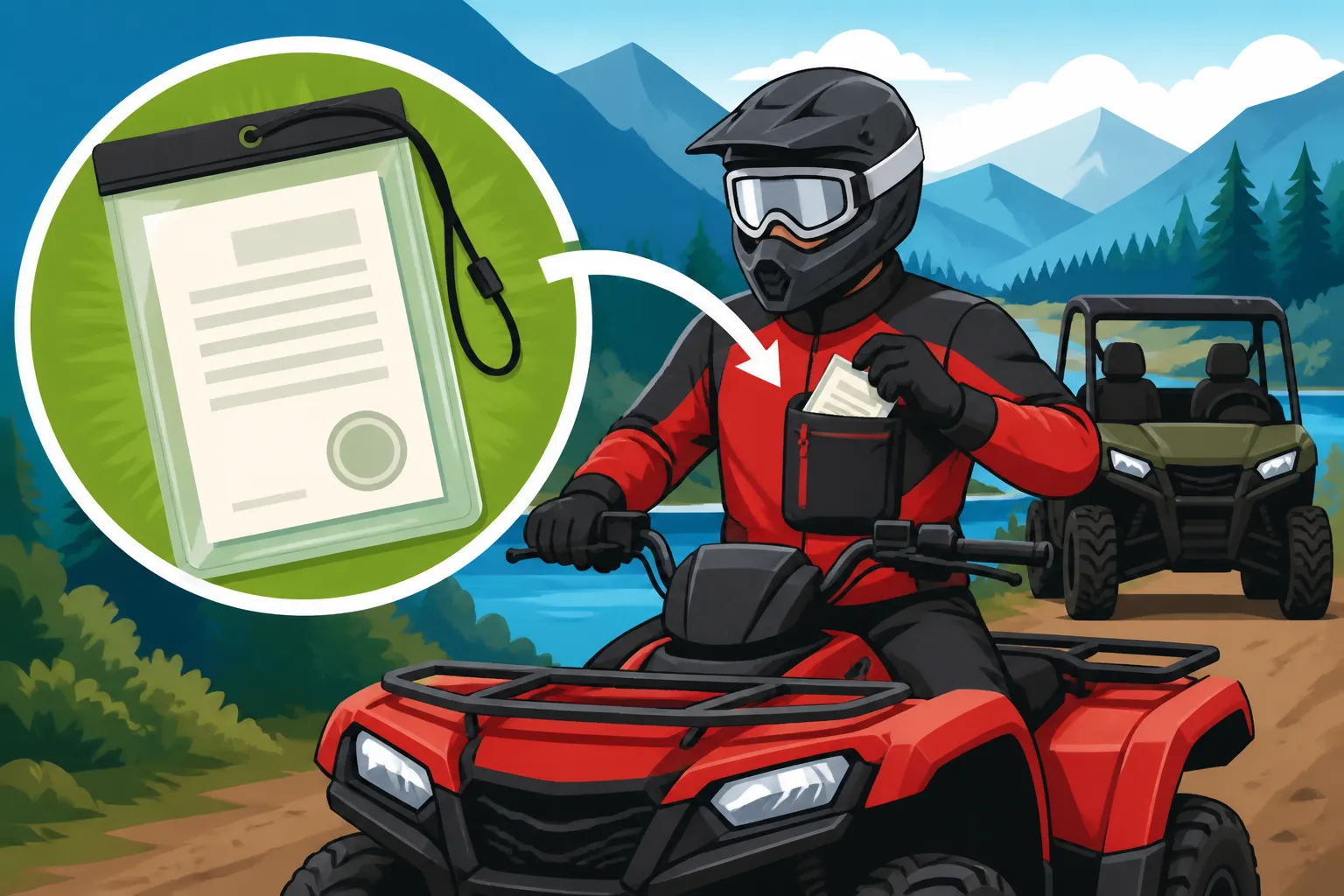
Your ORV adventures often take you through mud, rain, dust, and all sorts of challenging conditions. A simple ziplock bag just won't cut it for long-term protection. Investing in a durable, waterproof document pouch or a small, hard-shell case is highly recommended. These are designed to withstand the rigours of off-road riding, keeping your certificate bone dry and protected from tears or creases. Look for options specifically made for outdoor use, often found at marine or outdoor supply stores. Some riders even laminate their certificate (though be cautious not to obscure any security features or make it unreadable), but a heavy-duty waterproof pouch offers excellent protection without permanent alteration.
Consider where you'll store this pouch. Attaching it securely inside a storage compartment on your ORV, such as under the seat, in a glove box, or within a dedicated utility box, is far better than stashing it in a jacket pocket where it could fall out or get soaked. The goal is to choose a spot that is secure, easily accessible when needed, and out of the way of everyday wear and tear. Having it tucked away neatly ensures it doesn't become a distraction or a hazard during your ride.
Making It Readily Available for Inspection
While protecting your certificate is crucial, so is being able to produce it quickly when asked. An officer doesn't want to wait while you empty out your entire backpack or wrestle with a jammed compartment. Store your waterproof pouch in a spot that you can access efficiently, even when wearing gloves. Some riders prefer a small, dedicated compartment on their machine that's separate from their main storage, or a secure pocket in their riding gear that's specifically for essential documents.
Practise retrieving it a few times so you know exactly where it is and how to get to it without fumbling. This not only makes interactions with authorities smoother but also reduces stress if you're ever in a situation where you need quick access to your machine's details. Remember, the expectation is that you can present it upon request, much like a driver's license. [BC Riders Must Carry the Certificate] emphasizes this point – it's about immediate proof.
Carrying Companion Documents
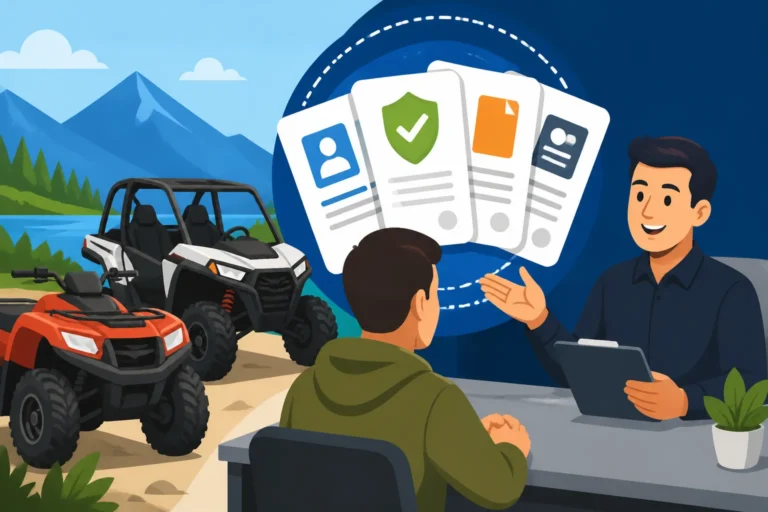
Your Certificate of Registration isn't the only document you should carry. Just like when driving a car, you, as the operator, need to have your photo identification with you. [BC Riders Must Carry Photo ID] is another non-negotiable requirement. This allows authorities to verify your identity against the registered owner's name on the certificate or to confirm that you are authorized to operate the machine.
If you have additional insurance coverage beyond the basic liability required on certain roads (e.g., [BC Resource Road Insurance of $200,000]), it's a good idea to carry proof of that policy as well. While not always legally mandated to be carried, having it can provide peace of mind and simplify things if an incident occurs. Finally, if you're riding on private land with permission, it's wise to carry a copy of that permission, especially if you're venturing onto leased Crown land or land where public access might be restricted. While LawDepot doesn't handle government registrations, it is a great resource if you need to create formal letters of permission or bills of sale for your ORV, providing a clear paper trail for any private agreements.
What to Do If Your Certificate is Lost, Damaged, or Stolen
Life happens. Documents get lost, torn, or sometimes even stolen. Realizing your Certificate of Registration is missing can be a moment of panic, especially if you have a ride planned. Thankfully, the process for obtaining a replacement is straightforward, but it does require some action on your part.
Steps to Obtain a Replacement
If your Certificate of Registration goes missing, the first step is to visit an ICBC Autoplan broker. These are the same brokers who handle your initial registration and transfers, and they are equipped to assist with replacements. You'll typically need to provide your personal identification and details about your ORV, such as its Vehicle Identification Number (VIN) and previous registration information. The broker will access the provincial database to confirm your ownership and the machine's registration status.
There may be a small fee associated with issuing a replacement certificate, but it's a minor cost compared to the potential fines of riding without it. The [BC Registration Processing Time] for a replacement is usually quite quick; often, you can walk out with a new document on the same day. Make sure you get the physical certificate before heading back out on the trails. It's not something you can easily print at home, as it's a formal government document.
Riding Legally While Awaiting Your New Certificate
This is a critical point: generally, it is not advisable to ride your ORV if you do not have your Certificate of Registration, even if you've applied for a replacement. While an Autoplan broker might be able to print you a temporary slip or confirmation of application, this often doesn't satisfy the legal requirement to "carry the certificate." The specific wording of the act means the physical certificate is what's expected. Riding on Crown land or Forest Service Roads without it, even if you know it's on its way, puts you at risk of a ticket.
If your ride absolutely cannot wait, your best bet is to avoid areas where the ORV Act applies, such as Crown land and Forest Service Roads. This typically means sticking to private property where you have explicit permission to ride, and where the provincial registration rules generally don't apply. However, it's important to verify local bylaws, as some municipalities may have their own rules regarding ORV use even on private land. Once you have that fresh, crisp replacement in hand, then you can confidently head back to your favourite trails. Having all your [BC Registration Paperwork Checklist] ready, even for replacements, can make the process much smoother.
When and Where You'll Need to Present Your Certificate
The primary reason to carry your Certificate of Registration is for compliance with the Off-Road Vehicle Act, which largely governs operations on public lands. However, various situations can arise where producing this document becomes necessary. Knowing these scenarios helps you stay prepared and ensures you can navigate interactions smoothly.
Interactions with Law Enforcement and Conservation Officers
This is the most common scenario where you'll be asked for your Certificate of Registration. Whether it's the RCMP, a local municipal police force, or a Conservation Officer, their role is to enforce the laws related to ORV operation. When you're riding on [BC Crown Land Triggers the Registration Rule] or any designated Forest Service Road, they have the authority to pull you over and request your documents. They'll want to see your Certificate of Registration to confirm the machine's identity, its registration status, and the registered owner. They will also typically ask for your personal photo ID to confirm you are who you say you are, and to verify your authorization to operate the machine.
These interactions are usually straightforward if you have all your documents in order. Being polite, cooperative, and presenting your documents promptly can make a big difference. An officer's primary concern is ensuring public safety and compliance with the law. If you can't produce the certificate, it raises questions and could lead to [BC Penalties for Riding Unregistered]. Even if your machine is fully registered, the absence of the physical document is a violation in itself.
Other Scenarios Requiring Proof of Registration
Beyond routine checks, there are other instances where you might need to show your Certificate of Registration:
- Selling Your ORV: When you sell your ATV or UTV, the Certificate of Registration is the crucial document for transferring ownership. The new owner will need it to register the machine in their name with an Autoplan broker. Without it, the transfer process becomes much more complicated, potentially requiring statutory declarations or other forms to bridge gaps in the ownership history. LawDepot can be a valuable tool for drafting these kinds of documents, like a [BC Statutory Declaration for an ORV], if you find yourself in a situation with missing paperwork from prior sales.
- Insurance Claims: In the unfortunate event of an accident, your insurance provider (or the other party's) will likely require proof of ownership and registration to process any claims. Having your certificate readily available can expedite this process.
- Crossing International Borders: If you're ever taking your ORV across the Canada-U.S. border (which can be a complex process with various customs requirements), having your Certificate of Registration is absolutely essential to prove legal ownership and facilitate temporary importation.
- Club Events or Organized Rides: Some ATV clubs or organized riding events might require you to show proof of registration (and sometimes insurance) before participating, to ensure all riders are compliant with provincial laws.
In all these scenarios, your Certificate of Registration acts as the official record of your ORV. It's the physical proof that links you, or your company, to the machine in the eyes of the law and various organizations. Therefore, treating it with the same care and importance as you would your vehicle’s registration or your personal identification is a habit every ORV owner should adopt. Understanding [What the Off-Road Vehicle Act Covers in BC] helps reinforce why this document is so fundamental to responsible ORV use in the province.
Disclaimer
This article is for general informational purposes only and does not constitute professional advice. Laws, prices and regulations vary by location and change over time. Consult a qualified professional for guidance on your specific situation.