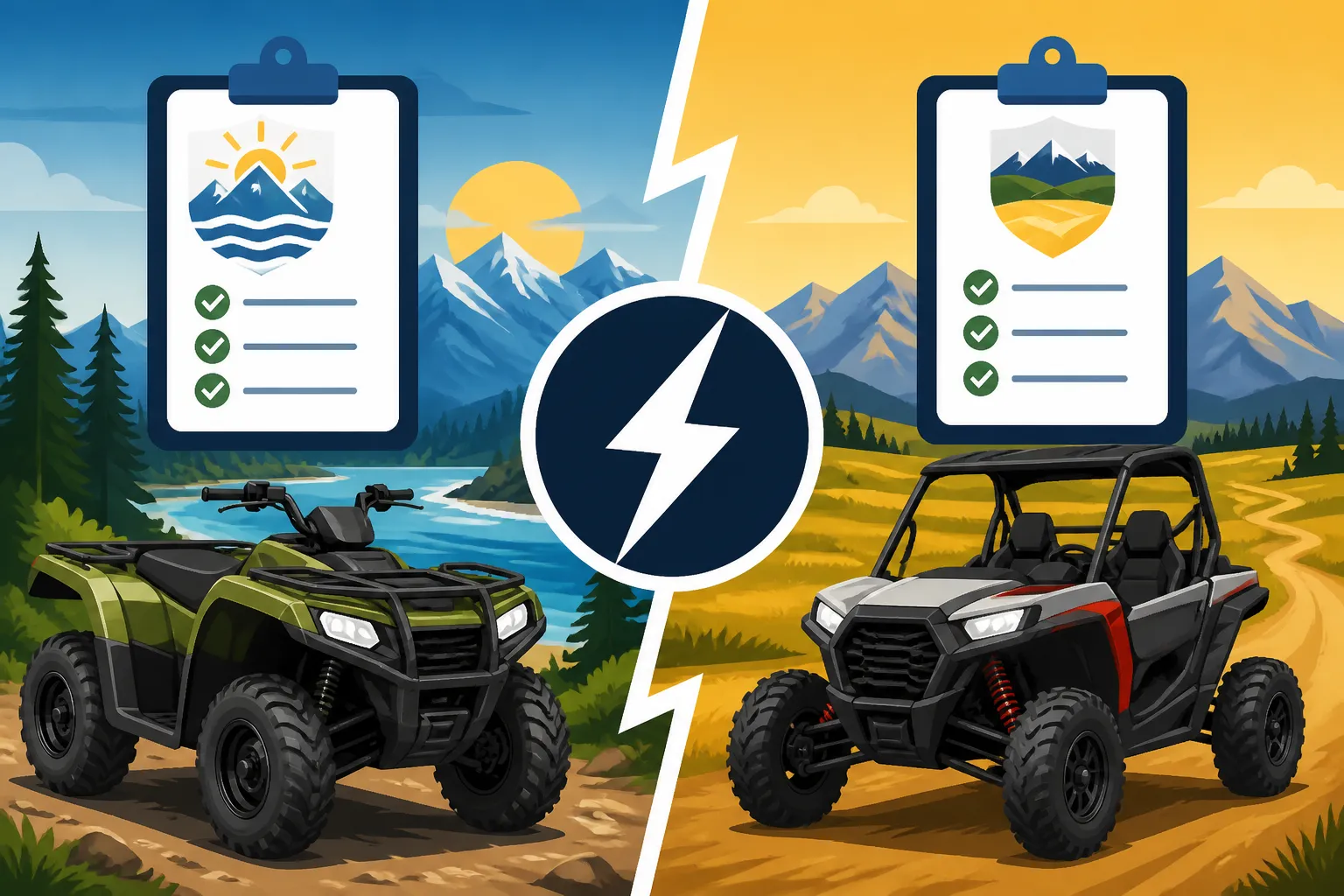
BC Registration Compared to Alberta
It's a common head-scratcher for off-road enthusiasts: "How does my BC ATV or UTV registration stack up against what my buddies in Alberta have to deal with?" Navigating the rules for your off-road vehicle (ORV) can feel like slogging through deep mud, especially when you're comparing notes with riders from other provinces. This guide will cut through the confusion, clearly laying out the fundamental differences and similarities between registering your quad or side-by-side in British Columbia and Alberta, so you know exactly what to expect, whether you're buying, selling, or just planning a cross-provincial ride.
The Core Difference: Registration in BC vs. Titling in Alberta
Right off the bat, the biggest difference between British Columbia and Alberta for your ATV or UTV comes down to one crucial word: "title." Alberta, like many other jurisdictions, issues a title for your off-road vehicle. BC, on the other hand, does not. This fundamental difference shapes everything about how you prove ownership, transfer machines, and what documents you carry.
Why BC Has Registration, Not a Title
In British Columbia, when you register your ATV or UTV, you receive a "Certificate of Registration" from ICBC. This isn't a title in the traditional sense; it's proof that your machine is registered to operate on Crown land and certain other areas as required by the Off-Road Vehicle Act. It's about compliance and identification, not a definitive, singular document of ownership that follows the machine its whole life. Think of it more like registering a bicycle with the city—it proves it's yours for identification, but it's not the same as a car title. This system was brought into effect when [BC Registration Became Mandatory in 2015], shifting how riders in the province interact with their machines legally.
This approach often catches people off guard, especially if they've dealt with vehicle titles elsewhere. It means that while the Certificate of Registration is important, proving ownership in BC, particularly for older machines or those with a convoluted past, relies on a continuous paper trail of bills of sale from every prior owner. This is often referred to as [BC's Continuity of Ownership Problem]. Without a complete chain of ownership, registering an older machine can become a real headache, requiring statutory declarations to fill in the gaps.
Alberta's Title System: A Simpler Approach to Ownership
Alberta operates on a title system for off-highway vehicles (OHVs), which include ATVs and UTVs. When an OHV is new, the manufacturer issues a Manufacturer's Statement of Origin (MSO), which is then used to apply for a title at an Alberta registry agent. This title then serves as the primary legal document proving ownership, much like a car title.
When an OHV is sold in Alberta, the seller typically signs over the title to the new owner, and the new owner then registers the OHV in their name at a registry agent. This process is generally more straightforward because the title itself is designed to be the definitive document that transfers with the machine. It clearly states who the current legal owner is, which minimizes disputes and simplifies the transfer process compared to BC's reliance on a chain of bills of sale. Alberta's system typically means fewer questions about past owners once you have a clear title in hand, though a bill of sale is still crucial for the transaction itself.
The Registration Process: A Step-by-Step Comparison
Understanding what documents you need and where to go makes a world of difference. Both provinces require you to take action, but the specifics of that action vary considerably.
Registering Your ORV in British Columbia
In BC, the registration process for your ATV or UTV is handled by Autoplan brokers, who are the same people who deal with your car insurance. This is often a surprise for new riders or those new to the province. When you buy a new or used machine, you'll need to head to an ICBC Autoplan broker with your paperwork.
Here’s what you generally need:
- Proof of Ownership: This is the big one. For a new machine, you'll have a New Vehicle Information Statement (NVIS). For a used machine, you need a bill of sale from the person you bought it from, and proof of ownership for every previous owner back to the original retail sale, or back to November 1, 2015, when the ORV Act became mandatory. If there's a missing bill of sale in that chain, you might need a [BC Statutory Declaration for an ORV] sworn at a Service BC office or before a Notary Public. This is where services like LawDepot can be a lifesaver, providing templates for statutory declarations and bills of sale that meet provincial requirements.
- Identification: Valid photo ID, like your driver's licence.
- Machine Information: The ORV's Vehicle Identification Number (VIN), make, model, and year.
- Payment: There's a one-time registration fee.
Once registered, you'll receive your Certificate of Registration and a provincial ORV plate. [BC ORV Number Plates and Decals] must be displayed on your machine. The registration is permanent for as long as you own the machine; there's no annual renewal sticker like you might find for car plates. [BC Registration Lasts as Long as You Own It], meaning you don't have to keep track of annual renewals, which is a nice perk for many riders.
Registering Your OHV in Alberta
Alberta's process for registering an off-highway vehicle is handled by authorized registry agents, which are private businesses licensed by the provincial government. This means you won't be going to a single government office but rather one of many convenient locations.
Typically, you'll need:
- Proof of Ownership: For a new OHV, this would be the Manufacturer's Statement of Origin (MSO). For a used OHV, you'll need the signed-over previous owner's title or the bill of sale. While the title is paramount, a clear bill of sale documenting the current transaction is always good practice. If you’re ever in a bind trying to create a robust bill of sale, especially for a private sale, tools from sites like LawDepot can assist in generating a professional document.
- Identification: Valid personal identification.
- Machine Information: The OHV's VIN, make, model, and year.
- Payment: Fees for registration and a license plate.
In Alberta, once your OHV is registered, you'll receive a registration certificate and an OHV license plate. Unlike BC's permanent registration, Alberta's OHV registrations are typically valid for one year and must be renewed annually. You'll receive a renewal reminder, and you'll pay a fee each year to keep your plate active. This is a significant difference, as it means an ongoing annual task and cost that BC riders don't have for registration itself.
| Feature | British Columbia (ORV) | Alberta (OHV) |
|---|---|---|
| Ownership Document | Certificate of Registration (Proof of Registration) | Certificate of Title (Proof of Ownership) |
| Registration Body | ICBC Autoplan Broker | Authorized Registry Agent |
| Primary Proof of Ownership for Used Machine | Continuity of bills of sale from every prior owner (or statutory declarations to fill gaps) | Signed-over title from previous owner (bill of sale also common) |
| Registration Term | One-time fee, lasts as long as you own the machine ([BC Registration Lasts as Long as You Own It]) | Annual renewal required (typically 1 year) |
| Annual Fees | No annual registration renewal fees | Annual registration renewal fees apply |
| When Mandatory | Since November 1, 2015, for Crown land use | Generally always required for public land use |
| Plate | BC ORV plate | Alberta OHV plate |
| Missing Paperwork | Often requires [BC Statutory Declaration for an ORV] to establish ownership | Generally simpler with title system; bill of sale still crucial for private sales |
Ownership, Transfers, and Missing Paperwork
The process of buying or selling an ORV, especially a used one, highlights the stark differences between the two provinces. This is where many riders encounter the most frustration, particularly in BC.
Transferring Ownership in BC: The Paper Trail Predicament
When you sell a registered ORV in BC, you sign over your Certificate of Registration to the new owner. But here's the kicker: the new owner still needs a complete chain of bills of sale going back to the machine's initial retail purchase or to November 1, 2015. This means you, as the seller, need to provide your bill of sale when you transfer the machine to the buyer. If you can't, or if there's a gap in your own ownership history, the new buyer might face challenges when trying to register it.
This continuity of ownership requirement can be a real pain for anyone trying to register an older machine that has changed hands many times. It's not uncommon for a rider to buy a quad only to discover that the seller doesn't have the bill of sale from their purchase, let alone documents from prior owners. This is precisely why [BC Registration Without a Bill of Sale] can be such a complex issue, often requiring a statutory declaration where you swear under oath that you are the rightful owner and explain how you came into possession of the machine. Legal document providers like LawDepot offer straightforward templates for creating these declarations, which can be immensely helpful in navigating this specific BC hurdle.
Transferring Ownership in Alberta: Title is King
In Alberta, transferring ownership of an OHV is generally more straightforward because of the title system. When you sell your OHV, you typically sign the title over to the buyer. The buyer then takes this signed title, along with a bill of sale (which is always recommended for a private transaction), to a registry agent to transfer the registration into their name and get a new plate if needed.
The existence of a clear title means that the registry agent usually doesn't need to scrutinize a long chain of past owners in the same way BC does. The title itself serves as the primary proof of legal ownership. While a bill of sale is important for the transaction details and sales tax purposes, the absence of a complete chain of bills of sale back through time is less of a barrier than it is in BC. This streamlined process is one reason why many riders from Alberta find the BC system surprisingly complex when they first encounter it.
Ongoing Requirements and Enforcement
Once your machine is registered, both provinces have rules about what you need to carry, how you display your plate, and what happens if you don't comply.
On the Trails in British Columbia
In BC, once your ORV is registered and you have your plate, you must carry your Certificate of Registration and a valid piece of photo identification with you whenever you're operating the machine on Crown land or other areas where registration is required. [BC Riders Must Carry the Certificate] and [BC Riders Must Carry Photo ID]. You don't need to carry proof of insurance unless you're on a Forest Service Road (FSR) or other specific areas where third-party liability insurance is mandatory.
The ORV plate must be clearly displayed. [BC Plate Placement on Front, Back or Left] is permitted, but it must be visible and legible. If you're caught riding an unregistered machine where registration is required, you could face [BC Tickets for an Unregistered Machine]. The enforcement is primarily focused on registration, proper display of the plate, and adherence to safe operating rules.
On the Trails in Alberta
In Alberta, you must carry your current OHV registration certificate and proof of liability insurance (if applicable, depending on where you're riding) when operating your machine. While Alberta's system has a title, the registration certificate is your proof that the machine is legally registered for the current year.
Like BC, Alberta requires your OHV plate to be clearly visible. Annual renewal means that police or Fish and Wildlife officers can easily check if your registration is current. Operating an unregistered OHV on public land can lead to fines, and persistent non-compliance can result in more serious penalties. Insurance requirements also exist, particularly for public lands and certain designated trail systems. It’s always a good idea to confirm specific insurance needs for the areas you plan to ride, as requirements can vary.
What to Remember for Cross-Provincial Riding
If you're planning to ride your BC-registered ORV in Alberta, or vice versa, it's essential to understand how each province recognizes the other's rules.
Visiting Alberta from BC
If you're visiting Alberta with your BC-registered ORV, you're generally permitted to ride as long as your machine meets BC's registration requirements and you comply with Alberta's operational rules. This includes carrying your BC Certificate of Registration, having your BC ORV plate displayed, and adhering to Alberta's helmet laws, age restrictions, and any specific trail rules. The principle of reciprocity means that Alberta typically recognizes valid registration from other provinces. However, you'll need to know about Alberta's insurance requirements for public land use, as these might differ from what you typically carry in BC.
Visiting BC from Alberta
Similarly, if you're coming to British Columbia with your Alberta-registered OHV, your Alberta registration is generally recognized. You should carry your Alberta registration certificate and ensure your Alberta OHV plate is properly displayed. Just like BC riders visiting Alberta, you must abide by BC's specific rules for operating an ORV, including helmet laws, age restrictions for riders, and any local bylaws or prohibitions. Crucially, if you plan to ride on a [BC Forest Service Road], you'll need to ensure you have the mandatory third-party liability insurance coverage of at least $200,000, which is often not included with basic Alberta OHV registration. This is a common point of confusion and can lead to tickets if overlooked.
The main takeaway here is that while your home province's registration or titling is usually recognized, you must always adhere to the operational rules, safety equipment requirements, and specific insurance mandates of the province you are visiting. Always check the local regulations for your destination before you head out.
Disclaimer
This article is for general informational purposes only and does not constitute professional advice. Laws, prices and regulations vary by location and change over time. Consult a qualified professional for guidance on your specific situation.